5 Signs That Your Living Space May Have A Pest Infestation

Pest infestation is a common problem that homeowners come across more than once. The issue itself is daunting, but things can be worse if it comes out of the blue. For most homeowners, the discovery of pest infestation is unexpected. You clean your place often, use quality products to steer clear of insects and rodents, and inspect the vulnerable area regularly, but the lurking enemies still end up taking you by surprise. Staying a step ahead is your best bet to protect your home against a major infestation and save up on massive extermination bills. Here are the signs you must watch out for.

Pest droppings
The most common indication of unwanted intruders in your home is the presence of pest droppings in your living space. You may notice them in areas frequently accessed by insects and rodents, such as the attic, basement, crawl spaces, under the sofa, or behind your water heater. If bed bugs are present, droppings are often found beneath sheets or mattresses. When these signs appear repeatedly or in multiple locations, taking action becomes an urgent requirement, as delaying treatment can allow pests to multiply and spread. In such cases, contacting the best pest control company in St. Louis or in your vicinity can help ensure proper removal of the infestation. The exterminators also take measures to reduce the risk of a future infestation by addressing both the pests and their entry points.

Dirt and grime build-ups

When you see an unexplained buildup of dirt and grime around your living space, you are dealing with an infestation. Look out for dirt on the walls, greasy-looking smudges on the floor, and grime on the furniture. These often occur when rodents rub up against surfaces. The house will appear dirtier than usual. Although these indications are often subtle, there could be a big problem brewing.

Unusual smells and sounds

Another sign that clearly indicates an impending infestation is unusual sounds and smells. The problem areas may smell of rotting or stale food. Household rodents tend to carry food around and drop it under the furniture or in the corners. You may also notice odors from their droppings and urine. Checking pest-help.com can give you a fair idea about linking a specific smell with different pests. Apart from strange smells, you may also hear scampering or crawling sounds from the attic or basement.

Damage to the furniture

The last thing you will want to see is damage to your furniture, but it is a clear sign that you will see an infestation sooner rather than later. Bugs and rodents can damage the fabric and also gnaw and scratch the wood. You may notice chewed wires and gnawed cardboard boxes in the storage areas. These are serious signs, and you should take action at the earliest.

Discarded body parts

Like droppings and food crumbs, pests often leave behind their body parts as telltale signs of their presence in your living space. You may find discarded wings, skin, or limbs in the corners or window sills. Sweeping them and hoping that they are gone for good is the worst mistake you can make. The best piece of advice is to get professional extermination at the earliest.

Homeowners must be watchful about pest presence in their living space. Never ignore even the smallest sign because what appears to be a few cockroaches or one rat may be only the beginning. Addressing the problem quickly can save you a lot of money and effort in the long run.

Finally Hired That Movers? How To Fully Utilize Their Services

If you’ve moved at least once in your life, you would know the amount of effort it takes to pack all your belongings up and move to a new house. As exciting as moving can be, shifting is quite the opposite. With the advancement in the packing and moving services all around the world, a vast majority of the moving companies in Gaithersburg MD and around offer additional services that can be added to your contract, at times with some legal verification if the situation calls for it. Keep reading to know more about how to fully utilize the moving services that you have hired. 

Read the fine print

The legal documents or contracts that you’ve signed with the movers after just reading the final quote and important details of delivery often include all the services that they will or can offer apart from the moving. With these documents, you can figure out what additional services you need to pay extra for and what services you can just avail free of cost since they are in the contract from the start. Read those documents carefully to know how you can utilize the moving services. 

Ask for any other/complementary available services

Often, packers and movers tell you of all other services they can provide. You can also get to know a lot about their additional services by just visiting their website or reading reviews about them on different online forums. 

However, if the moving company does not wish to write down the extra services they give out in the contract, you might miss them even though you could use some extra help from professionals. Keeping such cases in mind, it is always better to inquire about any additional services the moving company might give; for instance, rigging, repairing of goods, unpacking, fixing up furniture and more. 

Warehouse storage is a standard supplementary service

Quite a few movers let you store some of your heavy luggage or belongings, such as furniture or closets, in their warehouse if your new home doesn’t have the space to fit them yet. Movers in Germantown and surrounding areas have affordable charges in their warehouses. 

If you have a signed contract with a company, they might even give you a discount for storage. 

Hoisting your luggage is part of moving

Let’s say your hallway is too narrow. Or the doors are too small. Or your stairs cannot take the weight of the furniture that needs to be taken to the first floor. In cases such as these, it is best to let professional moving services to hoist or rig your luggage and belongings up to the destination using a pulley mechanism through the windows. These machines are safe and stable, which ensure the safety of your delicate furniture and belongings. 

Long-distance delivery

Most movers use trucks and lorries to lug your belongings to the new destination since it is safer and effective. However, sometimes the house is inside a colony or apartment complex that doesn’t allow entry to big trucks. Or perhaps the road leading to your home is too narrow for the truck. In such cases, the movers bring in smaller shuttles which make multiple trips to transport your belongings. 

Summing Up

Professional movers sure make your life easier and hence, are a better choice when moving. If you are looking to move in the coming future but don’t want to do the work, from packing to moving to unpacking, it would be wise to opt for a full moving service that would do everything for you in one go. 

7 Design Trends to Boost Your Work from Home Productivity

There are many advantages to working from home, including a flexible schedule, a comfy dress code, and a nonexistent commute. But sometimes, an atmosphere that’s too familiar can interfere with your focus and productivity. Design changes can help. Here are seven design tips and trends to make your home office a place you can focus and relax.

Influential color

Color is an influential design tool. Since light travels to your eyes in waves, it releases different sections along the way. Color is the portion of the light spectrum that you can see. Each color triggers different electrical impulses in the retina of your eyes. From there, the impulses travel to the brain, where they affect the endocrine system and influence your emotions, sleep patterns, blood pressure, and metabolism.

The colors that you should use in your home workspace depend on the qualities you want to strengthen. Blue is calming and helps you concentrate. Red is energizing, yellow is uplifting, and orange is fun. If you already have an abundance of energy, try a soft blue, a contemplative palette of violet, or a restful green.

Functional furniture

Imagine working in a room with no furniture. Soon enough, you’ll see the impact that emptiness has on performance. The furniture you want in your workspace depends on your business, but each type can affect your overall work performance.

Choose a spacious surface for work, whether it’s a desk or table, with a comfortable chair and all the materials you need close at hand. Take the time to set up your workflow: pending, in-progress, and archived should all have a designated place to minimize time waste. You might even consider using a standing desk to boost your energy level.

A versatile option like a modular sofa adds comfort to your space and lets you take a break without losing your mental focus. Physical comfort is an important part of job performance that extends beyond the basic ergonomics of keyboard and monitor positions.

Relaxing nature

Exposure to nature reduces the stress that interferes with your ability to get things done. Fight stress fatigue with beautiful surroundings that include a view of green space through your home office window. If you don’t have the option to choose a room with a view, bring nature inside with houseplants and create an indoor green space.

Strategic lighting

By now you’ve heard of the perils of blue light and circadian sleep woes. Yet blue light isn’t always a bad thing if you need to wake up and concentrate. The key to success is using it at the right time of day so that it won’t interfere with sleep.

Have multiple light sources in your workspace, some with blue light and some without. Start your day in bright, cool light, and transition to warmer light as your workday draws to a close. Use blue light filters on all your screens, or wear blue-blocking glasses, about two to three hours before you plan to sleep.

Comfortable temperature

Where’s the heat source in your workspace? This is something to consider when deciding on your room layout. You’ll also want to plan for air movement during the warmer months if your home office is upstairs in a house with no air conditioning. The ideal temperature for workplace productivity is somewhere between 72 and 77 degrees Fahrenheit, but that can depend on the type of work. Having the final say over the coziness or briskness of your office is another work at home perk.

Functional walls

If you’ve ever hung a small corkboard and run out of space to pin items, you might appreciate a cork wall. Designers often choose an accent wall and paint it a color different from the rest of the room. Your accent wall can be a place to pin ideas, notes, lists, photos, or anything else you want visible or easily accessible. If you don’t like the idea of a wall covered in pieces of paper, consider chalkboard paint instead. Stock up on some colored chalk and enjoy the vast expanse on which to write notes, lists, mind maps, or even doodles when you need a brain break.

Soothing sounds

Design is more than just visual elements. Sound is a near-constant in our environment and can make or break your home office environment. Are you working at home while others are present? Any sounds they make could interfere with your focus and take you off task. 

If possible, locate your workspace away from the main shared areas. If you don’t have enough room, invest in comfortable noise-canceling headphones for complete quiet. You can also use a cell phone app for a variety of audio options: classical instrumental music, meditation music, nature sounds, or café ambiance.

When you work from home, it’s hard to tell where your work life ends and your home life begins. This is when effective design strategies help to carve out a customized space tailored to your preferences. With the right personalization, that space can be more than just productive—it can be inspiring too.


5 Popular Closet Door Alternatives

A closet is an important part of any home. It has amazing practical use as storage space that hides items that you don’t want cluttered and littered about in your house while also providing a spectacle as room decoration, especially when located in a place like your bedroom.

Anything in your house that is tall, enclosed, has a door and has enough space to fit the things you want in storage inside counts as a closet. This means that you can purchase closets from furniture shops, or simply do a bit of modification in your house that you suspect may work lovely as a closet.

While remodeling, closet doors are certainly one of the main things that you will likely be focusing on, so here are some alternatives that you can consider using aside from the standard ones.

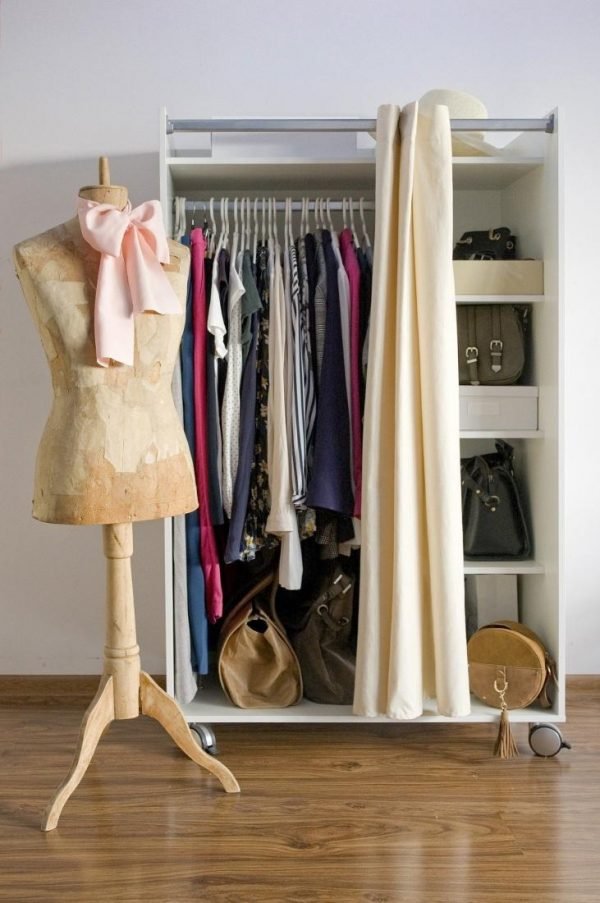
Curtains

That’s right; curtains aren’t just for hanging by the windows to block the sun. They can also be used as an alternative to closet doors, acting as doors while also giving your room additional flair.

However, being that curtains are made with fabric, you will eventually need to give them a good wash, especially if you don’t want the fiber to rot. Depending on the material as well, they can be vulnerable to things like getting too much sunlight in the room, causing the curtains to fade.

All that being said though, curtains are still a very good choice as a closet door if you can hang them. They are very budget-friendly, and there are a wide variety of them to choose from. In fact, you can even have made to measure curtains to fit the closet space as exactly as you want it to be.

Beaded curtains

Beaded curtains trace their root back to Asia, and it is not uncommon to see them as room dividers or in doorways in Asian homes or stores.

They function similar to curtains, as they will hang from your closet door frame to give the items inside “privacy”. Not complete privacy however, as unlike curtains; they don’t completely block your line of sight for the items contained in the closet. Still, they have a wider range of designs and variety to choose from and are also quite budget-friendly.

While they don’t share the problems of needing to be washed like curtains do, they do have a risk factor of being easily broken, as beads are simply

strung up together to form a coherent whole. Pets might gnaw at them, and children may curiously tug at them, so keep this in mind if you are considering having some beady doors.

Glass doors

Glass doors are perfect for people who just want a simple design to fit with their closet without having to bother with all the bits and pieces.

They can even come in transparent glass that allows you see inside your closet, or as reflective mirrors if you want the closet to be more private.

Being made of glass though, keep in mind that glass doors are very delicate and fragile. This means that you will need to handle your closet doors with extra care to ensure that you don’t accidentally shatter the glass. They can also get quite pricey, so you will want to think this one through.

Room Divider

Unlike the alternatives above, room dividers are not attached to closet doors. Instead, they are placed a slight distance away from the entrance. As a result, this makes them very flexible, as you can move them around wherever and whenever you feel like it, especially when you want to change the look of your closet once more. Finally, it also makes moving that much easier and convenient when you can simply pack your room divider up and bring it with you.

But they aren’t perfect. For starters, they are quite large, and demand a lot of space in your room. If your bedroom is small, a room divider might make

it feel more cramped than it already is. They also don’t offer much privacy, as they only block the frontal view of the closet and not the sides. Finally, they can get quite costly as well.

If you don’t mind those disadvantages, if you want to turn your closet into a walk-in version of itself, then a room divider will be perfect for you.

Pocket Door

Pocket doors are lifesavers for people who don’t have a lot of space in their homes, as this door can slide in and out of a wall with little issue. This gives the privacy and look of a regular closet door, while making the most out of the limited space in your home.

There’s a big catch though: You will likely need to rebuild some of your bedroom walls to fit it in, as it is unlikely that your room was built with pocket doors in mind. It can get quite expensive too.

Pocket doors are best utilized when building a new home, instead of remodeling an existing one, but if you don’t mind having to tear down your bedroom walls for a bit, you can make do with your current bedroom too.

Boring Home? Here Are Some Ways To Bring It Back To Life

Modern living room with designer sofa and coffee table. Wooden table set with plates and cutlery. Nobody inside

Living in your house for a long time can make your surroundings look drab sooner or later. What was once a bright and stunning home could become boring as you get used to its appearance and find nothing new or delightful to enliven the space. The wear and tear of years past can also chip away at a home’s novelty, not to mention its structural integrity.

Fortunately, you don’t need to make drastic changes to bring an aura of excitement and freshness back to your home. On the contrary, some simple changes can do the trick, and you won’t even have to spend too much time or money. 

To make your home lively again, here are some small but effective changes that are well worth trying:

  1. Change Up the Walls

The walls are the primary building blocks of a home. Not only do they provide support to the ceiling and roof, serve as dividers between rooms, and provide a barrier between you and the great outdoors. Walls can also be considered a canvas that can determine the look and feel your home exudes. 

More often than not, the walls are among the first things that can spell the difference between a lively, welcoming home and a dreary, humdrum one. They’re one of the most noticeable parts of a house, so changing them up can definitely do wonders. With your vision, along with a dash of creativity and diligence, here are some ways you can enliven your home through your walls:

  • Do Some Repainting

Sometimes, all it takes is a new coat of paint for your house to look good as new. With the right colors, you can make your space look brighter, roomier, warmer, and more inviting.

Solid white paint for your walls can give off a clean yet sophisticated look, especially if you couple it with a minimalistic setup. If you’re not a fan of white, some alternatives can be shades of gray or other off-white variants. 

Neutral tones, like cream or beige, can make a room feel warm and comfortable without being too vivid or heavy on the eyes. They work extremely well for older homes that have wood paneling. On the other hand, soft and cold tones, like pale or milky blue, or even desaturated cobalt or navy blue, can make a house feel playful without being too loud.

  • Change The Wallpaper

If you don’t have the time to paint, new wallpapers can work just as well. What’s great about wallpapers is that they can be more varied than paint when it comes to designs and patterns you can utilize. 

You can choose plain wallpapers or be a little more playful with those that have geometric or floral patterns. With wallpapers, bolder, more vivid colors may blend in better with your house’s aesthetics. Vintage designs can also give your house a unique and classy look. Just be careful not to select wallpapers that look too tacky.

Beautiful interior of modern room decorated with fairy lights

  • Hang Some Art

Sometimes, all a boring room needs is a spot of detail that can act as the center of attention. This is where a few art pieces hanging on your walls can come in handy. 

Some nice-looking wall art can come in the form of nature or abstract art, or even minimalist art, which can be the perfect decor for a modern home. Hanging wall art won’t only draw in your attention, but it can also serve as an accent piece that puts an otherwise bare space together.

  1. Add Some Greenery

Plants aren’t limited to just the yard or garden anymore. They can also work well as indoor accessories, breathing life back into what’s become a dreary old room. Aside from helping with air circulation, plants can also give your house that much-needed splash of color. Much like wall art, tall potted plants or small houseplants that are well situated within a particular room can serve as accent pieces or even centerpieces that can help put a room together. 

  1. Rearrange The Furniture

Bringing a boring house back to life doesn’t always mean adding or removing stuff. Sometimes, you have to work with what you have, and all you need is to move around a few items. Remember to maximize the space you have by cleverly utilizing corners or arranging your furniture in a way that complements the size of the room, as well as the shape of each item. Think of them as a puzzle, wherein each piece should fit well together. If you have a large space with no dividers, don’t be afraid to experiment by using your furniture as the means with which to set borders or achieve a sense of flow from one room to the next. 

  1. Get The Junk Out

Years of living in a house can also mean you’ve spent just as long to accumulate junk all around. Clutter can be heavy on the eyes and inevitably make a house look exhausting, instead of exciting or relaxing. Declutter your home and you’ll be surprised not only by how much space you actually have, but also by how refreshing your home can be once the rubbish is gone. Even small items, when taken collectively, can make a house feel too busy and cramped. If you want to bring life back to your house, get ready to part ways with stuff that you don’t need, or those that don’t effectively complement the space and setup you have. 

  1. Change The Lighting

A house can begin to look new again with some simple adjustments to the lighting. Literally brighten up your home by taking your lighting options towards more creative avenues. For instance, instead of settling for the usual white lights on a ceiling, try out pendant lights for the kitchen or wall lights for the living room. Stringing up festoon or fairy lights in bedrooms can give them that subtle charm, and opting for softer wall lights in bathrooms can mollify their cold and tiled ambiance. Moon lamps or Himalayan salt lamps can even act as centerpieces in what could be an otherwise tired space. 

Back To Basics

Large-scale renovations aren’t always the means to resuscitate a boring old house. Often, just a few clever and creative adjustments would suffice, and these don’t even have to be painfully complicated or expensive. In fact, making simple changes to the basic elements of a house, such as the walls, lighting, and furniture, can already lead to surprising and refreshing results. 


Is Your Home Ready For The Market? Let’s Find Out

Are you going to be selling your home any time soon? If that’s the plan, then there are some things that must be done before your home goes up for sale. The reason for this is that you are going to have a far easier time selling your home if it is in good condition and it looks a certain way. You may not like it, and you may not think that you should have to do so much to get your home ready, but you do, and that’s something you’ve just got to come to terms with. In this article, we’re going to be taking a look at some of the ways to know whether or not your home is ready for the market. Keep reading down below if you would like to find out more.

house

Repairs

The first thing that you’re going to need to do is handle all of the repairs. The big ones are the most important as most buyers won’t mind a couple of minor ones, though it may knock a small amount off of your asking price. You can’t really ask someone to pay full price for your home and then find that they’ve got to spend more money on repairing things. They might have blown their entire budget on the purchase and not have enough to complete them, and this isn’t nice of you to do so you should really make sure they are all done.

This is going to include anything big like problems with the roof, any leaking pipes and so on. But, it would also be a good thing to do if you could fill in any holes that you’ve got in the walls where you have had pictures up, and any problems that you notice. Keep in mind that your house will be surveyed, so if you think that you can get away with hiding something, the chances are that you can’t. It’s for this reason that it’s best to just get everything done before this happens.

Curb Appeal

Another thing that you should think about is the curb appeal of your home. When people see the outside, this is the first impression they get, and this is going to stick with them throughout the home. The only reason that you will be able to change their mind if the outside is horrendous, is if the interior is literally like wonderland. First impressions are super important, so you’ve got to make sure that the outside of your house doesn’t look like one of the slums from the TV shows that you see. 

To do this, you’ve just got to make sure that the grass is cut so that it’s not up to your ankles, that the gutters are cleaned out if there is stuff hanging over them currently, and just try to make it look pretty. Plant some flowers, add some decoration. Do something to make it stand out amongst a sea of other people who are also trying to sell their homes.

Show Home Standard

The final thing that we’re going to mention is that is should be at showhome standard. This means that everything should be clean and tidy, all completed to a high standard. If you want, you can hire a local mover to help you get all of your items out of the home, and into the new one, or into storage if you don’t have another place to go yet. Obviously, you can leave the things that you are always going to be using such as a sofa and the TV, but anything that is unnecessary should be out of the way.

If you’re not sure about how you can do this, then there are plenty of guides online. Or, you can look up pictures of show homes and see what they look like. You will notice that everything has a place, and everything is in its place rather than scattered around. You will also notice that it will be very minimal, so keep this in mind when you are getting the property ready.

We hope that you have found this article helpful, and now have a better understanding as to some of the things that will help you figure out whether or not your home is ready for the market. If you make sure that you have done the things on this list, then you will know for sure that your home is ready to sell. It’s not an easy process as there is a lot to get through, but once you’re finished, it’s going to be much easier to sell your home. Good luck, and we hope that you get the results that you’re looking for.

How To Repair A Concrete Wall In Your Garden

If your concrete block wall is in need of a repair then don’t panic. This is something that can occur after time due to the differing weather conditions and the mere wear and tear associated with all structures. If you notice a concrete block or several have begun to crack, make sure the gaps get filled in as soon as possible. 

This is one of the easier DIY tasks, yet if you do not feel confident, why not enlist a pro or even ask someone for a hand? 

You don’t need to spend a large sum of money on getting your block wall repaired, instead, why not consider doing the job yourself? Read on to discover exactly how to do so…

Before you start the process of repairing the garden well, you need to make sure the area itself is prepared. You will need to get all of the equipment needed for the task too. A lack of planning is where a lot of people go wrong with any sort of DIY task. You should make sure you use a reel mower to clear the area so that you have a working place that enables you to complete the task efficiently.

Now that you have ensured the area is prepared, here are the steps to follow:

Firstly you will need to ensure your concrete mixture is ready. Don’t forget how important it is to try and work fast. You don’t want the concrete to become hard too soon. 

Once the mix is ready, you should now pick up your trowel and put the mix whereby the missing mortar has occurred. Make sure you fill every gap necessary with your fresh concrete. Don’t forget the importance of a smooth edge. 

Once this has cured, you then need to repair any deep cracks through the use of adhesive caulk. This process needs to be done when the mixture and trowel are not substantial enough. Put the adhesive caulk into your caulking gun and ensure you squeeze until the substance fills up the cracks. 

And last but not least, another method works by combining concrete caulk and mortar. These again both need to go into the caulking gun. Once you have taken the tip of the tube off, it is advised that you start from the bottom and move up. You should do this in a sideways motion.

Hopefully one of the three methods mentioned in this article will help you. Just don’t forget to be quick whilst you work but also careful too. And, make sure you smooth out the edges no matter what substance you use! 

If you don’t feel confident repairing the wall yourself or you think that the damage is too extensive, it certainly makes sense to go down the professional route instead. After all, you can end up spending a lot more money in the long-run if you attempt to carry out the task yourself and you don’t really know what you are doing. It is never worth the risk.

Texture Design: How To Add Texture To A Small Space

Do you own your dream home? Are you in love with your property? Regardless of whether you answer yes to these two questions, you still won’t be able to resist sprucing up your house’s interior. After a while, the style you thought you loved becomes a little old and tired, and in need of a touch-up.

Thankfully, utilizing different textures is a fantastic way to add a new dimension to any room in the house, even if it’s small! Yep, the size doesn’t matter where texture is concerned because you can follow these top tips to transform your design strategy.

Rugs Over Carpets

Most people plaster the floor in carpet since it looks easy on the eye and feels good underfoot. However, too much of the same material will impact the balance of the room. Plus, some places aren’t applicable, such as the kitchen, where you need flooring that’s robust and easy to maintain. Therefore, rugs are the best option as you can downsize while keeping a rustic appeal. A 4×6 rug should fit into almost any space in your home, so there’s no reason to worry about the room’s specifications. All you need to do then is figure out how to break up the area to ensure it flows.

Layer, Don’t Clutter

The problem with small appliances and accessories is the urge to use lots of them to fill the space. A mistake is to assume that you can go overboard because they aren’t as big. Unfortunately, this plan results in a cluttered and messy home, which is the worst-case scenario. Instead, you want to compliment the fixtures with another texture. Wall art is the perfect example as it uses hard-to-fill space, and the long lines are different from the shorter, fatter angles of a sofa or armchair

Focus On New Spots

Your property’s rooms will be full of texture and charm, yet the spaces off them might look bare and cold. By targeting these features, you can instantly enhance the interior without worrying about clutter. The key is to make sure any additions are practical. For instance, a bench by the front door breaks up the monotony of a long corridor, and it also offers a place to sit and store your belongings. Alternatively, a coat rack will incorporate different textures through holding your coats, hats, and scarfs. There are several of these spots in every home, so don’t be afraid to focus on them.

Accessorize Furniture

Accessories are excellent at giving everyday items and pieces a different edge, as long as they aren’t similar. Using greenery, or any outdoor features should prevent this from occurring since hardly any household fittings have the same properties as plants and flowers. That’s why lots of property owners place them on coffee and side tables. For the bed, you can use an oldie but goodie – throw cushions and covers. With materials ranging from silk to wool and regular cotton, you shouldn’t run out of accessories to transform the boudoir!

If you’re creative enough, you shouldn’t find it hard to texturize any small space.

3 Ways To Make Your Dining Room More Elegant

All around the world, one of the most sacred activities across cultures and borders is cooking and inviting friends and family to your place for a delicious meal. No matter where you are from or who you are, this ancient tradition of sharing food and enjoying each other’s company will never go out of style. If you adore dinner parties, you may be on the lookout for ways to chic-ify your dining room, making it the perfect spot for dinner guests to relax and have a great evening. 

In this blog you will find tips on how to make your dining area more elegant by adding subtle touches to your existing space. Get ready for the deluge of compliments you’ll receive after following this guide – and let’s get started!

  1. Draw the eye upwards

One tip that is regularly shared by architects is learning how to draw the eye up. This means designing your space to make it seem bigger and lighter by exploring the verticality of the room. One way to do this is to treat your ceiling like a fifth wall. What this means is to not disregard your dining room ceiling as a blank space, but to make it work for the whole space. This could be by hanging tasteful vine plants in the corners, or adding a Murano Glass Chandelier

 for an extra classy touch. 

  1. Invest in beautiful cloth napkins. 

Cloth napkins might seem more trouble than they’re worth, especially if you have young kids who go through ten napkins per mealtime! Nevertheless, investing in special-occasion cloth napkins will add a beautiful, subtle touch to your dinner table when guests come over. You could go for hand-sewn patterns, classic linen, or deeper, richer colors to create a wintry ambiance at your dinner party – discover luxury table linen to elevate your dining experience and impress your guests. In addition, heavy, rich cloth napkins add substance to your table and are bound to get many compliments when friends and family come over

When buying cloth napkins, ensure you read the label carefully to avoid shrinking them in the washing machine.

  1. Gorgeous centerpieces

Centerpieces aren’t exactly an everyday thing, but for occasions when guests are coming to town, a centerpiece is a stunning and special addition to your table. The centerpiece doesn’t necessarily have to consist of fresh-cut flowers, although those are a classic choice with which you can’t really go wrong. Here are some modern centerpiece ideas for your dinner party table. 

  1. An arrangement of candles. To add to the ambiance of your dinner party, you could create an arrangement of unscented candles which add a delightfully sultry touch to the evening.
  2. A vase of odorless plants. These stems could be green bamboo, “white bunny tail” dried flowers, large tropical leaves or a clear vase full of petals. 

Although coronavirus has led to an inability to have dinner parties too often, soon these days will be over and we will be able to invite friends to our home once more. When that time comes, be prepared by using this dining room decor guide!


Actionable Ideas For Homeowners To Optimize Heating Oil Costs

As winters approach and outdoor temperatures drop, winterizing your living space would be a top priority. When it comes to getting your home ready for the tough season, heating oil costs often have you worried. Prices tend to increase during the colder months due to growing demand, so you can never be too sure about the budget. But home heating is something you cannot manage without, so you will have to bear the brunt of the pricing fluctuations. The good thing, however, is that you can take some measures to optimize the costs and keep your monthly bills under control. Here are some actionable ideas that can help homeowners to keep a check on these costs.

Maintain your heating system

A well-maintained heating system will deliver the best possible efficiency and performance. It means that you can get more with less, which translates into a reduction in fuel consumption. Regular maintenance checks throughout the year would help, while you should call a professional to have a good look at the system before the winter chill sets in. If there are any issues with the system, addressing them on time can keep the oil consumption at optimal levels throughout the season.

Focus on good insulation

Proper insulation of your living space cuts down the pressure on the heating system. Moreover, you will probably need to run it for fewer hours if the place is warm enough. You will end up with lower fuel consumption and costs. Even before the season begins, have a good look at drafts and holes and cover them to prevent cold winds from entering. Fix the windows, vents, and attic floors for insulating the home thoroughly.

Shop heating oil in bulk

The smartest way to economize fuel costs is by shopping in bulk, particularly when the prices are lower during the hotter months. But this is possible only if you have adequate storage arrangements. The best thing you can do is find affordable energy providers in your area and check their pricing and delivery fee structures. Keep an eye on the fuel price and order when it runs low. Some sellers offer guaranteed prices after you order, so you will not have to pay more even if the price goes up before delivery.

Set the thermostat lower

Surprisingly, setting the thermostat lower can help you save up significantly on your monthly heating oil costs. It lowers energy consumption, which will obviously cut down the expense. However, adjusting a manual thermostat may be a challenge as it does not align with the environmental changes automatically. Upgrading to a smart thermostat is the best thing you can do this winter. The programmable thermostat lets you adjust the settings for ensuring the lowest possible heating oil consumption.

Winter heating need not cost a fortune and neither should it be stressful for homeowners, provided that you are vigilant about heating oil consumption and costs. It is equally vital to choose a provider you can trust, even if you need same-day delivery and emergency services.