
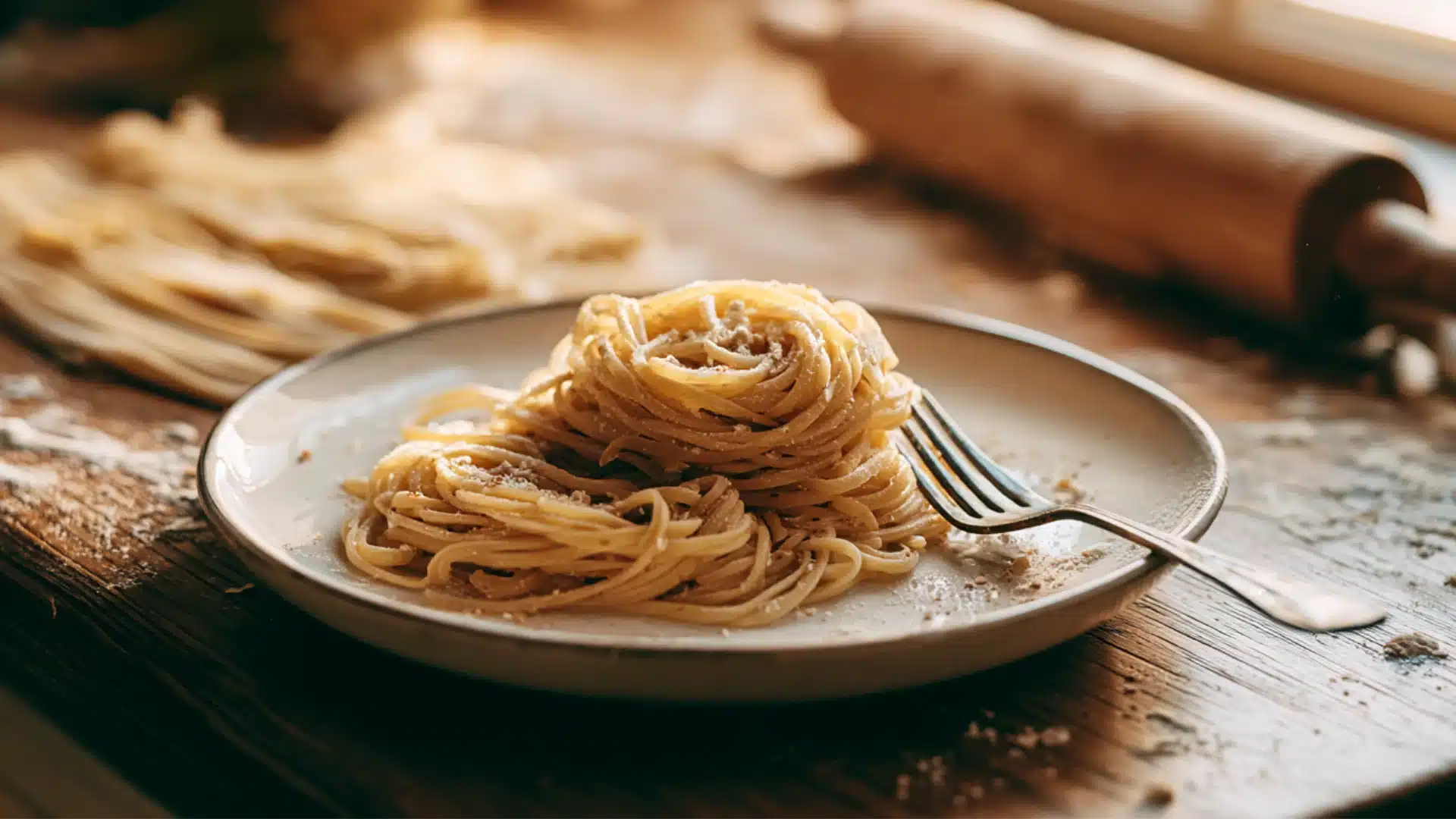

Spaghetti from the store works well. However, homemade spaghetti noodles have a completely distinct flavor; they are softer, fresher, and well worth the effort.
Making fresh pasta from home with just flour and eggs takes less than an hour.
With or without a pasta maker, these instructions will help you through the entire process step by step. You’ll also get advice on drying and cooking times for homemade spaghetti noodles.
One factor is nearly always the difference between dough that works and dough that tears: resting time. Don’t miss it.
Ingredients & Equipment Needed for Homemade Spaghetti Noodles
- Two cups (250g) of all-purpose flour, plus more for dusting
- Two big eggs at room temperature
- One room-temperature egg yolk
- Half a teaspoon of fine salt
For freshly cooked spaghetti, 00 flour is the ideal choice. Compared to all-purpose flour, 00 flour is more finely ground, which gives the dough a smoother, silkier texture. This results in firm-biting, soft, and smooth noodles.
Equipment
- Rolling pin
- A sharp knife
- A large cutting board or a spotless, level surface
- A large boiling pot
- Bench scraper (a stiff spatula can also be used instead)
- Pasta maker
- Attachment for a spaghetti cutter
All you actually need is a sharp knife and a rolling pin. Everything else speeds up the task rather than improves it. Click to learn to make gluten-free pasta at home.
How to Make Homemade Spaghetti Without a Pasta Machine?
Making delicious spaghetti doesn’t require any special tools. All you need is a sharp knife and a rolling pin.
Step 1. Mix and Knead Until the Dough is Smooth
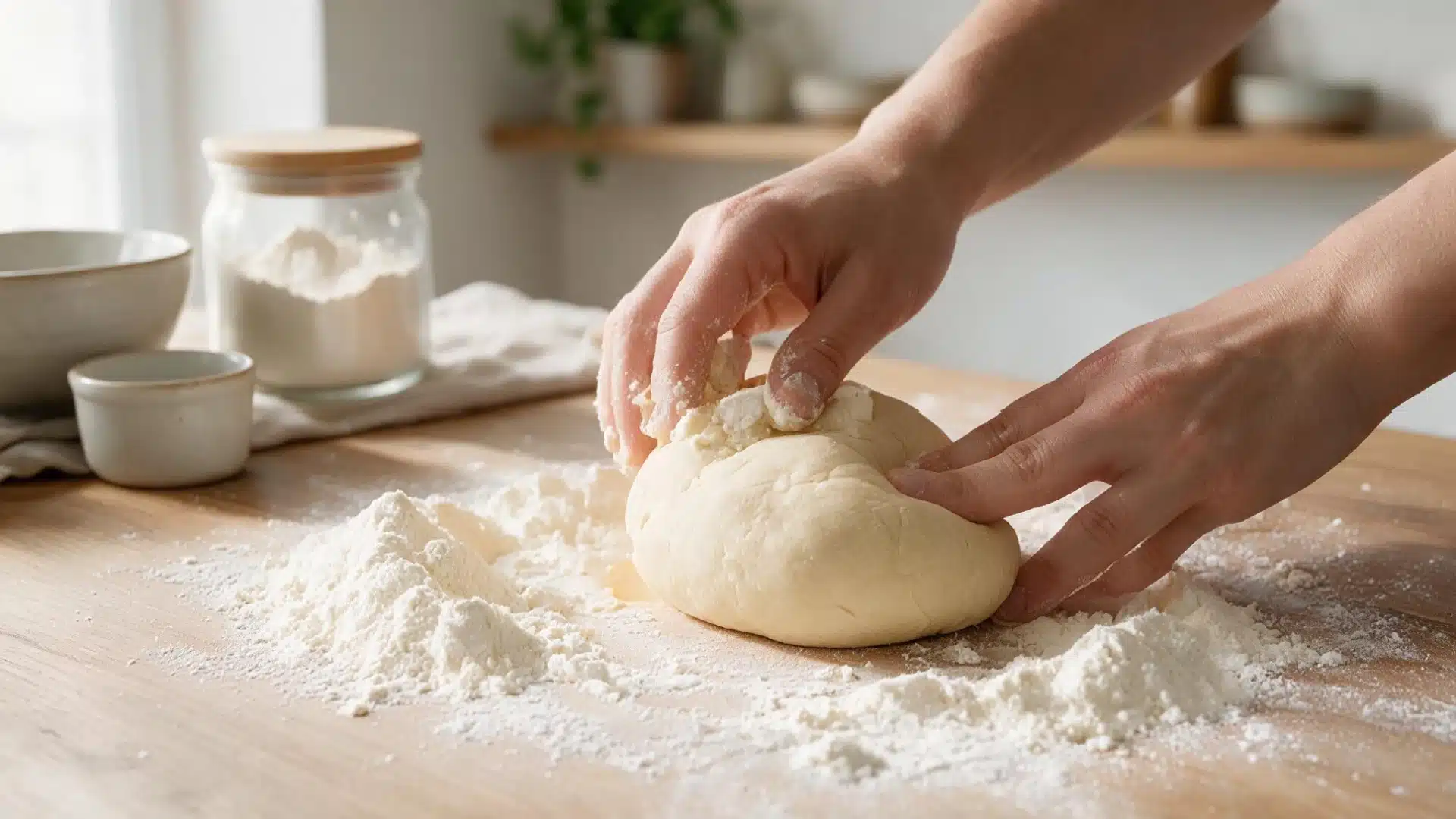
Transfer the flour onto a spotless work area. Make a mound out of it. Create a large well in the middle. Crack the eggs into the well. Put the salt in there.
Beat the eggs in the well with a fork. As you beat, gradually draw in the flour from the edges. Continue until a shaggy, rough dough is formed. Turn to your hands. Form the dough into a ball.
Knead for 8 to 10 minutes now. Using the heel of your hand, push the dough aside. Refold it in your direction. Make a quarter turn. Do it again.
The dough should feel neither sticky nor dry, but rather smooth and slightly tacky.
Add one teaspoon of flour at a time if it adheres to your hands. Before adding additional flour, work it in completely.
If the dough tears when you press it, it needs more kneading. Give it 2 more minutes, then check again.
Step 2. Why Resting the Dough is NOT Optional
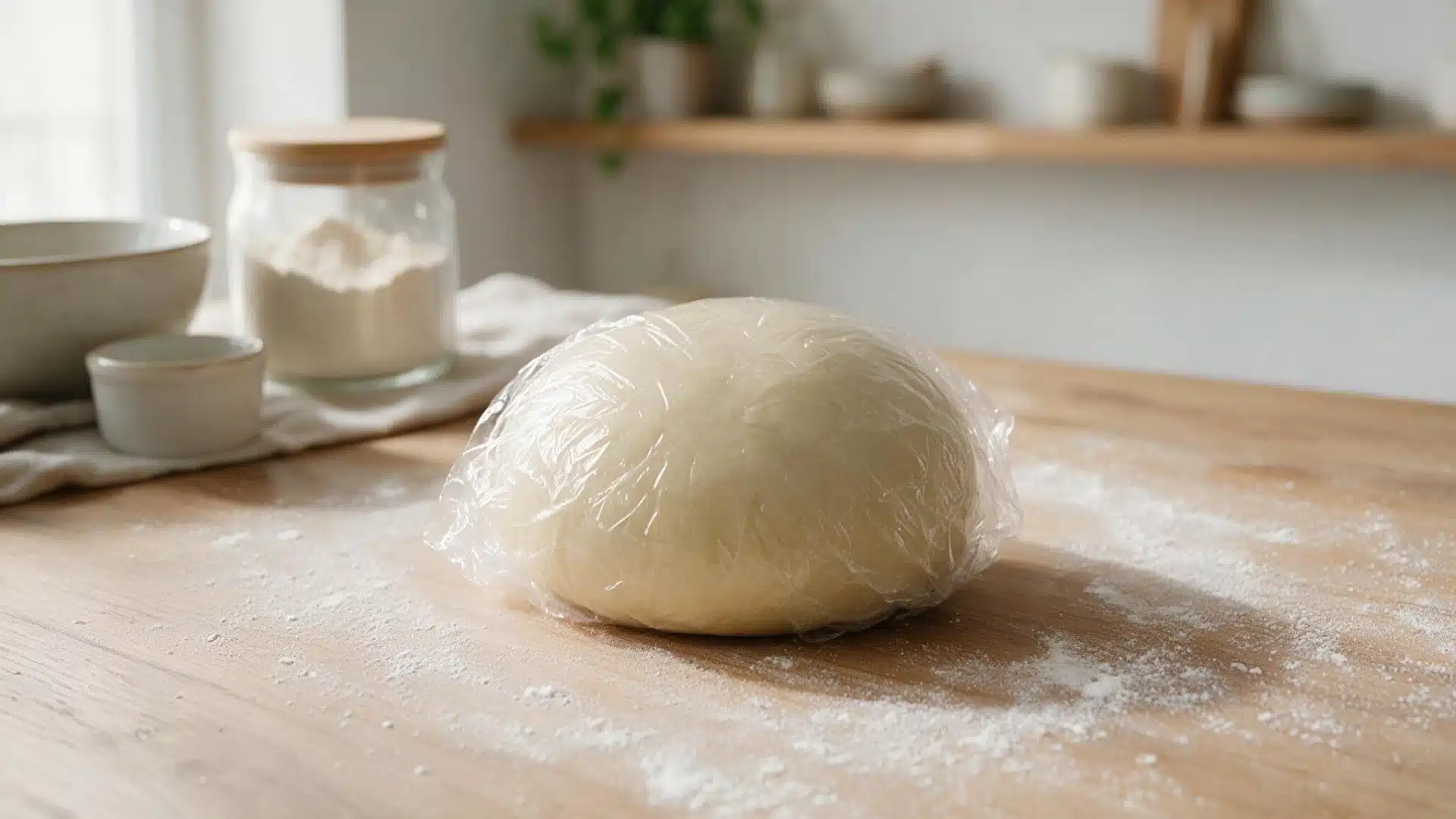
Wrap the kneaded dough tightly in plastic wrap. Let it rest at room temperature for half an hour. More than most people realize, this stage is crucial.
The gluten relaxes as you rest. Every time you attempt to roll the dough thin without it, it bounces back. You wind up battling it the entire time. It rolls out easily and stays in place after resting.
The resting time makes a difference. Don’t miss it.
Step 3. Roll it Thin Enough to Work With
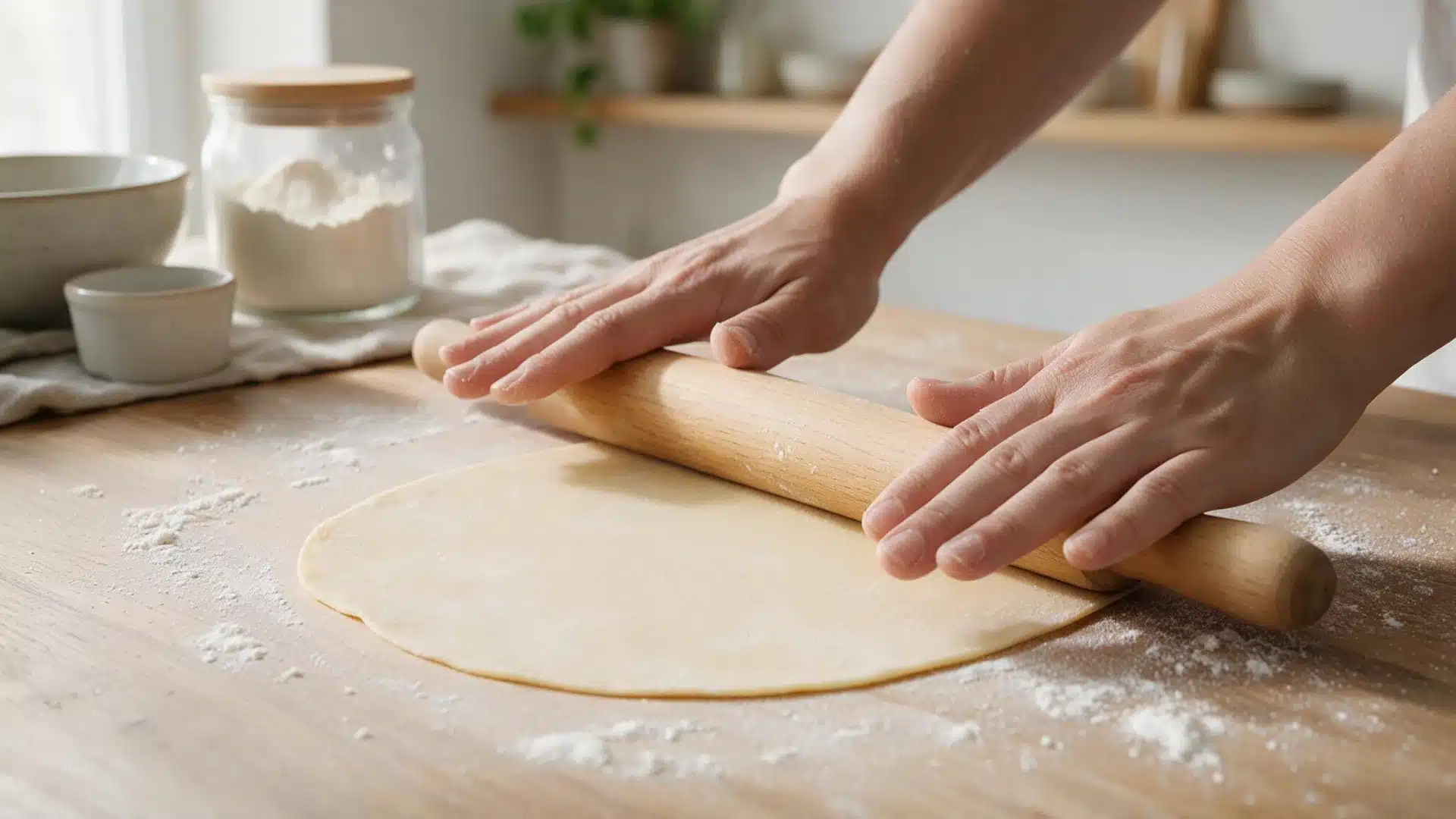
Sprinkle flour on your surface. After resting, cut the dough into two equal pieces. Take one piece at a time. Keep the other one wrapped.
Form the dough into a smooth, thin sheet. Aim for a thickness of 1-2 millimeters. Raise the sheet toward the direction of a light source. Your hand should be nearly visible through it.
As you roll, dust the dough and the surface. This prevents it from adhering to the board.
Step 4. Cut the Noodles by Hand Without a Special Tool
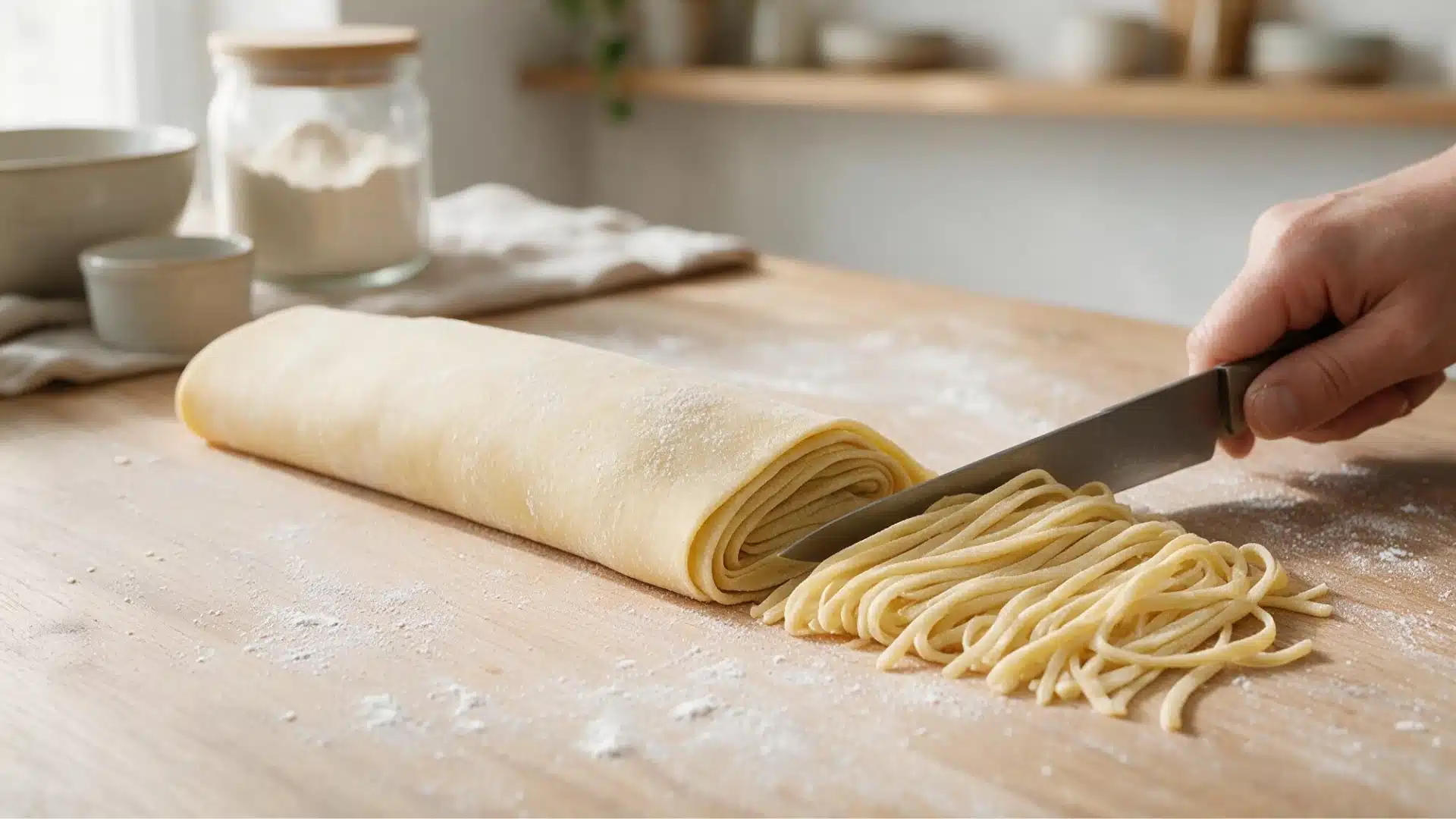
Lightly dust the rolled sheet with flour. Form it into a flat log shape by rolling it loosely. Using a sharp knife, cut across the roll. For regular spaghetti thickness, make cuts about 2 mm wide.
As soon as you cut the noodles, shake them out. Separate them right away. Gently toss them in a small amount of flour. On a surface dusted with flour, lay them flat or twist them into loose nests.
If noodles stick together after cutting, add more flour and toss right away. Once they dry stuck together, they won’t separate cleanly.
How to Make Homemade Spaghetti With a Pasta Machine?
The uncertainty surrounding thickness is eliminated using a pasta machine. The process goes faster, and each sheet comes out evenly.
1. Prepare the Dough Before it Hits the Machine
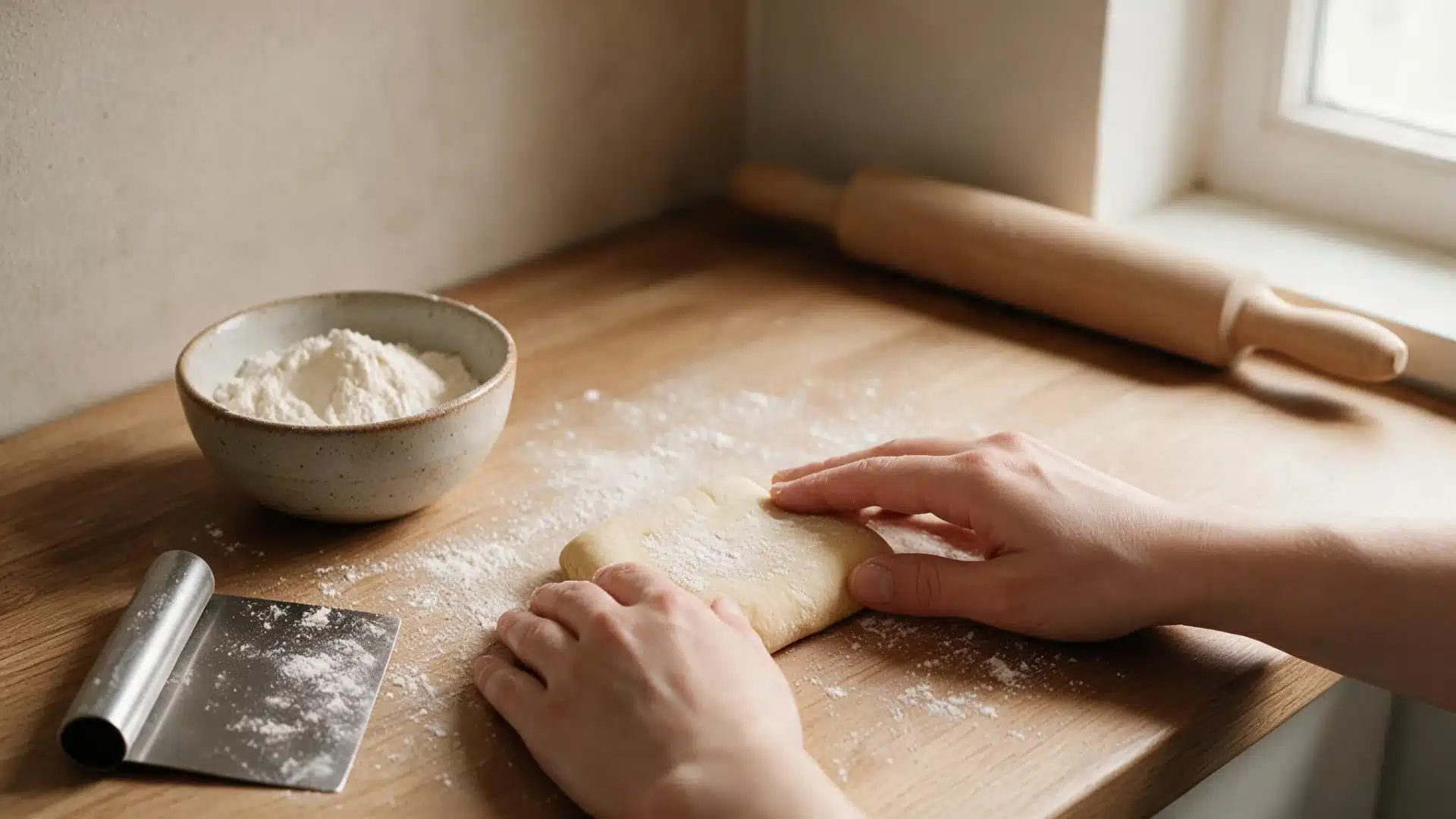
The dough recipe and rest period should be the same. Flatten the dough by hand before putting it through the machine. Form it into a rectangle about 1 cm thick. This prevents it from folding or jamming during the initial pass.
Before each pass, lightly dust both sides with flour.
2. The Right Thickness Setting for Spaghetti
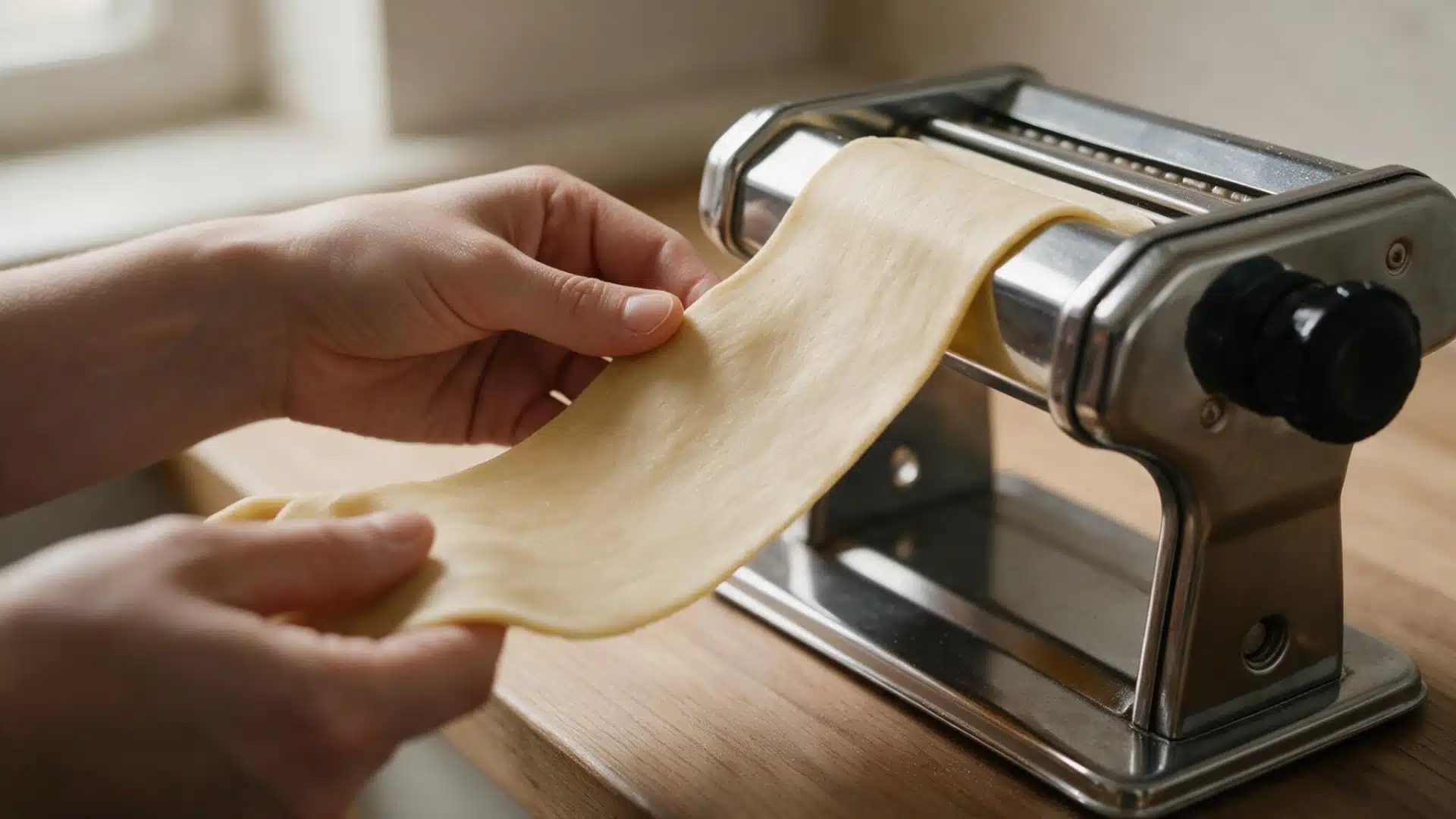
Pasta machines typically feature settings ranging from 1 (thickest) to 7 or 9 (thinnest). Run the dough through twice at each setting, starting with setting 1. Don’t move from setting 1 to setting 5 all at once; instead, go down gradually.
Stop at setting 5 or 6 for spaghetti. This results in a 1.5–2 mm sheet. The noodles become brittle and difficult to manage when they get thinner.
3. How to Feed Dough Through Without Tearing it
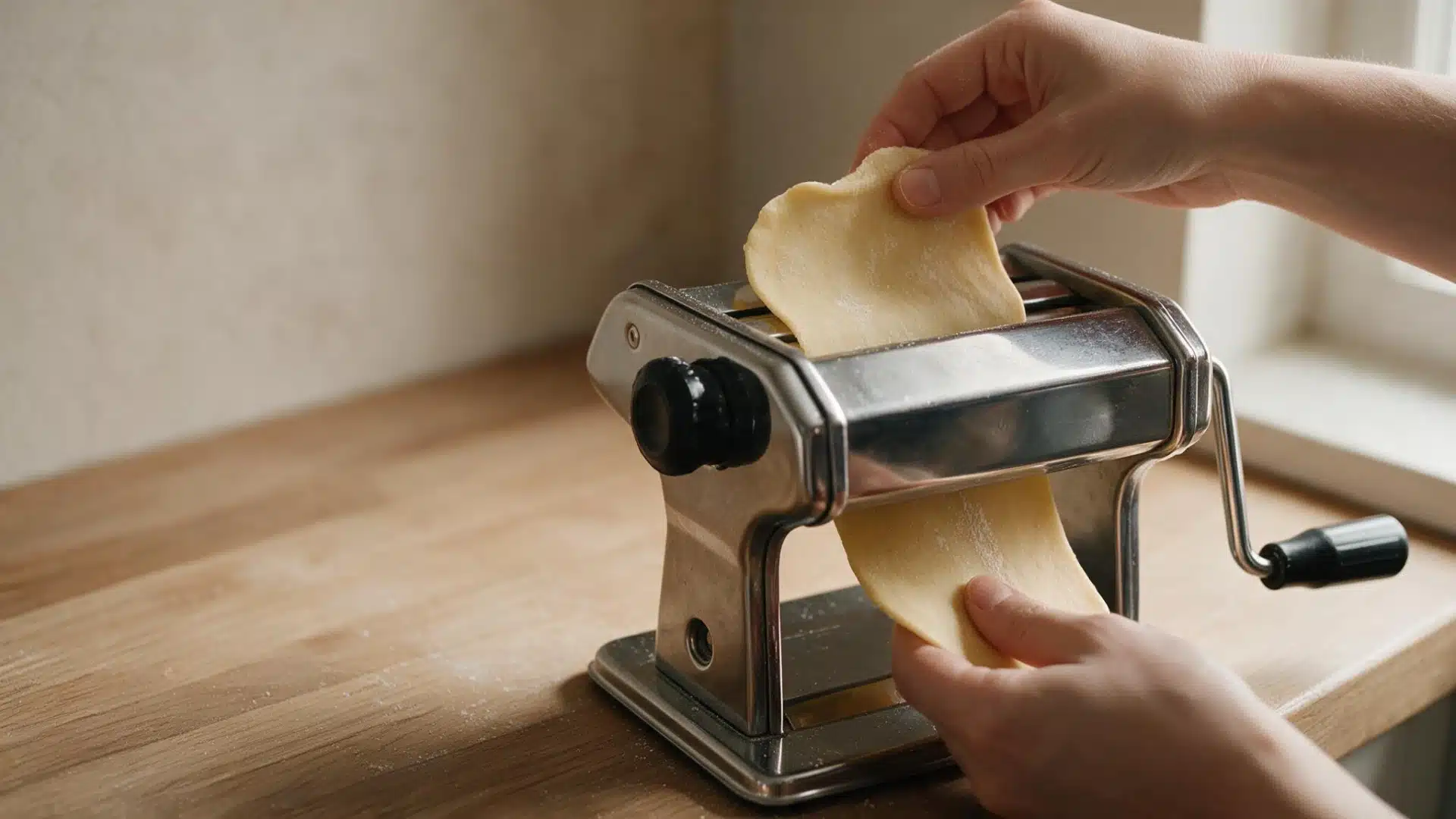
Using one hand, feed the dough in. As it emerges from the back, guide it with the other hand. Avoid stretching or pulling the dough. Let the rollers do the work.
Fold the sheet back together if it rips during the pass. Try it again after running it at a broader setting. Tearing typically indicates that the dough is either too cold or too dry.
4. Catch and Separate Noodles Before They Stick
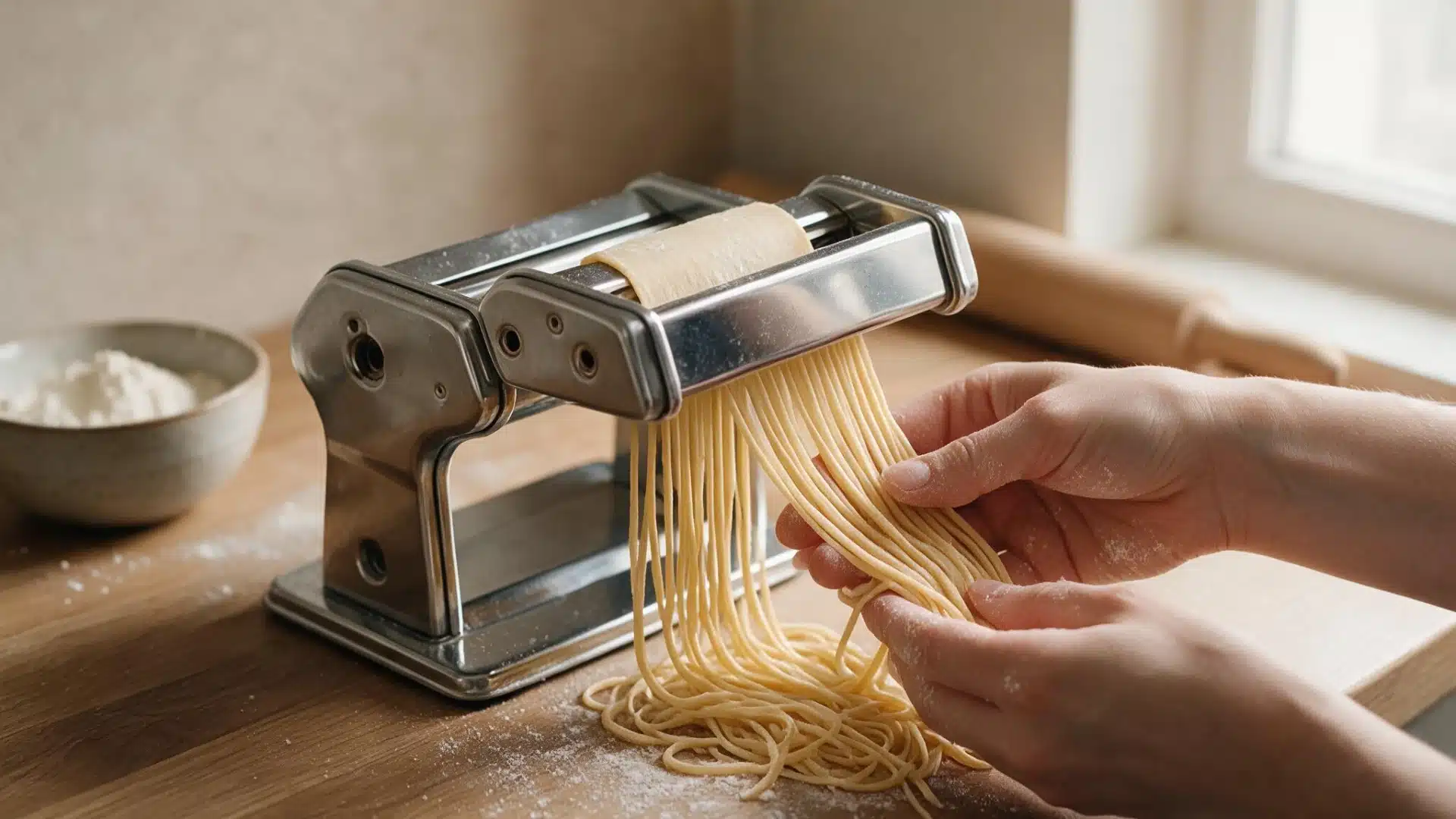
Use the spaghetti cutter attachment once you’ve achieved your desired thickness. Slowly feed the sheet through.
As the noodles emerge from the opposite side, catch them with one hand. Immediately separate them and mix in the flour.
If you don’t have a cutter attachment, apply the knife technique from the last part to hand rolls.
What the Pasta Dough Actually Needs (Egg or Water or Both)?
Eggs are used to make fresh spaghetti dough. The proper ratio is roughly one egg for every 125g of flour, plus one extra yolk for richness. The yolk contributes fat. This gives the noodles a beautiful yellow hue, texture, and richness.
You can make dried semolina pasta with a water-only dough. Eggs produce better results for freshly prepared spaghetti, including firmer texture, richer flavor, and noodles that withstand sauce.
Use eggs that are at room temperature. The dough starts hard and uneven because the eggs are cold.
Basic Pasta Cooking Times
Compared to dried spaghetti from a box, freshly made spaghetti cooks much faster. The difference between flawless and mushy noodles is time.
Store-bought dried pasta takes much longer to cook than freshly made spaghetti. The method of storing the noodles before cooking determines the timing.
- Fresh (just made): boil salted water for two to three minutes.
- Dried handmade (completely dry): boil salted water for 8–10 minutes.
- Frozen (uncooked): Cook right out of the freezer, adding one or two more minutes.
Serve These With Homemade Spaghetti Noodles
The flavor of freshly prepared spaghetti is superior to that of dried pasta. It gets even better with the proper sides and sauce. This is what works.
Tomato Sauce
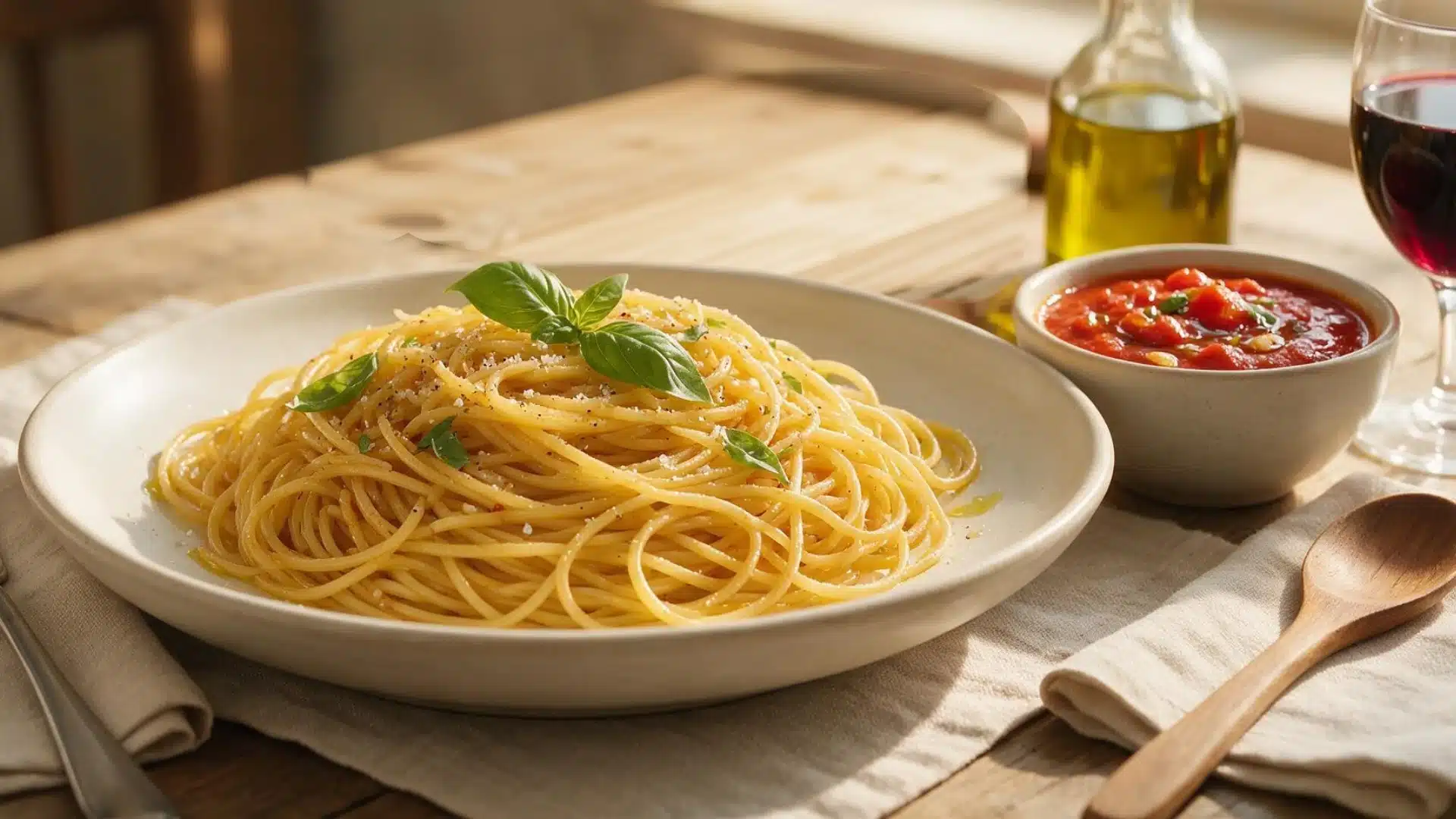
Fresh pasta pairs best with a basic tomato sauce. Use high-quality canned crushed tomatoes. Add garlic, olive oil, and a dash of salt, and cook for 20 to 25 minutes.
It should be thick enough to cover a spoon’s back. Add fresh basil at the very end, not while the food is cooking.
Fresh noodles easily absorb sauce. Just before serving, not before, toss them together.
Meat Sauce (Bolognese)
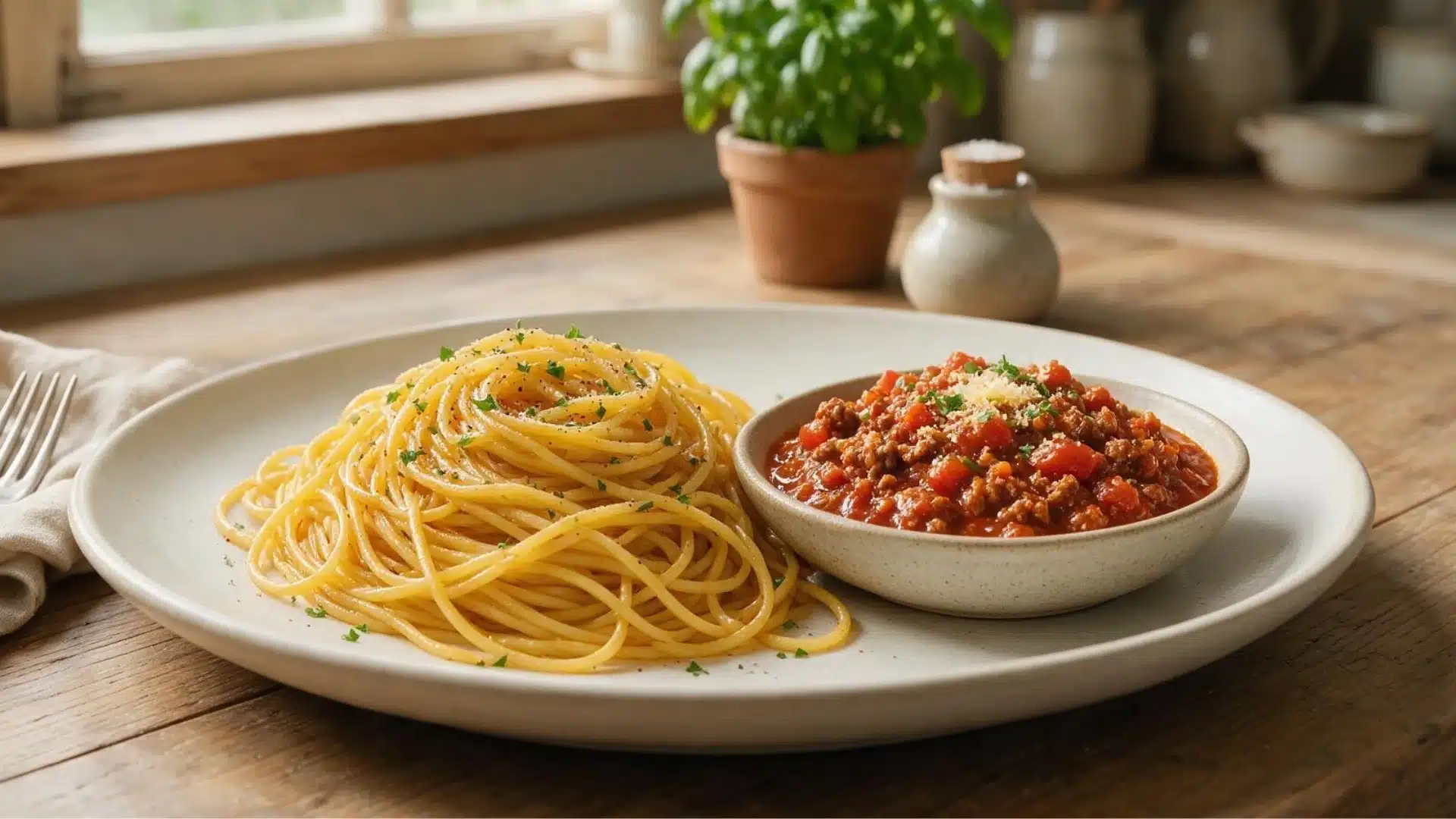
Homemade spaghetti is a perfect match for bolognese. For optimal flavor, use equal amounts of both beef and ground pork. Before adding the tomatoes, brown the meat thoroughly.
During the final ten minutes of cooking, add 60 milliliters of whole milk.
Simmer the bolognese over low heat for at least an hour. It tastes better the longer it cooks.
Side Dishes to Serve with Noodles
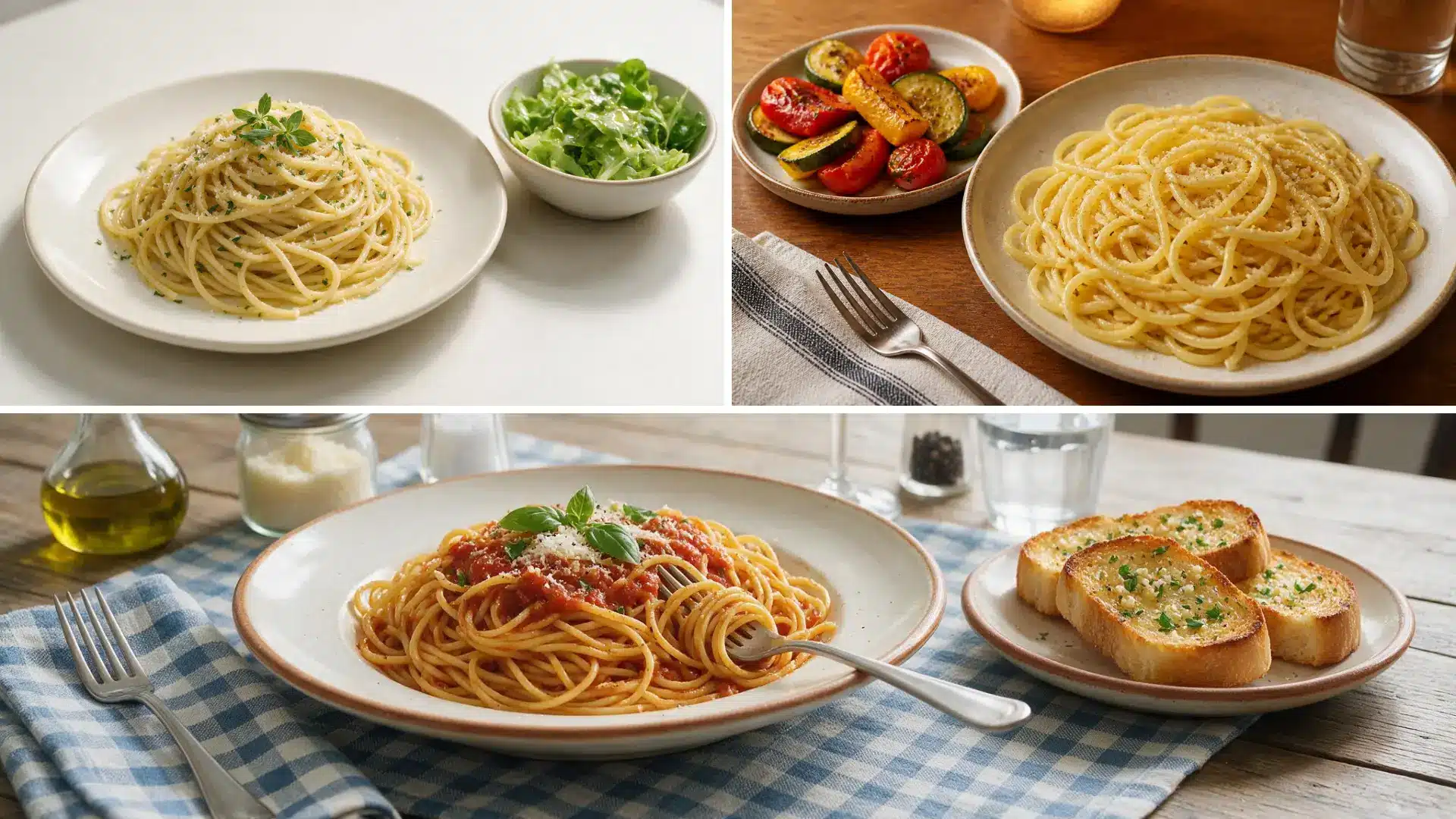
The dinner is finished with a few straightforward sides that don’t overpower the pasta.
- Garlic Bread: Toast thick pieces of sourdough with butter and garlic. Serve hot with the pasta.
- Green salad: The richness of a beef sauce is countered by a straightforward salad dressed with lemon.
- Roasted vegetables: Bell peppers, cherry tomatoes, or zucchini roasted for 20 minutes at 400°F (200°C) complement any sauce.
Make sure the sides are light. The primary attraction is the pasta.
Conclusion
Three factors are essential for making homemade spaghetti noodles: the proper dough consistency, adequate rest time, and sufficient flour when cutting. Both a machine and the hand-roll method are equally effective.
It takes about an hour to make the dough from scratch, and just two to three minutes to cook once it’s fresh.
Now you have everything you need to build a good batch from scratch, including the complete process and the solution to every typical error.
Frequently Asked Questions (FAQs)
1. Can You Make Homemade Spaghetti Without Eggs?
Yes. Replace eggs with water (about 90 ml per 200g of flour).
2. Can You Make the Dough Ahead of Time?
Yes. Refrigerate wrapped dough for up to 24 hours before rolling.
3. How Do You Make Homemade Spaghetti Noodles from Scratch?
Mix flour and eggs, knead the dough, let it rest for 30 minutes, roll it thin, then cut.