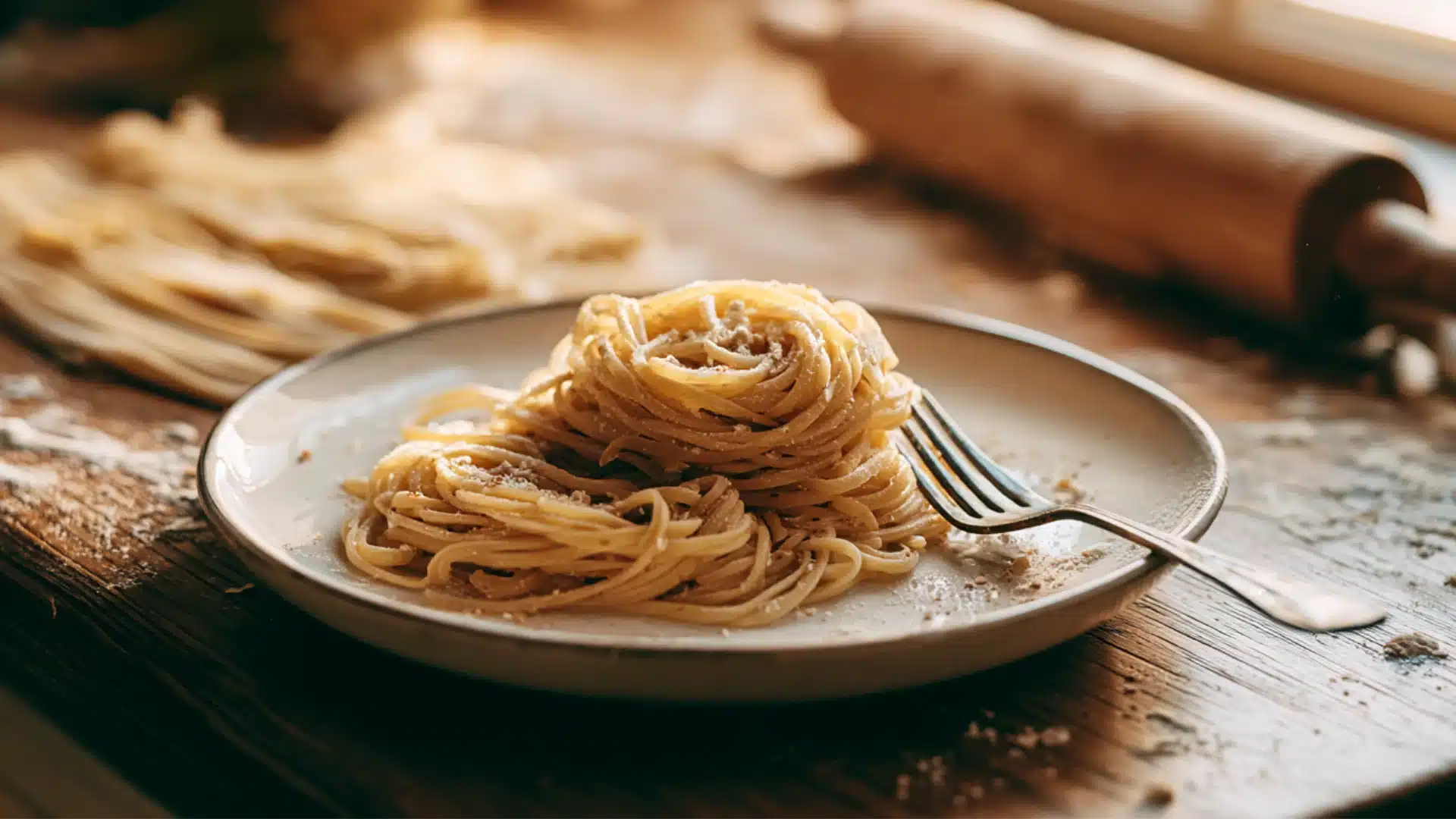

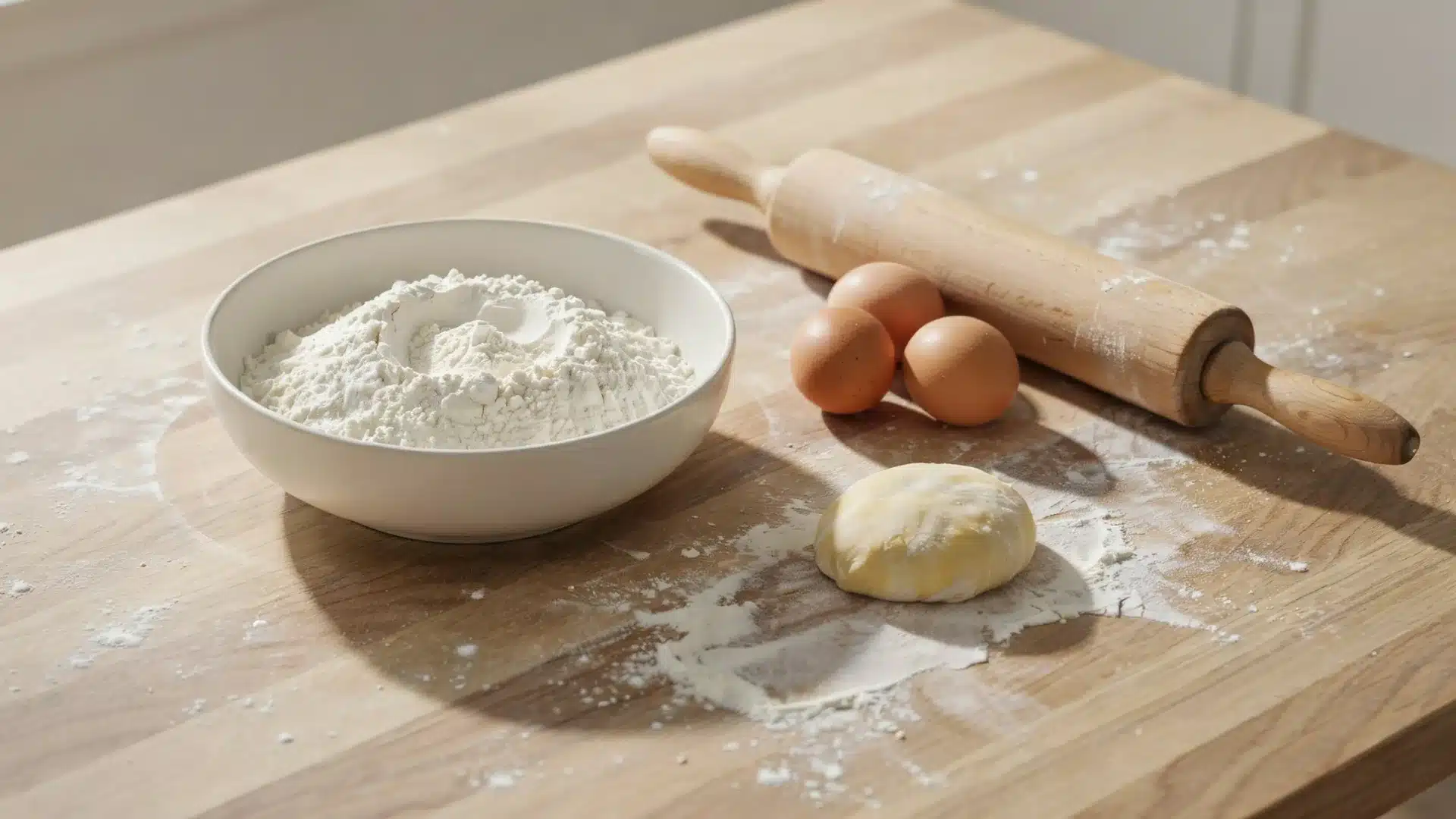

Making pasta from scratch seems easy. Until the dough becomes tough, rips, or sticks, the flour is usually the issue, and one poor decision can affect everything.
00 flour is the finest option. Because it is finely ground and low in protein, the dough is soft and rolls without resisting.
The best flour for homemade pasta is covered in this post.
You’ll find which flour is best for each kind of pasta. It includes everything from hand-shaped orecchiette to rolled tagliatelle. It also explains why grind size and protein are more important than most recipes indicate.
Best Flour For Homemade Pasta
Italian 00 flour is ideal for making pasta at home. Its low protein level (around 8–9%) and fine grind result in soft, smooth dough that rolls out with ease.
Semolina flour is a superior option for chewier pasta. Although it requires a bit more work to get perfect, all-purpose flour also works.
Why 00 Flour is the Standard Pick?
The most popular flour for fresh pasta is Italian 00 flour. The “00” denotes the best grind in Italian flour categorization.
In On Food and Cooking, Harold McGee claims that finer milling produces more consistent dough. It doesn’t rip when it rolls thin.
There is about 8–9% protein in 00 flour. There is less gluten when there is less protein. Dough with less gluten is softer and more pliable. The majority of fresh pasta shapes require that suppleness.
The main reasons 00 flour is effective:
- Rolls out thin without rebounding
- Yields a silky, smooth finish.
- Swiftly and uniformly absorbs the egg.
- Suitable for the majority of fresh pasta forms
The rest period following kneading is hurried in most recipes. Don’t—covering the counter for 20 to 30 minutes allows the gluten to relax fully.
Click to make gluten-free pasta dough at home.
Other Types of Flour for Homemade Pasta
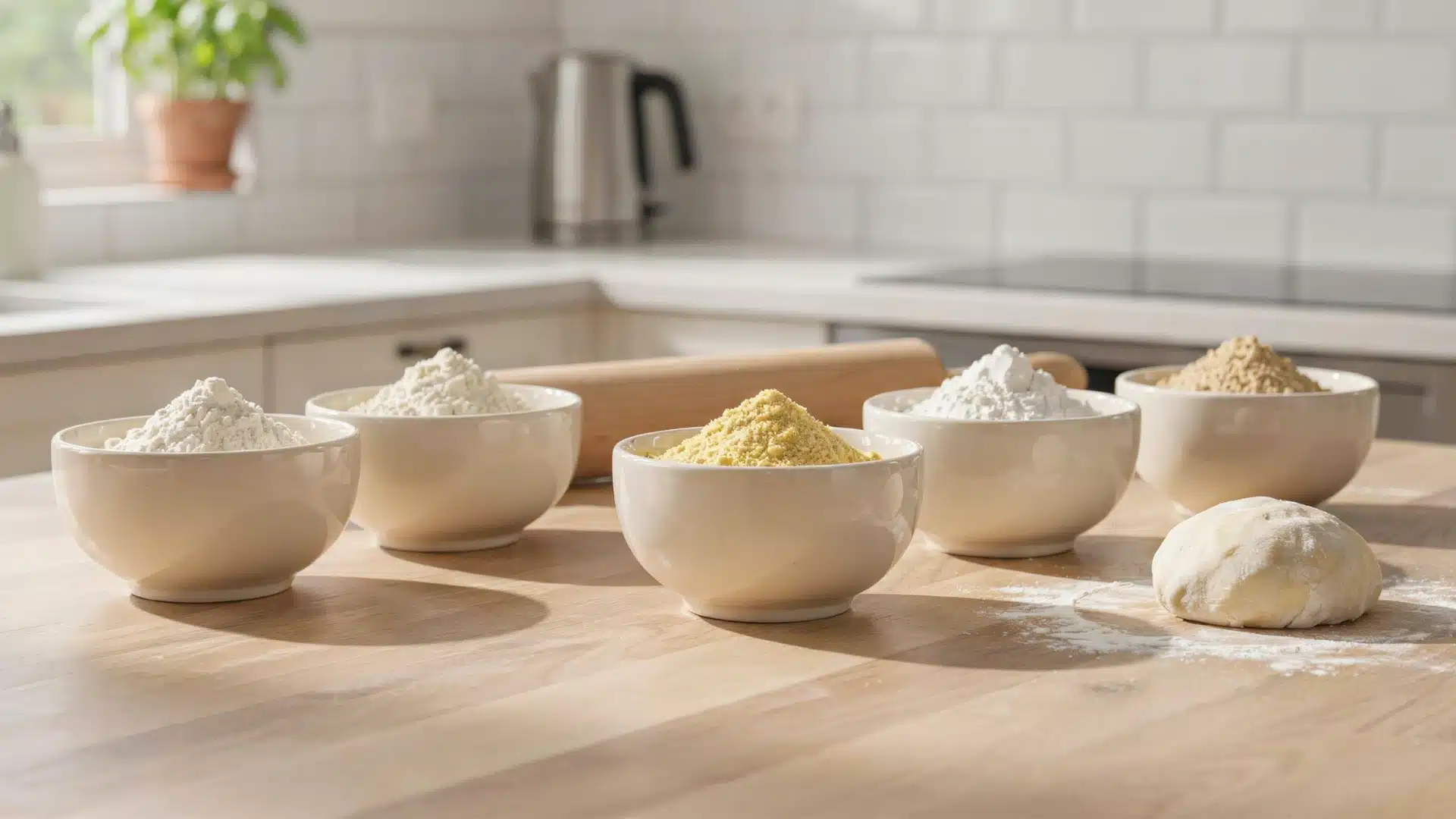
Once you combine flours with eggs and begin kneading, each flour behaves differently. They are distinguished by two factors: grind size and protein content.
These are the primary choices that go beyond 00 flour.
Best for Traditional Italian Pasta: Semolina Flour
The traditional choice for traditional Italian forms is semolina. According to the USDA database, it has 12–13g of protein per 100g, which is greater than 00 flour.
When shaping pasta on the board, the coarser grain helps your hands grip. Because of this, it works well with pressed forms like cavatelli and orecchiette.
Anticipate a richer, wheaty flavor and a harder bite.
Best Budget Option: All-Purpose Flour
Most kitchens already have all-purpose flour, saving you a separate trip. Its protein content is slightly greater than 00, ranging from 10 to 12%.
According to the USDA, the average is 10.3g per 100g. The dough becomes stiffer and requires a little more kneading. Thicker slices like pappardelle and cooked pasta also benefit from it.
Best for Chewier Pasta: Bread Flour
Of all the flours, bread flour adds the most chew. The dough bounces back as you roll because it contains roughly 12 to 14% protein.
Before rolling it thin, let it rest for 30 to 40 minutes. To make it softer, add one teaspoon of olive oil every 100g. It works better with chewy, structural spaghetti than with soft, fresh sheets.
Choosing Whole Wheat Flour
Whole wheat adds a nutty taste and a little extra fiber. The dough naturally becomes dry and crumbly because the bran breaks through the gluten.
Please avoid using more than 30% whole wheat combined with all-purpose or 00. It keeps together with a teaspoon of olive oil per 100g. It also produces the group’s healthiest pasta.
How Does Grind Size Affect Texture in the Finished Pasta?
The size of the grind determines the rate at which flour absorbs liquid.
Fine flour, such as 00, absorbs eggs easily, and smooth dough forms quickly.
Semolina and other coarser flours absorb more slowly. The pasta’s surface becomes a little rougher as a result.
It’s not a flaw because the texture is rough. Instead of sliding off the noodle, it helps the sauce stick to it. This explains why rigatoni and other semolina-based forms retain rich sauces so well.
What Flour Protein Content Actually Does to Your Dough?
The amount of gluten that develops during kneading is directly influenced by protein content. There is more structure and chew when there is more gluten.
Dough with less gluten is softer and easier to roll. You can choose the right flour every time if you know this one truth.
8–9% Low-Protein Flours, Such as 00 Flour
- Make a supple, soft dough.
- With little resistance, roll thin.
- Ideal for fresh spaghetti made with eggs
12–14% High-Protein Flours, Such as Bread Flour
- Please make the pasta chewier and more structured.
- More kneading and a longer rest period are required.
- Ideal for extruded or dried pasta
It has been stated that the average protein content of all-purpose flour is 10.3 g per 100 g. At 12–13 g, semolina flour runs higher.
However, its behavior in the dough is altered by its coarser grind.
Best Flour Matched to the Pasta You’re Making
Your choice of flour should be based on the shape you’re creating.
Hand-pressed shapes require a different type of dough than thin, rolled sheets. Here’s how to match the spaghetti on your board with the flour.
Fresh Egg Pasta: Pappardelle, Fettuccine, and Tagliatelle
Dough for rolled pasta must thin without resisting. Here, 00 flour is the best option. You may get sheets down to 1-2 mm without ripping because of its suppleness.
For each egg, use 100g of flour. An all-yolk recipe yields richer, more golden pasta, claims Bon Appétit. In boiling water, it maintains its shape better.
Pasta with Filling: Ravioli, Tortellini, and Agnolotti
Thin but robust sheets are necessary for filled pasta. If it’s too soft, the filling will show through. The edges won’t seal, and it’s too rigid.
This works great with 00 flour. Sheets have just the right amount of grip when 20–30% semolina is added to the mixture. Before you seal and cut, the filler remains in place.
Hand-Shaped Pasta – Cavatelli, Orecchiette, Gnocchi Shells
These shapes don’t get rolled thin. They get pressed and dragged across a board. For hand-shaped pasta, semolina flour is the better choice.
Semolina’s coarser texture gives your hands the grip to shape the pasta without sticking. The finished pasta holds thick sauces like lamb ragù much better than smooth 00-based pasta.
Lasagna Sheets and Baked Pasta
For baked pasta, strength matters more than delicacy. 00 flour or all-purpose flour both work. The pasta gets layered, sauced, and cooked for 30–40 minutes in the oven. A slightly firmer sheet won’t turn mushy.
Which is Actually Better: Semolina or 00 Flour?
Before preparing their first batch, the majority of home cooks inquire about this contrast. Although both are good options, they cannot be used interchangeably. What you’re making will determine the best choice.
Bite, Texture, and What Each Flour Produces
00 Flour Yields
- Smooth, soft dough
- Easy-to-roll thin sheets
- The egg comes through with a mild flavor
Semolina Flour Yields
- Chewy, firm pasta
- A surface texture that is a little harsher
- A more robust, wheaty taste
When compared side by side, the differences are evident. Pasta made with 00% flour is softer. Pasta made with semolina has more bite.
It all depends on the food; neither is superior overall.
Which One to Use for First-Time Pasta Makers?
00 flour is more manageable for novices. The dough comes together more quickly. When you roll unevenly or overknead, it is easier to fix.
If your ratios are incorrect, semolina may become dry and stiff.
To become comfortable, start with 00 flour. After you get the hang of it, add 20–30% semolina for more texture.
Can Semolina and All-Purpose be Used Together?
Indeed. A 50/50 mixture of fine semolina and all-purpose flour works well. The outcome is still tasty and useful, but it is firmer than a 00-blend.
If you don’t have any flour in your pantry, this is a good alternative.
Conclusion
Every component of your pasta is shaped by the flour you use. It alters the final texture, the feel of the dough, and the noodle’s ability to retain sauce.
The best flour for homemade pasta depends on what you’re making.
The simplest place to start is with 00 flour. Semolina adds a richer flavor and more chew. Most home cooks find that a combination of the two yields the greatest results.
You’re done if you match your shape to the flour instructions above. The key to making good pasta is using the proper flour and giving it some time.
Frequently Asked Questions (FAQs)
1. What Flour do Italians Use For Pasta?
Italians use 00 flour for fresh pasta and semolina for hand-shaped varieties.
2. What is the Healthiest Flour to Use For Pasta?
Whole wheat flour is the healthiest option, offering the most fiber and nutrients.
3. What is the Best Flour for Making Pasta from Scratch?
The ideal option is 00 flour, which is smooth, soft, and simple to work with.