



You pick up a rotisserie chicken on the way home, eat half for dinner, and slide the rest into the fridge. Two days later, or maybe three, you open the container and wonder if it is still good.
It is a question most people answer by smell alone. That is not always reliable.
Harmful bacteria do not always change how chicken looks or smells. And the safe storage window is shorter than most people assume.
This blog covers exactly how long rotisserie chicken lasts in the fridge, how to store it correctly, and how to spot spoilage before it becomes a problem.
How Long Does Rotisserie Chicken Last in the Fridge?
Up to 4 days in the fridge with proper storage. After that, the risk of foodborne illness climbs fast.
The temperature inside the fridge is low enough to inhibit bacteria. Nevertheless, it doesn’t kill the microbes; rather, it simply slows down their multiplication.
By the fifth day, the levels of bacteria in the chicken become dangerous. The USDA’s FoodKeeper App supports the 3-to-4-day limit for the safety of cooked chicken.
It might look and smell perfectly fine even on day five, which is why that might be a problem. Some bacteria don’t leave any spoilage signs at all.
That’s why you should follow the 3- to 4-day rule for rotisserie chicken in the fridge, even if it looks perfectly fine.
How Chicken Type Affects Fridge Life
The type of chicken does not change the storage timeline. All cooked chicken follows the same rule, regardless of how it was prepared.
| Chicken Type | Fridge Storage |
|---|---|
| Rotisserie chicken (whole) | 3–4 days |
| Shredded rotisserie chicken | 3–4 days |
| Grilled chicken | 3–4 days |
| Fried chicken | 3–4 days |
| Cooked chicken breast | 3–4 days |
| Costco rotisserie chicken | 3–4 days |
The pattern is consistent across every cut and cooking method. Three to four days in the fridge; that is the limit for all cooked chicken, not just rotisserie.
If the 4-day window is running out before the chicken is finished, the freezer is the next step. Cooked chicken stored in airtight containers or freezer-safe bags stays safe for up to 4 months.
Portion it before freezing, label each bag with the date, and the chicken is ready to use whenever you need it.
Rotisserie Chicken Storage: Fridge vs. Freezer
How long rotisserie chicken lasts depends on where and how you store it. The method matters as much as the timeline.
In the Refrigerator
The fridge is the first stop for any leftover rotisserie chicken. A few simple steps make the difference between 2 days and the full 4.
- Set the fridge to 40°F (4°C) or below, as warmer temperatures make bacteria multiply faster than expected.
- Transfer to an airtight container as soon as you get home, as the original store clamshell lets air in and dries out the meat, which eventually spoils the meat.
- Store on the lowest fridge shelf. It holds the coldest, most consistent temperature and stops juices from dripping onto other foods.
- Debone before refrigerating. Deboned pieces cool more evenly and store more compactly than a whole bird, which slows bacterial growth from the start.
In the Freezer
Running out of that 4-day window doesn’t mean the chicken has to go to waste; the freezer is the next best option.
- Freezing extends safe storage to up to 4 months. The USDA confirms this for all cooked chicken stored in airtight containers or freezer-safe bags.
- Portion the chicken before freezing. Smaller amounts thaw faster and prevent waste.
- Use freezer-safe zip-lock bags. Squeeze out as much air as possible before sealing.
- To thaw safely, transfer the bag to the fridge 12 to 24 hours before you need it.
- The cold-water method also works: submerge the sealed bag in cold water and change the water every 30 minutes until fully thawed.
How to Store Rotisserie Chicken Properly?
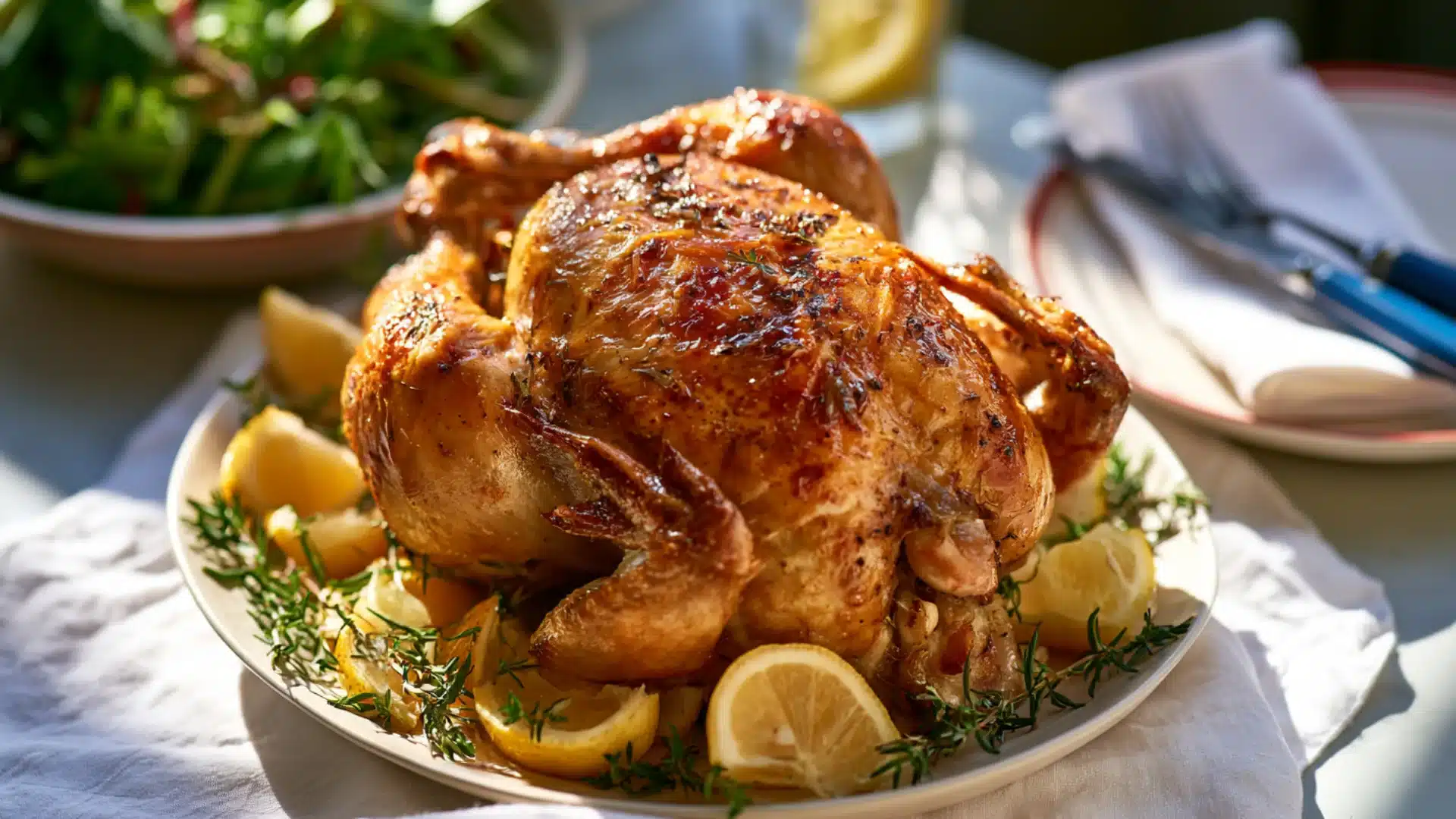
Storing it the right way is the solution to all your problems. Most storage mistakes happen in the first two hours after purchase.
Getting these four things right from the start keeps rotisserie chicken safe for the full 4 days.
Refrigerate Within 2 Hours
The USDA’s two-hour rule covers all cooked foods. After 2 hours at room temperature, cooked chicken enters the danger zone, between 40°F (4°C) and 140°F (60°C).
Bacteria multiply rapidly in that range. On days above 90°F (32°C), the window shrinks to just 1 hour. Get the chicken into the fridge fast.
Use Airtight Containers
The plastic wrapping in the store is not suitable for storage. It allows airflow, which dries out the meat and speeds up deterioration.
It also allows the odor from the chicken to spread to other foods kept in the refrigerator. Place it in an airtight box or zip-lock bag right after purchasing to avoid that.
Store in Small Portions
Do not put the whole bird in one container if you plan to eat it across multiple meals. Divide it by cut: breast, thigh, wing, leg, or shred it into meal-sized amounts.
Smaller portions cool faster. This limits the time bacteria have to multiply before the chicken reaches a safe storage temperature.
It also means you only open what you need. The rest stays sealed.
Keep the Fridge at 40°F (4°C) or Below
Many home refrigerators run 2 to 5 degrees warmer than the dial setting suggests.
The USDA recommends 40°F (4°C) or below for all perishable foods. Check the reading once a week.
How to Tell if Rotisserie Chicken Has Gone Bad?
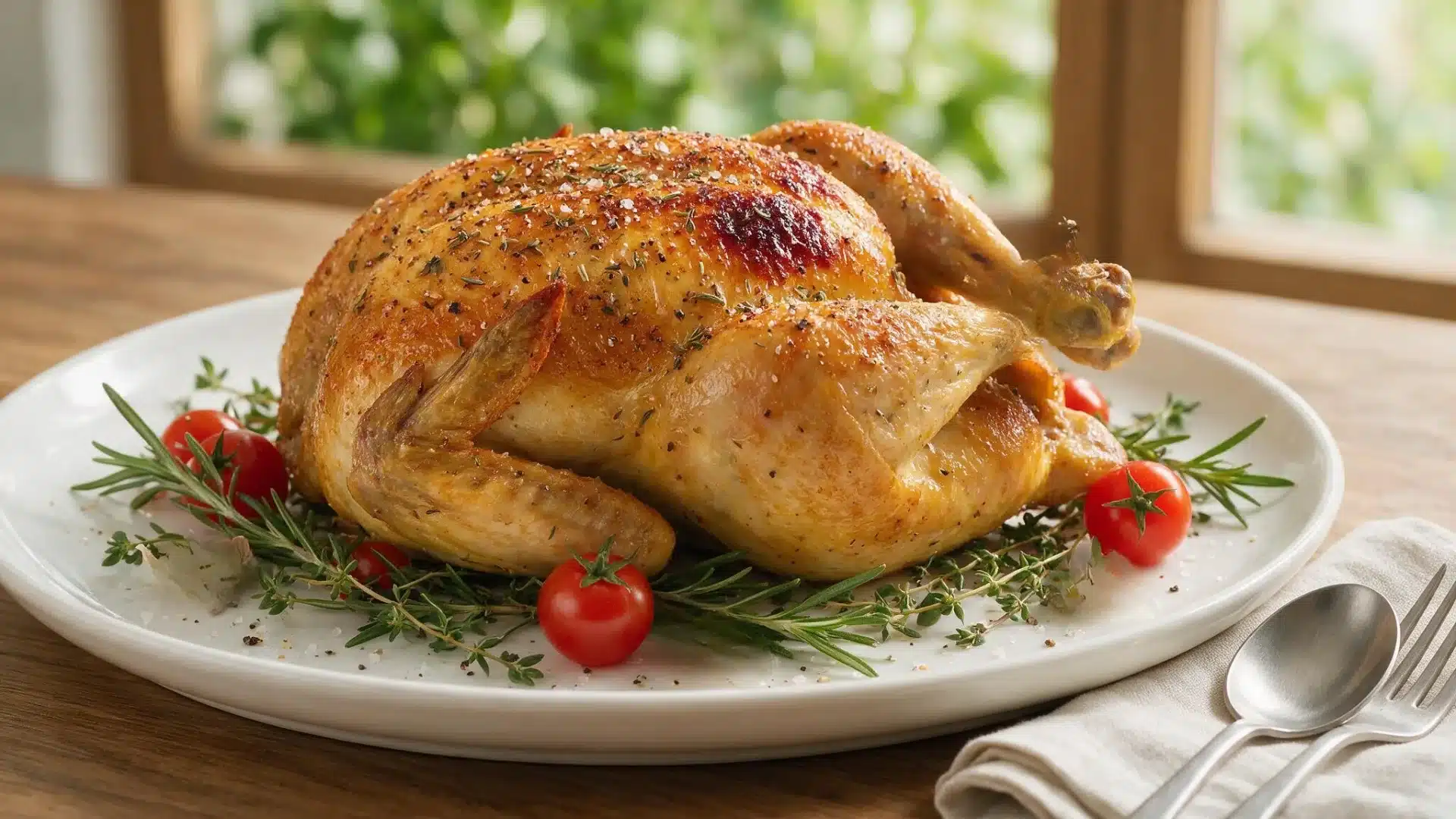
Check the chicken before eating it, even if it hasn’t been four days, as contamination can sometimes spread faster than expected.
This depends on how the chicken was handled before you bought it and how long it sat on the store’s heated display.
Smell
Fresh cooked chicken has very little odor. A sour smell is a clear sign to discard it. Do not try to reheat the chicken to save it.
According to the USDA, heat does not eliminate the toxins that spoilage bacteria leave behind in cooked meat.
Texture
Fresh rotisserie chicken has a firm, slightly dry surface. A slimy or sticky feel means bacterial biofilm has started to form.
If it feels wrong, it is wrong. No amount of cooking will fix it.
Color
Light skin darkening after a day or two is normal. Gray or greenish-tinted meat is not. Any green tinge is a firm signal to discard.
The presence of mold in white, grey, or greenish hues means you should throw out the entire piece, regardless of where it appears on the chicken.
Reheating Rotisserie Chicken Without Drying It Out
Incorrect reheating of rotisserie chicken will make it tough and dry.
However, you can easily solve this by adding liquid when reheating it and heating it to 165°F (74°C).
Oven
Best for reheating larger pieces or a whole portion. The added liquid and foil covering keep the meat moist and evenly heated throughout.
- Preheat to 350°F (177°C).
- Place the chicken in a baking dish and add 2 to 3 tablespoons of chicken broth or water.
- Cover tightly with foil and heat for 20 to 25 minutes.
Stovetop
A quick, reliable option for shredded or sliced chicken. The oil or butter adds moisture back and stops the meat from turning rubbery.
- Heat a pan over medium heat with 1 tablespoon of olive oil or butter.
- Place the chicken into the pan and stir occasionally for 5 to 7 minutes.
- Works well with shredded or cut-up pieces.
Microwave
The fastest method available, but the easiest to get wrong. Always use medium power and a damp paper towel to keep the moisture in.
- Place the chicken in the microwave dish and put 1 tablespoon of broth or water in the dish.
- Cover it with a wet paper towel and microwave on medium power for 90 seconds.
- Check the internal temperature after heating to confirm it reaches 165°F (74°C); medium power retains moisture, while high power dries the meat out quickly.
Final Thoughts
Most people never think about how long rotisserie chicken lasts in the fridge until they are already staring at a 3-day-old container.
Now you do not have to guess. Four days, the right container, and a cold enough fridge- that’s really all it takes.
Frequently Asked Questions (FAQs)
1. Can You Eat Rotisserie Chicken Cold Straight from the Fridge?
Yes. Cold rotisserie chicken is safe to eat as long as it has been stored at 40°F (4°C) or below and is not older than 4 days.
2. Can You Refreeze Rotisserie Chicken After it Has Been Thawed?
Only if it was thawed in the fridge. Chicken thawed in cold water or the microwave must be reheated immediately and not refrozen.
3. Is It Safe to Eat Rotisserie Chicken Left Out Overnight?
No. Cooked chicken left out for more than 2 hours enters the danger zone. It should be discarded.
4. Does Shredded Rotisserie Chicken Last as Long as Whole Pieces in the Fridge?
Yes. Shredded or sliced chicken follows the same 3-to-4-day rule.
5. Can You Store Rotisserie Chicken in Its Original Store Container?
No. The store clamshell is not airtight. Transfer the chicken to a sealed container or zip-lock bag before refrigerating to slow spoilage.