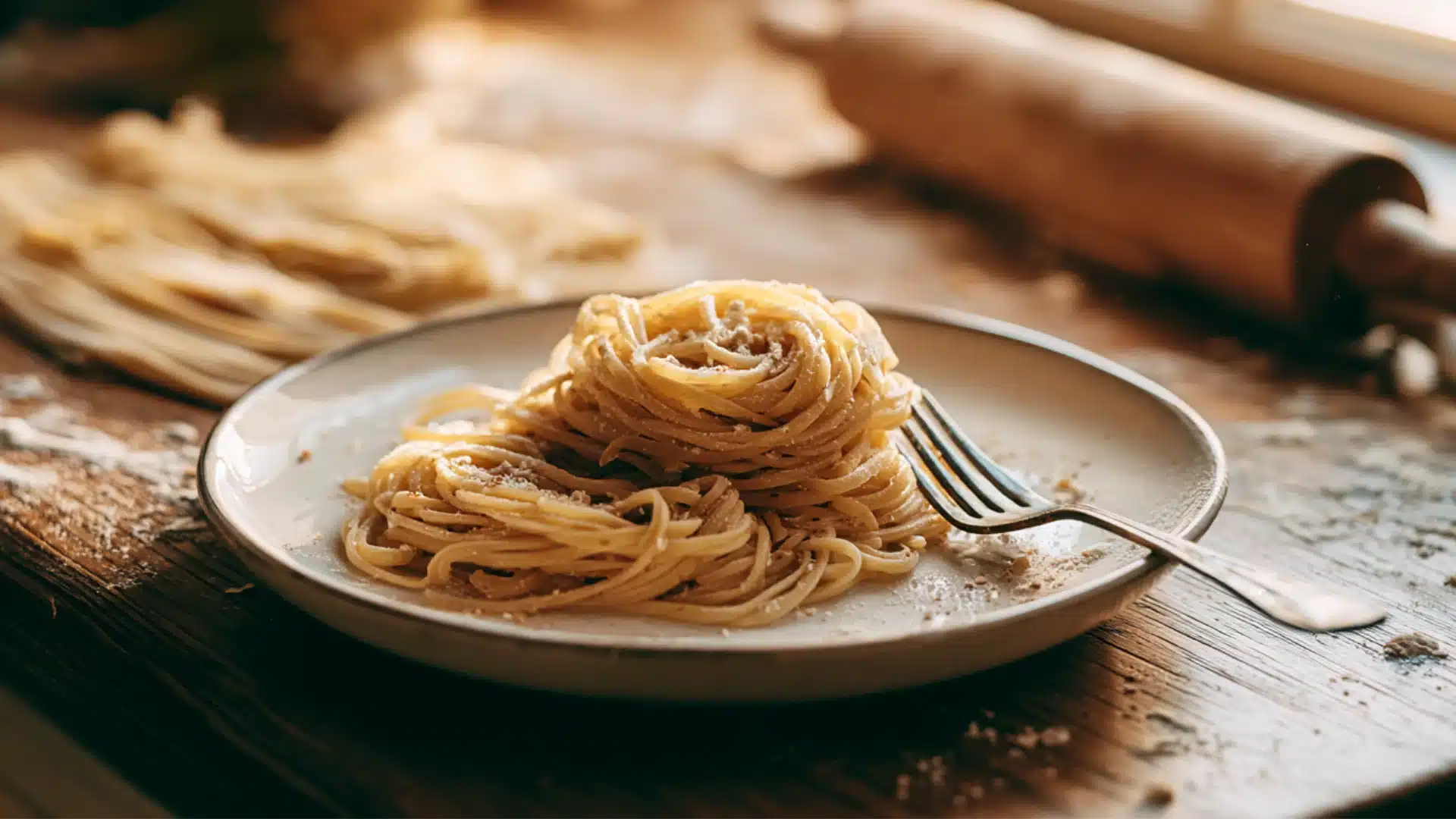

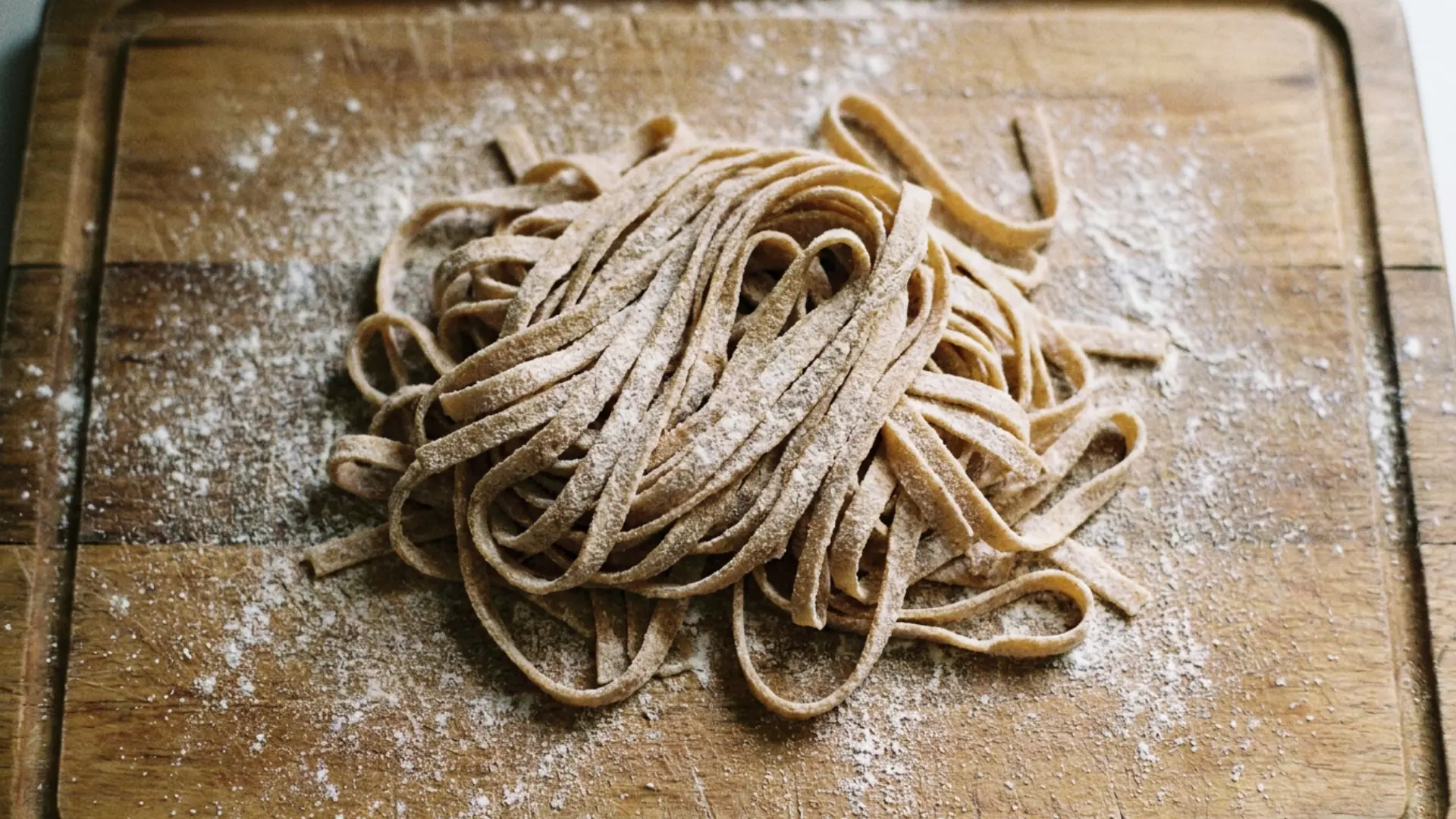

Store bought gluten free pasta does not get it right.
The texture is off, the flavor is flat, and it falls apart the moment it sits in sauce for more than a minute. Most brands fix this by adding more starch.
That makes the texture gummier, not better.
This gluten free pasta dough recipe starts with the right flour blend instead. You get pasta that holds its shape, has real bite, and actually tastes like pasta.
Eighty percent of the work is in the dough. The flour blend matters. The resting time matters.
Get those two things right, and the pasta rolls, cuts, and holds together the way it should.
What Makes Pasta Gluten Free?
Gluten is the protein in wheat, barley, and rye that gives regular pasta its stretch and bite.
Remove it, and the dough falls apart without the right replacement.
People avoid gluten for two main reasons: either because of celiac disease, in which gluten triggers an autoimmune response that damages the gut lining, or because of gluten sensitivity, which causes bloating and discomfort.
A good gluten free pasta dough recipe replaces wheat flour with a blend of alternatives.
Rice flour adds lightness, almond flour adds texture, chickpea flour adds protein and structure, oat flour adds softness, and cassava flour comes closest to wheat in stretch and feel.
Ingredients for Gluten Free Pasta Dough
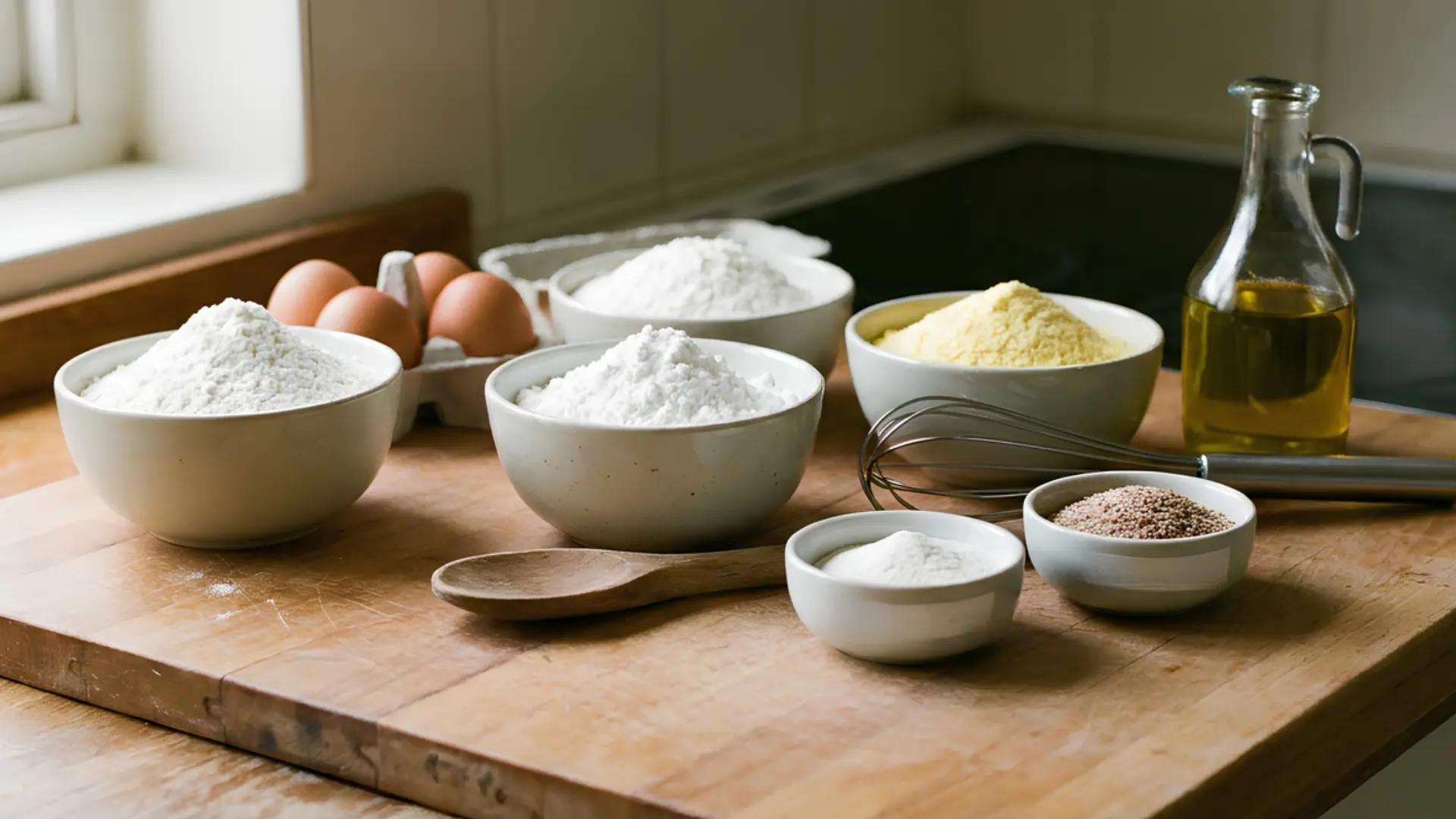
Getting the ingredients right is the whole game here.
The flour blend determines the texture. The binders determine whether the dough holds together at all.
Basic Flours and Starches
- 1 cup fine white rice flour
- 1/2 cup tapioca starch or cornstarch
- 1/4 cup corn flour for a slightly denser, more textured dough
Liquids and Binders
- 2 large eggs or 4 egg yolks for a richer dough
- 1 tbsp olive oil for smoothness and flexibility
- 1 to 2 tbsp warm water, added gradually until the dough comes together
Optional Ingredients for Texture
These are not required, but they make a real difference in how the dough handles and how the pasta holds up in sauce.
- 1/2 tsp xanthan gum for stretch and elasticity
- 1 tsp psyllium husk as a natural alternative to xanthan gum
How to Make Gluten Free Pasta Dough From Scratch?
Prep Time: 15 minutes| Cook Time: 48 minutes| Serves: 4
Follow the order and do not rush the resting step. That is where most homemade versions go wrong.
Gluten free dough behaves differently from wheat dough at every stage. It is stickier when wet, more fragile when dry, and more sensitive to temperature than most recipes let on
Step 1: Mix the Dry Ingredients
Add the rice flour, tapioca starch, and xanthan gum or psyllium husk to a large mixing bowl. Whisk until fully combined.
Uneven dry mixing leads to patches of gummy dough that are impossible to fix later.
Step 2: Add the Wet Ingredients
Make a well in the center of the flour mixture. Crack the eggs into the well and add the olive oil. Beat the eggs lightly with a fork before gradually pulling the flour in from the sides.
Add warm water one tablespoon at a time until the dough forms a rough ball. Stop the moment it comes together.
Too much water makes the dough sticky and impossible to roll.
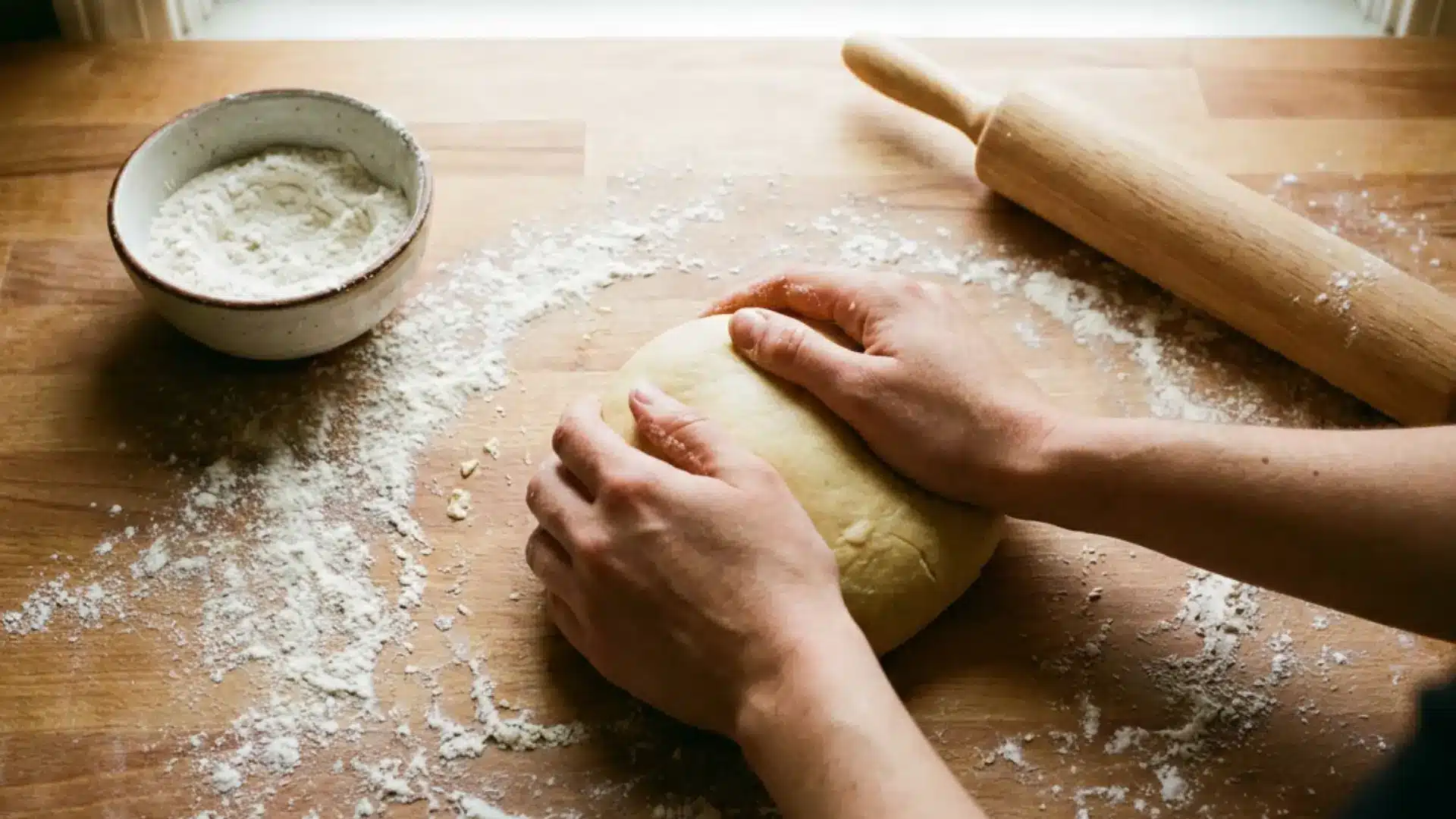
Step 3: Knead the Dough
Gluten free dough does not need aggressive kneading.
There is no gluten network to develop. Knead for 2 to 3 minutes on a lightly rice floured surface until smooth and pliable.
If it tears, it needs 30 more seconds. If it sticks dust lightly, continue. Do not overknead. Gluten free dough turns tough fast.
For pasta machine use: reduce the water by half a tablespoon and knead for an extra 30 seconds. Feed through the widest setting first and fold back on itself twice before moving to a thinner setting.
Step 4: Rest the Dough
Wrap the dough tightly in cling wrap and rest at room temperature for 30 minutes.
The starches absorb the moisture fully during this time, and the dough becomes noticeably more pliable.
In a warm kitchen, refrigerate it instead, but bring it back to room temperature for 10 minutes before rolling. Cold dough cracks at the edges.
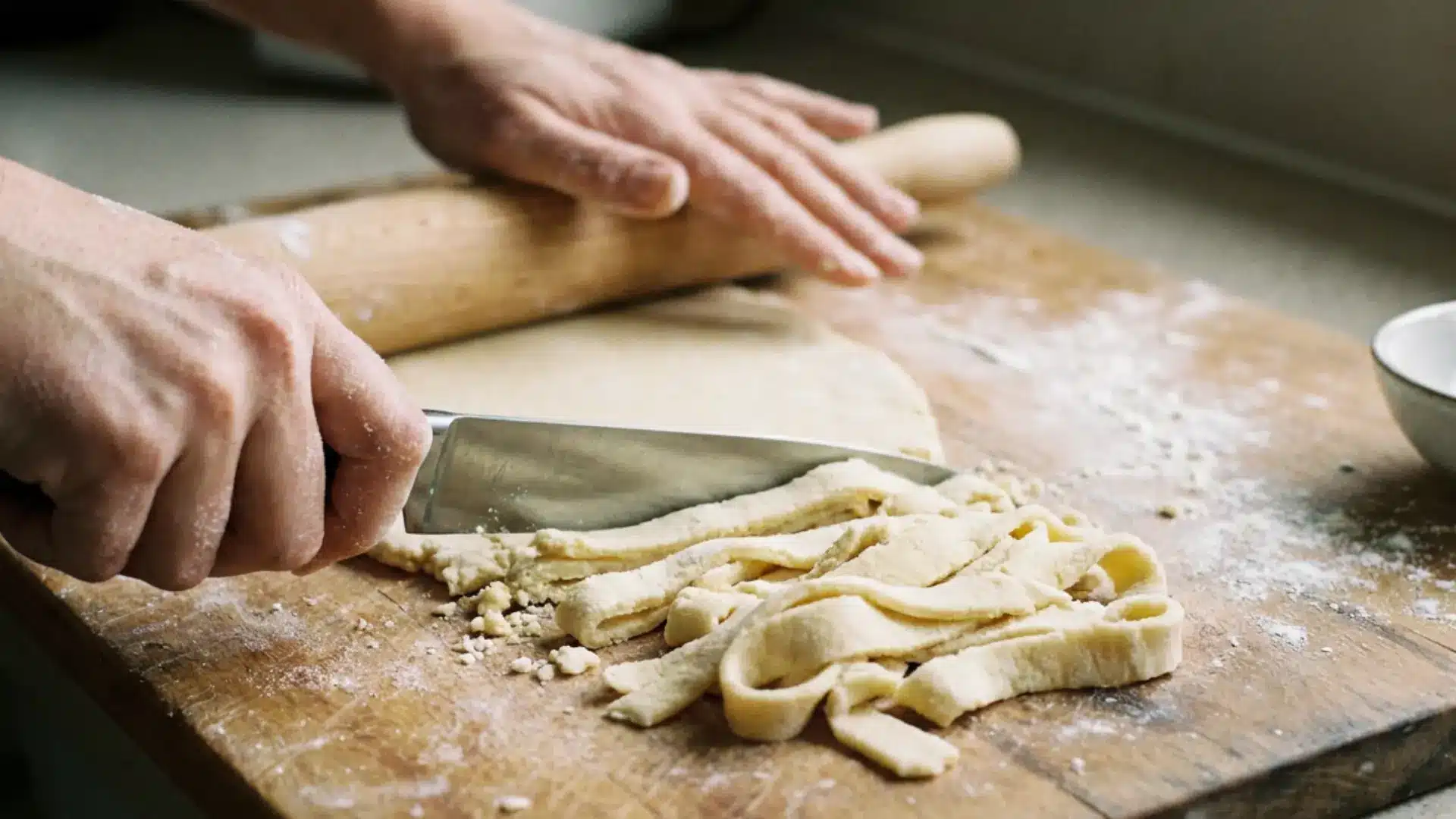
Step 5: Roll and Cut
Divide the remaining dough into four equal portions. Work one portion at a time and keep the rest wrapped.
Dust the surface lightly with rice flour and roll to a thickness of 2mm for most shapes.
For noodles:
- Fold the sheet loosely into thirds
- Cut across the folds at your preferred width
- 5mm for tagliatelle, 2mm for linguine, 10mm for pappardelle
- Unfold immediately and dust with rice flour to stop them from sticking
For ravioli:
- Roll two sheets to 1.5mm thickness
- Place one teaspoon of filling at 4cm intervals across one sheet
- Brush lightly around each mound with water
- Lay the second sheet on top and press firmly to seal
- Cut between each mound and press the edges with a fork
- Cook within 30 minutes of shaping, as gluten free pasta dries out fast
Gluten Free Pasta Dough Recipe Variations
The base gluten free pasta dough recipe works for every shape and sauce. These four builds cover the most common situations.
1. Italian Gluten Free Pasta Recipe
Traditional Italian gluten free pasta uses a single high quality flour rather than a blend.
Finely milled white rice flour or a certified Italian gluten free flour blend works best here. It gives the dough a smoother texture and cleaner flavor than a standard blend.
The preparation follows the same base method with one key difference.
Rest for 45 minutes instead of 30. The extra time makes a noticeable difference when the pasta hits boiling water. Use semolina free flour only and dust the work surface with fine rice flour throughout.
2. Whole Grain Pasta Dough Recipe
Whole grain gluten free pasta has more fiber, more flavor, and a slightly denser texture than the white flour version.
It works best with heartier sauces like bolognese or roasted vegetable ragu, where the nuttier flavor earns its place.
- Replace half the white rice flour with brown rice flour or buckwheat flour
- Keep the tapioca starch the same. It provides the stretch that the whole grain flour lacks
- Add an extra half tablespoon of water, as whole grain flours absorb more liquid
- Rest for a full 45 minutes. Whole grain dough needs longer to hydrate properly
The dough will feel slightly rougher than the white flour version. That is normal. It rolls out cleanly once rested.
3. Flavored Pasta
Flavored gluten free pasta adds color and a subtle taste difference without changing the base technique.
Keep the added ingredient dry enough not to throw off the dough hydration.
- Spinach pasta: blend 30g of cooked, squeezed, dry spinach into the eggs before adding to the flour
- Tomato pasta: add one tablespoon of tomato paste to the wet ingredients and reduce the water slightly
- Beet pasta: add one tablespoon of cooked pureed beet to the eggs and reduce water by half a tablespoon
Taste the dough after kneading. It should not taste strongly of the added ingredient. If it does, add a pinch of salt and knead once more.
4. Low Carb and Keto Friendly Variations
Standard gluten free pasta uses rice flour and tapioca starch, both high in carbohydrates. For a keto version, the flour blend needs to change entirely.
- Replace rice flour with almond flour for a lower carb base with a slightly nutty flavor
- Use psyllium husk instead of xanthan gum. It binds well and adds no carbs
- Skip the tapioca starch and add one extra tablespoon of almond flour to compensate
- The dough will be softer and more fragile. Roll slightly thicker at 2.5mm to avoid tearing
According to Healthline, almond flour contains about 6 grams of carbohydrates per 100 grams, compared with 80 grams in white rice flour.
That one swap significantly reduces the carb count while keeping the pasta’s shape and texture intact.
Bottom Line!
This gluten-free pasta dough recipe works for every variation you need. The Italian version rests longer. The whole grain pasta dough recipe swaps in brown rice or buckwheat flour.
The gluten free egg free pasta recipe uses aquafaba in place of eggs. The gluten free pasta dough recipe vegan version follows the same swap.
For machine use, firm the dough slightly. For ravioli, roll thinner and seal carefully. For noodles, cut immediately and dust well. Every version starts from the same base.
Get the flour blend and the resting time right, and the rest follows.
Frequently Asked Questions
1. How Long Does Gluten Free Pasta Dough Last in the Fridge?
Wrapped tightly, it keeps for up to 2 days. Bring it to room temperature for 10 minutes before rolling, or it will crack at the edges.
2. Can You Freeze Gluten Free Pasta Dough?
Yes, freeze for up to one month. Thaw overnight in the fridge and rest at room temperature for 15 minutes before rolling.
3. Why Does My Gluten Free Pasta Fall Apart When Cooking?
The dough was either under rested or too wet. Rest for a full 30 minutes and reduce the water by half a tablespoon on your next batch.
4. What Is the Best Flour Blend for Gluten Free Pasta?
Fine white rice flour and tapioca starch in a 70-to-30 split give the best balance of lightness and stretch.
5. How Long Should You Cook Fresh Gluten Free Pasta?
2 to 3 minutes in heavily salted boiling water. Taste after 2 minutes, and pull it out the moment it loses its raw-flour taste.