


Curtains can make or break a room.
And the biggest mistake has nothing to do with color, fabric, or pattern. It is the length. Too short and the space feels unfinished.
Too long in the wrong room, and it becomes a practical headache.
The right curtain length is one of the easiest fixes in home decor and one of the most overlooked.
The right length depends on three things: your ceiling height, the room the window is in, and how you want the fabric to land.
This curtain length guide covers all three.
What is the Best Curtain Length for Your Home?
For most rooms, 95-inch floor-length curtains hung from a rod placed 4 to 6 inches above the window frame are the standard that works.
In rooms with 9-foot ceilings, step up to 108 inches.
For kitchens and bathrooms, sill-length panels at 63 inches are the practical call. The rod height matters as much as the panel length itself.
Standard Curtain Lengths Explained
Ready-made curtains come in four standard lengths. Each fits a specific setup.
- 63 inches: sill length. Best for kitchens and bathrooms.
- 84 inches: the most widely sold length. Works when the rod sits close to the window frame on an 8-foot ceiling. Often too short when the rod is hung higher.
- 95 inches: the better everyday choice for 8-foot ceilings when the rod is hung 4 to 6 inches above the frame.
- 108 inches: designed for 9-foot ceilings or ceiling-to-floor installations.
Click to find a full breakdown of panel sizes, measurement steps, and width guidance.
Curtain Length Guide by Ceiling Height
Ceiling height is the first number to know. It determines which panel length you need and where the rod should go.
The rule is simple: the taller the ceiling, the longer the curtain, and the higher the rod.
Best Curtain Length for 8-Foot Ceilings
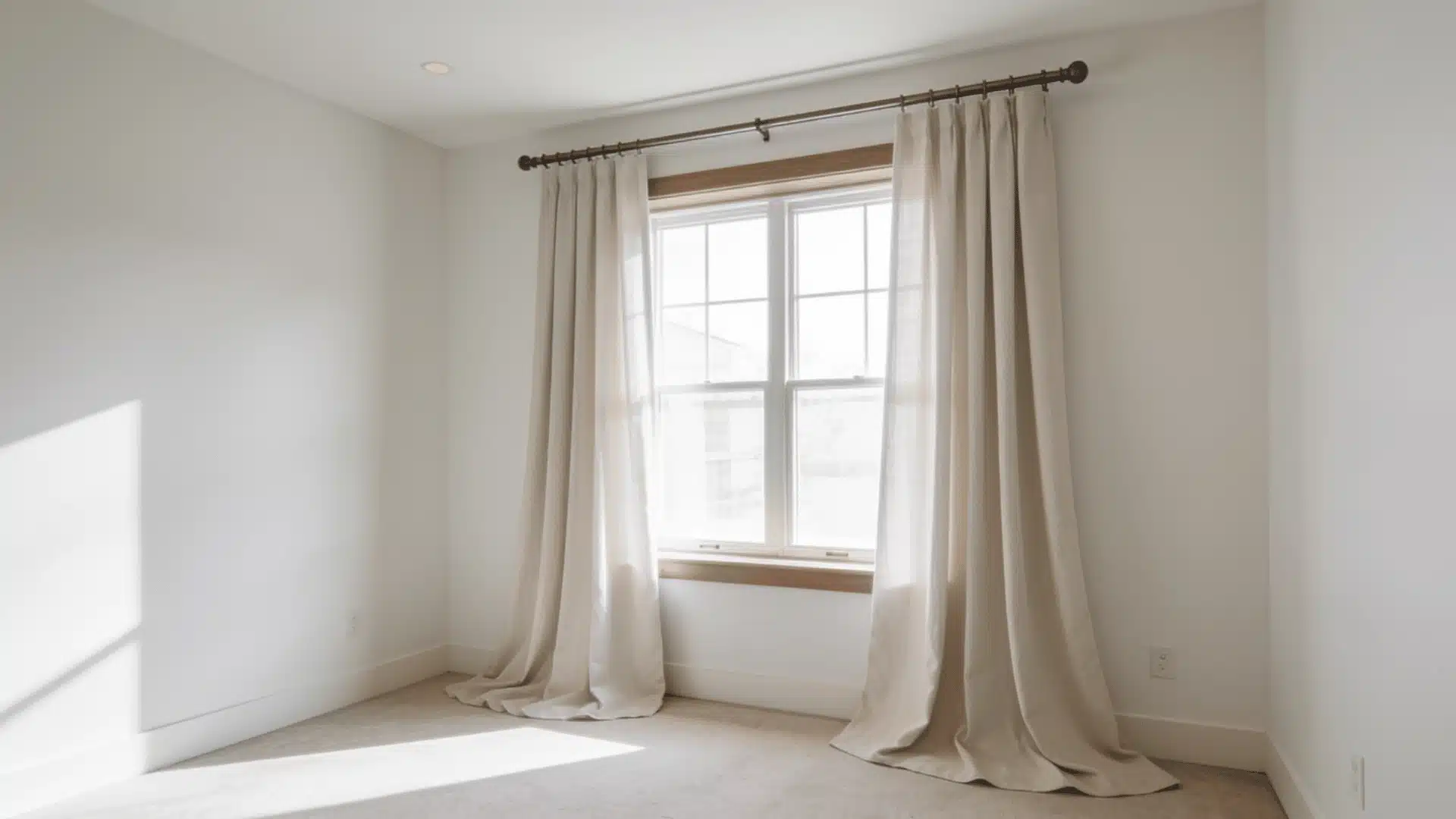
On a standard 8-foot (96-inch) ceiling, 95-inch panels are the most reliable choice. Here is why 84 inches falls short in most cases.
When a rod sits 4 to 6 inches above the window frame on an 8-foot ceiling, that rod lands at roughly 86 to 90 inches from the floor.
An 84-inch panel will leave a gap of 2 to 4 inches before it reaches the floor. That gap reads as a mistake, not a design decision.
A 95-inch panel at that same rod height will just graze the floor. That is the result you want.
If your rod is only 1 to 2 inches above the frame, 84-inch curtains can work.
But pushing the rod up even slightly makes the window look taller and the ceiling feel higher, and that means 95 inches is the safer choice.
The numbers:
- Rod height: 4 to 6 inches above the window frame
- Recommended panel length: 95 inches
- Result: floor graze with a clean, flat fall
Best Curtain Length for 9-Foot Ceilings

For 9-foot (108-inch) ceilings, 108-inch panels are the standard floor-length option. Hang the rod 6 to 8 inches above the window frame for the best visual result.
At that rod height on a 9-foot ceiling, a 108-inch panel will graze the floor cleanly.
If you want a slight puddle with a few inches of extra fabric pooling at the base, add 6 inches and look for 114-inch or custom panels.
One thing worth noting: on 9-foot ceilings, the distance between the rod and the ceiling starts to feel significant.
If the gap above the rod is more than 12 inches, the curtains can look like they are floating in the middle of the wall. Pull the rod up to within 6 to 8 inches of the ceiling cornice to avoid this.
The numbers:
- Rod height: 6 to 8 inches above the window frame
- Recommended panel length: 108 inches
- Result: clean floor glaze, proportional to ceiling height
Best Curtain Length for 10-Foot Ceilings and Above

At 10 feet and higher, standard panel lengths run out.
Most ready-made curtains stop at 108 inches, which is a 9-foot drop. For a 10-foot ceiling, you need 120-inch panels to reach the floor with the rod hung at ceiling height.
The right approach for tall ceilings is ceiling-to-floor curtains, with the rod mounted within 1 to 2 inches of the cornice and the panel running straight to the floor.
This is not just a style preference. On a 10-foot or taller ceiling, anything less than full-height coverage leaves the wall above the curtains looking bare and unresolved.
Brands including IKEA, Pottery Barn, and RH (Restoration Hardware) carry 120-inch and 144-inch panels.
Custom curtains are the cleanest solution for unusual ceiling heights, but they add real cost. Budget between $150 and $400 per panel, depending on the fabric.
The numbers:
- Rod height: within 1 to 2 inches of the ceiling cornice
- Recommended panel length: 120 inches (10-foot ceiling), 144 inches (12-foot ceiling)
- Result: full-height coverage that suits the scale of the room
Curtain Length Guide by Room
Ceiling height sets the panel length. The room determines the style.
A length that works in a formal living room is wrong for a kitchen window above a hob.
Living Room Curtain Length Recommendations
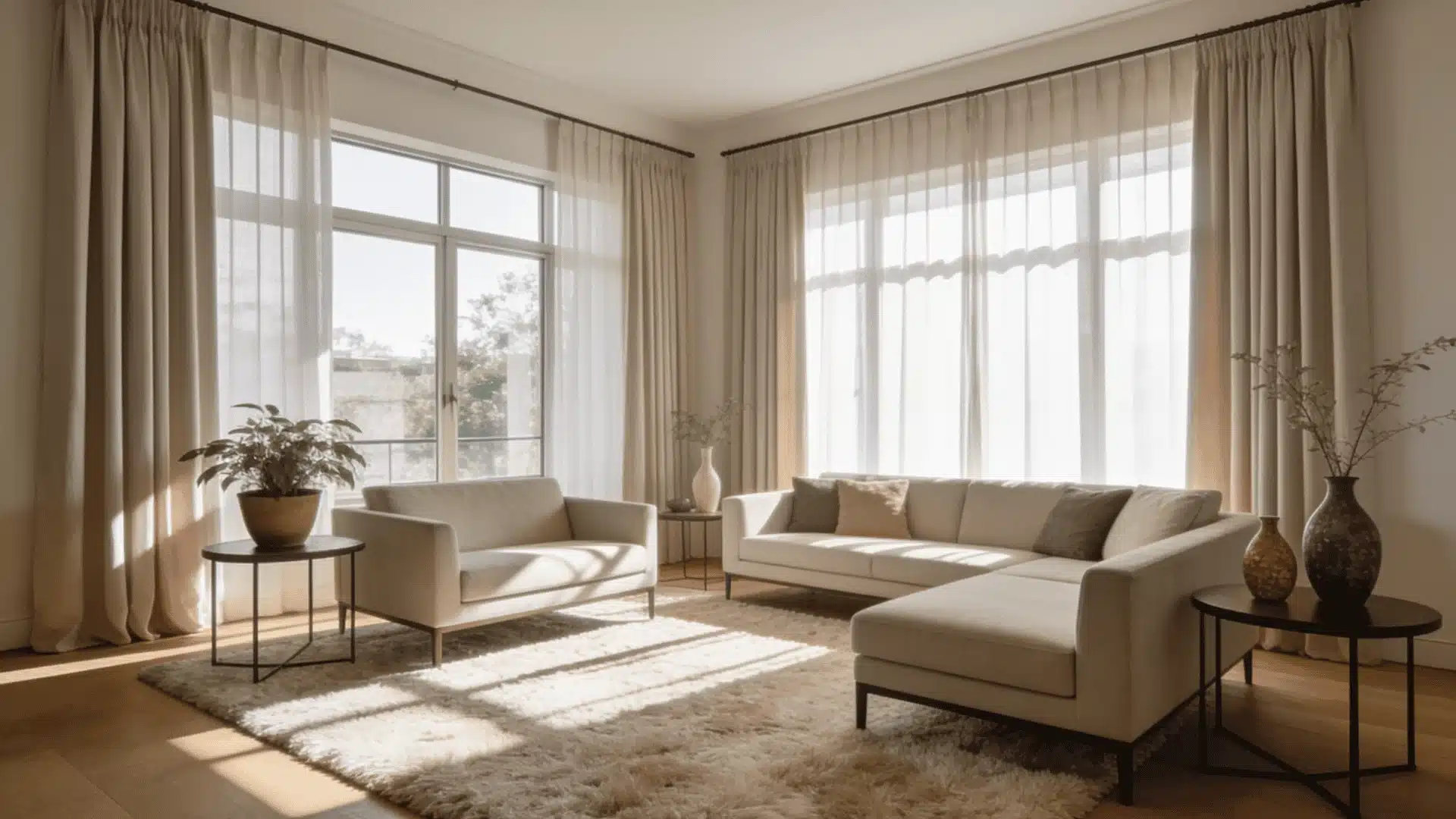
Floor-length curtains are the standard. A floor graze, where the panel sits roughly half an inch above the floor, is the cleanest finish for most living rooms.
It looks intentional and does not collect dust the way pooling fabric does.
Puddle length works in formal or low-traffic living rooms, but in a family room with children or pets, fabric that pools gets stepped on and is harder to keep clean.
Bedroom Curtain Length Recommendations
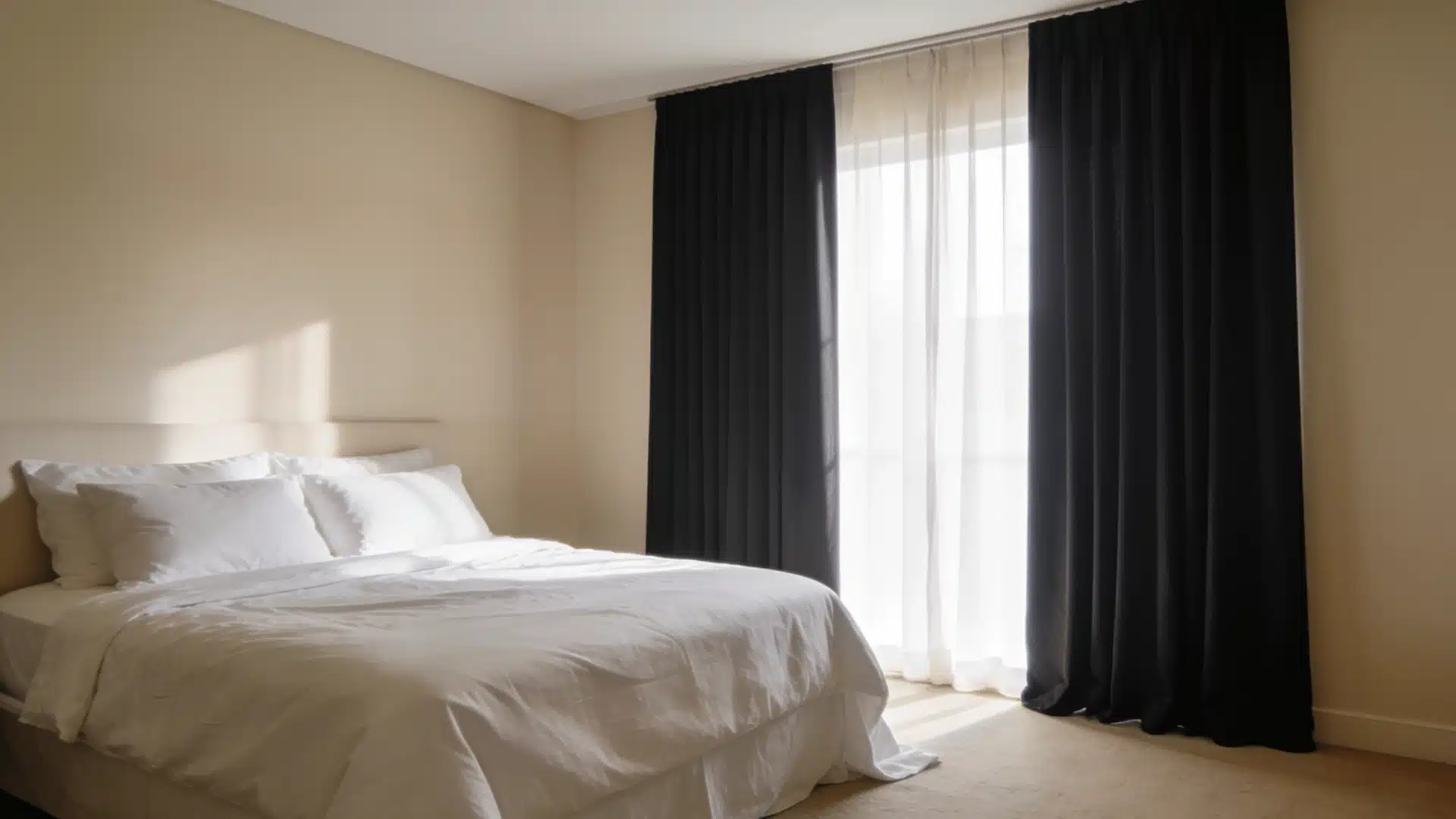
Floor-length curtains work well here, and the same ceiling-height rules apply. Hang the rod as close to the ceiling as possible.
The room reads taller, which matters most in smaller bedrooms. For children’s rooms and nurseries, curtains that stop at or just above the sill are safer and more practical than floor-length drops.
Kitchen Curtain Length Recommendations
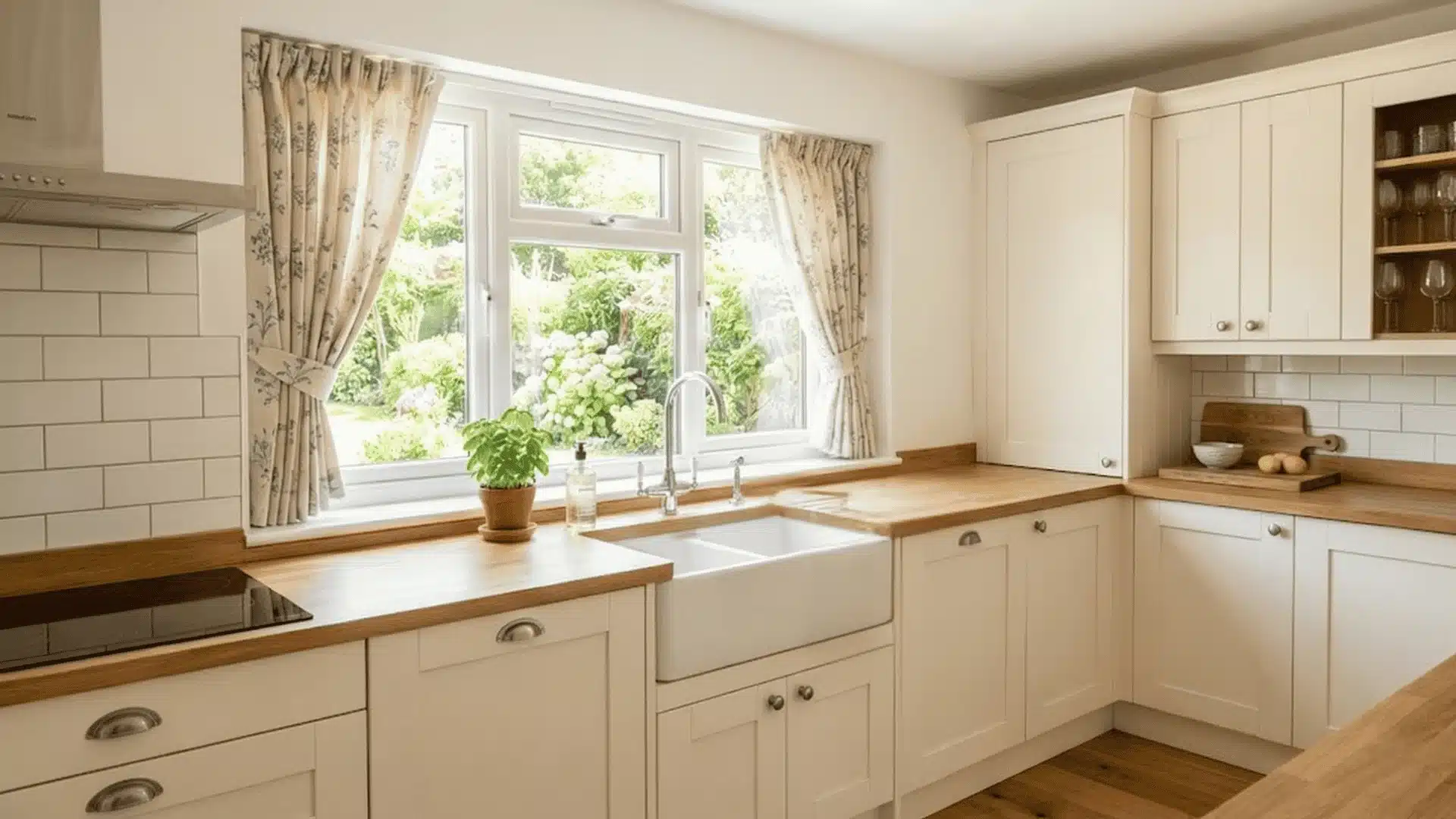
Sill-length curtains are the right call for kitchen windows. Floor-length fabric near a hob or toaster is a fire risk.
Café-style curtains, which cover the lower half of the window only, are a good alternative where privacy is needed at counter level without blocking light from the top half.
Dining Room Curtain Length Recommendations

Dining rooms suit puddle-length curtains well.
Traffic is lower, the curtains are rarely touched between meals, and the puddle fabric looks proportional in a room used for an occasion.
A 4 to 6-inch puddle is enough in most spaces. In an open-plan dining and kitchen layout, a floor graze keeps the visual line cleaner across the combined space.
Should Curtains Touch the Floor?
There are four ways curtain fabric can land. Each reads differently, and the right choice depends on the room and how much upkeep you want.
Floating Curtains
Floating curtains hang 1 to 2 inches above the floor. This is the most common curtain mistake, not a style choice. A visible gap reads as a panel that is slightly too short, full stop.
Curtains That Just Touch the Floor
A floor graze, where the panel skims the floor with around half an inch of contact, is the go-to length for most rooms.
It looks clean and intentional, moves well when the curtains are opened, and does not collect dust the way longer fabric does.
This is the most practical finish for living rooms, bedrooms, and dining rooms in regular use.
Curtains That Break Slightly
A slight break means 1 to 2 inches of fabric resting against the floor, creating a small fold at the base. It adds softness without the upkeep of a puddle.
Works best on hard flooring. On thick carpet, the fold tends to disappear.
Puddled Curtains
Puddle length means 6 to 12 inches of extra fabric pooling on the floor. It is a formal look that suits rooms used for an occasion rather than daily traffic.
Puddled fabric gathers dust, needs regular repositioning, and does not work well in homes with pets or young children.
Conclusion
The right curtain length is not guesswork. It comes down to ceiling height, room type, and how the fabric lands.
For most homes, 95-inch panels on a rod hung 4 to 6 inches above the frame is the formula that works on 8-foot ceilings.
Step up to 108 inches for 9-foot ceilings, and go ceiling-to-floor for anything taller.
Choose the floor contact style based on how the room is actually used, and the curtains will do the rest.
People Also Ask
1. What is the Most Popular Curtain Length?
84-inch and 96-inch panels are the top-selling lengths in the US and UK for standard 8-foot ceilings.
2. Are 84-Inch Curtains Long Enough?
Only if the rod sits 1 to 2 inches above the frame. At higher rod positions, 95-inch panels are the better fit.
3. How Far Should Curtains Be Off the Floor?
Curtains should not float above the floor. A half-inch graze is the standard for most rooms.
4. What Curtain Length Makes a Room Look Bigger?
Ceiling-height rods with floor-length panels draw the eye upward and make any room read taller and larger.