
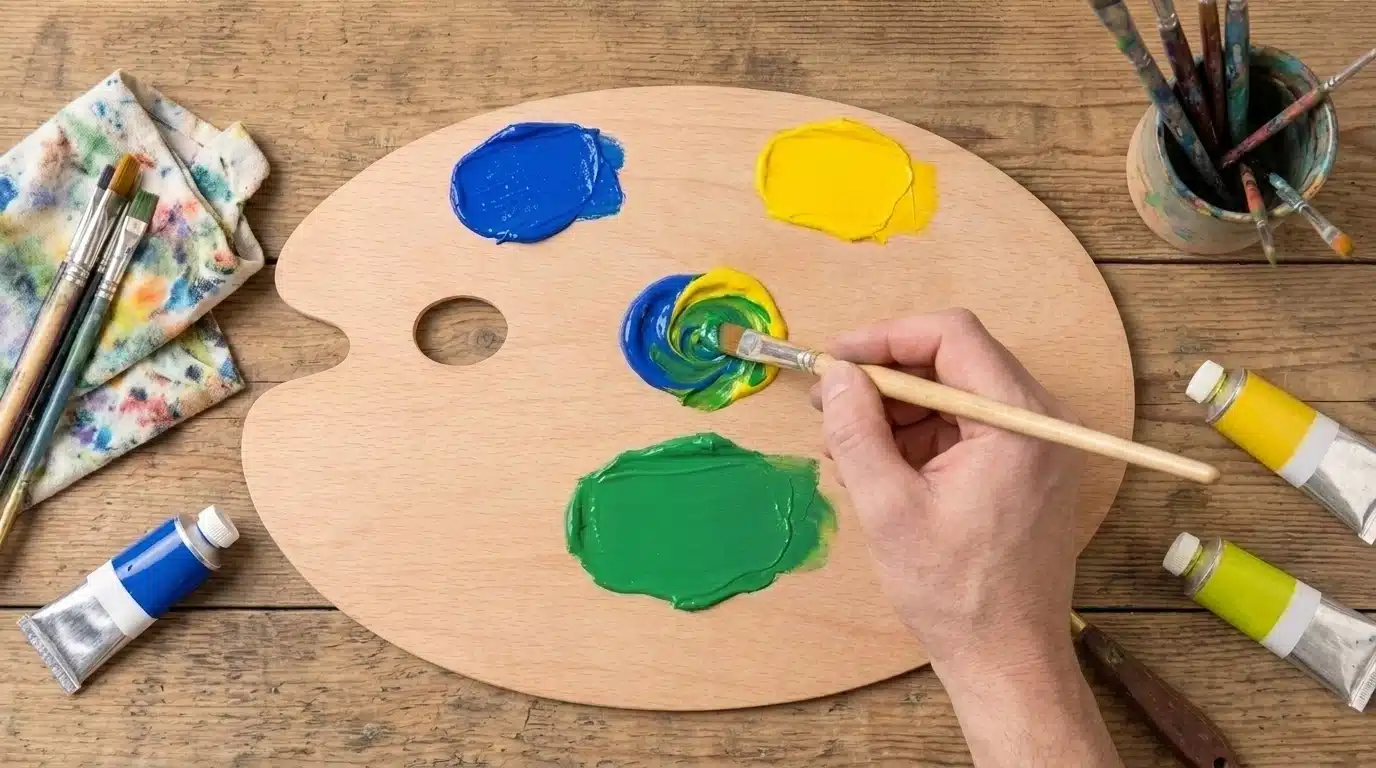

Green isn’t a pure color; it’s a secondary color created when two primaries are mixed. Green comes up when you mix blue and yellow.
The exact shade depends entirely on which blue and which yellow get used.
Cool blues with bright yellow create a whole different sort of green than a golden yellow would with that same cool blue.
Read on to learn how to create every green shade. Bright lime, soft sage, and deep forest green are all just a mixing ratio away.
Grab some of the paints lying in your craft collection and make some of these fantastic green color mixes!
What Two Colors Make Green?
Green is formed by a basic combination: blue and yellow. Blend these two primary colors, and green emerges consistently, regardless of the medium employed.
Conventional color theory explains why this combination works.
Blue and yellow are located at opposite ends of the color wheel from red, and mixing any two primary colors yields a secondary color.
Green simply happens to be the one that originates from this specific pair. Two colors enter, and a third one emerges.
Make Different Shades of Green
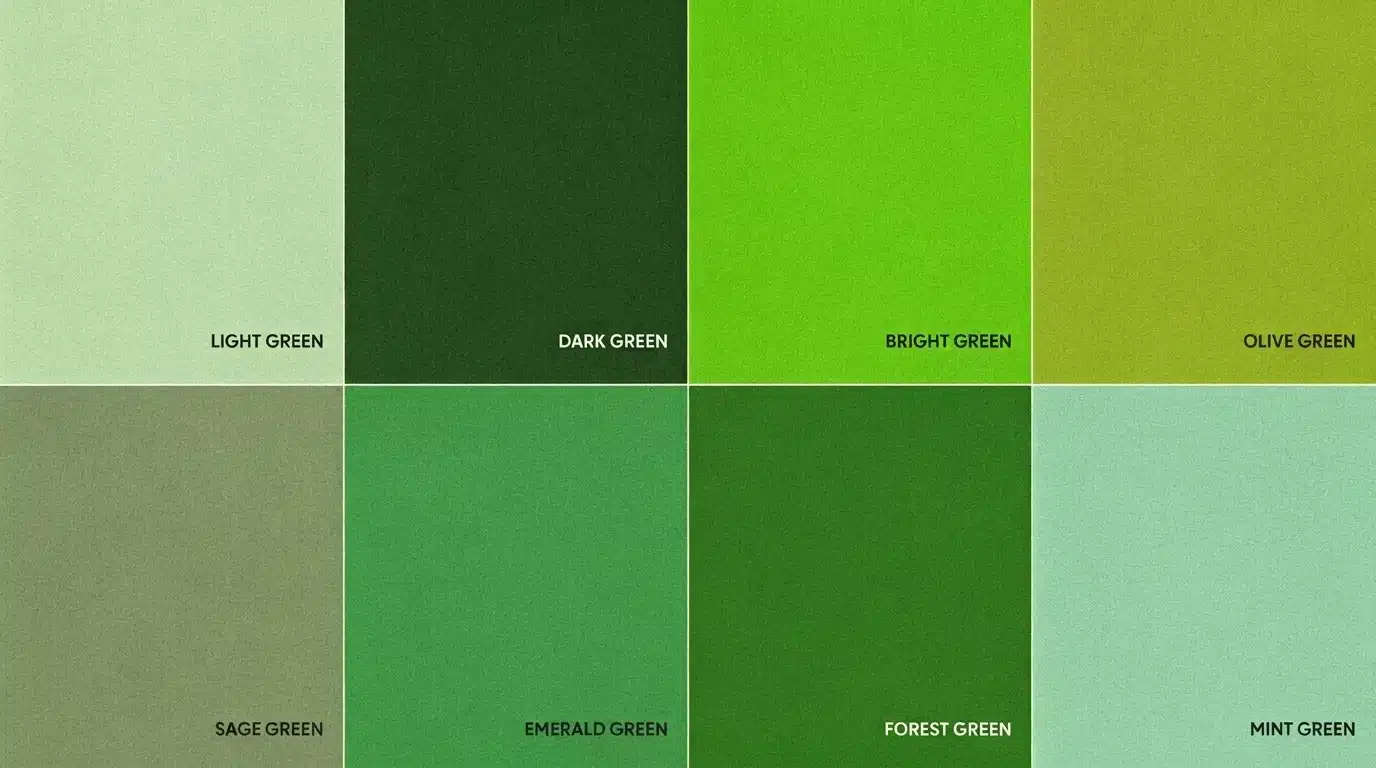
Once you know what colors make green, adjusting the shade is as simple as adding a little more. A few reliable tweaks cover most situations painters run into.
Light Green
Add more yellow to the base green, then mix in a small amount of white. The yellow brightens the hue, and the white softens its intensity without washing it out completely.
Dark Green
For a richer tone, work ultramarine into your green base before introducing black or burnt umber.
Black shifts color fast, so use it sparingly and test after every small addition. Burnt umber offers a gentler path toward depth, giving you a shadowy green without the risk of overshooting into near-black territory.
Bright Green
Vivid, energetic green comes from pairing a warm yellow against a cool-toned blue. That temperature contrast keeps the mixture lively rather than muddy.
Skip earthy or muted pigments here entirely, since even a small amount can dull the vibrancy you’re trying to achieve.
Forest Green
Combine a deep blue with yellow, then add burnt umber. The burnt umber grounds the mix, pulling it toward a shadowy, woodland tone rather than something bright or playful.
Olive Green
That dusty, military-inspired tone comes from muting a standard green with red or burnt sienna. Either pigment knocks back the brightness without turning the mix brown.
Start with a tiny amount, since olive tones shift quickly, and blend thoroughly before deciding whether you need more warmth.
Sage Green
To achieve that soft, herb-garden shade, combine gray with a muted green base, then lighten with white.
Gray pulls saturation down, giving the color its calm, understated quality, while white keeps things airy. This combination works especially well for wall colors and botanical-inspired interiors.
Emerald Green
Jewel-toned and cool, emerald green begins with phthalo blue mixed into a bright yellow.
A small addition of white keeps the shade from tipping into darkness while preserving its saturation.
Because phthalo blue is a strong pigment, add it in small increments to avoid overwhelming the yellow entirely.
Mint Green
Start with a green base, then add white and a tiny amount of blue. The extra blue keeps the mint from leaning too yellow, and the white gives it that pale, refreshing quality.
Quick Green Mixing Chart
Bookmark this chart for future projects, since matching a specific green often comes down to checking ratios rather than mixing from scratch every time.
| Desired Green | Blue | Yellow | Optional Addition |
|---|---|---|---|
| Bright Green | Phthalo Blue | Lemon Yellow | White |
| Olive Green | Ultramarine | Yellow Ochre | Red |
| Sage Green | Cerulean | Yellow Ochre | Gray |
| Forest Green | Ultramarine | Cadmium Yellow | Burnt Umber |
| Emerald Green | Phthalo Blue | Lemon Yellow | White |
| Mint Green | Medium Green | – | White + Blue |
| Lime Green | Phthalo Blue | Lemon Yellow | Extra Yellow |
What Colors Make Green in RYB vs. CMYK vs. RGB
Green doesn’t form the same way in every color system. Painters, printers, and screens each rely on different rules, so the same word “green” comes from completely different sources depending on the medium.
Green in RYB (Paint and Traditional Art)
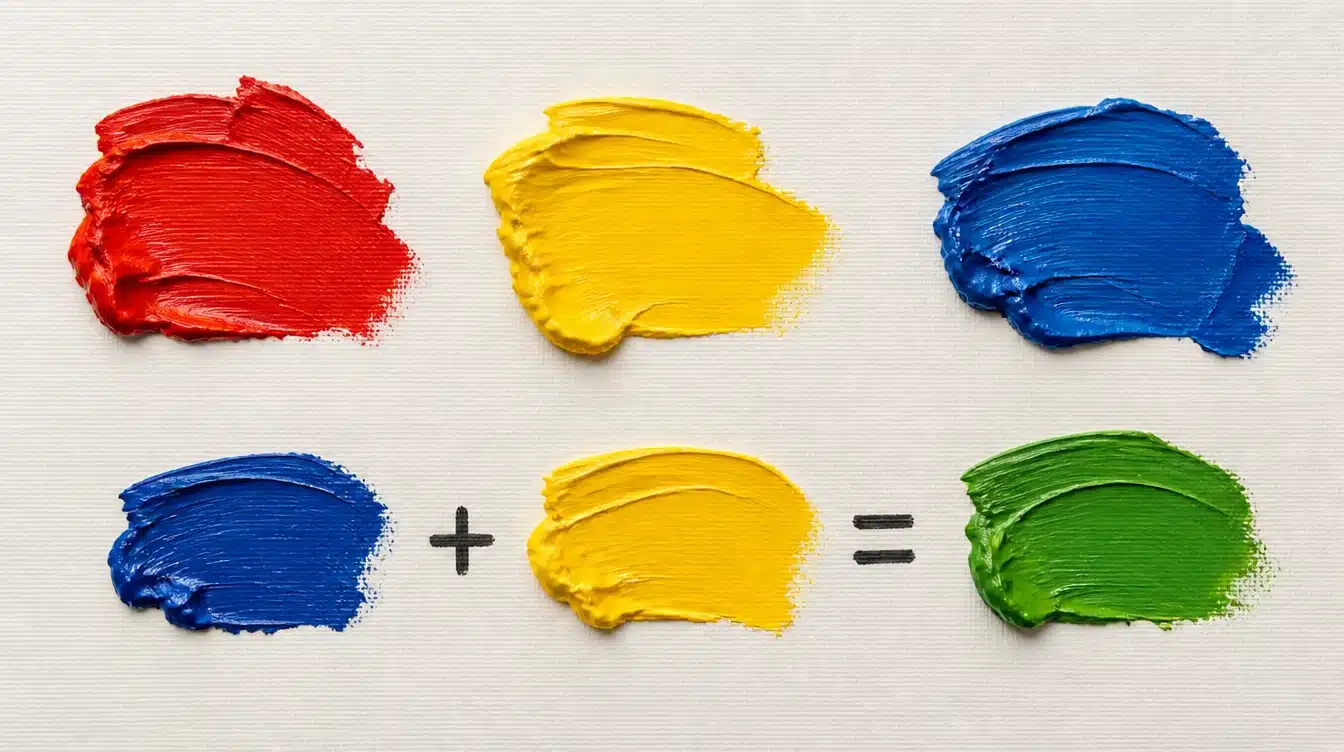
RYB stands for red, yellow, and blue, the model used in painting and traditional art. Blue and yellow combine to create green, following the same rules covered throughout.
Pigments absorb and reflect light unevenly, so results shift depending on the exact blue and yellow chosen.
Green in CMYK (Printing)
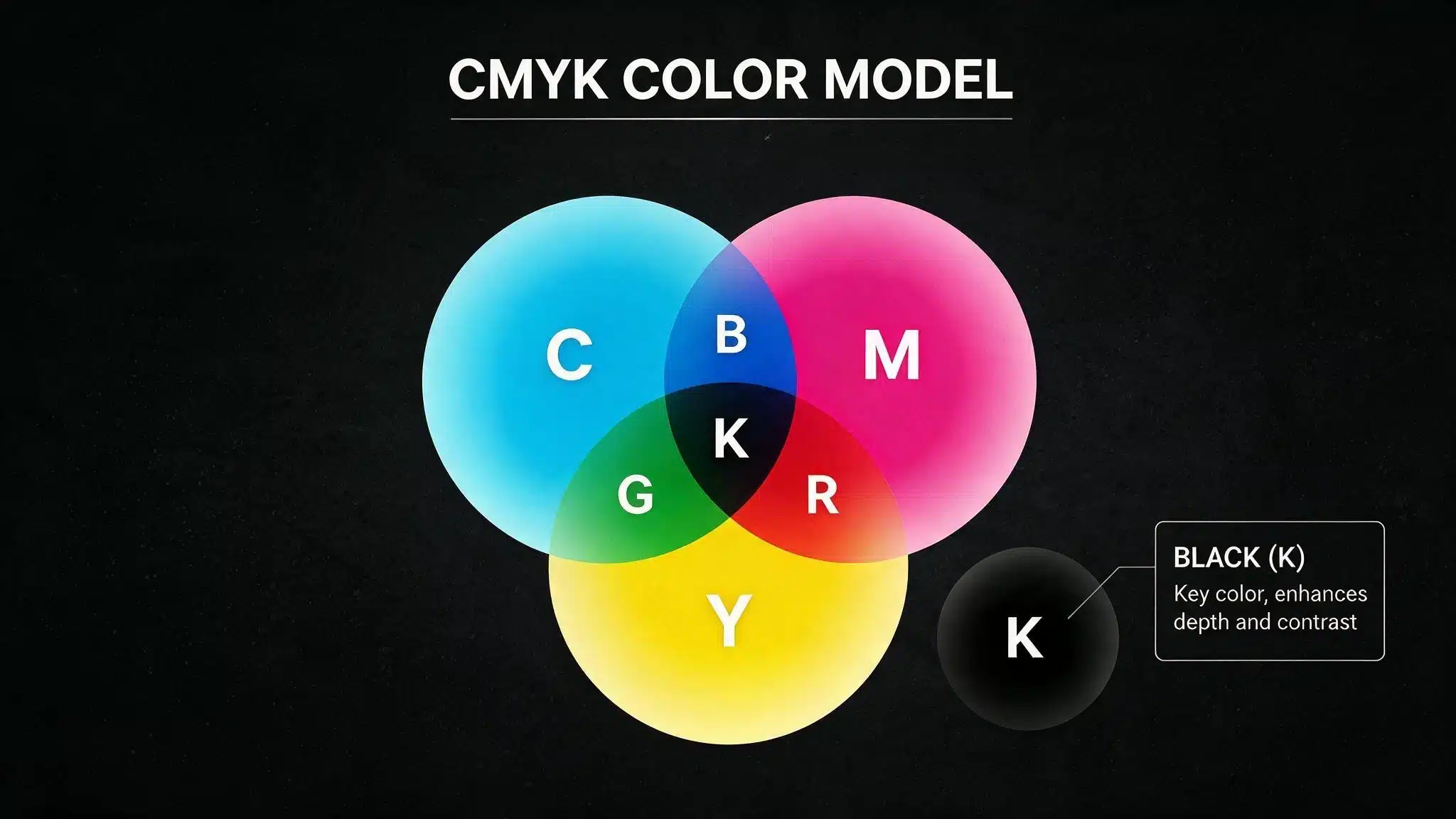
CMYK stands for cyan, magenta, yellow, and black, the model used in most printing. Green forms from cyan and yellow, not blue and yellow like in paint.
Cyan already contains a hint of green within it, so the mix behaves a bit differently than traditional pigment mixing.
Green in RGB (Digital Screens)
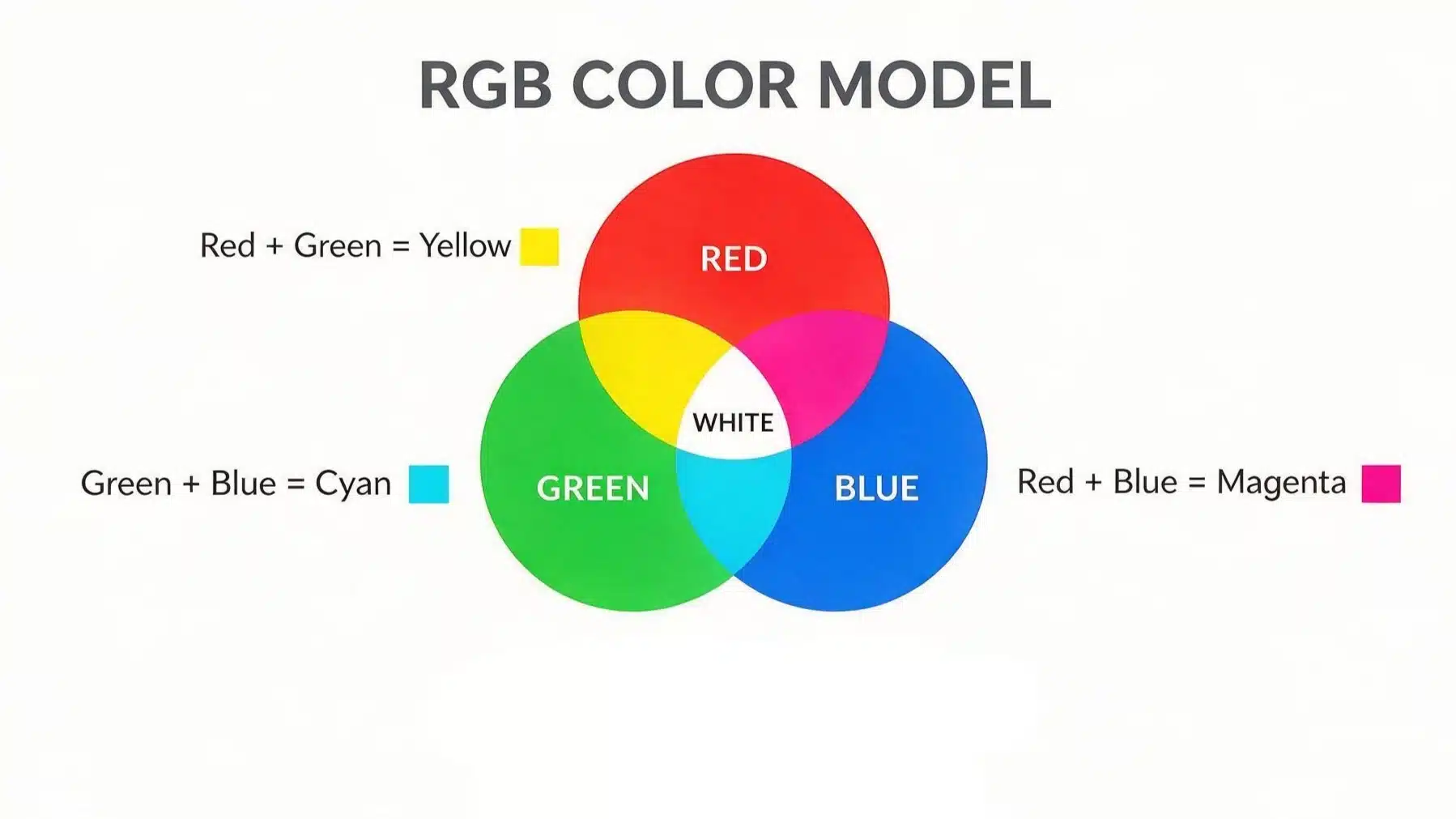
RGB stands for red, green, and blue, the model used for screens and digital displays.
Unlike paint or print, green already exists as its own primary color and doesn’t need to be mixed at all.
Light combines rather than pigment, so screens add red and blue light to isolate green rather than blending colors together.
Mixing the Perfect Green Every Time
Once you know what makes green, it comes down to two things: the right blue and yellow, and understanding how small additions shift the outcome.
Acrylic painters especially benefit from testing combinations on scrap paper before committing to a canvas, since small ratio changes produce noticeably different results.
The mixing chart above makes a handy reference for future projects, whether the goal is a soft sage wall or a punchy lime accent.
With these formulas on hand, creating the exact green no longer means relying on pre-mixed paint from a store shelf.
Frequently Asked Questions (FAQs)
1. Does the Type of Paint (Oil or Acrylic) Change How Green Mixes?
Yes, slightly. Each medium dries and shifts tone differently, though the same blue-yellow rule applies.
2. Why Does My Green Turn Gray or Brown Instead of Staying Vibrant?
Too many colors mixed usually cause this. Clean tools between mixes to keep green vibrant.
3. Can White Paint Alone Lighten Green, or Does It Need Yellow Too?
White lightens green but cools it slightly. Add a touch of yellow to keep it fresh.