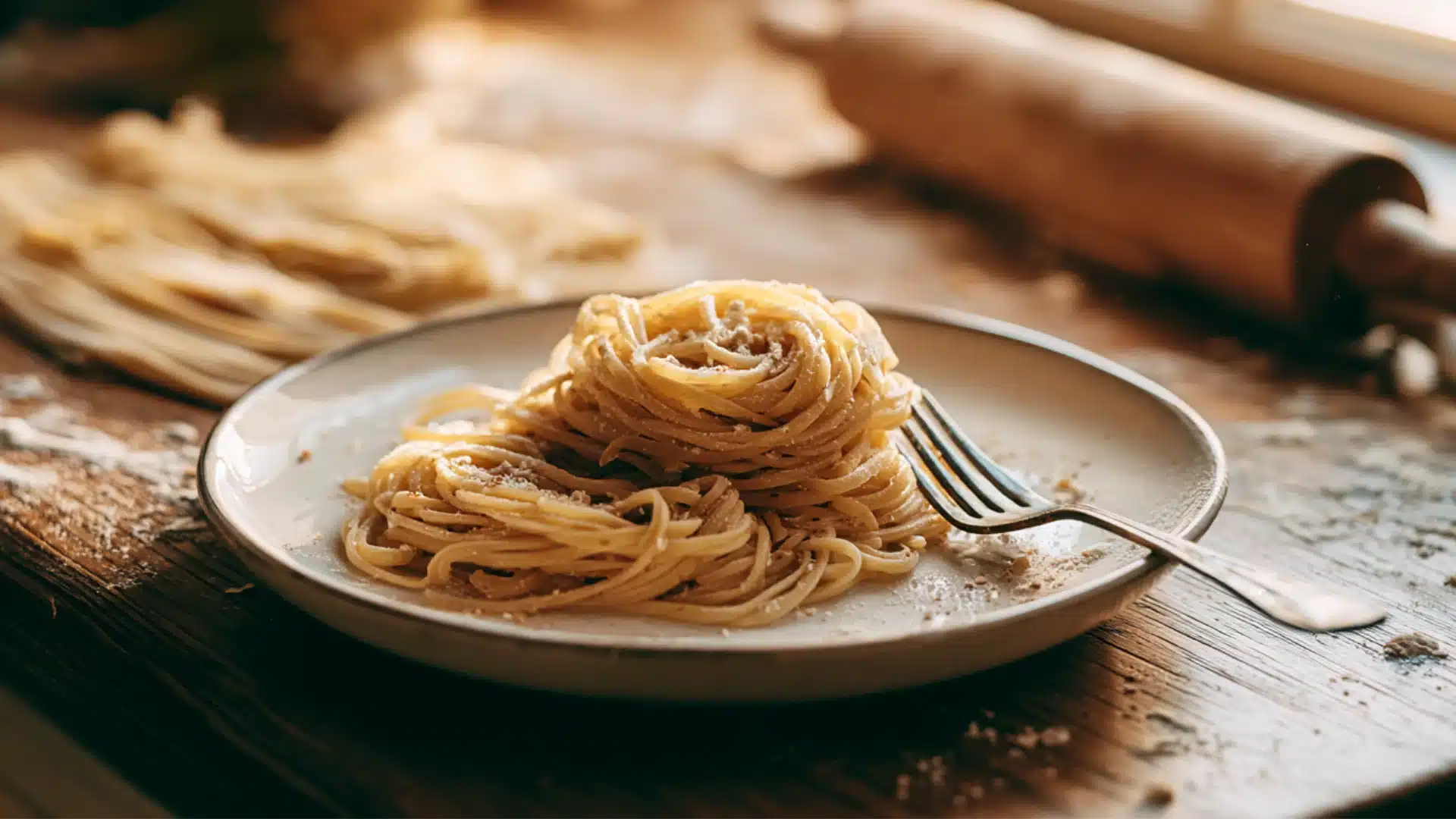

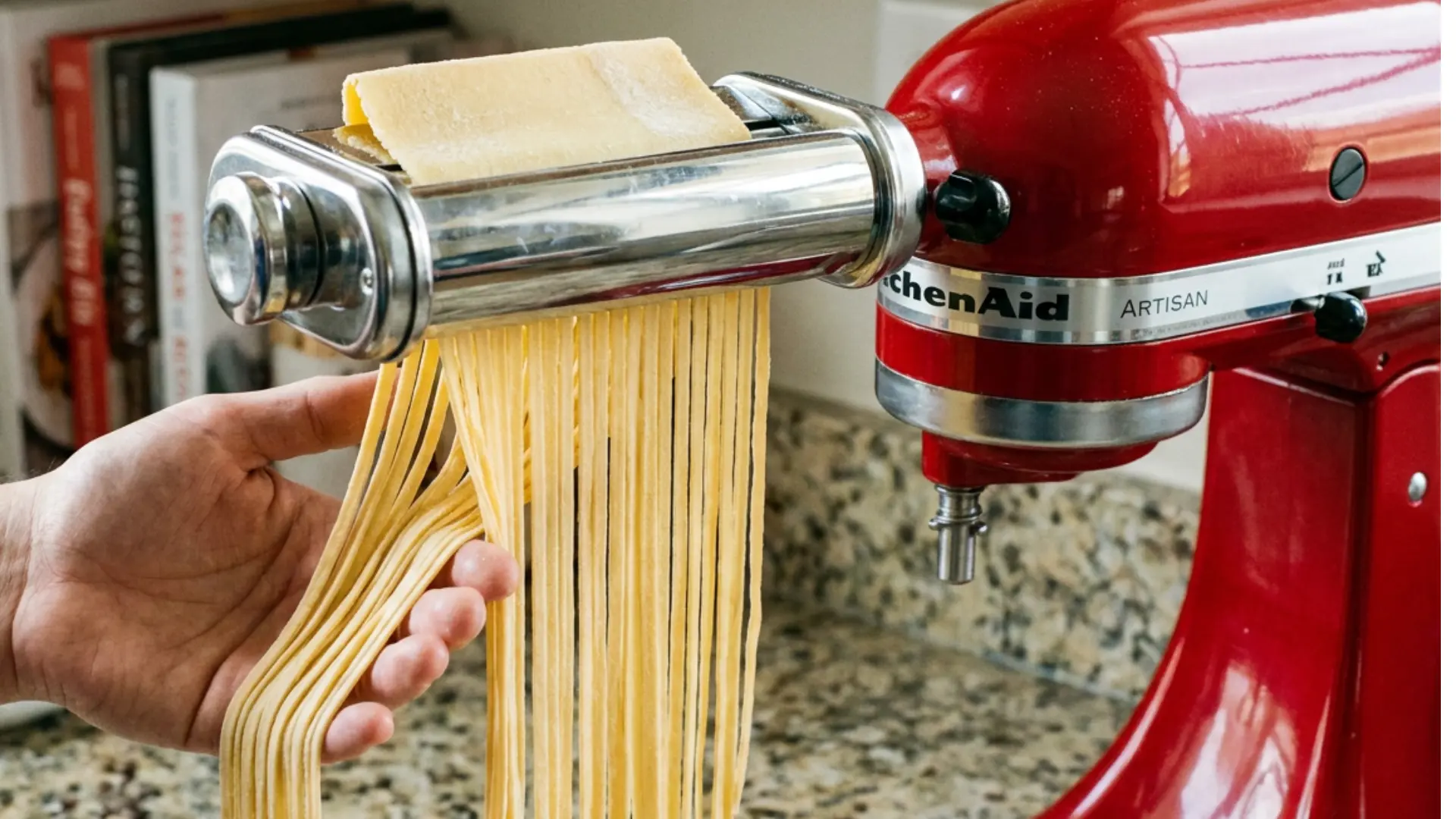

Store bought pasta is fine. It is just not the same.
Fresh homemade pasta has a texture dried pasta never comes close to. It is softer and more tender, and it holds sauce in a way that changes the whole dish.
This homemade pasta recipe takes around 20 minutes to make and 30 minutes to rest.
The ingredients are simple. The technique takes one read through to understand. And the result is the kind of meal that makes you wonder why you ever reached for the packet.
Diet Tags: Vegetarian | Vegan-adaptable (see egg-free version) | Dairy-Free
Fresh Pasta vs Dried: What You Actually Get
Fresh pasta cooks in under three minutes. The texture is softer, the flavor is richer, and it holds sauce differently. Dried pasta is processed and dehydrated. Fresh pasta is neither.
A good homemade Italian pasta recipe also gives you full control over what goes into the dough.
You choose the flour, the egg ratio, and the thickness. Want it thinner for delicate sauces? Roll it thinner.
Want more bite for a ragu? Add a little semolina. No packet gives you that.
Ingredients for Homemade Pasta (and What to Skip)
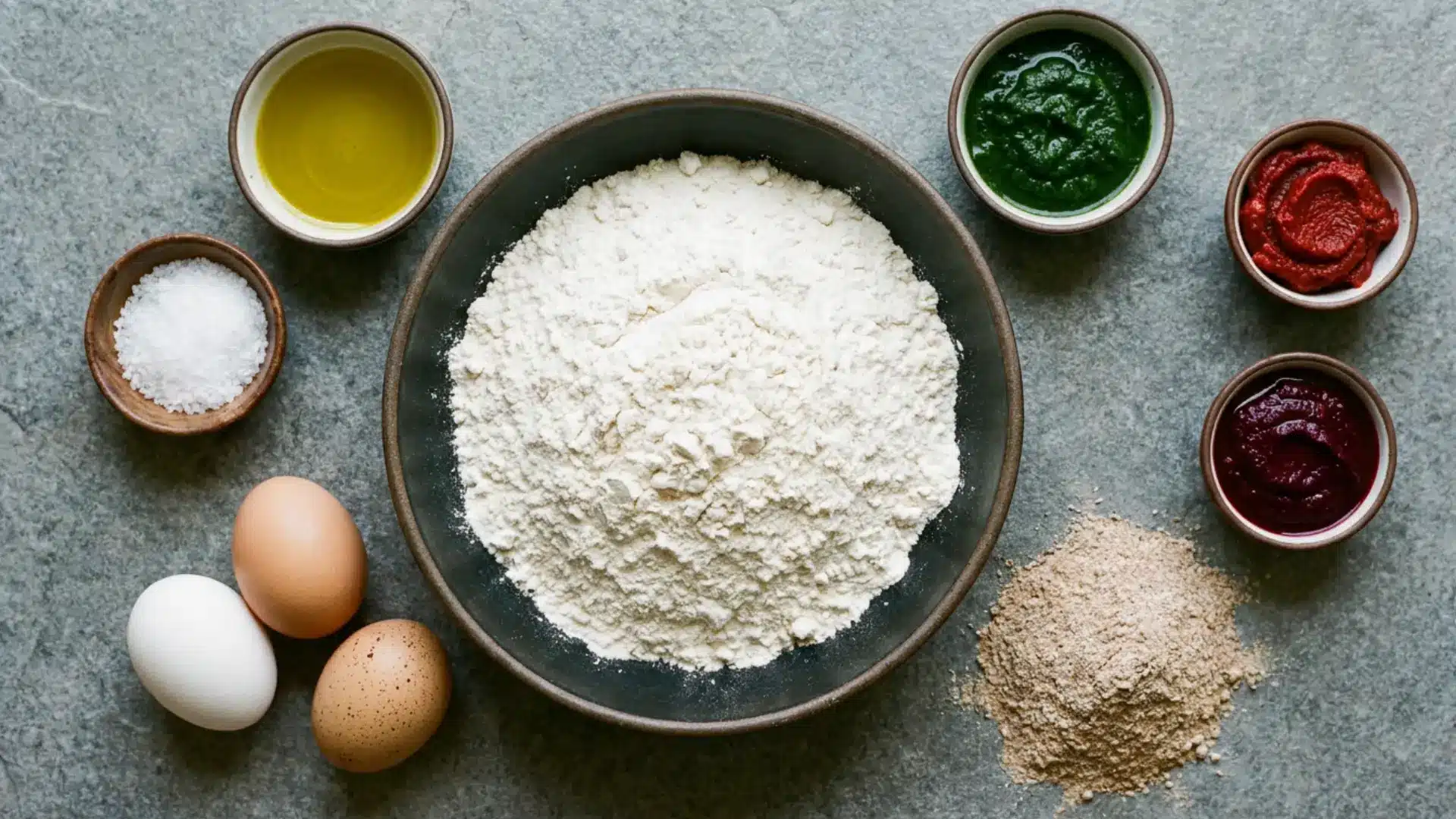
Getting the ingredients right before you start saves time and avoids problems mid dough. Everything here is straightforward.
Nothing needs a specialty store.
Basic Ingredients
- 2 cups 00 flour or all purpose flour
- 3 large eggs at room temperature
- 1 tbsp olive oil
- 1/2 tsp salt
Optional Ingredients for Variations
- 30g cooked, squeezed dry spinach for green pasta
- 1 tbsp tomato paste for red pasta
- 1 tbsp cooked pureed beet for deep purple pasta
- Half whole wheat flour for a nuttier, denser dough
- 3 tbsp aquafaba or one flax egg per whole egg for a homemade pasta recipe without eggs
How to Make Homemade Pasta at Home?
Prep Time: 20 minutes | Cook Time: 53 minutes | Serves: 4
Fresh pasta is more forgiving than most people expect.
The dough comes together quickly, the technique is straightforward, and the whole process from mixing to cutting takes under an hour. What trips most people up is not the skill level
Step 1: Bring the Dough Together
Mound the flour on a clean surface and make a well in the center.
Crack the eggs into the well and add the olive oil and salt. Beat lightly with a fork, gradually pulling the flour in from the edges.
Switch to your hands when it gets too thick and bring it into a rough ball. Add half a teaspoon of water if it feels too dry and dust lightly with flour if it sticks.
For flavored pasta, blend spinach, tomato paste, or beet into the eggs before adding to the flour. The color distributes evenly as you knead. If you see streaks, the dough needs another minute.
Step 2: Knead Until It Feels Like Soft Leather
Knead for 8 to 10 minutes on a lightly floured surface. Push away with the heel of your hand, fold back, turn a quarter turn, and repeat until the dough is smooth and elastic.
Press your thumb in at the end. If it springs back, it is ready.
Do not underknead. Underkneaded dough tears when you roll it and falls apart in boiling water.
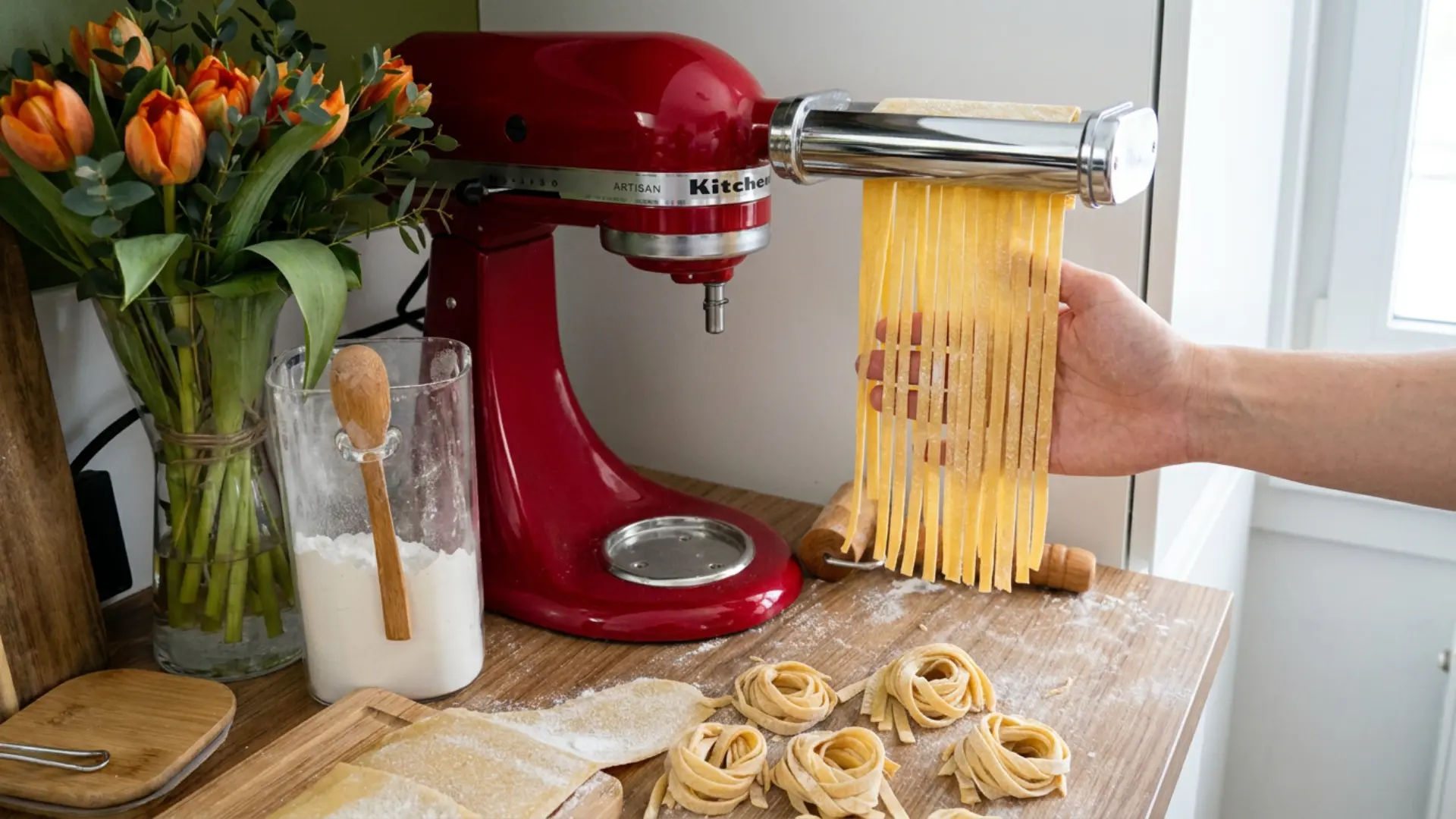
- For a pasta machine: flatten into a disc and feed through the widest setting three times, then step down one setting at a time until you reach your target thickness
- For hand rolling: knead the dough for the full 10 minutes. A firm even knead matters more than the tool you use
Step 3: Rest for 30 Minutes — Do Not Skip This
Wrap tightly in cling wrap and rest at room temperature for 30 minutes. Resting lets the gluten relax so the dough rolls without springing back.
Skip it, and the dough fights you at every stage. Thirty minutes is the minimum.
An hour is better. The starch hydrates more fully and the dough becomes noticeably easier to roll.
Step 4: Roll and Cut
Divide the rest of the dough into four portions, keeping three wrapped while you work. Dust lightly with flour and roll from the center outward, turning a quarter turn after each pass.
Roll to 2mm for most shapes and 1.5mm for ravioli.
- For noodles: fold the sheet loosely into thirds and cut at your preferred width. 5mm for tagliatelle, 2mm for linguine, 10mm for pappardelle. Unfold immediately and dust to stop sticking
- For ravioli: roll two sheets to 1.5mm. Add one teaspoon of filling at 4cm intervals, and lightly brush water around each mound. Lay the second sheet on top, press firmly to seal, cut between each mound, and press the edges with a fork
Step 5: Cook It Fast (Two to Three Minutes, no More)
Bring a large pot of water to a rolling boil and salt it heavily. Fresh pasta cooks in 2 to 3 minutes.
Do not walk away. Taste at 2 minutes and pull it the moment it loses its raw-flour taste. Overcooked fresh pasta goes soft fast and you cannot undo it.
Before you drain, set aside a cup of pasta water. It loosens thick sauces and helps them coat the pasta evenly.
Step 6: Sauces That Work With Fresh Pasta
Keep the sauce simple. Fresh pasta has its own flavor, and a heavy sauce covers it rather than works with it.
- Butter and sage: melt butter, add sage leaves, and toss straight from the pot
- Cacio e pepe: equal parts pasta water and pecorino, plus black pepper. Nothing else
- Simple tomato: canned tomatoes, garlic, olive oil, and pasta water
- Carbonara: eggs, pecorino, guanciale, and black pepper. Add pasta water slowly
- Brown butter and parmesan: coats fresh pasta better than any jarred sauce
Three Builds From the Same Base Dough
Three builds. Same base. Different results. This homemade pasta recipe works across all three without changing the core technique.
1. The Italian Version: Better Flour, Longer Rest
Use only 00 flour, and rest the dough for a full hour rather than 30 minutes.
That is the whole difference. The longer rest is why the dough rolls thinner, tears less, and produces a silkier bite. Keep the sauce simple.
Butter and sage. Cacio e pepe. A light tomato. The pasta is the point.
2. Egg-Free and Vegan: Use Aquafaba
A homemade pasta recipe without eggs works with the right swap.
Replace each whole egg with 3 tbsp aquafaba or 1 flax egg made with 1 tbsp ground flaxseed mixed with 3 tbsp water.
Add an extra half tablespoon of olive oil for richness. Roll slightly thicker at 2.5mm as the dough is more delicate. The flavor is milder and the color paler. Both are normal.
3. Pasta Without a Machine
Homemade pasta without a machine needs only a rolling pin, a sharp knife, and a clean surface.
- Use a heavy rolling pin for more control
- Roll from the center outward, turning a quarter turn every two passes
- Dust lightly but regularly. Fresh pasta sticks fast
- Work one quarter of the dough at a time
The first sheet will be uneven. By the fourth, it will feel easy.
The Three Mistakes That Wreck Fresh Pasta
The most common mistake: adding too much water too fast.
Fresh pasta dough needs water added slowly, half a teaspoon at a time. Add it all at once, and the dough becomes sticky and impossible to roll.
You cannot fix an over-hydrated dough by adding more flour. Start dry and add water only if the dough does not come together.
Second most common: skipping the rest.
Thirty minutes feels like a long time when you are hungry. Skip it, and the dough snaps back every time you roll it, tearing at the edges. Set a timer and walk away.
Third: under-kneading.
Eight minutes feels like enough. It rarely is. Under-kneaded dough looks smooth on the outside but tears the moment it hits the rolling pin.
Knead until the dough feels like soft leather and springs back when you press it.
Bottom Line
The classic takes an hour from mixing to cutting. The Italian version needs better flour and a longer rest. The egg-free version swaps aquafaba and rolls slightly thicker.
The no-machine version needs only a rolling pin and a sharp knife.
Get the base right first. Then try spinach for color, semolina for bite, or brown butter for the simplest sauce you will ever make.
Frequently Asked Questions
1. How Long Does Fresh Homemade Pasta Last in the Fridge?
Fresh pasta keeps for up to 2 days in the fridge, stored in an airtight container dusted lightly with flour to stop the pieces from sticking together.
2. Can You Dry Homemade Pasta for Later Use?
Yes, hang the cut pasta over a drying rack or the back of a chair for 30 minutes to an hour until fully dry, then store in an airtight container for up to a week.
3. What is the Difference Between 00 Flour and All Purpose Flour for Pasta?
00 flour is more finely milled and has a lower protein content, which produces a smoother, silkier dough. All-purpose flour works well but produces a slightly chewier result.
4. Can You Make Homemade Pasta Dough in a Food Processor?
Yes, pulse the dry ingredients first, then add the wet ingredients and pulse until the dough just comes together. Finish kneading by hand for 2 to 3 minutes to develop the texture properly.
5. Why is My Homemade Pasta Chewy After Cooking?
The dough was either overkneaded or rolled too thick. Roll to 2mm for most shapes and make sure the water is at a full rolling boil before the pasta goes in.