

The ceiling of a room is undoubtedly the heart of it. Get a good ceiling, and everyone who enters the room will be instantly drawn to it.
But get a bad one, and your room just earned some negative aura points.
The best ceilings are always delivered when wood is used as the material. You get that vintage feel, straight out of a literary novel.
Wood ceilings work in almost any home, from budget-friendly pine shiplap to high-end reclaimed beams.
Below are eight ideas organized by room, plus the wood types and lighting choices that make each one work. Costs range from about $4 to $30 per square foot, depending on the material and style.
Why Does Wood Ceiling Get the Edge Over Other Materials?
Paint can fade, wallpaper can peel, and decorative panels do not go with every style.
Wood emerges as a clear winner among these.
Because it works with everything! From modern homes to traditional farmhouses and period properties, wood suits them all.
It adds a texture and a sense of craftsmanship that instantly reshapes a space.
And the cherry on top is that it offers a budget-friendly way to achieve the same visual look as other materials, such as PVC or MDF shiplap, which comes at a pocket-emptying rate.
Cheapest to Luxurious: Wood Options for Ceiling
Just because wood has a reputation for being a budget-friendly option doesn’t mean it lacks luxurious options.
It has everything for everyone’s choice!
The affordable choices include Pine shiplap, MDF beadboards, and Tongue-and-groove pine. All three are easy to install.
And they suit farmhouse, Scandinavian, and modern interiors.
The high-end options are Reclaimed wood ceilings, White oak planks, and exposed beams. All of them create a dramatic and distinctive look.
Living Room Wood Ceiling Ideas
The ceiling of the living room should always look its best. It’s the first room guests notice; it’s where all the fun happens.
Hence, it deserves the best of the ideas.
For an average 300-square-foot living room, that works out to roughly $1,800 to $7,500 total, depending on whether you go with slats or full beams.
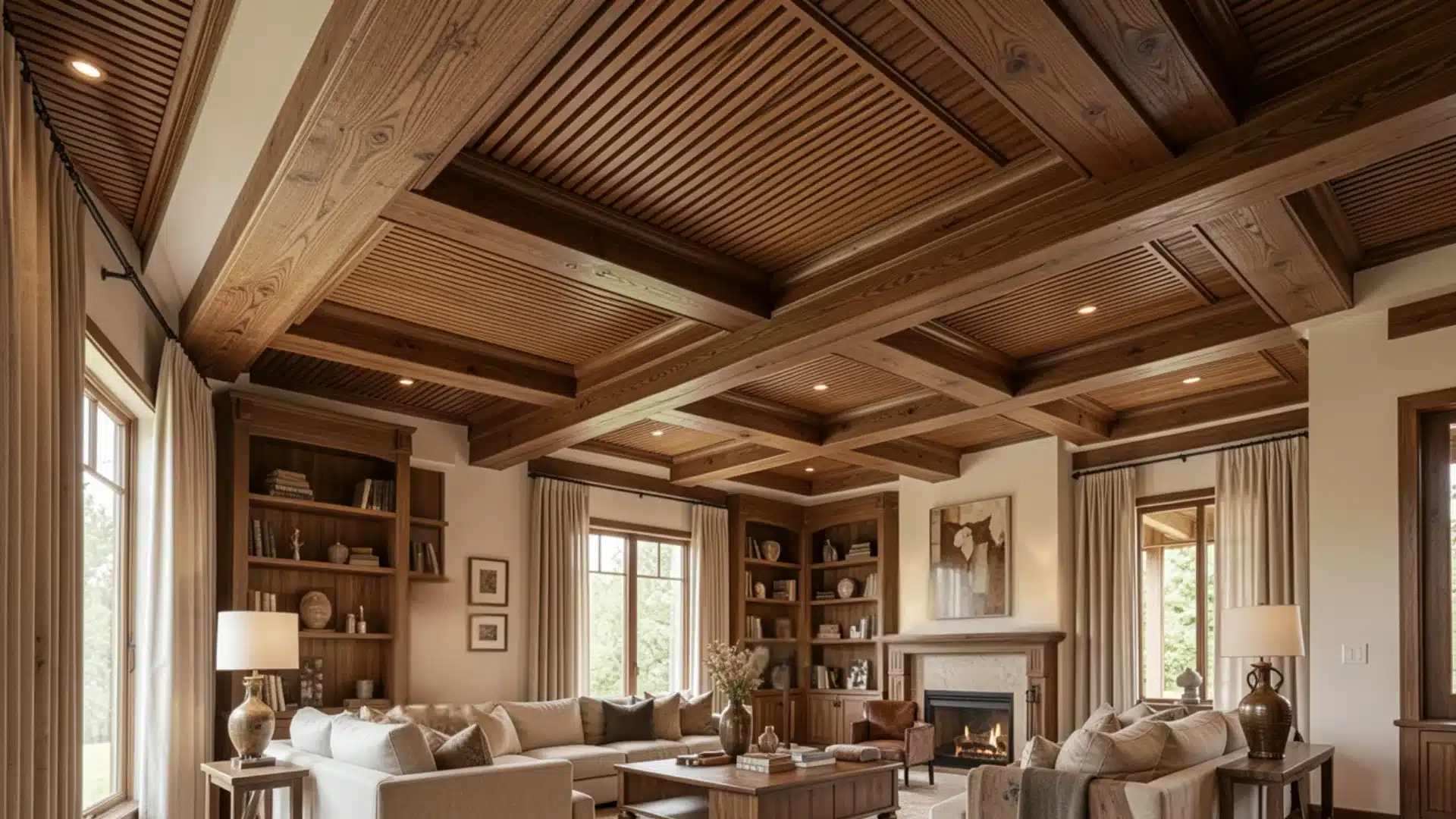
1. Exposed Wood Beam Ceiling
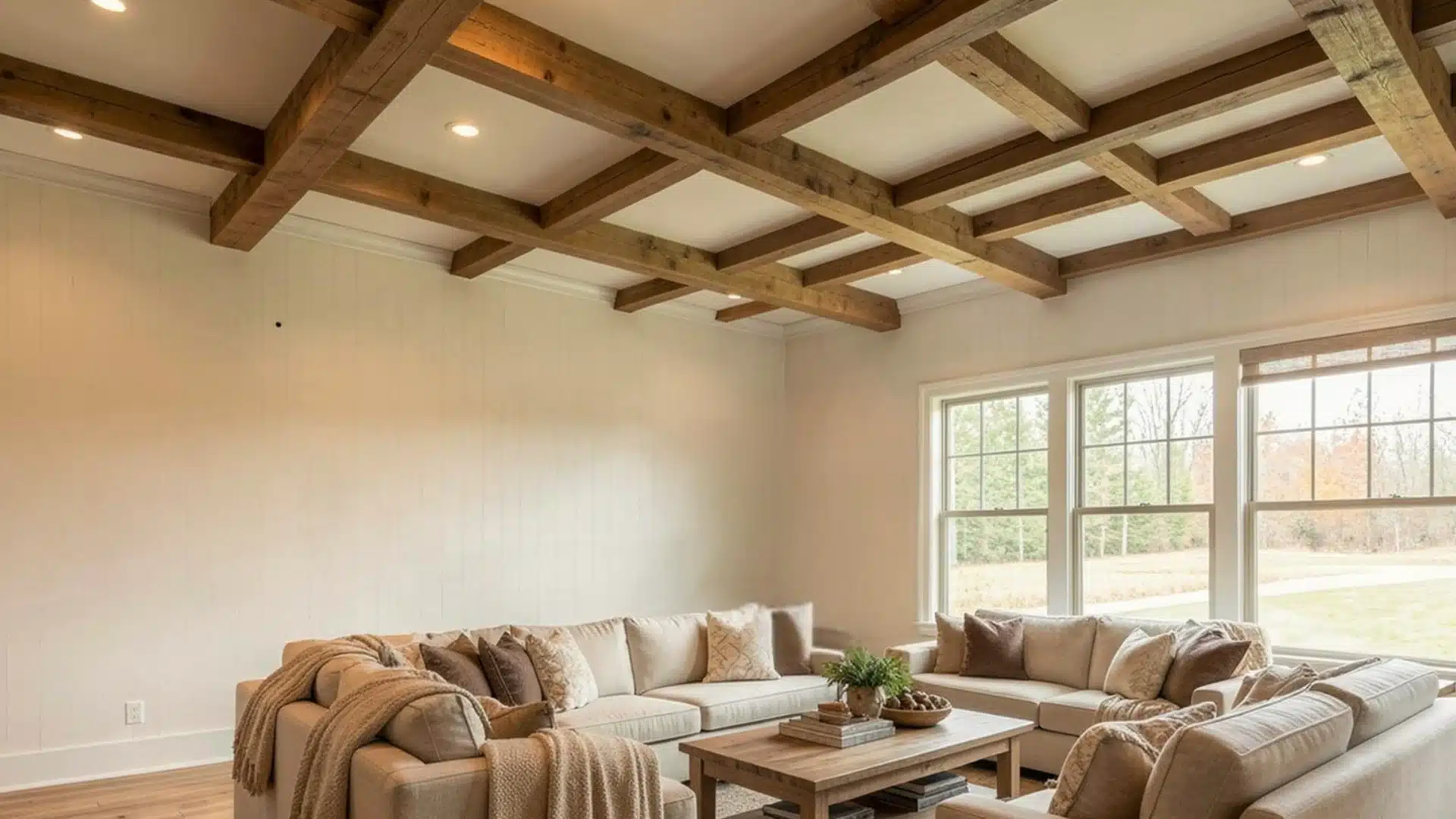
Install real or faux wood beams across an existing drywall ceiling, spacing them evenly for balance.
This design adds architectural character and visual depth to the living room.
And on top of that, it makes the room feel more custom-built. Expect to spend roughly $8-$25 per square foot, depending on materials and beam size.
Pair the beams with neutral furniture and warm lighting for balance.
2. Natural Wood Slat Ceiling
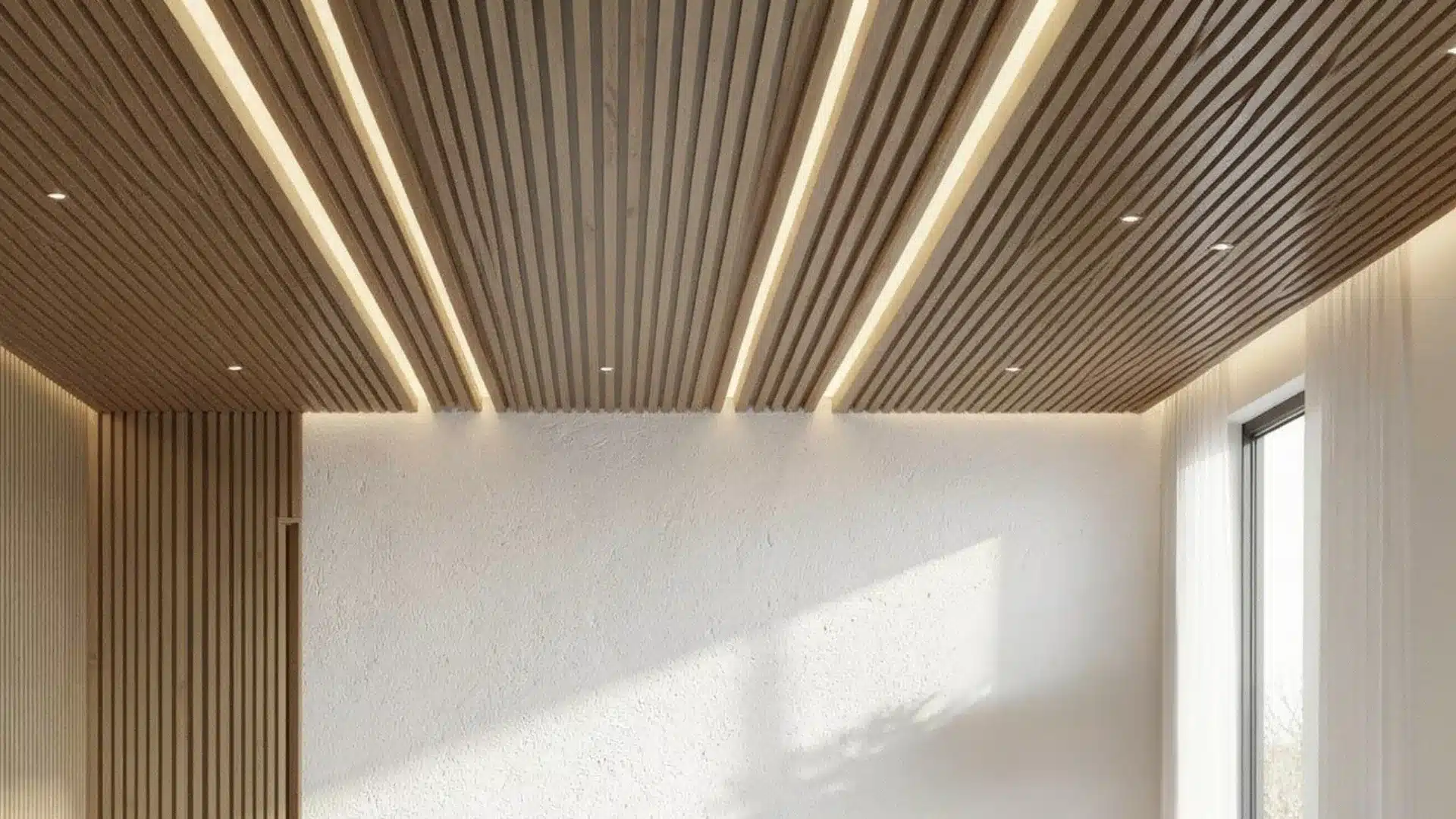
Attach narrow wood slats over a backing surface, keeping consistent gaps between each piece.
The linear pattern draws the eye upward and creates a clean, contemporary look. Most installations cost between $6 and $15 per square foot.
For Bedroom
A bedroom is a much more personal space than the living room. Hence, the ideas for these offer a more personal, comforting look.
For an average 150-square-foot bedroom, expect a total somewhere between $600 and $1,800, depending on the finish.
3. Whitewashed Wood Plank Ceiling
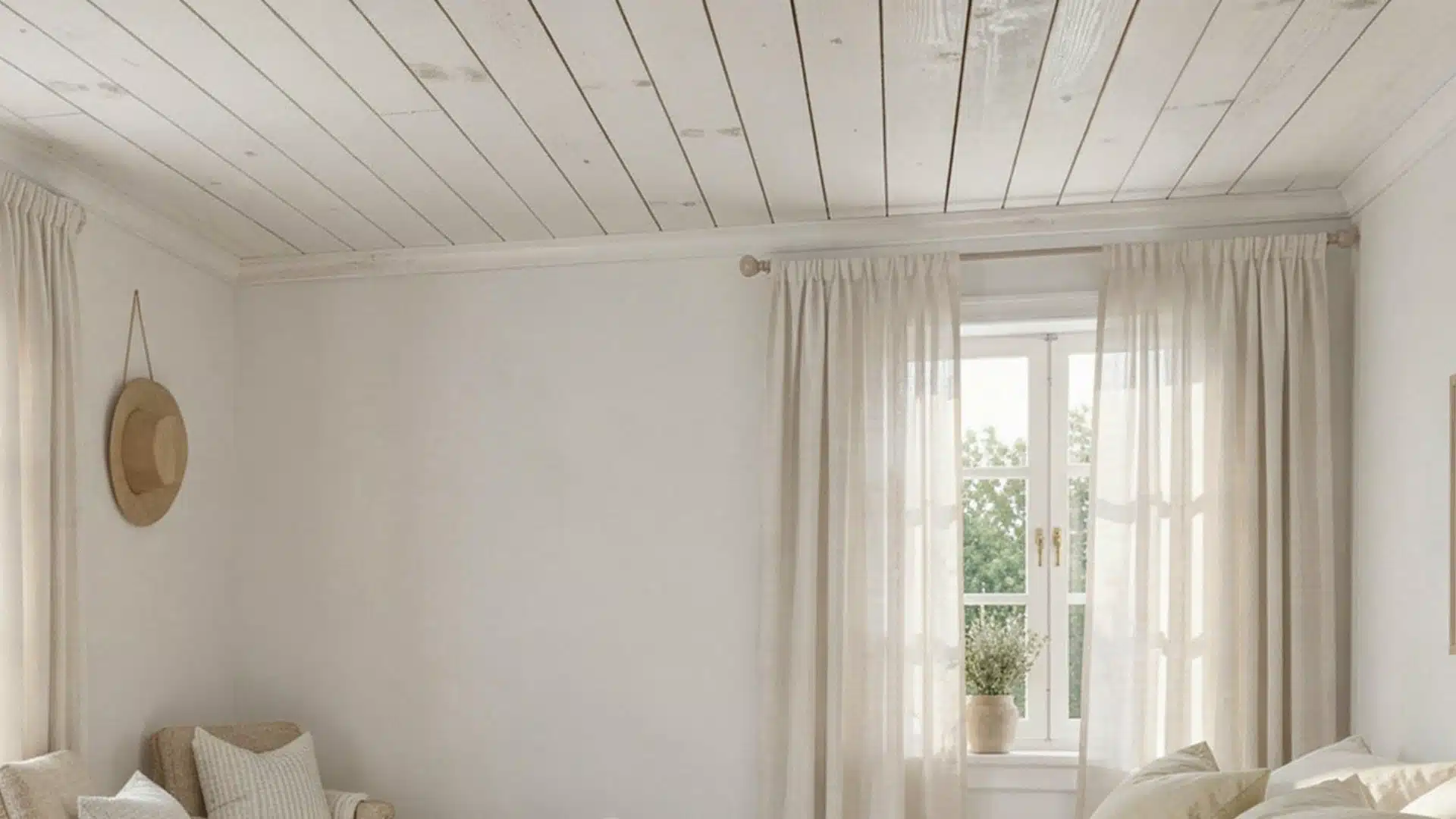
Install tongue-and-groove planks finished with a whitewash stain to create a bright, airy retreat.
The finish softens the wood grain while maintaining its natural character. Also, avoid pairing this ceiling with too many competing wood tones.
The cost of this idea generally ranges from $4 to $10 per square foot.
4. Dark-Stained Wood Ceiling
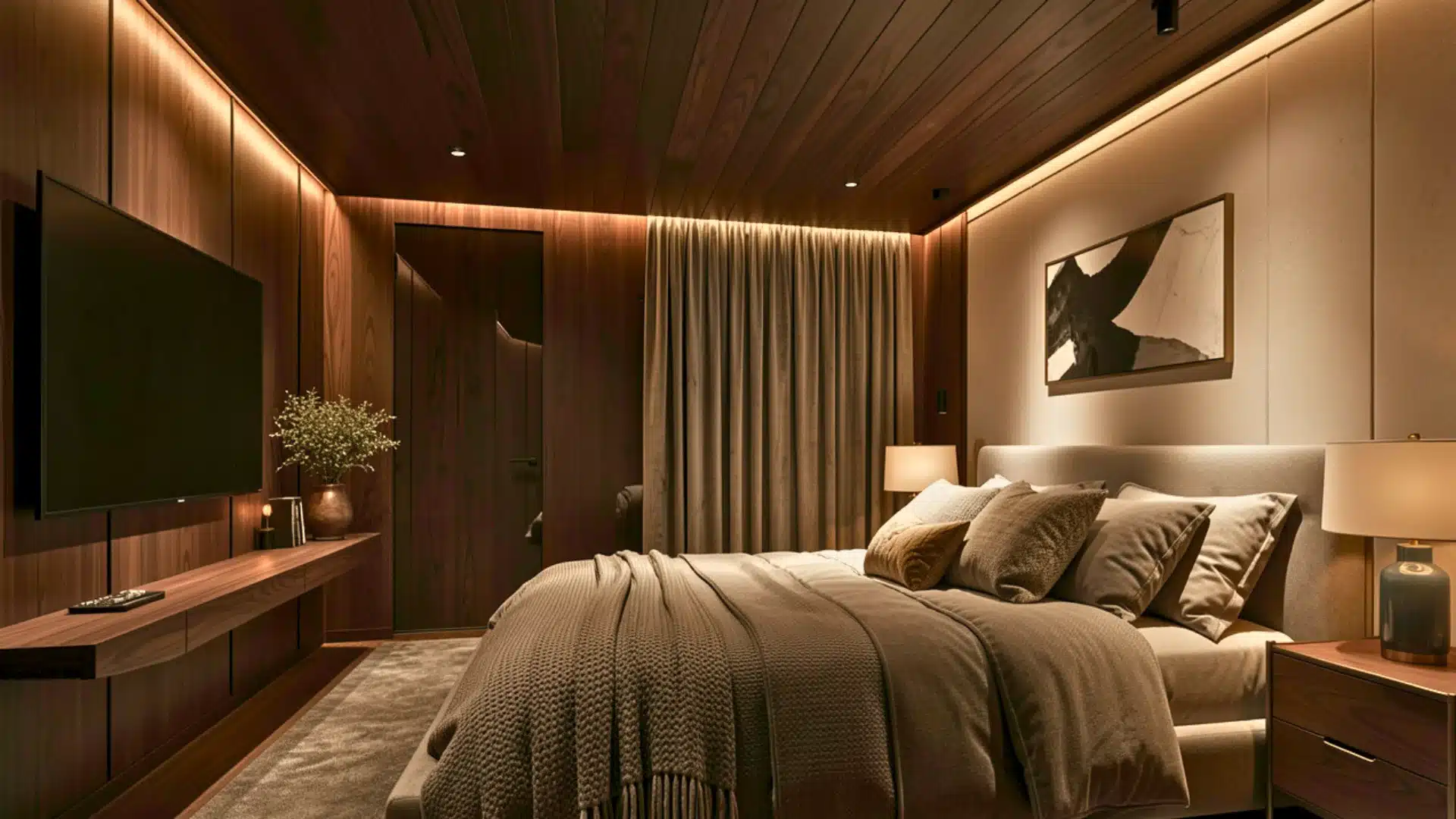
A dark wood ceiling adds depth and creates an atmosphere that feels luxurious and intimate.
This idea works best with generous natural light or higher ceilings. Also, avoid using dark stains in already dim rooms unless additional lighting is planned.
The expected cost for this idea is $5-$12 per square foot.
Ideas For Bathroom
When choosing from the wood ceiling ideas for your bathroom, consider things like moisture, humidity, and water splashes.
For an average 40-square-foot bathroom, that comes out to roughly $240 to $640 total — one of the more affordable rooms on this list to finish in wood.
5. Cedar Plank Ceiling
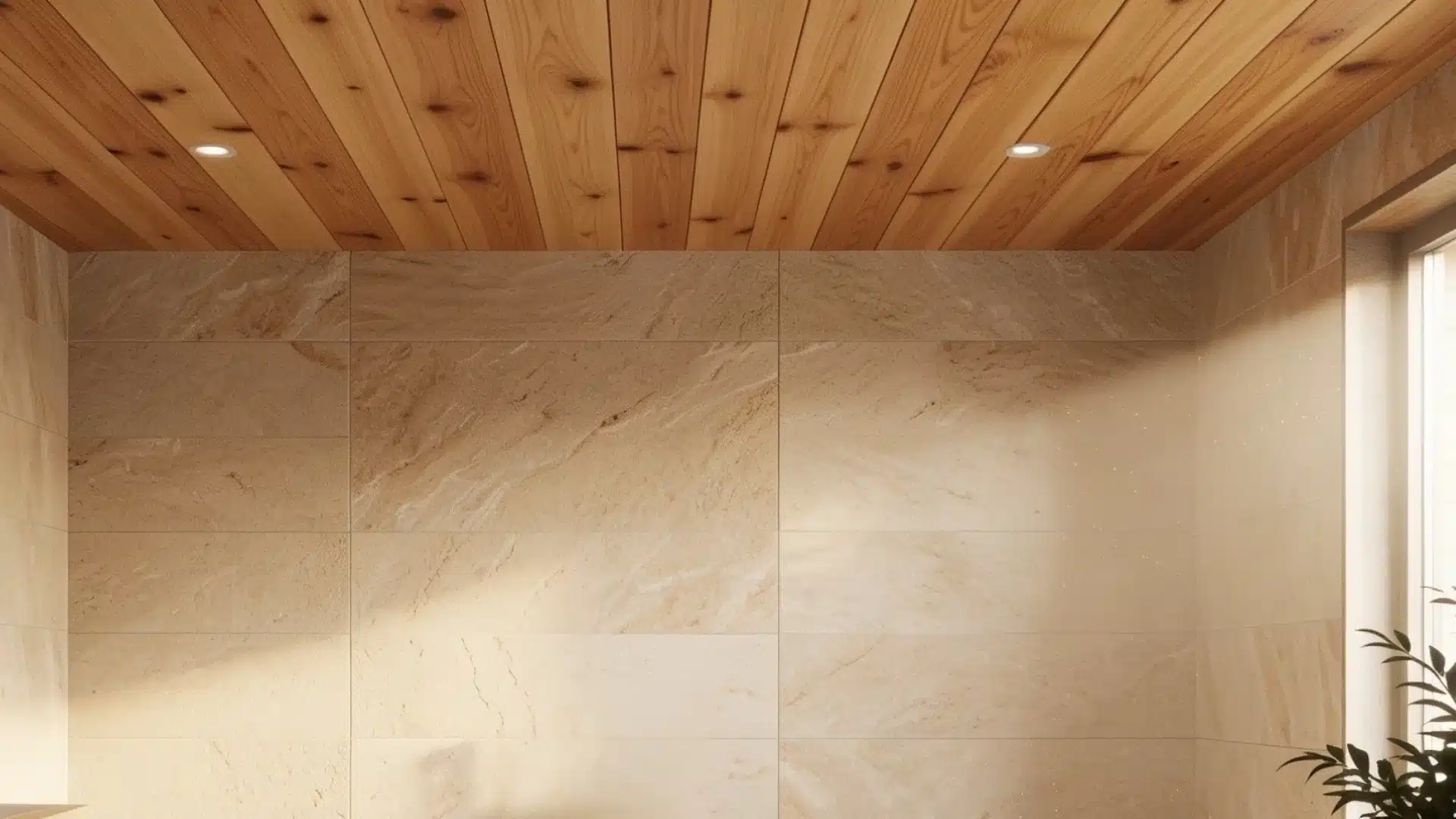
Cedar is naturally resistant to moisture, making it an excellent choice for bathrooms.
When installed and sealed correctly, it creates a spa-like atmosphere with warmth and texture. For best results, pair cedar ceilings with natural stone and soft neutral colors.
The cost of this idea is approximately $6-$14 per square foot.
6. Wood Slat Accent Ceiling
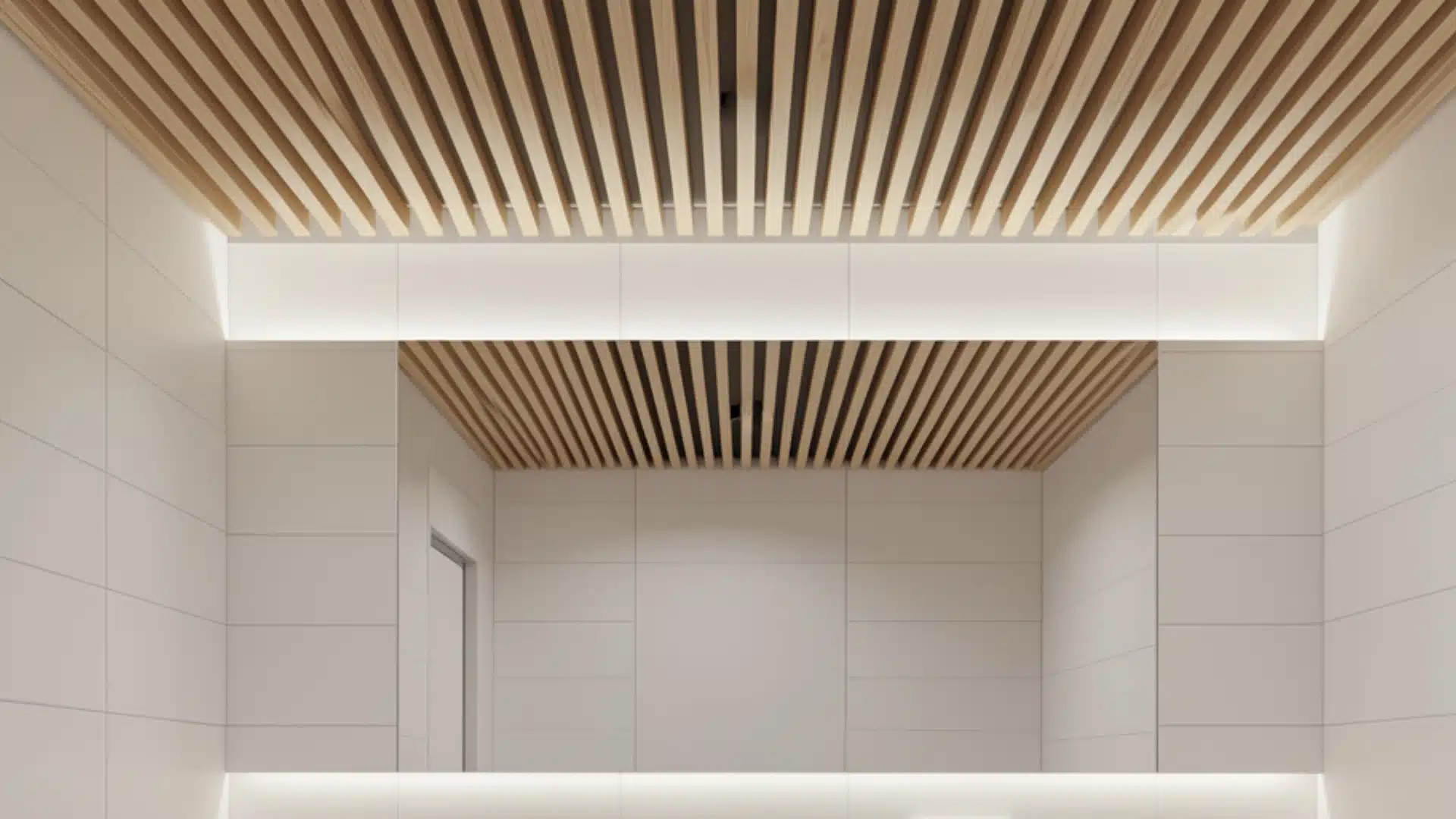
A wood slat ceiling turns a simple bathroom into a designer-inspired space.
Also, avoid overly narrow rooms with dark slats, as they may feel enclosed. Light-colored slats combined with minimalist fixtures create a clean, contemporary look.
Installation typically costs between $7 and $16 per square foot.
For Entryways
For entryways, choosing an idea that instantly catches the eye of everyone who enters the house is the right choice.
The ideas listed below offer the same.
For an average 60-square-foot entryway, expect a total between $360 and $1,800, with coffered designs landing at the higher end.
7. Coffered Wood Ceiling
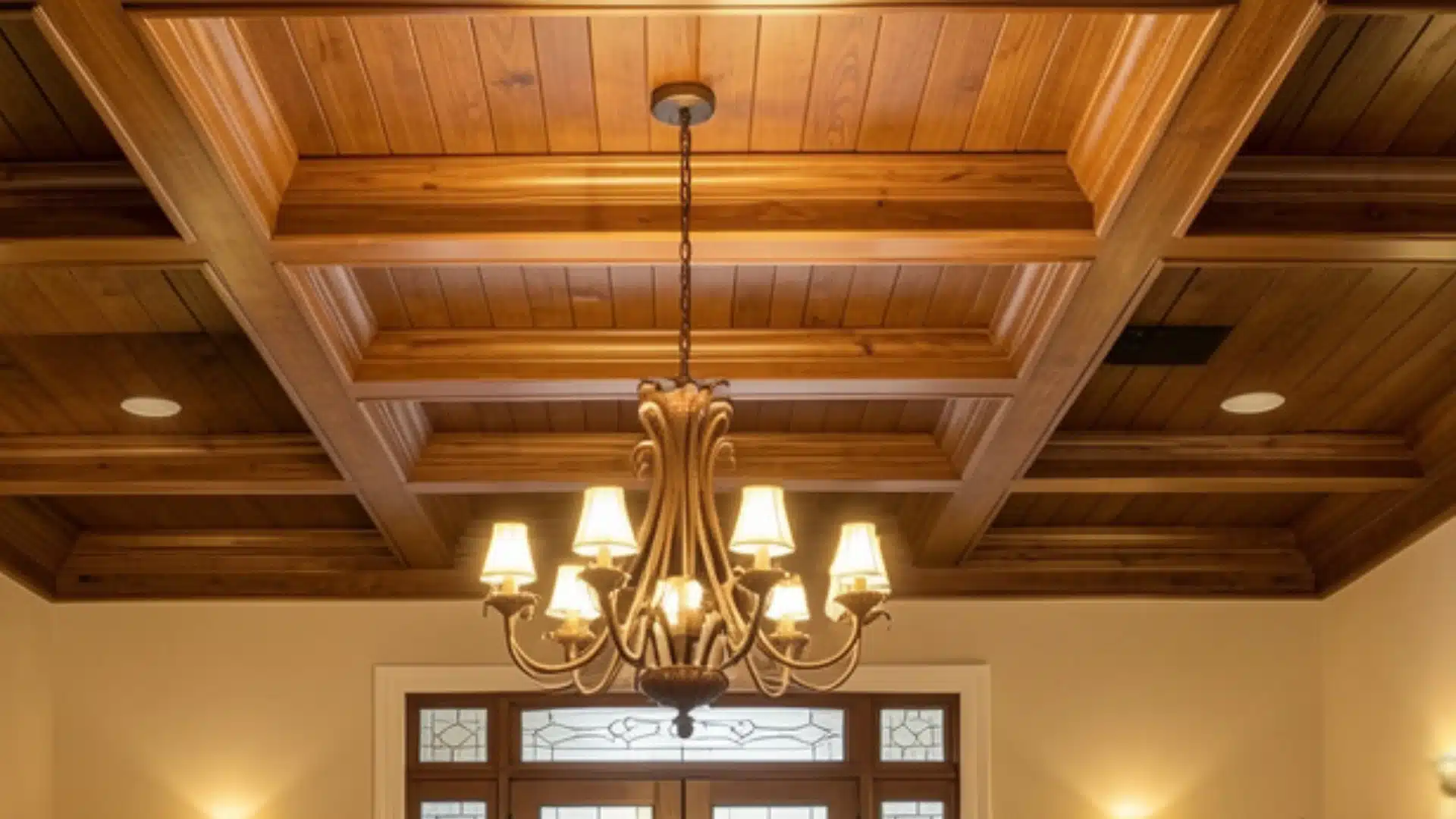
A coffered wood ceiling is one of the best choices for entryways, as it adds depth and sophistication.
Avoid overly intricate designs in small foyers, where they can feel like too much. Costs generally range from $10 to $30 per square foot installed.
8. Vaulted Wood Plank Ceiling
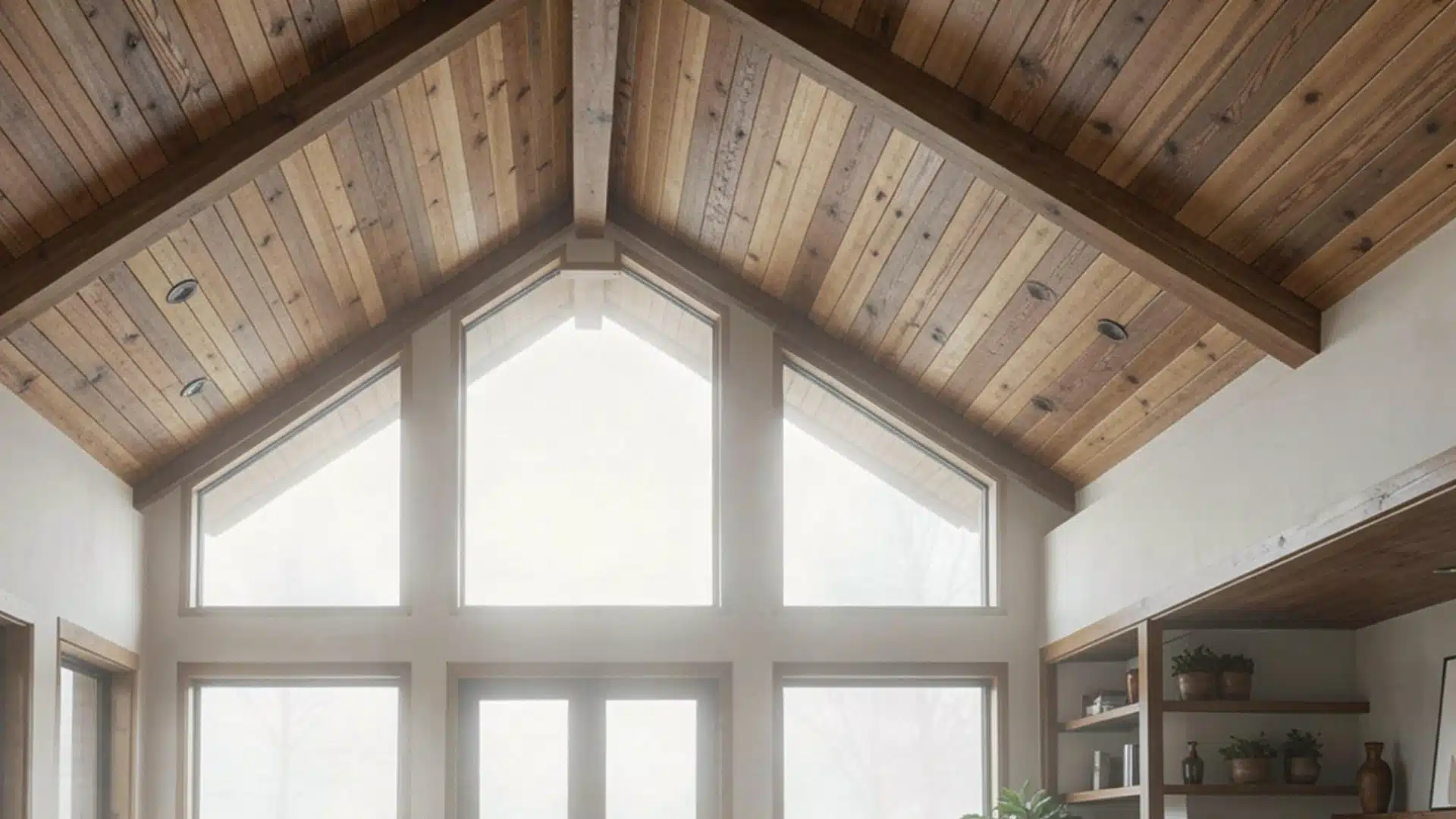
Installing wood planks along a vaulted ceiling highlights the room’s height and architectural character.
This design creates a welcoming atmosphere while making the entryway feel larger.
Avoid mixing too many wood finishes in close proximity, as it can look disjointed. Expect costs of roughly $6–$15 per square foot.
Does Your Ceiling Height Work for This?
Not every idea here suits a standard 8-foot ceiling.
Height changes how each style reads, and in some cases, rules an option out entirely rather than just affecting how it looks.
| Idea | Minimum Ceiling Height | Why It Matters |
|---|---|---|
| Exposed Wood Beam Ceiling | 9 feet or higher | Beams visually lower the ceiling; in an 8-foot room they can feel cramped rather than architectural |
| Natural Wood Slat Ceiling | 8 feet works fine | Flat profile adds texture without eating into height |
| Whitewashed Wood Plank Ceiling | 8 feet works fine | Light finish keeps the room feeling open regardless of height |
| Dark-Stained Wood Ceiling | 9 feet or higher | Dark tone already lowers the perceived ceiling; low rooms can feel heavy |
| Cedar Plank Ceiling | 8 feet works fine | Standard bathroom height is rarely an issue for this one |
| Wood Slat Accent Ceiling | 8 feet works fine | Same low-profile advantage as the living room slat version |
| Coffered Wood Ceiling | 9 feet or higher | Recessed panels need real depth to read as coffered instead of flat |
| Vaulted Wood Plank Ceiling | Requires an existing vaulted or sloped ceiling | Not a height question — this one depends on the structure itself |
If your ceiling sits at a standard 8 feet, the wood slat and whitewashed plank ideas are the safest bets — both add texture without demanding extra height.
Save the beams and coffered look for rooms with more clearance to work with.
What’s the Best Type of Wood to Use?
Choosing the right wood depends on your budget, the room’s moisture, your preferred finish, and how you want it to age.
Pine is affordable and takes paint or stain well.
Cedar naturally resists moisture, making it great for humid spaces.
For a premium, long-lasting finish, choose white oak or walnut. In bathrooms or laundry rooms, sealed cedar or PVC wood-look planks are better options than MDF or untreated pine.
Matching Lighting to Your Wood Ceiling
The right lighting is what finishes off any wood ceiling idea.
When paired correctly, lighting highlights the grain, texture, and warmth of the wood, turning the ceiling into a standout design feature.
- Use directional recessed lighting instead of standard can lights. Angled fixtures highlight the wood grain and texture, creating depth and visual interest rather than leaving the ceiling in shadow.
- Install pendant lights in kitchens and dining rooms. Hanging fixtures naturally draw attention upward, helping the wood ceiling become part of the room’s overall design statement.
- Pair warm-toned woods with warm-white bulbs. Pine, cedar, and honey oak look richer under 2700K–3000K lighting, which enhances warmth and preserves natural color variation.
- Avoid cool-white bulbs with warm wood ceilings. High-Kelvin lighting can wash out natural wood tones and create a flat, overly sterile appearance.
- Avoid uneven lighting placement. Poorly spaced fixtures can create dark patches across the ceiling, preventing the wood texture from being showcased effectively.
Conclusion
The right wood ceiling ideas can completely change how a room looks and feels.
From exposed beams in the living room to cedar planks in the bathroom, every option brings real warmth that paint or wallpaper simply cannot match.
Pick the wood type that fits your budget and your room’s moisture level.
Get your lighting right. And you’ll have a ceiling that stops people in their tracks, for all the right reasons.
Frequently Asked Questions (FAQ’s)
1. What is the Cheapest Wood Ceiling Option?
Pine shiplap and tongue-and-groove pine are the most budget-friendly choices. Both are easy to install and cost under $10 per square foot.
2. Can You Install a Wood Ceiling in a Bathroom?
Yes. Cedar is naturally moisture-resistant and works well in bathrooms.
3. What Type of Lighting Works Best with a Wood Ceiling?
Warm-white bulbs between 2700K and 3000K work best. They bring out the natural tones in pine, cedar, and honey oak beautifully.