


Four walls and a roof make a house. Curtains make it yours.
They control light, block the outside world, and give a room its mood.
But none of that works when the panels hang too short, gap in the middle, or sit flat because the width was cut too tightly.
Getting your curtain measurements right the first time is the difference between a window that looks finished and one that looks forgotten.
Measure your rod width, not the window frame. Multiply that figure by 1.5 to 2 for fullness, then drop a straight measurement from the rod down to your chosen hem point.
Curtain Measurement Terms You Should Know
Curtain Width
Curtain width is the total amount of fabric needed to cover the window properly when the curtains are closed.
This is not the same as the window frame width. Curtains need to be wider than the window, both to cover the frame and to create soft, gathered folds rather than hanging flat like a bedsheet.
Curtain Length or Drop
Curtain length, also called drop, is measured from the rod or hanging point down to wherever the curtain should end.
The ending point could be the sill, the apron (just below the sill), or the floor. Drop is always measured from the rod position, not from the top of the window frame.
Rod Width
Rod width is the full length of your curtain rod from one end to the other.
In most rooms, the rod extends 4 to 10 inches past each side of the window frame.
This means the rod is always wider than the window itself. Your curtain width calculation starts from this rod width figure, not from the window frame measurement.
Fullness
Fullness is the extra fabric that allows curtains to gather into soft folds when drawn closed.
A curtain cut to exactly match the rod width will hang flat with no fold or drape. a fullness ratio of 1.5 to 2 times the rod width is standard for most heading styles.
A higher ratio gives richer, more layered folds. A lower ratio gives a leaner, more minimal look.
Set the Rod Position Before You Measure Anything
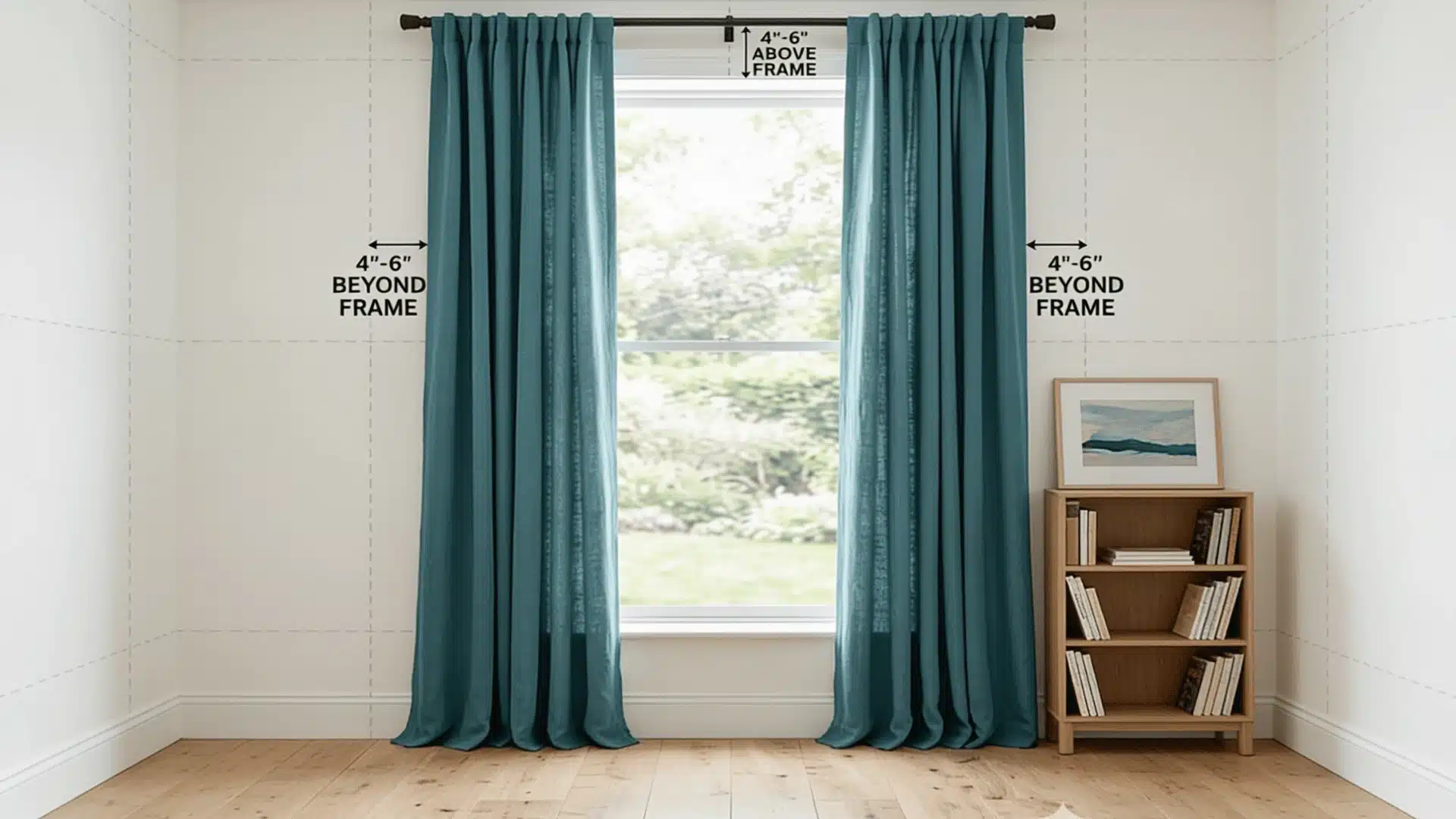
Rod placement shapes the whole look of the window and tells you how the curtains will look. Decide on this before you measure anything else.
Mount the Rod Higher Than You Think
This lifts the eye and makes the window feel taller. For a more dramatic effect, position the rod 8 to 12 inches above the frame or just below the ceiling coving.
High rod placement is one of the most effective and lowest-cost ways to make a room feel more spacious.
Extend the Rod Past the Frame on Both Sides
This lets the curtain stack clear the glass when open, so natural light is not blocked.
In narrow rooms or small windows, 4 inches per side is enough. In larger, more generous rooms, 6 to 10 inches per side gives a more proportional finish.
Make Sure the Rod Is Level Before Measuring Drop
Even a small tilt affects the hem. Use a level or spirit level app before marking your bracket positions.
Once the rod is at the right height and level, you have a fixed start point for every length measurement in that room.
Tools You Need Before Measuring Curtains
Before you start, gather these. Measuring twice with the wrong tool still gives you the wrong number.
- Metal tape measure (essential): More accurate than a fabric tape, which flexes and stretches.
- Pencil and notepad (essential): Write measurements down immediately. Memory fails across multiple windows.
- Step stool or sturdy ladder (Essential): Needed to reach the rod position safely and measure straight.
- Level (recommended): Confirms bracket marks are horizontal before you measure drop. Substitute: a spirit level app on your phone.
- Phone camera (recommended): A quick photo of each window gives you a reference if measurements get questioned later.
- Window measurement worksheet (optional): Useful when measuring several windows in one session
How to Measure for Curtain Width?
Curtains should always be wider than the window. A curtain cut to match the window frame exactly will look tight and flat.
Here is how to get the right width in four steps.
Step 1: Measure the Window Frame from Side to Side
Place the end of your metal tape measure at one inner edge of the window frame and extend it to the opposite inner edge. Write this down.
Step 2: Add Your Rod Extension on Both Sides
Decide how far your rod will extend past each side of the frame, then add that figure twice.
For a 48-inch window with 6 inches of extension on each side, your rod width becomes 60 inches.
Step 3: Multiply the Rod Width by Your Fullness Ratio
For most everyday curtains, multiply by 1.5 to 2. For pencil pleat or pinch pleat heading styles, use 2 to 2.5. This gives your total curtain fabric width.
Step 4: Divide by the Number of Panels
Most windows use two panels. Divide the total fabric width by two to get the per-panel width. Always round up, not down.
Curtain Width Formula
- Window frame width + rod extension on both sides = rod width
- Rod width x 1.5 to 2 = total curtain width needed
- Total curtain width / number of panels = per-panel width
Curtain Width Example
For a 48-inch window, add 6 inches on each side. Rod width becomes 60 inches.
For proper fullness at a 1.5 to 2 ratio, you need 90 to 120 inches of total curtain width.
Across two panels, each panel should be 45 to 60 inches wide. If the closest standard panel size is 54 inches, choose that over the smaller option.
How to Measure for Curtain Length?
Curtain length is measured from the rod position down to your chosen hem point. Never measure the window glass alone.
The rod sits above the frame, so that figure will always come up short.
Mark the Rod Position First
Mark or confirm where the rod will sit, then measure straight down from that point to the floor.
Choose Your Hem Finish
The four standard options are:
- Sill — curtain ends at the windowsill
- Apron — 4 inches below the sill
- Floor — stop 0.5 inches above the floor
- Puddle — add 2 to 6 extra inches beyond the floor measurement
Puddle length looks striking in formal rooms but collects dust quickly. It is not a practical choice for high-traffic areas or homes with pets.
Match to the Nearest Standard Drop
Most off-the-shelf curtains come in 54, 72, 84, 90, and 108 inches. Always round up, never down.
When Your Measurement Falls Between Standard Sizes
Standard drops are 54, 72, 84, 90, and 108 inches. Most measurements don’t land exactly on one of those.
Here’s what to do depending on the gap.
- Within 1–2 inches short: Order the next size up and hem to fit. Most curtains have a generous hem allowance of 3 to 4 inches.
- More than 2 inches short: Order custom length or choose the larger standard size and hem down. Don’t order the smaller size — a hem can only take fabric away, not add it back.
- More than 2 inches too long: Order the larger size and have it hemmed. Puddling that much fabric unintentionally reads as a mistake, not a style choice.
- Exactly between two sizes: Always go longer. You can shorten a curtain. You can’t stretch one.
For a full breakdown of each length style and which rooms they suit best, see our curtain length guide.
How to Measure for Different Curtain Styles
Heading style changes where your measurement starts and how the fabric sits on the rod.
Rod Pocket Curtains
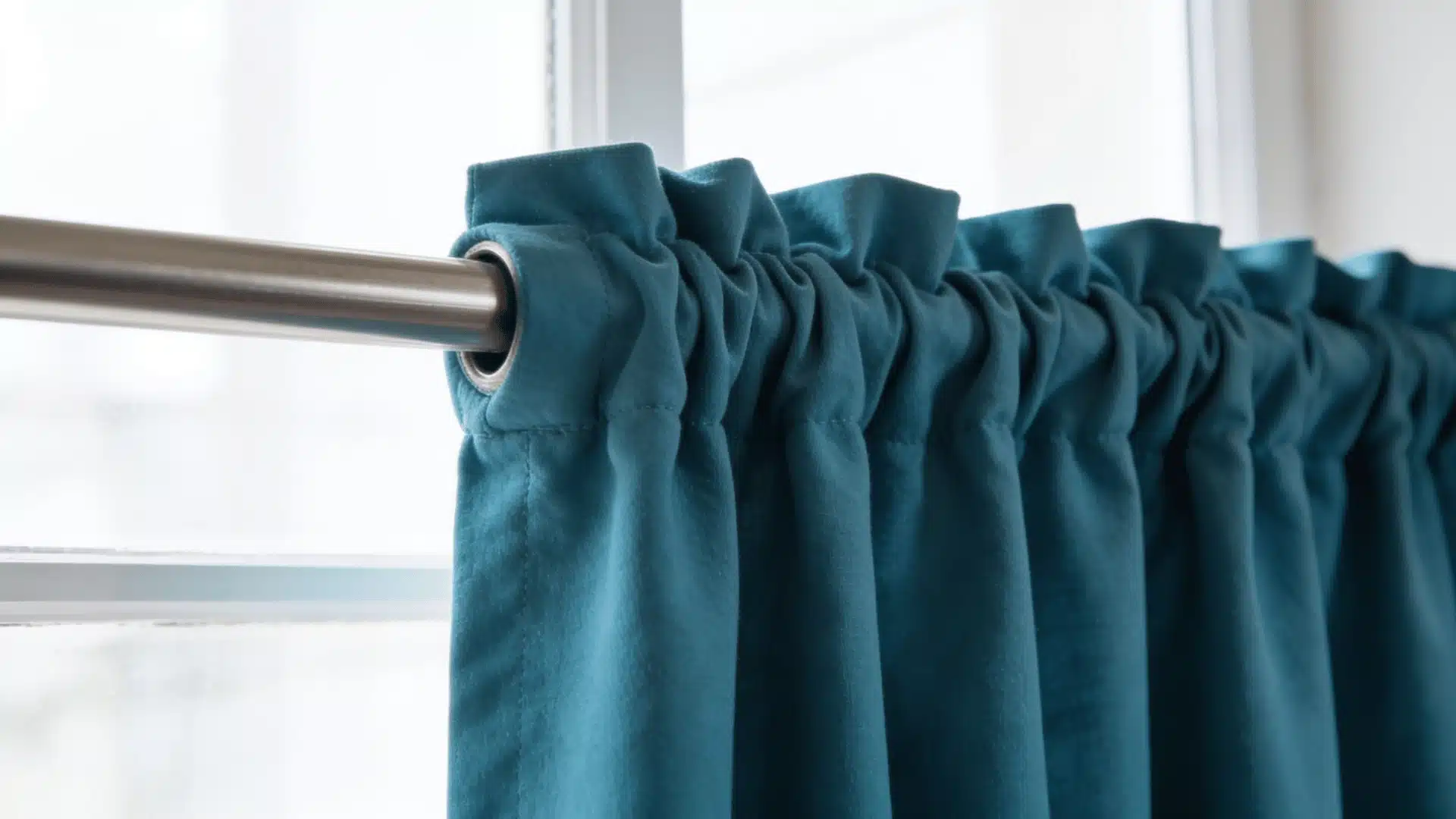
The fabric is threaded directly onto the rod through a sewn pocket at the top. Measure from the top of the rod to the desired curtain end.
The curtain sits slightly above the rod top because the pocket slots over it, so account for 0.5 to 1 inch of lift when measuring drop.
Grommet Curtains
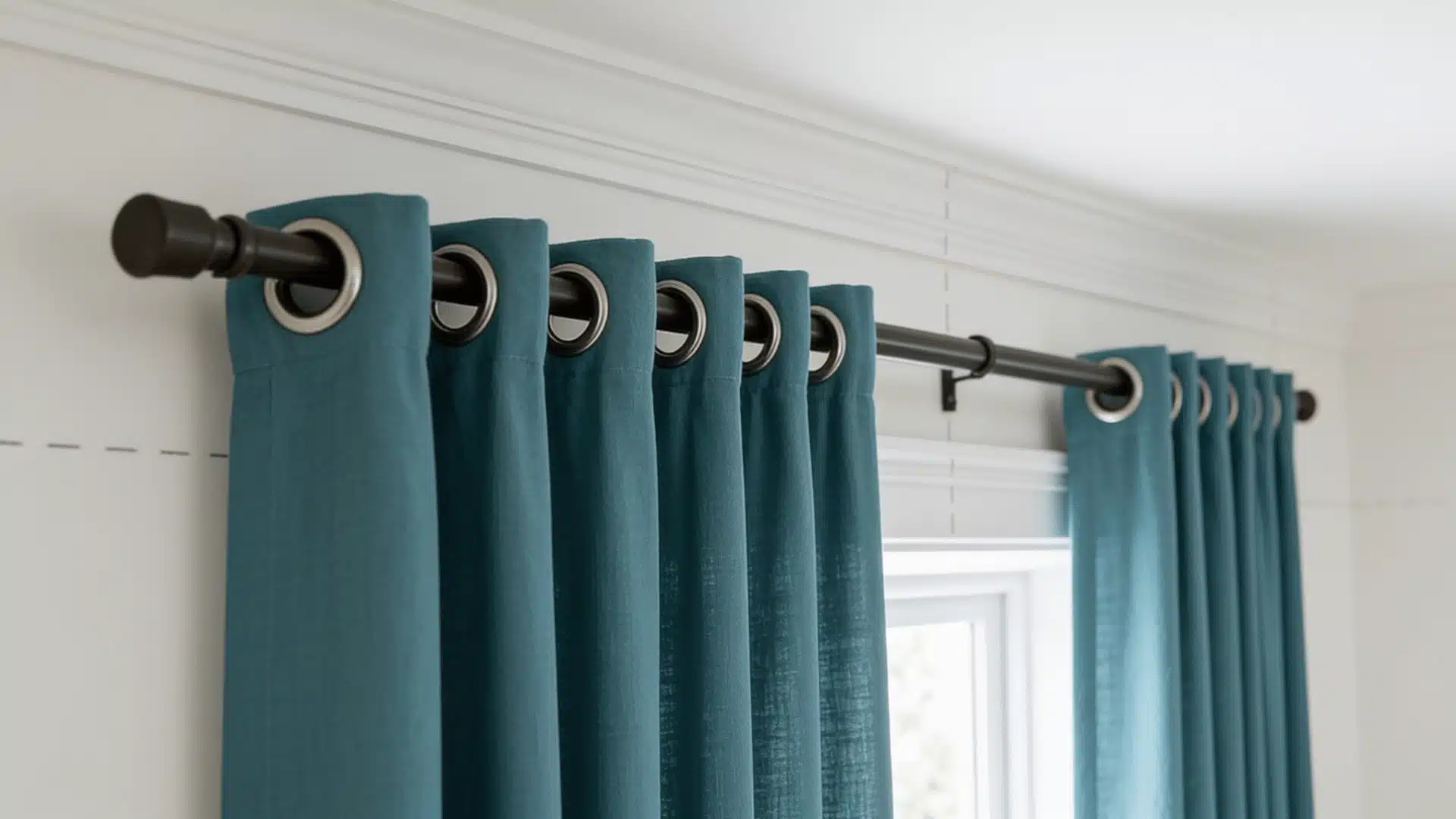
Metal rings run along the top of the panel and sit over the rod.
The fabric hangs slightly below the rod level because the rings carry the weight. Measure from the top of the rod. The grommet itself typically adds 0.5 to 1 inch of height above the top of the fabric panel.
A color that looks sharp in one light reads quite differently once hung, so it is worth testing a fabric swatch at the window before ordering.
Tab-Top Curtains
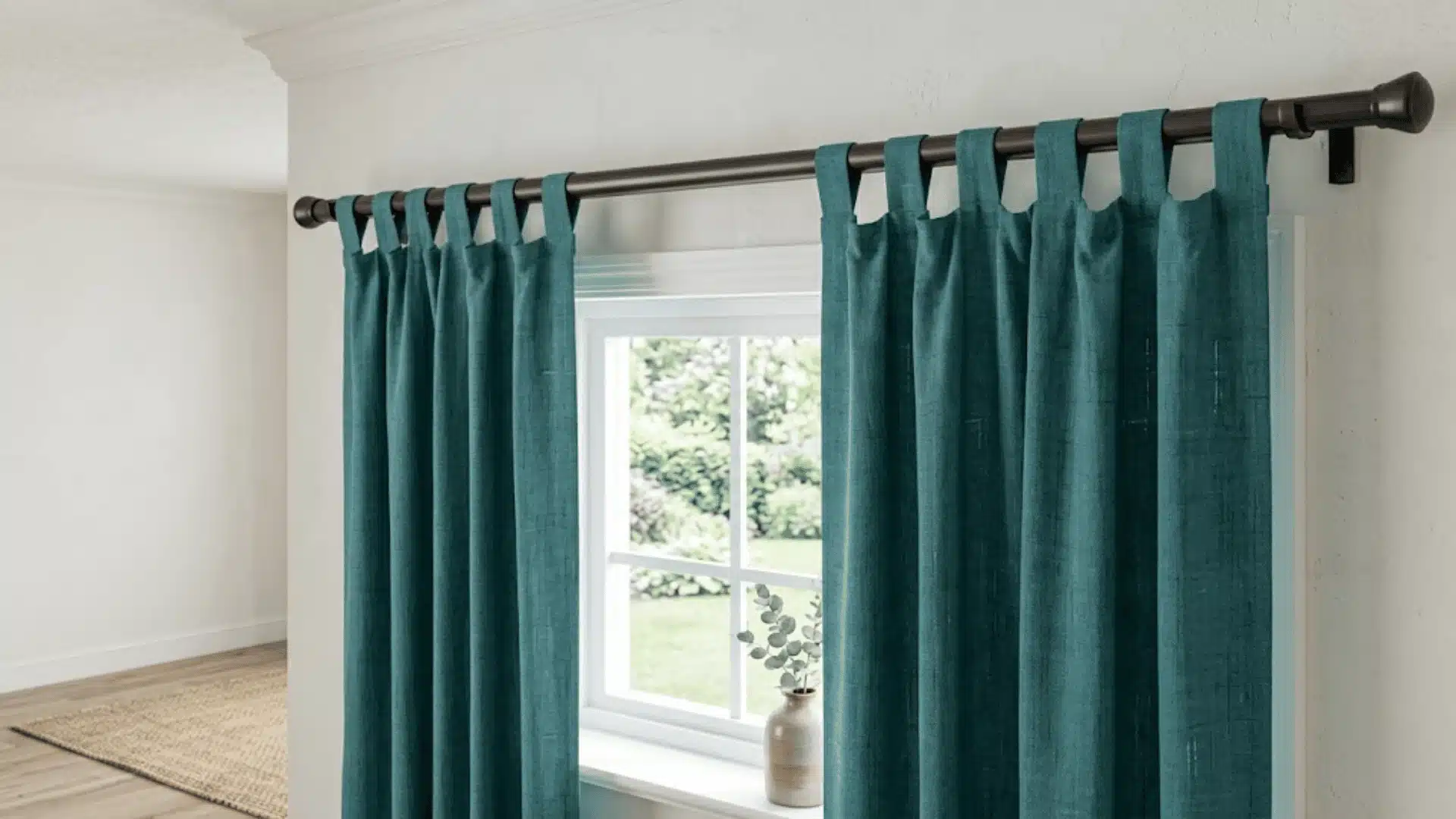
Fabric loops sit over the rod and are visible as part of the design. The tab adds length at the top. Measure from the top of the rod to the desired hem, since the tab itself is built into the listed curtain length.
Pleated Curtains
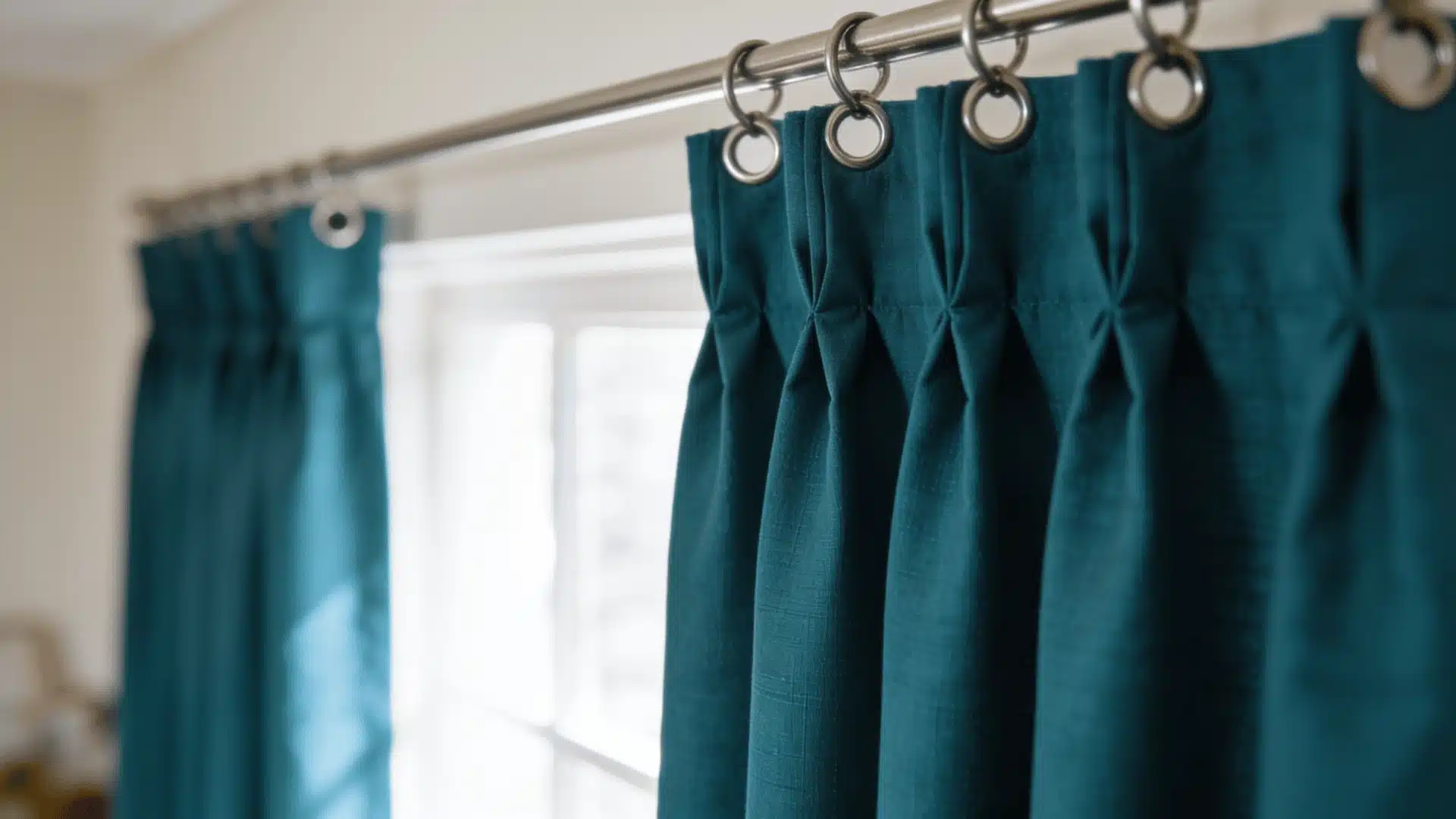
Pinch pleat and pencil pleat curtains use hooks that slot into curtain rings or track runners. The measurement starts from the ring or hook base, not from the top of the rod.
The hook position within the pleat tape also affects the final drop by 1 to 2 inches, so check the curtain supplier’s guidance for the specific heading tape used.
Cafe Curtains
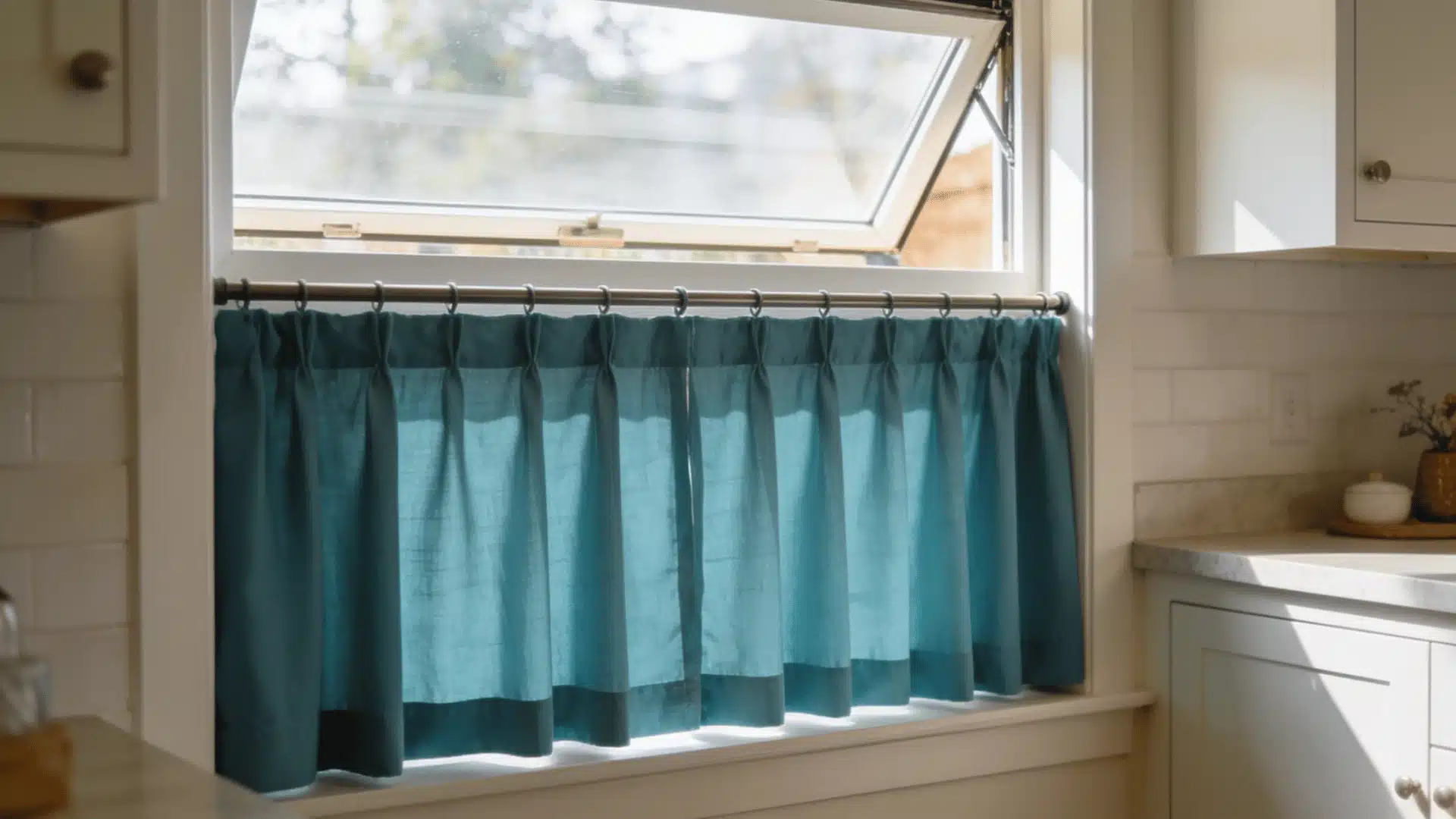
Cafe curtains cover only the lower portion of the window, giving privacy without blocking light from the top.
Measure from the cafe rod position (usually fitted mid-window or at the sill) down to just below the sill. There is no floor consideration here.
The rod sits inside the window recess in most cases, so measure from the rod to the sill and subtract 0.5 inches for clearance.
Quick Curtain Measuring Reference
Use this as a fast check before placing your order.
- Window Width: Measure frame edge to frame edge
- Rod Width: Add 4 to 10 inches on each side of the window frame
- Curtain Width: Rod width x 1.5 to 2
- Curtain Length: Rod position to desired ending point
- Floor Length Gap: Stop about 0.5 inch above the floor
- Puddle Length: Add 2 to 6 extra inches beyond the floor measurement
Final Curtain Measuring Checklist
Go through this before placing any order or cutting any fabric. One skipped box is usually one return.
- Window width measured (frame edge to frame edge)
- Rod placement decided and marked with a pencil
- Rod extension added on both sides
- Fullness ratio chosen and total fabric width calculated
- Curtain length measured from rod position to desired hem point
- Per-panel width calculated and rounded up to nearest standard size
- Panel quantity confirmed (most windows need two panels)
- Header or heading style confirmed (affects where drop measurement starts)
- Furniture and floor clearance checked (nothing blocking the hem path)
Get it Right Before You Order
Width, length, and rod placement.
Get those three right and curtains stop being a guessing game. Measure from the rod, not the frame.
Apply the right fullness for your heading style. Drop a straight line to your chosen hem point. Write it all down before you shop.
Done right, even a simple fabric pair can completely change how a room feels. Ready to pick your panels?
Read our curtain fabric guide to find the right weight and lining for every room in your home.
People Also Ask
1. How Wide Should Curtains Be Compared to the Window?
Total curtain width across both panels should be 1.5 to 2 times your rod length, not the window frame width.
2. Should Curtains Touch the Floor or Stop at the Sill?
Floor-length panels suit most living rooms and bedrooms. Sill or apron length works better in kitchens and bathrooms.
3. What Length Curtains Make a Room Look Taller?
Hang the rod 4 to 8 inches above the frame and run curtains all the way to the floor.
4. How Do You Measure Curtain Drop without a Rod in Place Yet?
Mark the planned rod position with a pencil, then measure straight down from that mark to the floor.