
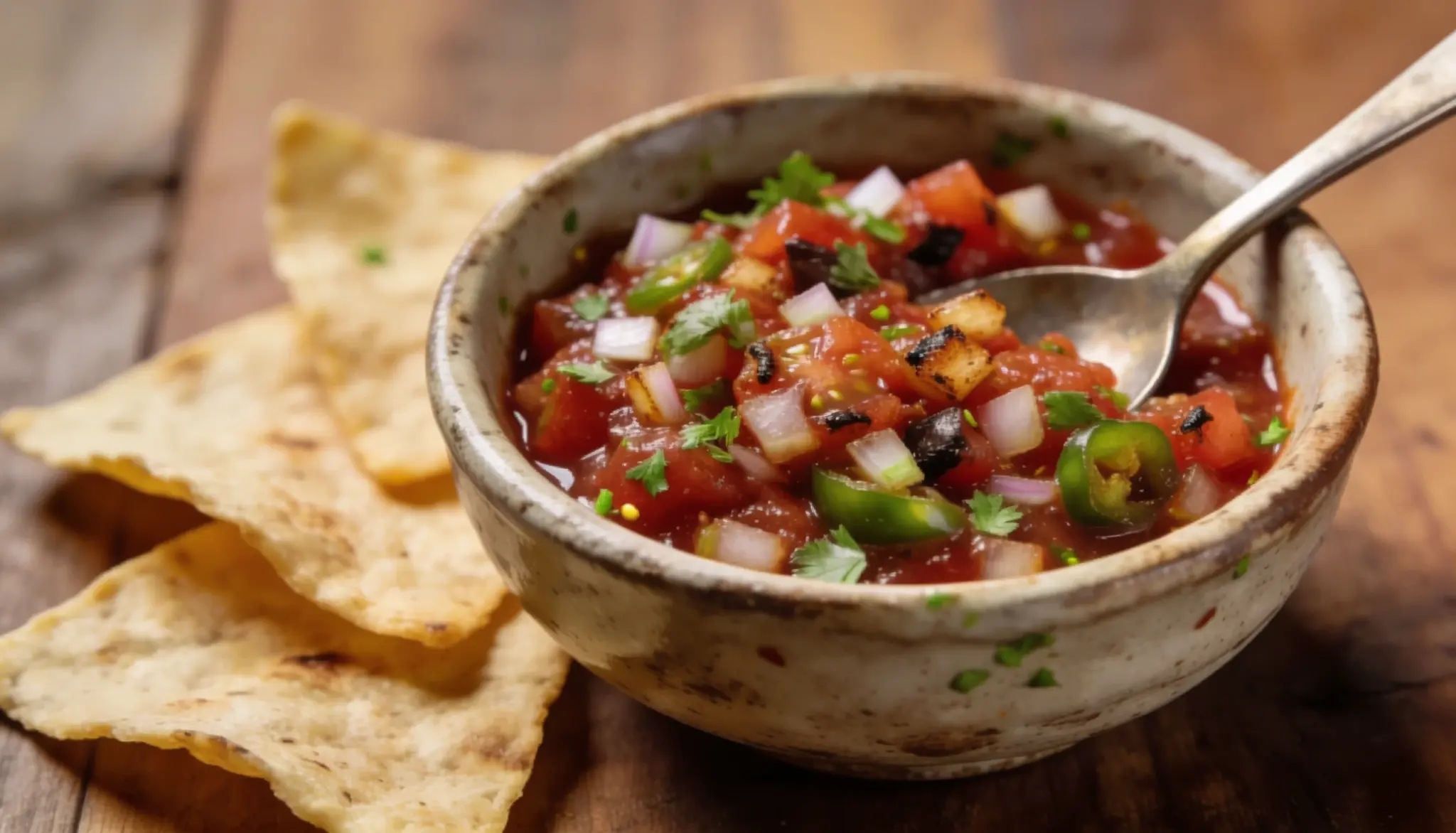

This roasted tomato salsa is sure to make your bland tomatoes into something you can eat with a spoon.
Twenty minutes under high heat does the job: skins blister, juices thicken, and the sugars turn bittersweet in a way raw tomatoes never reach.
This particular recipe involves roasting tomatoes, peppers, and garlic and then blending them when cooled down.
What makes this salsa stand out is the burning smell; it adds some depth to the flavor, which cuts through the sweet taste rather than making it sweeter.
It takes no more than thirty minutes in all, but only ten are active cooking time.
You need cherry tomatoes, jalapenos, garlic, half an onion and a lime.
Serve it with chips, spoon it over tacos, or use it instead of hot sauce.
Recipe Card
Prep Time: 10 minutes
Cook Time: 20 minutes
Total Time: 30 minutes
Serves: 6 (about 2 cups)
Difficulty: Easy
Cuisine: Mexican-inspired
Diet Tags: Vegan, Vegetarian, Gluten-Free
Why Roast the Tomatoes First
Bite into a raw tomato and it’s mostly water and acid, sharp and gone in seconds.
Roast it, and the cell walls break down while the water cooks away completely.
What’s left behind darkens and thickens into something closer to jam.
Roasting isn’t only about flavor it changes what’s actually inside the tomato.
Then there’s the char. Those blistered black spots carry a slight bitterness that plays against the sweetness underneath, making the salsa taste complete instead of missing something.
Also read: How to Roast Cherry Tomatoes Perfectly
Ingredients and Equipment You’ll Need
Nothing fancy goes into this just what’s already sitting in most kitchens.
The tomatoes and peppers do most of the heavy lifting once they hit the oven, and everything else is there to round out the flavor at the end.
Ingredients
- 2 lbs (900g) Roma tomatoes, halved
- 2 jalapeños, stems removed (swap in 1 serrano for more heat)
- 3 garlic cloves, left unpeeled
- 1 medium white onion, quartered
- 2 tbsp lime juice
- ¼ cup cilantro, chopped
- 1 tsp salt
- 1 tbsp olive oil
Stick with Romas if you can. Beefsteak tomatoes carry more water, and that extra liquid waters down the salsa instead of letting it thicken up on the sheet pan.
Plum tomatoes behave almost the same way once roasted similar flesh-to-water ratio, similar result.
Equipment
- Baking sheet
- Aluminum foil
- Blender or food processor
- Chef’s knife
- Cutting board
- Mixing spoon
How to Make Roasted Tomato Salsa?
30 minutes, most of it hands-off.
Roast the vegetables until they blister, then blend everything with the fresh stuff lime, cilantro, salt and you’re done.
Step 1: Prepare the Vegetables
Preheat the oven to 425°F (220°C). Rinse the tomatoes, jalapeños, and cilantro.
Peel the onion and garlic, then cut the tomatoes and onion into large chunks as smaller pieces burn before the centers soften.
Spread everything on a baking sheet in a single layer, and drizzle with olive oil if you want deeper browning on the edges.
Step 2: Roast Until Charred
Roast for 20–25 minutes, flipping everything once halfway through.
You’re looking for soft tomatoes that have started collapsing, charred edges on the peppers, and onions that have gone slightly golden at the tips.
A heads-up before this step: roasting jalapeños and garlic at 425°F puts a sharp, eye-watering bite in the air, not just a nice smell. Crack a window or run the vent. It's normal, not a sign anything's gone wrong — the char that's building the flavor is the same thing stinging the eyes.
That’s the point where the sugars have caramelized enough to carry the whole salsa.
If the jalapeño skins blister and blacken heavily, peeling off the loosest, charred bits before blending softens the smokiness slightly — leave the skins on for a sharper, more assertive char throughout the salsa.
Step 3: Blend the Ingredients
Move the roasted vegetables into a blender or food processor. Add the cilantro, lime juice, salt, and black pepper.
A few short pulses gives you a chunkier salsa; run it longer for something smoother.
Scrape down the sides once or twice so nothing gets left unblended at the bottom.
Step 4: Taste and Adjust the Seasoning
Try it before you serve it. If it tastes flat, it’s usually missing salt, not more lime.
If it tastes one-note, more lime is what it needs.
Want more heat? Blend in another roasted jalapeño rather than adding raw pepper it keeps the flavor consistent with the rest of the salsa.
Step 5: Chill and Serve
Let it cool on the counter first, then refrigerate for 20–30 minutes.
The flavors settle and sharpen a bit once it’s cold straight-from-the-blender salsa tends to taste a little disjointed by comparison.
Spoon it over tacos, scoop it with chips, or use it anywhere you’d normally reach for hot sauce.
What to do when Salsa Turns Bitter Instead of Smoky
This usually means the vegetables went past charred into fully blackened before coming out of the oven.
So pull the tray out as soon as the skins blister and the edges darken. A few black spots add flavor, but a pan that looks fully burnt will taste burnt too.
Delicious Ways to Serve Roasted Tomato Salsa
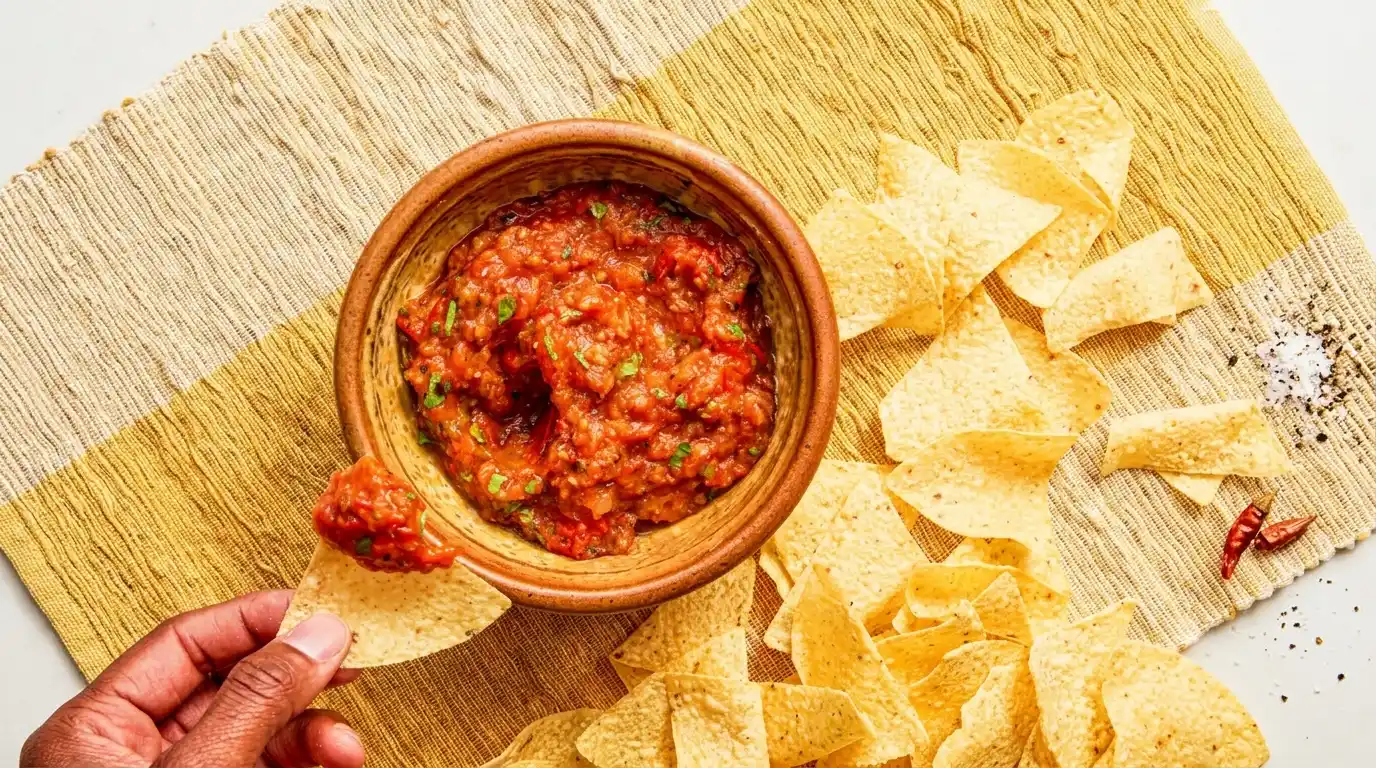
This isn’t a salsa you’ll use once and forget about.
It shows up anywhere something needs a little brightness and a bit of char chips, eggs, grilled meat, doesn’t matter.
1. Pair with Tortilla Chips: Just scoop from the bowl right onto some tortilla chips for the easiest and quickest method of serving.
It is one of those appetizers that will be gobbled up in no time anywhere.
2. Pour on Tacos: Pour a spoonful of the salsa on top of tacos made with chicken, beef, fish, shrimp, or vegetables.
The smokiness in this salsa goes well with rich flavors and adds some heat as well.
3. Use as a Topping for Burritos and Burrito Bowls: Instead of using a thick sauce, use this salsa to add moisture and a strong taste to your burritos and burrito bowls.
4. Pair with Grilled Meats: Serve it next to grilled chicken, steak, pork, or seafood for a smoky, acidic contrast.
The char in the salsa mirrors the char from the grill itself.
5. Add to Nachos and Quesadillas: Drizzle it over loaded nachos or serve alongside quesadillas as a simple dipping sauce.
It cuts through melted cheese instead of adding more richness on top.
6. Enjoy with Breakfast Favorites: Spoon it over scrambled eggs, omelets, breakfast burritos, or avocado toast some mornings.
It works as a quick substitute for hot sauce when you want something fresher.
How to Store Roasted Tomato Salsa?
Let the salsa cool completely before moving it into a clean, airtight container.
Storing it warm traps steam inside, which makes the texture watery faster.
This keeps the flavor and texture intact for several days afterward.
1. In the Fridge
Keep it in an airtight container inside the fridge. Glass jars work better than plastic here, since they don’t hold onto lingering smoky odors.
It stays good for up to five days once chilled properly.
Give it a quick stir before serving, since liquid tends to separate a bit over time.
2. Can You Freeze it?
Yes, this salsa freezes well if you want to keep it around longer.
Transfer it into a freezer-safe container or bag, leaving room for expansion. Flat freezer bags are easier to stack and thaw faster than round containers.
Thaw it in the refrigerator overnight, then stir well before serving to bring the texture back.
Avoid thawing at room temperature, since that can affect both texture and safety.
3. How Long Does it Last?
- In the refrigerator: Up to 5 days
- In the freezer: Up to 3 months
Use a clean spoon each time you serve it, and keep the container sealed tightly. A dirty spoon introduces bacteria that shortens how long the salsa stays safe to eat.
Toss the salsa if it smells off, shows mold, or looks discolored in any way.
When in doubt, it’s always safer to throw it out than risk it.
Conclusion
This salsa takes barely any effort just tomatoes, an oven, and time.
The charring does all the work, turning plain vegetables into something worth eating straight from the bowl.
Roasting boosts the tomatoes’ natural sweetness while adding a smokiness raw salsa never gets.
Make a batch on Sunday, and it’ll last you the whole week. Store it right, and it stays flavorful through day four.
Once you try it roasted, raw salsa just doesn’t compare.
Frequently Asked Questions (FAQs)
1. Is roasted tomato salsa spicy?
That comes down to which peppers go in. Deseeding the jalapeños knocks the heat down a good bit.
Keep the seeds, or use a serrano instead, for something sharper.
2. Can I make roasted tomato salsa without a blender?
Yes, easily. Chop the vegetables by hand for a coarser texture, or mash them with a fork for something smoother.
3. What herbs can I use instead of cilantro?
Parsley is the easiest swap if cilantro isn’t your thing. It won’t taste identical, but it still brings enough freshness to hold the salsa together..