

Facial dermal piercings are currently trending.
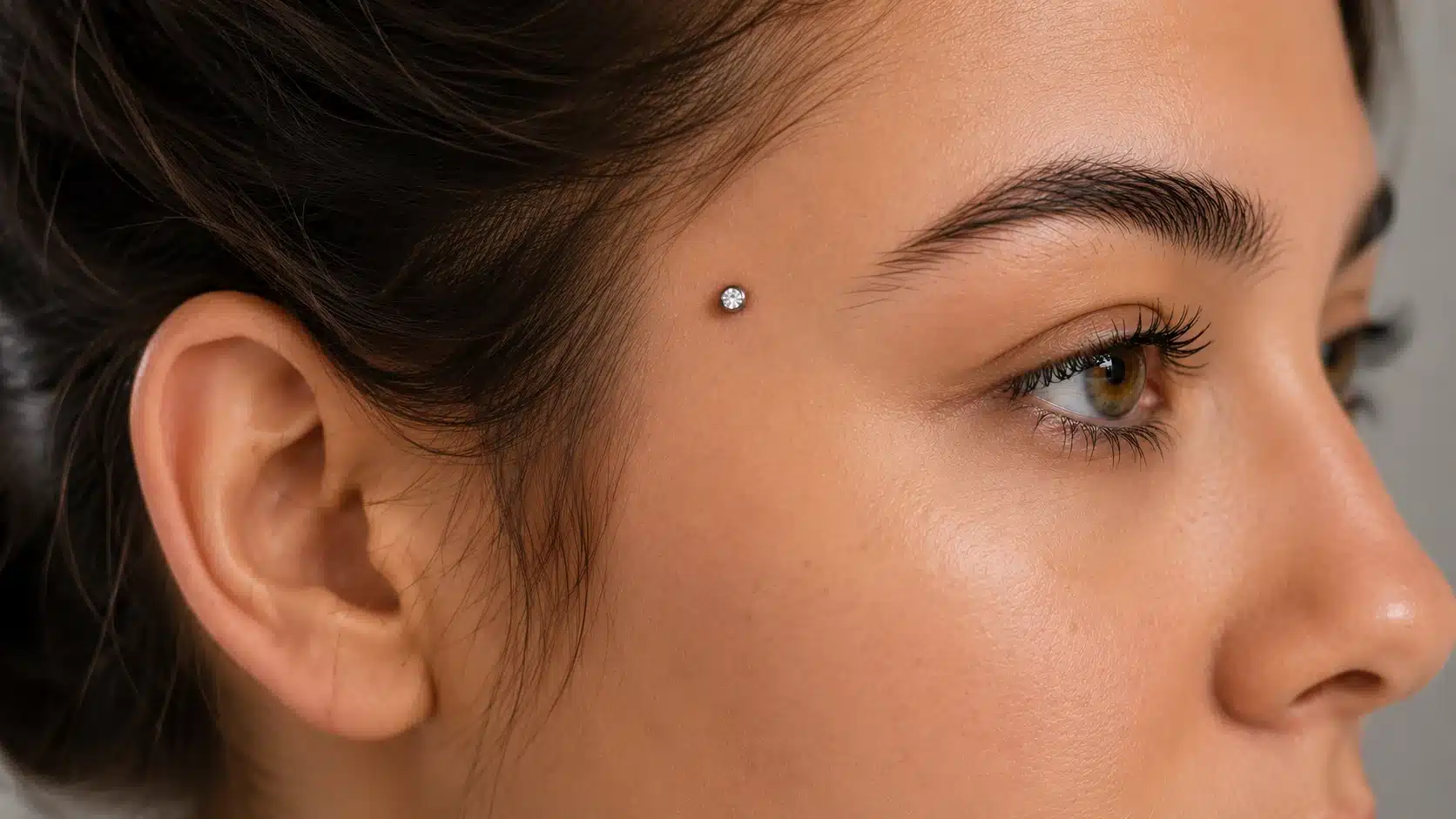
Unlike typical piercings that penetrate the skin and have two exposed ends, a dermal piercing is placed beneath the skin, with only a flat top visible.
That is what gives it a distinctive appearance.
It can be placed nearly anywhere on the face, from the cheek to the temple, offering more placement choices than an earlobe or nose piercing.
Since only one end secures the piece, healing requires additional attention and time.
What is a Facial Dermal Piercing?
A dermal piercing on the face is flat beneath the skin, with just its top visible. It doesn’t go completely through as a regular piercing would.
A small anchor is inserted initially, positioned right beneath the skin’s surface. A decorative cap is then screwed onto the anchor, leaving only that part visible.
The rest stays concealed below the surface, giving it a distinct look. The single-anchor design reduces overall stress on the skin.
It additionally decreases the likelihood of the jewelry moving or coming loose over time.
They create openings in areas regular piercings can’t reach, such as the cheek, the temple, or even close to the eye.
Facial Dermal Piercings: Least to Most Painful
Facial dermals work on several spots, each with its own look and feel. Some areas heal faster, while others need extra patience and care.
5. Forehead

Forehead placements are on flat skin, usually near the hairline or brow.
This spot has fewer nerve endings than areas like the temple, making it feel less painful during the procedure itself.
The flat surface also makes it easier for piercers to work with. Healing time still varies from person to person, depending on skin type and aftercare habits.
4. Temple
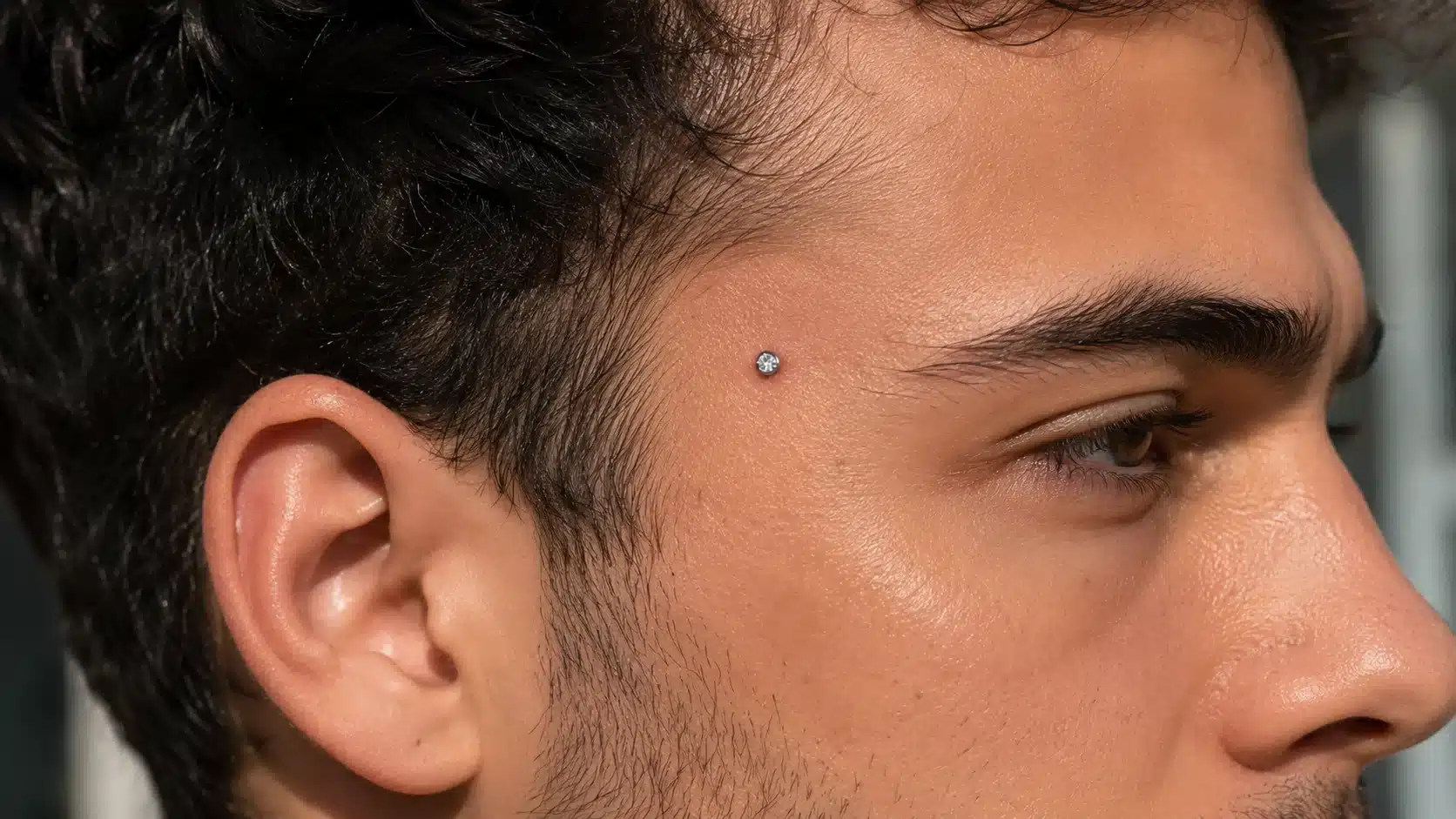
The temple area is flat and close to the hairline. It is for those who want something subtle but still visible.
Movement from talking or chewing doesn’t affect this spot much.
The skin here stays relatively still throughout the day. That makes healing a little smoother compared to busier areas like the jaw.
3. Cheekbone (Upper Cheek)
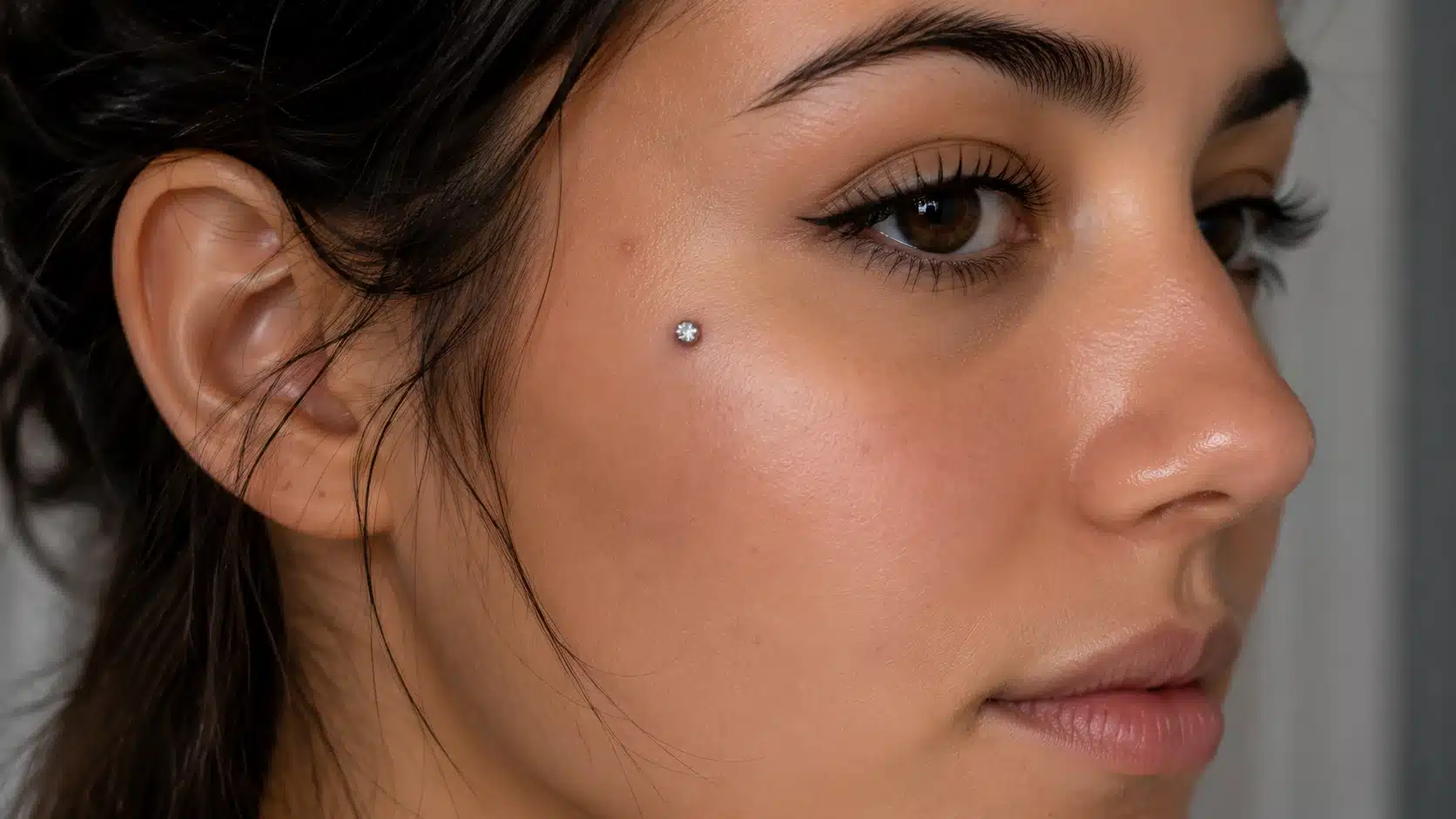
This is one of the most requested spots for a facial dermal.
It is done right on the upper cheek, following the curve of the bone. The flat skin there makes healing a bit easier than other spots.
This area doesn’t flex much during normal facial expressions.
You can expect mild soreness for the first few days, followed by steady, uneventful healing.
2. Chin
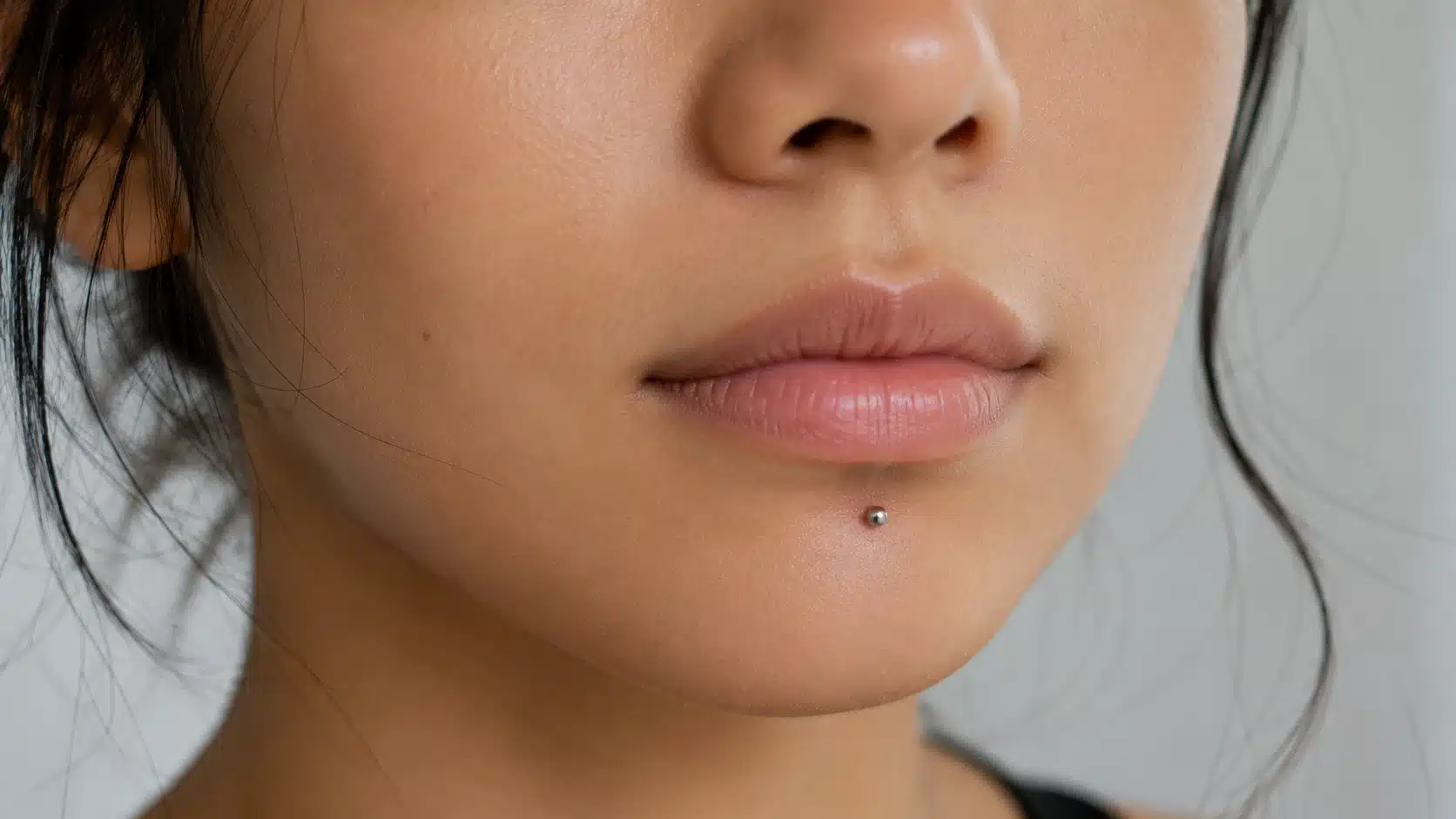
A chin dermal sits below the lower lip, right on the chin’s flat surface. This spot draws attention with a bold, clean look.
The skin here is thicker, which often makes healing steadier and more predictable.
Movement from talking and eating still affects this area somewhat. Careful cleaning helps keep irritation low during the first few weeks.
1. Under-Eye (Tear Trough)
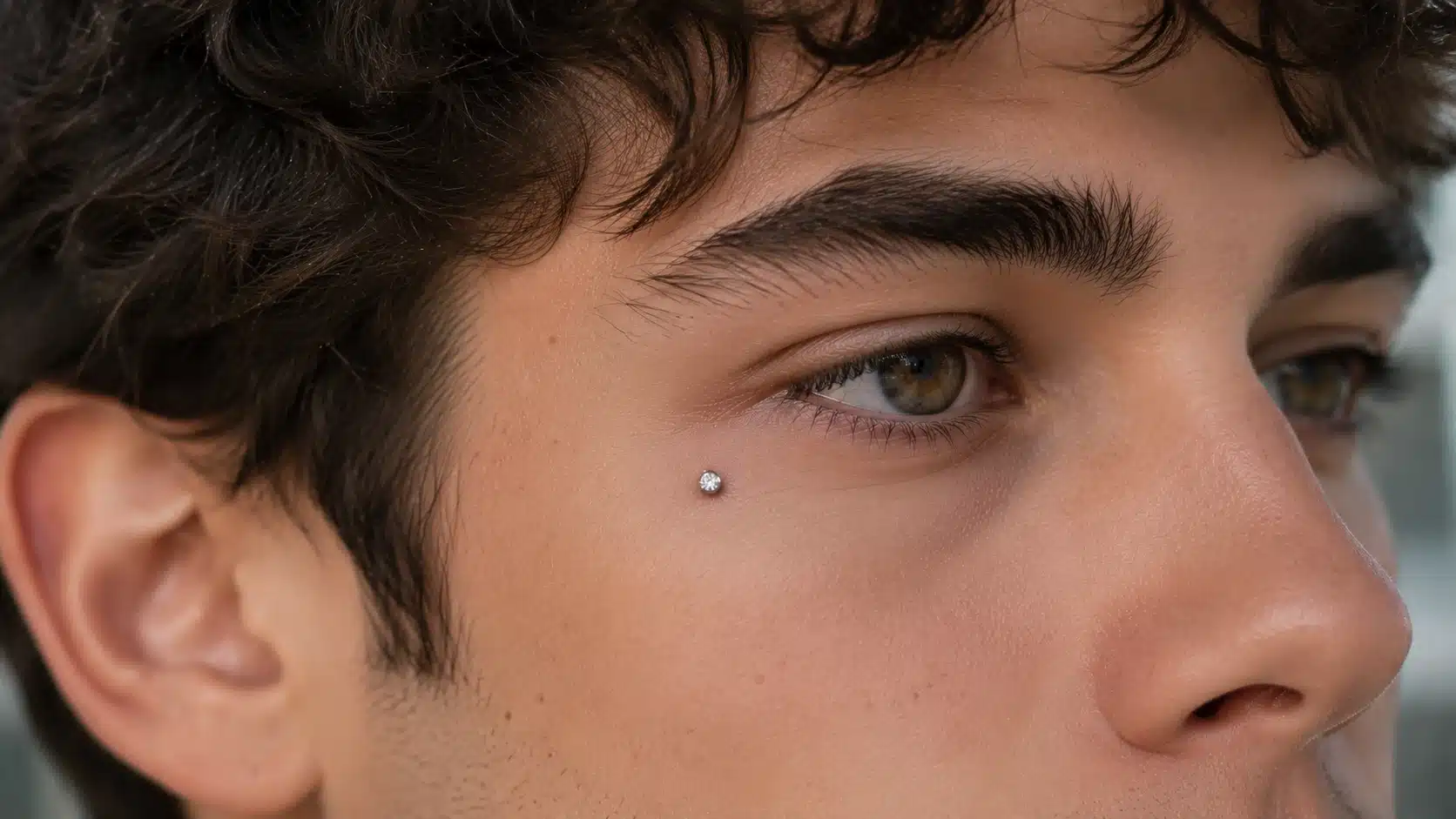
This is the most painful facial dermal piercing.
This placement is just below the lower lash line. It’s delicate work, and not every piercer will offer it. Many piercers turn this placement down due to the risks involved.
The skin here is thin, so healing takes longer than other facial spots.
Blood vessels are very close to the surface.
Swelling is common in the first week, and bruising can show up as well.
Facial Dermal Piercing Pain Scale
Skin thickness plays a big role in pain levels. Thicker skin, like the jawline, often hurts less. Thinner skin, like near the eye, tends to hurt more.
Nerve density matters too, since some spots carry more nerve endings than others.
Pain tolerance also varies a lot from person to person, and the piercer’s technique matters too; a skilled, steady hand causes less trauma to the skin.
Placement itself ties all these factors together. Bone-close areas often feel different from soft tissue spots.
| Placement | Pain Level (1-10) | Sensitivity | Procedure Duration |
|---|---|---|---|
| Cheekbone | 4 | Moderate | 5-10 minutes |
| Temple | 4 | Moderate | 5-10 minutes |
| Forehead | 3 | Low to moderate | 5-10 minutes |
| Chin | 5 | Moderate to high | 5-10 minutes |
| Under-eye | 7 | High | 10-15 minutes |
What Happens During a Facial Dermal Piercing Procedure?
The procedure follows a set process from start to finish. Knowing each step can ease nerves before sitting in the chair.
Step 1: Skin Marking and Placement
The piercer starts by marking the exact spot.
A small dot shows where the anchor will sit. This step allows time to check placement before anything permanent happens.
Adjustments are easy at this stage, so don’t rush it. Adjust until it feels right.
Step 2: Creating the Pocket
Next, the piercer creates a small pocket under the skin.
This is usually done with a needle or a dermal punch. The method depends on the piercer’s training and the placement chosen.
The pocket holds the anchor once it’s inserted. This part happens fast, often in seconds.
Step 3: Inserting the Anchor
The anchor slides into the pocket right after it’s made.
It sits flat beneath the skin’s surface. Once in place, the skin naturally settles around it. This anchor is what holds everything steady long-term.
A well-placed anchor shouldn’t feel sharp or move around under the skin.
Step 4: Attaching the Jewelry
The decorative top screws onto the anchor last.
This is the only part that stays visible. The fit should feel snug, not loose or wobbly. A loose top can lead to problems later.
The piercer checks the fit carefully before finishing up.
Facial Dermal Piercing Aftercare
Good aftercare decides how well a facial dermal heals. A steady routine keeps irritation low and helps the anchor settle properly under the skin.
Cleaning Routine: Clean the area twice a day using a saline soak or spray directly on the piercing.
Products to Use: Stick to sterile saline solution made for piercings.
Avoid Touching the Piercing: Avoid touching it with unwashed hands. No swimming pools, hot tubs, or open water for several weeks.
Sleeping: Sleep in a position that keeps pressure off the piercing.
Makeup and Skincare Precautions: Avoid makeup directly on or near the piercing. Keep skincare products like retinol or acids completely away from the area.
Healing Timeline for Facial Dermal Piercings
The first week brings the most swelling and tenderness. Redness around the anchor is normal during the healing period.
Weeks two through four bring less swelling and more comfort.
The skin starts settling around the anchor. Itching may happen, but avoid scratching.
By one to three months, most dermals feel fully settled and daily upkeep becomes much simpler.
Full healing takes longer for some skin types. Mild redness and slight puffiness early on are normal. Clear or white fluid is common too.
Choosing Jewelry for a Facial Dermal
The right jewelry keeps a facial dermal safe and comfortable. Metal, size, and design all affect healing and long-term wear.
Best Metals
Titanium is the top choice, since it resists irritation.
Surgical steel works too, but sensitive skin may react. Gold, 14k or higher, is another safe pick. Avoid cheap alloys, since they often contain nickel.
Popular Top Designs
Small gems are the most popular design.
Flat discs offer a simpler look instead. Smaller designs sit better on facial skin, since bulkier tops snag more easily.
Jewelry Sizes
Most tops measure 2mm to 4mm.
Smaller sizes suit thin skin, such as the under-eye area, while larger tops work on flatter spots like the forehead.
When to Change the Jewelry?
Wait until healing is fully complete before changing the top, usually two to three months. Changing early can disturb the anchor.
No soreness or swelling means it’s ready.
Cost of a Facial Dermal Piercing
Prices vary by location, piercer skill, and jewelry choice.
The procedure alone usually costs $50 to $100. Simpler spots like the temple cost less, and spots like the under-eye cost more.
Basic titanium jewelry starts around $15 to $25, while fancier designs can run $40 or more.
Some piercers include a follow-up check in the price, while others charge around $10 to $20 per visit after that.
Removal is usually cheaper than the original piercing, often $20 to $40. Some piercers remove their own work for free.
Wrapping Up
Facial dermal piercings come with real trade-offs worth weighing first. Placement, cost, and healing time all shape the final decision.
A steady cleaning routine helps healing no matter where the piercing sits. Choosing a skilled piercer matters as much as choosing the right spot.
With proper care, a facial dermal can look sharp for years. Skip the care, and even the best placement can fail. Patience makes the biggest difference here.
Frequently Asked Questions (FAQs)
1. Is There an Age Requirement for Facial Dermal Piercings?
Most studios require clients to be 18 or older. Some allow minors with parental consent, though local laws may prohibit this regardless of consent; check your area’s regulations.
2. Can You Get More than One Facial Dermal at a Time?
Yes, you can do multiple dermals at once. Spacing matters for healing. A skilled piercer plans this out first.
3. Are Facial Dermal Piercings Safe for People with Sensitive Skin?
Sensitive skin just needs extra caution. Titanium lowers the risk of reactions. A patch test can help beforehand.