Create a Perfectly Cozy Reading Corner at Home

We all lead busy lives and if you have some spare time, then it can feel like a real luxury. However, if we have a dedicated space in the home that is set up to relax in and to spend that precious downtime, then it will make it easier to enjoy that time, rather than think about fifty other things that you need to get done. If you have a corner of the home that can become a dedicated reading nook, then this could be just what you need. With a book and a chair, you can read anywhere. But with a reading nook it can be a corner of the home that is dedicated to relaxation and downtime, and a perfect cozy corner to lose yourself in a book. What are the best ways to design a space like this, though? Here are some things to think about and get you inspired.

Soft materials

There isn’t a lot more that says cozy, than a soft chair to relax in, covered in soft cushions and throws. When looking for a chair or a bean bag for the reading nook, then look for one that is soft and comforting, in a material that you love. Add throws, pillows, and cushions, and other texture from decor, and it will be a place where you can instantly feel comforted. 

Add a bookshelf

Having a bookshelf in a reading nook is kind of a no-brainer. The style that you choose will totally depend on the space that you have, though. For example, if you have a reading nook by a bay window, could you use some of that window space to create a built-in bookshelf? You could also choose floating shelves and bookends, or you could choose a bookcase on https://tylko.com/shelves/bookcase/, for example. Make it fit the space you have, fill it with your favorite books and personal trinkets, and then you can easily get cozy and reading whenever you have the time.

Complete with pops of color

The colors that you use in a home can be very powerful, and can be just the things that you need to create some instant happiness, as described here: https://mymove.com/room-color-and-how-it-affects-your-mood/. If you have a reading nook that is designed to be your little retreat or happy place, then make it feel like that, with all of your favorite colors, or just inject a shot of your favorite. It could be using color on the walls, in artwork, in furniture, rugs, throws or cushions. Whichever you choose, just make sure that you love it so it helps to bring a smile to your face.

Lighting

The lighting is important in a reading corner, because you could be there late into the night when you get reading a compelling book. If you are going to be by a window then natural light will be helpful in the day, but what about at night? Having a floor lamp that can be angled or moved easily is a good idea, as well as smaller fairy lights, strung around the area. Creating mood lighting and having different levels of light will be nicer than just one big harsh bright light.

Pool Deck Repair- Fix The Concrete Around Your Pool

A cracking or sinking swimming pool patio is always easy to overlook until you are jolted by the pain of hitting your toe on the raised slab. A cracking patio not only looks ugly but also provides room for the growth of moss, weeds, and piling up of dirt. There are many reasons for the cracking, sinking, or lifting of a swimming pool deck. An example is the growth of trees that extend their roots under the concrete slabs. Shifting soils and the freeze-thaw events are also responsible for raising the slab and widening existing smaller cracks. Follow these steps to repair your swimming pool deck.

How to fix the cracks

1. Clean Out the Crack

Start by widening the crack. Hold a concrete chisel and tap it lightly with a hammer. Widen to about 1/4 inch width. The V shape will help the filler material stick better for a long time. Brush the crack thoroughly with a wire brush to remove any bits of loose concrete. Impurities such as debris, dry leaves, and even dust will prevent the filler from sticking to the healthy concrete. Vacuum the crack with a shop vac as well as you can.

2. Fill The Crack With Repair Cement

Start by putting solid crack filler into the crack if the crack extends a depth of 1/4 inch.

Trowel a fair amount of the concrete mortar into the crack. Use the sharp edges to push the cement as far as possible into the gap. Put more concrete mortar until it forms a mound on top of the crack. Scrape excess concrete and use a trowel to level the repaired surface. Leave the concrete to dry.

3. Coat with Epoxy Sealant

An epoxy-based sealant will protect the concrete mortar repair as well as make the surface watertight. Spread a thin coat of an epoxy sealant over the surface. Be sure to cover the joint in between the pool deck and the repair area. You should fill any remaining gaps using the epoxy. Leave the epoxy sealant coat to dry.

4.Inspect the Seal

The epoxy seal is meant to prevent water from soaking into the repair surface. It is time to test the Seal. Pour water on the sealant and leave it for some time. Observe. If the water remains on the surface, then the Seal is good. If the water seeps into the concrete, you’ll have to seal the surface again when the water has dried. Leave the patch to cure.

How to Repair Sinking Concrete

1. Inspection

The first step is inspecting the deck to determine how to best approach the repairs.

2. Install a three-pier system

Install the three-pier system under the slab to lift it. The pier system below the slab will allow for smaller holes to be drilled in your concrete slab. A slab bracket also reaches across a large area of the floor, which allows for even weight distribution so that the slab will not crack.

3.Install Steel Tubes

Drive steel tubes down through the slab bracket into the firm souls beneath. Hydraulics will be helpful in this step. You should choose steel tubes made up of galvanized steel since they’re resistant to corrosion, which ensures the slab pier system’s quality and longevity. These steel tubes transfer the home weight to the firm soils below, which is the pier system’s real strength.

4.Move the slab weight to the soil

The piers will transfer the concrete slab weight to the firm material under your swimming pool deck. The concrete patio’s sinking movement will permanently stop as the system lifts the concrete slab.

5.Inject Grout Filling

Lifting the slab will leave a void underneath the deck. If the deck has been sinking due to washout or compacted soil, a gap was present before the installation. You should pump grout carefully under the slab to fill all the voids present.

6.Finishing

Finishing is the final step. It involves all the finalizing operations. Now, fill the holes you drilled into the concrete slab with cement. Level it properly so that the patches look uniform with the rest of the slab. Sweep all the dirt and debris generated by the process.

Top Tips For Giving Your Bathroom An Upgrade

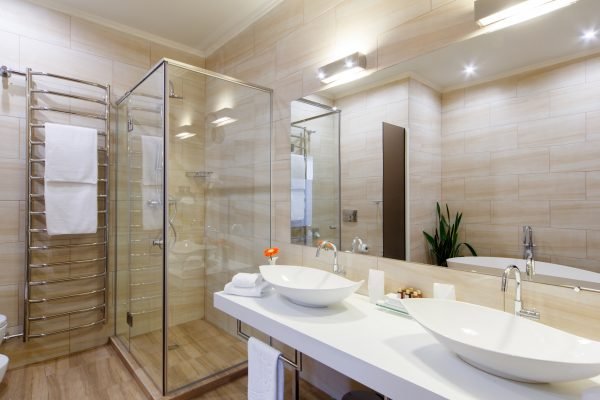
bathroom of the hotel rooms, with a shower and a few washbasins.

Your bathroom is a room that gets a lot of use and therefore it is natural that over time it can become tired and worn. Bathrooms can be expensive to get re-done, but due to their nature, it is important that you get them done properly. The last thing you want is for it to leak or break not long after you have got it renovated. That being said, you don’t need to break the bank to get it done, you just need to do your research and look into reviews of products and items. You can also shop around and see if you can buy the same item cheaper from a different shop. The cost of your bathroom will depend on if you are doing a complete renovation of everything from your team poly septic tanks to your lighting, or if you are looking to give it more of a cosmetic upgrade. Here are some top tips for giving your bathroom an upgrade.

  • Decide on a budget

This is the most important thing you need to consider when looking to get your bathroom done. The costs of a bathroom upgrade can quickly rack up, so you want to ensure it fits into what you are looking to spend. Some of the main things that you will need to think about are if there are elements that you can do yourself, what are the things you place the most value on in the room, and if you are looking to sell soon or if you are looking to stay in the house for a long time. The best way to do this is to make a spreadsheet, list out everything that you will need to spend on from the items to go in the room to the labor costs, and work out what you want to spend on each area.

  • Think about the usage of your bathroom

How are you going to use your bathroom? Is it going to be a family bathroom with young children getting plenty of use, will it be a luxurious wet room for you and your partner, or will it be an en-suite? When it comes to deciding how you want your bathroom to be designed, you will need to consider all of these factors. A family bathroom will get a lot more wear and tear as it is being used by so many people, whereas for a more luxurious bathroom for just your partner and yourself, you could (literally) splash out a little more on it. If your bathroom is smaller you could also spend more on items such as tiles as you won’t need so many as if you were re-doing a large bathroom. 

  • Consider the lighting you will use

Lighting can have a considerable impact on a room and this is the same for your bathroom. Consider what sort of lighting you will want as soon as possible as bad lighting can really have an impact on the room. Natural lighting is usually the best choice and if you can, try to get a skylight or large windows fitted in somewhere. If you are planning on having a vanity mirror, it is a good idea to put this where you will be facing the window so you can make full use of the natural lighting. You will also need to remember that artificial lighting will be used a lot and this is just as important. If you want more of an ambiance, you could consider spotlights with a dimmer switch, or low-level lighting. Try to avoid bare bulbs or harsh light sources which are not very relaxing! 

  • Choose materials that are made to last

As we’ve already said above, bathrooms get a lot of use, so you will want materials that are built to last. It can be tempting to go for something based on the aesthetic, but you want to make sure that it is just as sturdy and practical as it is nice to look at. Be sure to look at reviews online and also speak to your builder if you have any doubt. They will have experience in this and be able to advise on what is best! You want tiles that are non-porous (porcelain is often a good choice for this) and if you are getting cabinets fitted, stay away from cheap particle-board materials. These can quickly become damp, swell, and chip. When it comes to your plumbing fixtures, it can be tempting to opt for plastic as they are cheaper, but it is better to spend more on something such as brass that will last forever.

  • Add in some luxuries

To add luxury to your bathroom, you can opt to add some freestanding bath tub with its minimalist and compact design which is ideal for small areas. Since it is freestanding, it is flexible to be placed at any part of your bathroom.

Once you have decided on your budget and how you want your bathroom to look, it is time to think about any added luxuries that you will want to add in. Some good ideas for this include underfloor heating and heated towel rails. These could be a bigger upfront cost, but you will be much more comfortable – particularly during the winter months! You could also get a more luxurious shower such as a rain shower or a bath with jacuzzi jets. These are things that you can look out for when you know what you want to spend! Consider how much you will treasure and actually use these features before becoming swept up in the excitement of it all!

These are just a few things to think about when you are looking to redo your bathroom. It is important to keep your budget in mind throughout the project and get upfront costs wherever possible. If you just say yes to different things as you go along and then add it up at the end, you are likely to lose track and go way over your budget. Make sure to take before and after photos of the project for you to look back on too! What are some top things you have considered in the past when doing up your bathroom? 

3 Tips For Setting Up A Garden Fountain

Does it seem that your front or backyard garden might be missing something?  Maybe, a few tulips, but you feel that it’s more than just flowers. Probably, a grapevine to crawl up the fence, but that’s not exactly it. You want something that makes a garden a tranquil retreat from the hustle and bustle of city life just by looking and listening to it.

In that case, you’re probably missing a garden fountain.

The mere sight and sound of water endlessly flowing from pond to pipe is a great way to add some ‘oomph’ to your home. You can have one indoors, but placing it in your outdoor garden allows you to unwind better. And, regardless of what everyone else thinks, fountains aren’t necessarily a waste of water.

Before you go and buy your fountain, you must understand a few things first. Setting up a fountain requires a bit of scrutiny on your part, from considering the size of your garden to the type of pump needed to ensure steady water flow.

Here are a few tips on making sure your fountain works to the benefit of your garden and, more importantly, your well-being:

  1. How Do You Like The Water To Fall?

This factor determines basically everything you want in a fountain, namely the design and type of water pump. There are five ways water flows in fountains. These include:

  • Running – The water flows while hugging the smooth fountain surface (e.g., urn or wall). It loses less water to splashing, but more water to evaporation due to the thin flowing layer.
  • Bubbling – The water flows out of the basin’s center, creating a water column high enough to generate a puddle. It loses less water to splashing, but it may be too quiet for noisy areas.
  • Raining – The water drops from holes on the top, creating a veil of falling water. The sound gets louder with the fall height, but also loses more water to splashing.
  • Pouring – The water leapfrogs from basin to basin, adding to the sound with each landing. Fountains that allow water to flow like this can either be soothing or distracting to people. 
  • Cascading – The water is allowed to spill over from basin to basin. The splashes it generates are loud enough, but forces more water to splash.

Once you’ve determined how you want the water to fall, you can find out more about the rest, such as the type of water pump suitable for the task. The types of pumps available range from external pumps to solar-powered ones.

  1. Consider Local Noise

You’d want to hear your fountain at home despite all the noise outside. In most situations, choosing how the water flows won’t be enough. If you need your fountain to be quiet since refilling them is too tedious, the garden surrounding it will have to absorb outside noise.

According to the Environmental Protection Agency, an average residential area maintains between 45 and 55 decibels, with 70 decibels being the threshold for a person’s well-being. Of course, this isn’t always the case as the neighborhood also has its share of rowdy parties, passing police sirens, and occasional roadworks.

Soundproofing a garden is all about redirecting or absorbing sound waves. One common solution involves fencing the garden with stone masonry, hedges, or acoustic materials. With the right water flow, the fountain can mask any noise that does make it through.

  1. Splashing Isn’t The Only Problem

A properly-built garden fountain can reduce water loss due to splashing, but that isn’t much of an issue. There’s no way to prevent the fountain from losing water because evaporation is a thing, so it’s better to focus on other problems.

Choosing the right location brings good fortune to the household and also mitigates problems that may arise. For example, placing the fountain under the shade prevents algae from growing (algae requires sunlight to thrive). However, this way, the fountain is at risk of falling leaves and debris that can clog the system.

A clogged pipe or pump is unavoidable (although not as inevitable as evaporation), as it will collect debris over time. The fountain should come with tools to help you maintain it when needed. Have a skimmer ready to remove floating leaves and branches.

Conclusion

Imagine going home after a hard day at work to the soothing welcome of trickling water. A garden fountain can be a boon to you and your family, given proper planning and setup. It can also be a lovely addition to your plethora of plants.

What to Look Out for When buying Cast Iron Radiators

hammock

A cast iron radiator is one of those items that can help turn a house into a home when it looks just right. The rustic nature and classic design, matched with a radiator that looks like it will never let you down, makes cast iron a suitable choice in most living rooms and hallways. And while it’s easier said than done to get one, when you are in the market and shopping around for cast iron radiators, what should you know? Are there any red flags to be aware of? And is there anything you need to do at home to ensure your radiator will fit in and work as planned?

To help make finding your ideal radiator easier, here is what to look out for when buying cast iron radiators.

Second hand is usually a no-go

Spotted a cast iron radiator in a vintage store or yard and thought the price makes it a bargain? Be extremely wary of second hand cast iron radiators, especially if they’ve been painted over. While a decent model can last for decades, you want to make sure that a second hand product hasn’t been left to the elements or is showing signs of rust and oxidation.

If it’s a yard sale, ask if you can get a hose and run water through it. The seller might look perplexed, but a quick flush of water will help you see if there are any holes or cracks which aren’t immediately noticeable.

New cast iron isn’t always expensive

There is a preconception that cast iron radiators are always expensive. This isn’t true. Just look at these cast iron radiators from Trade Radiators. You can get a traditional-looking radiator, with all the mod cons, for the same price as a decent convector radiator or towel rail.

If you are shopping and see that cast-iron radiators are sold as a “premium” product, don’t fall for a hefty price tag. Even if you don’t know radiators, when shopping, look at product specs like the number of sections and dimensions, then have a quick Google (not the product name) to see similar products cost online. You’ll often find there is a better deal to be had. Check out https://www.radiatoroutlet.co.uk/ to know more.

Cast Iron takes longer to heat up

Cast iron may be powerful, but don’t think it will heat up in an instant. Think of it as boiling water in a pot; watch it, and nothing will happen. Cast iron is denser, which means it needs a little longer to get warm and heat a room. If you want to heat a room super-fast, aluminium is a good choice. Keep in mind though, due to the denseness, cast iron also takes longer to cool down, so it can keep a room warmer for longer.

Make sure your wall can take it Modern panel radiators do have one slight advantage over older models; they’re lighter. Why would that matter? If you are hanging a cast iron radiator on a wall, you need to make sure the wall can take it. Most cast iron radiators will have supporting feet to keep it in place and take most of the weight, but you would still need wall stays which keep a radiator in place.

It should be fine on any brick or plaster, but double-check if an older wall will be able to support it.

Account for pipe centres

If you have spotted your ideal cast iron radiator in a store and want it, did you remember to bring your measuring tape and check pipe centres? Some cast iron will tend to have protruding pipe entries that jut out, which affects the measurement for your pipe centres. Double-check they will match your current radiator centres, or else you might have to get someone who can adjust pipes and do some work pulling up floorboards; a costly endeavour that can be avoided with a simple tape measure.

That’s pretty much the basics covered when looking at what to watch out for when buying a new radiator. Thanks for taking the time to read, and remember, you can get more advice like this in the home & garden section.

How to Keep your Home Warm and Save Money with Ease

If you feel as though your home is colder than it should be then you are not alone. There are so many people who are in the same situation that you are in right now, but it is possible for you to turn things around with ease.

Open up your Curtains

Heat from the sun doesn’t cost you a thing. For this reason, you need to make the most out of it. You need to open up your curtains and let some sunlight in, so you can heat your home. When it gets dark, you need to make sure that you shut your curtains if possible. This will add a layer of insulation to your home and it will also keep the heat in. It’s important that you don’t have any leaks or gaps in your windows as this will let a lot of cold air in.

Use Timers to your Advantage

Programming your boiler so that the heating comes on at a certain time is always a good thing. If you keep your heating on at a lower temperature, then this is cheaper than turning it on and off all the time. The main reason for this is because your boiler will heat up at a nice, constant speed, regardless of what temperature you keep your thermostat at. If you want to benefit yourself even more then it would be wise for you to try and invest in a smart thermostat if possible.

Move your Sofa

Sure, it may feel great for you to have your favourite sofa or chair in front of the radiator, but if you do this then you will be absorbing all of the heat and this is the last thing that you need. If you want to get around that then you need to try and move everything away from the radiator. If you do this then you will soon find that hot air is able to circulate freely and that you can make the most out of your main source of heat.

Make the Most out of your Insulation

When it comes to heat, it should be noted that around 25% of it is lost through the roof. It’s more than possible for you to reduce this if you install 25cm of insulation in your loft. You also need to see what is happening in your walls too. One-third of heat in a home that is not insulated is lost, so even though insulation may be expensive, it’s a worthwhile investment all the same. If you have wood flooring then you can easily have underfloor heating installed if you want to make your home feel warmer.

Wrap Up

If you have a hot water tank, then it is vital to ensure that the tank itself is insulated. This will stop the water from going cold as fast and it will drastically reduce your heating bill too. If you insulate your hot water tank, then this will save you a considerable amount of money every single year, so keep that in mind.


Water Damage In Your Home? Here’s How To Clean It

Homes can suffer from water damage for a whole host of different reasons.  If water damage is severe – for example, if there has been a flood and there is lots of water damage to different areas of your property – you may need to call a water damage restoration service to help you out.  On the serious end of the scale, you may be suffering after a flood, causing lots of water damage to different areas of your property. We’re not going to look at recovering from this type of water damage, purely because it can be very severe. Many aspects of your property may be damaged, so the best solution is to get some professionals to help you deal with everything. In this event, consider ServiceMaster of Lake Shore.

No, this post will look at some of the typical water damage you might face in and around your home. This mainly includes water damage to your ceiling and walls, usually found in the bathroom and kitchen, but also in any other room in your house. In most cases, this sort of water damage can be cleaned. So, here are some tips to help you deal with this problem:

Find the source of the water damage

The first thing you want to do is find what’s causing your water damage. Sometimes, you are the cause! Well, more specifically, your bad habits are causing water damage. For example, if you don’t turn the fan on when you shower, there’s no way of removing the moisture from the air. Likewise, if you leave your surfaces wet after cleaning dishes or showering, it can create water damage. This might not seem like it will do much, but consider how often you do it. Over time, you can create some severe water damage that might need to be professionally removed and waterproofed by a Basement Waterproofing Kingston company, or a company wherever the damage is. In these instances, you need to change your bad habits to eradicate the source.

Essentially, you need to open the windows and use an extractor fan after showering, so any moisture can leave the room. You should also dry the walls and other surfaces when they’re wet. This should help you prevent any water damage from getting worse. 

Additionally, water damage can form from things that are out of your control. The obvious example is a leaky pipe in your home that makes water soak through the walls. There’s no point in cleaning the water damage if the problem still persists because it will just keep coming back.  If this is your issue, things like Mr Flow plumbing services can be useful to deal with the root of the problem. From here, you’re in a position to clean the water damage without worrying about it returning. 

Make sure the area is dry

Once the problem has been addressed, you can start the cleaning process. The first step is to make sure the whole area is dry. If you try to clean a damp part of your wall or ceiling, it will likely do more harm than good. Cleaning water-damaged surfaces is far more effective when they’re nice and dry. 

You can choose a range of tactics to dry the area – some people prefer to use cloths/towels, while others may use a hairdryer. Honestly, pick whichever option works best for you. If you have some old towels lying around, they can be used to blot the area dry. Likewise, if you have a hairdryer that can reach the damaged area, it does do a great job of drying the whole place out. 

One word of caution with hairdryers: make sure you use a low heat setting and don’t put it too close to the surface. If your hairdryer is too hot and close to the surface, it could make wallpaper catch on fire or burn. Then, you have to deal with fire damage instead of water damage!

Clean the afflicted area with some disinfectant

At this point, you’re ready to actually clean and get rid of the water damage stains. These tend to be brown and unsightly, and you can remove them with any type of surface cleaner. However, you should use a disinfectant if you want to be as thorough as possible. Household bleach is the most commonly used item, just make sure you wear gloves and a mask while using it. 

Spray or apply the bleach to the surface, then let it settle for a few minutes. Afterwards, you can use a sponge and some soapy water to gently rub away at the stains. They should come off and don’t be surprised if wallpaper peels away. This is a natural reaction to years of water damage, and you can either paint over it or find new wallpaper to replace it. 

The most important thing here is that you use a disinfectant. Why? Well, you need to ensure the area is completely free of any bacteria or fungi. When water damage occurs, mould isn’t far behind. In essence, the bleach kills any mould spores and stops it from forming. So, you don’t have to deal with cleaning the water damage and then seeing black spots of mould form a few weeks later.

Should you consider replacing your water system?

If you’re experiencing water damage on a regular basis, the it could be due to an old water system that needs to be replaced eventually.

Your water system is the lifeblood of your home’s plumbing, so deciding whether to replace it is no small matter. Over time, pipes can degrade, leading to leaks, reduced water pressure, and even water contamination. If you notice frequent leaks, unusual noises, or discolored water, it might be time to think about a replacement.

Older systems, especially those using outdated materials like lead or galvanized steel, pose health risks and may not meet current safety standards. Upgrading to something more modern like Leaf Home’s whole home water system can improve water quality and pressure, reduce the risk of future leaks, and even save you money on water bills in the long run.

Consider also the environmental benefits; new systems can be more eco-friendly, reducing water wastage and energy consumption. Ultimately, a new water system is an investment in your home’s future, ensuring safety, efficiency, and peace of mind.

Dry the area (again!)

That’s right, you’re back on drying duties! The same tactics apply here, but you really want to make sure you dry the area as quickly as possible. The absolute worst thing you can do is clean away water damage stains, but then leave the wall without drying it. You’re basically just going to make more stains come back! So, act quickly and ensure the surface is nice and dry, leaving you with a clean area.

Oh, one other thing to mention, which ties in with the last two points, you shouldn’t use lots of water when cleaning. Ideally, you should squeeze most of the moisture out of your sponge, so it’s damp. Using too much water will make it harder to dry your wall, which can cause more water damage to occur. 

There you have it: follow these tips to learn how to clean water damaged surfaces in your home. As mentioned in the introduction, this applies to water damaged caused by bad habits or minor mishaps in the home. If you’re suffering from flood damage, you really should call a professional Water Damage Restoration Company in as there will be lots of work to do.


5 Signs That Your Living Space May Have A Pest Infestation

Pest infestation is a common problem that homeowners come across more than once. The issue itself is daunting, but things can be worse if it comes out of the blue. For most homeowners, the discovery of pest infestation is unexpected. You clean your place often, use quality products to steer clear of insects and rodents, and inspect the vulnerable area regularly, but the lurking enemies still end up taking you by surprise. Staying a step ahead is your best bet to protect your home against a major infestation and save up on massive extermination bills. Here are the signs you must watch out for.

Pest droppings
The most common indication of unwanted intruders in your home is the presence of pest droppings in your living space. You may notice them in areas frequently accessed by insects and rodents, such as the attic, basement, crawl spaces, under the sofa, or behind your water heater. If bed bugs are present, droppings are often found beneath sheets or mattresses. When these signs appear repeatedly or in multiple locations, taking action becomes an urgent requirement, as delaying treatment can allow pests to multiply and spread. In such cases, contacting the best pest control company in St. Louis or in your vicinity can help ensure proper removal of the infestation. The exterminators also take measures to reduce the risk of a future infestation by addressing both the pests and their entry points.

Dirt and grime build-ups

When you see an unexplained buildup of dirt and grime around your living space, you are dealing with an infestation. Look out for dirt on the walls, greasy-looking smudges on the floor, and grime on the furniture. These often occur when rodents rub up against surfaces. The house will appear dirtier than usual. Although these indications are often subtle, there could be a big problem brewing.

Unusual smells and sounds

Another sign that clearly indicates an impending infestation is unusual sounds and smells. The problem areas may smell of rotting or stale food. Household rodents tend to carry food around and drop it under the furniture or in the corners. You may also notice odors from their droppings and urine. Checking pest-help.com can give you a fair idea about linking a specific smell with different pests. Apart from strange smells, you may also hear scampering or crawling sounds from the attic or basement.

Damage to the furniture

The last thing you will want to see is damage to your furniture, but it is a clear sign that you will see an infestation sooner rather than later. Bugs and rodents can damage the fabric and also gnaw and scratch the wood. You may notice chewed wires and gnawed cardboard boxes in the storage areas. These are serious signs, and you should take action at the earliest.

Discarded body parts

Like droppings and food crumbs, pests often leave behind their body parts as telltale signs of their presence in your living space. You may find discarded wings, skin, or limbs in the corners or window sills. Sweeping them and hoping that they are gone for good is the worst mistake you can make. The best piece of advice is to get professional extermination at the earliest.

Homeowners must be watchful about pest presence in their living space. Never ignore even the smallest sign because what appears to be a few cockroaches or one rat may be only the beginning. Addressing the problem quickly can save you a lot of money and effort in the long run.

Finally Hired That Movers? How To Fully Utilize Their Services

If you’ve moved at least once in your life, you would know the amount of effort it takes to pack all your belongings up and move to a new house. As exciting as moving can be, shifting is quite the opposite. With the advancement in the packing and moving services all around the world, a vast majority of the moving companies in Gaithersburg MD and around offer additional services that can be added to your contract, at times with some legal verification if the situation calls for it. Keep reading to know more about how to fully utilize the moving services that you have hired. 

Read the fine print

The legal documents or contracts that you’ve signed with the movers after just reading the final quote and important details of delivery often include all the services that they will or can offer apart from the moving. With these documents, you can figure out what additional services you need to pay extra for and what services you can just avail free of cost since they are in the contract from the start. Read those documents carefully to know how you can utilize the moving services. 

Ask for any other/complementary available services

Often, packers and movers tell you of all other services they can provide. You can also get to know a lot about their additional services by just visiting their website or reading reviews about them on different online forums. 

However, if the moving company does not wish to write down the extra services they give out in the contract, you might miss them even though you could use some extra help from professionals. Keeping such cases in mind, it is always better to inquire about any additional services the moving company might give; for instance, rigging, repairing of goods, unpacking, fixing up furniture and more. 

Warehouse storage is a standard supplementary service

Quite a few movers let you store some of your heavy luggage or belongings, such as furniture or closets, in their warehouse if your new home doesn’t have the space to fit them yet. Movers in Germantown and surrounding areas have affordable charges in their warehouses. 

If you have a signed contract with a company, they might even give you a discount for storage. 

Hoisting your luggage is part of moving

Let’s say your hallway is too narrow. Or the doors are too small. Or your stairs cannot take the weight of the furniture that needs to be taken to the first floor. In cases such as these, it is best to let professional moving services to hoist or rig your luggage and belongings up to the destination using a pulley mechanism through the windows. These machines are safe and stable, which ensure the safety of your delicate furniture and belongings. 

Long-distance delivery

Most movers use trucks and lorries to lug your belongings to the new destination since it is safer and effective. However, sometimes the house is inside a colony or apartment complex that doesn’t allow entry to big trucks. Or perhaps the road leading to your home is too narrow for the truck. In such cases, the movers bring in smaller shuttles which make multiple trips to transport your belongings. 

Summing Up

Professional movers sure make your life easier and hence, are a better choice when moving. If you are looking to move in the coming future but don’t want to do the work, from packing to moving to unpacking, it would be wise to opt for a full moving service that would do everything for you in one go. 

7 Design Trends to Boost Your Work from Home Productivity

There are many advantages to working from home, including a flexible schedule, a comfy dress code, and a nonexistent commute. But sometimes, an atmosphere that’s too familiar can interfere with your focus and productivity. Design changes can help. Here are seven design tips and trends to make your home office a place you can focus and relax.

Influential color

Color is an influential design tool. Since light travels to your eyes in waves, it releases different sections along the way. Color is the portion of the light spectrum that you can see. Each color triggers different electrical impulses in the retina of your eyes. From there, the impulses travel to the brain, where they affect the endocrine system and influence your emotions, sleep patterns, blood pressure, and metabolism.

The colors that you should use in your home workspace depend on the qualities you want to strengthen. Blue is calming and helps you concentrate. Red is energizing, yellow is uplifting, and orange is fun. If you already have an abundance of energy, try a soft blue, a contemplative palette of violet, or a restful green.

Functional furniture

Imagine working in a room with no furniture. Soon enough, you’ll see the impact that emptiness has on performance. The furniture you want in your workspace depends on your business, but each type can affect your overall work performance.

Choose a spacious surface for work, whether it’s a desk or table, with a comfortable chair and all the materials you need close at hand. Take the time to set up your workflow: pending, in-progress, and archived should all have a designated place to minimize time waste. You might even consider using a standing desk to boost your energy level.

A versatile option like a modular sofa adds comfort to your space and lets you take a break without losing your mental focus. Physical comfort is an important part of job performance that extends beyond the basic ergonomics of keyboard and monitor positions.

Relaxing nature

Exposure to nature reduces the stress that interferes with your ability to get things done. Fight stress fatigue with beautiful surroundings that include a view of green space through your home office window. If you don’t have the option to choose a room with a view, bring nature inside with houseplants and create an indoor green space.

Strategic lighting

By now you’ve heard of the perils of blue light and circadian sleep woes. Yet blue light isn’t always a bad thing if you need to wake up and concentrate. The key to success is using it at the right time of day so that it won’t interfere with sleep.

Have multiple light sources in your workspace, some with blue light and some without. Start your day in bright, cool light, and transition to warmer light as your workday draws to a close. Use blue light filters on all your screens, or wear blue-blocking glasses, about two to three hours before you plan to sleep.

Comfortable temperature

Where’s the heat source in your workspace? This is something to consider when deciding on your room layout. You’ll also want to plan for air movement during the warmer months if your home office is upstairs in a house with no air conditioning. The ideal temperature for workplace productivity is somewhere between 72 and 77 degrees Fahrenheit, but that can depend on the type of work. Having the final say over the coziness or briskness of your office is another work at home perk.

Functional walls

If you’ve ever hung a small corkboard and run out of space to pin items, you might appreciate a cork wall. Designers often choose an accent wall and paint it a color different from the rest of the room. Your accent wall can be a place to pin ideas, notes, lists, photos, or anything else you want visible or easily accessible. If you don’t like the idea of a wall covered in pieces of paper, consider chalkboard paint instead. Stock up on some colored chalk and enjoy the vast expanse on which to write notes, lists, mind maps, or even doodles when you need a brain break.

Soothing sounds

Design is more than just visual elements. Sound is a near-constant in our environment and can make or break your home office environment. Are you working at home while others are present? Any sounds they make could interfere with your focus and take you off task. 

If possible, locate your workspace away from the main shared areas. If you don’t have enough room, invest in comfortable noise-canceling headphones for complete quiet. You can also use a cell phone app for a variety of audio options: classical instrumental music, meditation music, nature sounds, or café ambiance.

When you work from home, it’s hard to tell where your work life ends and your home life begins. This is when effective design strategies help to carve out a customized space tailored to your preferences. With the right personalization, that space can be more than just productive—it can be inspiring too.