10 Tips for Landscaping Your Backyard

Beautiful backyard landscaping and a fabulous façade leave a lasting impression on people. Landscapes add curb appeal to your home, but many homeowners find it hard to create and maintain them. If you’re planning to sell your house, investing in landscaping projects can help you increase your property’s value and get your house listed at a higher price.

Below are some tips and tricks to design and build captivating landscapes in your backyard that make your house stand out in the neighborhood and increase the value of your home:

1. Steer Clear of Diseased Trees and Plants

Trees and tall plants play an important role in creating exquisite landscapes. They not only beautify your outdoor living spaces but also cleanse the air and provide shade and fruits. However, diseased and dead plants or trees around the landscapes not only spoil the look of your backyard but also risk the health of other plants and trees in the surroundings. Moreover, overgrown trees with widespread roots can potentially damage your landscape and house structure.

While keeping your landscape prim is easier in less fertile places, what can you do if you live in a suburb where tall trees overcrowd your yard? For instance, Austin, Tx, has a wide variety of magnificent trees. Those living here constantly have to deal with common tree diseases like oak wilt, which can only be eradicated by removing trees. So what do they do? They call in a professional tree removal service Austin Tx to ensure the safety of their landscapes and house structure.

Taking the lesson from the above example, you should do the same and take the help of an expert near you to protect your yard. Professional tree removal services not only help you get rid of diseased plants, but they can also determine which trees can harm your landscape, backyard, or house

structure with deep or expanding roots. They can also help you maintain plants and trees and provide a complete long-term tree plantation plan for your backyard.

2. Create a Combination of Hardscaping and Softscaping

Landscaping is not just about plants. To create a stunning backyard landscape, you need to add various hardscaping elements that bring out the beauty of your plants. Hardscaping includes all the elements in your backyard that need to be built. Simply put, hardscaping means all the hard elements added to beautify the landscape and surrounding areas together with soft elements like plants, trees, herbs, and shrubs. You can construct fountains and add vintage pots, stones and boulders, fairy houses, wooden fences, and other exquisite hardscaping elements to your soft scapes to create a spectacular landscape. You can also follow some simple DIY project ideas to construct stunning driveway paving, pergolas, decks, pathways, fountains, etc., that complement your landscape, add visual appeal to your backyard, and increase your property value.

3. Create a Small Ecosystem

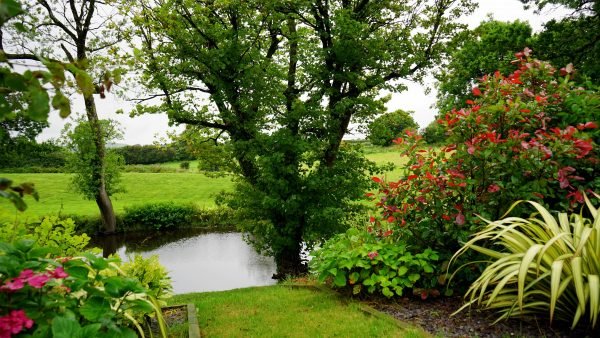
Take your backyard up a notch with a beautiful artificial pond or any other water feature, some water-based plants, rocks, and pebbles. This water feature will become a small pond ecosystem for animals and bugs and spruce up your backyard look. Small ecosystems and water features are among the most popular landscaping trends. You can also try putting some water pumps into your backyard landscaping to create a natural water spring effect.

4. Fill up the Empty Spaces with Lush Green Grass

A lush green grass around your backyard landscape creates a natural contrast to landscaping elements and boosts the overall look of your backyard. Certain fertilizers and natural minerals like Epsom salt help the grass retain a bright green color and maintain its health. Nurture the soil under the turf in fall to allow the grass roots to absorb nutrients. Strong roots sprout healthy grass during the spring and summer seasons. Spare a few minutes to pull out weeds and seasonal grass every now and then.

5. Add Some Colorful Plants to the Pathways

Who doesn’t adore seasonal plants and colorful flowers? A splash of color from flowers is the finest way to create a captivating landscape and add curb appeal to your backyard. However, you need to be careful in your plant selection. Make sure you read all the instructions for sunlight, water, and nutrient requirements. If your backyard receives plenty of sunlight, avoid choosing plants that cannot survive over-exposure to sunlight.

6. Create a Sitting Area and Fire Pit

Give your backyard an aesthetic boost and create a sitting area and fire pits. Place a couple of chairs and a table and slip a rug under it to create an attractive sitting area. Or, if you have a lot of space to fill, you could even explore getting one of these Large Summer Houses built in your backyard to add a real luxury touch, as well as provide a focal point that is sure to be the envy of those who see it. Play with bright colors that go along well with the flowers and plants in your backyard and pathways.

7. Spruce Up Your Backyard with Perennials

Perennials are plants that bloom all year round. Investing in some lovely perennials and planting them in the proper area, together with rocks and other landscaping features, can result in an alluring appearance. The best thing about perennials is that they do not require frequent upkeep. All you need to do is a little tweak and trim during spring and summer and water them only when the surrounding soil is dry. These easy maintenance tips will keep them healthy and blooming throughout the year.

8. Install Pathway and Landscape Lights

Spruce up your pathways and landscapes with walkway LED lights. They brighten up the path and give an illusion of space. Moreover, landscape lights highlight the natural features of your backyard and bring out the colors of your seasonal plants even in the darkness of night. You can try solar or battery-powered lights instead of hard-wired lights. They are easier to maintain without electrical hazards.

9. Plant in a Pot to Control Growth

Some perennials and seasonal plants can grow exponentially and spoil the look of your landscape. The best way to control the growth of plants that spread quickly is to plant a pot instead of putting the plant directly into the backyard. Plant pots prevent roots from spreading inside and thus control their growth on the outside. To give a more natural look, bury the plant pots at ground level and surround them with natural rocks.

10. Concentrate on Size and Plant Repetitions

The scale or size of a landscape and the repetition of perennial plants and trees are the most difficult parts of landscape planning for homeowners and novice landscape designers. However, a well-thought-out scale and pace plan give your yard a stylish yet well-organized look. Repeating tall plants are best suited against the house’s structure, near patios, fire pits, or pathways. The variation in size, type, and plant color creates a perfect trail of plants that spruce up your outer living space. However, you must strike a balance between repetition and new plants and hardscaping elements. Repetition creates a sense of coherence, but it should not be monotonous. An occasional new element is preferable to create a variety instead of a year-round dull and repetitive look to your backyard landscape.

Final Thoughts

A stunning landscape design can boost your house’s overall appearance and increase its curb appeal. However, you don’t need to spend a lot to create a captivating landscape in your backyard. Use these expert techniques to enhance your landscape’s beauty and utility and boost your property’s value.

5 Tips To Improve Home Ventilation (And Why It’s Super Important!)

The plastic window is open. Open window with curtains and mountain views.

You’re looking for different home improvement projects to do around the house. There are lots of different options available, but one that’s probably at the back of your mind is improving the ventilation. 

Effectively, your home’s ventilation is its ability to disperse air around. A well-ventilated home will move air around and disperse it outside the property with no issues. On the flip side, a poorly-ventilated home could be very stuffy, have stale air floating around, and lead to a number of issues. 

So, this post will focus on two separate things. Firstly, why is it so crucial to improve home ventilation? After learning about this, you’ll find a host of tips that will help you achieve an excellently-ventilated property! 

Why home ventilation is important

As mentioned in the introduction, the purpose of ventilation is to move air around your home. Doing so will help you get rid of the following: 

  • Airborne allergens
  • Chemicals
  • Moisture
  • Odors
  • Pollutants

Consequently, a well-ventilated property will give you these amazing benefits: 

Healthier air inside the home

Getting rid of things like dust and other airborne allergens will make the air in your home easier to breathe. It creates a healthier environment that’s better for people suffering from seasonal allergies – or other airborne allergies. They will see a reduction in common symptoms, like blocked noses, itchy eyes, and sore throats. 

Likewise, think about the chemicals and other pollutants you may release in your home. When you clean your house – particularly in places like the bathroom or kitchen – you could use bleach or other chemicals that release toxins into the air. A good ventilation system will take these harmful things and disperse them outside. Thus, the air is healthier and has less chance of causing extra health problems. 

A lower chance of water damage

A lot of homeowners will experience water damage at some point. Contrary to popular belief, you don’t need to be hit by a flood to require a restoration service for water damage in the home. In fact, the most common cause of water damage comes from poor ventilation. 

You see, a poorly-ventilated property won’t be good at removing steam or hot air. Therefore, this air hits the walls or ceiling and condenses, leaving moisture sitting there. From here, the moisture settles in and creates damp conditions that lead to mold and rot. As such, you’ll need to fork out a lot of cash on mold removal or water damage restoration. When your property has a good ventilation system in place, all of the hot air will dissipate outside. You don’t get condensation, and the inside of your house stays nice and dry. 

A home that smells nice and fresh

Lastly, ventilation gets rid of all the nasty odors in your house. If you kept every single window and door closed in your home, it will smell really musty and nasty. Let’s be honest, you’ve experienced this many times before. If you have a particularly sweaty night, you wake up in the morning and the air in the bedroom almost feels thick and smells a bit stale. Opening the windows helps to get fresh air into your home while bad odors leave. 

To summarize, you need to improve home ventilation to enjoy a house that smells nicer, has healthier air to breathe in, and won’t fall victim to water damage/mold. Right, this brings us to the big question…

How do you improve home ventilation?

You’ll be pleased to know that improving home ventilation is much easier than you think. This isn’t a task that requires a huge amount of effort or investment. Sure, there are tips below that will suggest you buy certain things to improve ventilation, but it’s up to you to decide what lengths you need to go to. 

Keeping all of that in mind, here are the top tips: 

#1 Open doors & windows

This was something we very briefly touched upon a few paragraphs ago, but it’s the simplest way to instantly see improvements in ventilation. 

The problem most households have is they keep the windows and doors shut too often – especially in winter. Yes, you want to keep your home warm, but you need to ventilate it and get fresh air inside. Opening your windows for a couple of hours a day in the morning will help you get rid of stale air, bring fresh air into your home, and really decrease the humidity at the same time. 

If you have to pop to the shops or take the kids to work, this is the perfect time to leave your windows open just a little bit. When you return, you will be amazed at how much fresher your home feels and smells. 

Another pro tip is to put some fans next to the windows as this helps to blow more air out of your home, boosting the ventilation effect.

#2 Use your exhaust fans

Sometimes called extraction fans, these fans come in every single home these days. They are literally designed to help extract air and transport it outside. You will typically find them in the two rooms most guilty of generating a lot of hot air and humidity: the bathroom and kitchen. 

In your kitchen, the exhaust fan usually sits above the cooker, helping to suck up steam while you cook. Always turn it on when cooking to stop your home from getting full of really hot and humid air that may lead to water damage. The same goes for your bathroom – this fan needs to be on whenever you shower or run the bath. It’s also a good idea to have it on when going to the toilet as it does help you get rid of some bad smells!

There’s a really easy and cool way to see just how effective these fans can be. Take a shower without the fan on and look at how foggy your bathroom mirror gets. The next day, take a shower with the fan on, and you should see a distinct difference. Just make sure you keep the fan clean as it can sometimes get clogged with dust, making it ineffective. Every month or so, remove the fan and clean it out. 

#3 Try to dry your clothes outside

Whenever this is possible, it will make a considerable difference to your home’s ventilation. Drying clothes inside will mean that so much moisture escapes from these clothes and gets into the air. The humidity levels rise uncontrollably, leading to dampness and mold. 

If you have a dryer, you can dry your clothes in that. Granted, many of you are looking to cut down on your energy bills, so letting clothes dry by themselves will help you avoid turning on the dryer. That’s completely fair enough, so hang them outside if you have enough room. If you live in an apartment, you sometimes get communal clotheslines to dry your clothes outside. If not, don’t worry, the next tip can also prove useful when drying your clothes indoors. 

#4 Buy a dehumidifier & air purifier

Two products are very effective at improving ventilation in your home. A dehumidifier works by extracting moisture from the air. You can turn it on whenever you like to decrease humidity levels and ventilate your home – much in the same way as an exhaust fan. It’s also handy for drying clothes very quickly indoors as it sucks the moisture from them. So, if you don’t have space to dry clothes outside, this is a great alternative. 

An air purifier will take allergens and other pollutants out of the air. It filters the air through the machine, removing these things and filling your home with cleaner air. This is one of those products you have to see in action to believe. It sounds ridiculous, but your air genuinely feels healthier after using a purifier for a few days. 

#5 Use an HVAC system

Some homes will already have a heating, ventilation, and air conditioning system installed. If this is the case, you will have air ducts throughout your home that can be used to filter air through. 

All you have to do is set your HVAC fan to on, so it runs and extracts air from your property, drastically improving ventilation. Effectively, you end up with an exhaust fan in every single room, with the added benefit of a filter to filter out harmful pollutants or airborne allergens. 

If you do not have one of these systems in your house, you may consider installing one. It’s a good idea if you also need air conditioning during the summer months. Here, you can combine your heating, air conditioning, and ventilation all into one. 

How do you know if your home isn’t well-ventilated? For starters, it will always smell a bit sour and stale, and you may constantly have a stuffy nose. Likewise, you could check the humidity – and if it is above 75% regularly, then there’s too much moisture in your home. Follow the tips above, and you will see massive improvements in ventilation, leading to a healthier and better property.

5 Tips To Make Your Home Beautiful

The way you design your home reflects a lot of things about you. It can mirror your lifestyle, your likes, and your dislikes. It is necessary to find a company that you can trust with the whole renovation process. For your home development, companies like Virginia Shower And Bath can help. 

Making your home look beautiful is not only for families that move in. Old homeowners can also make a way to beautify and decorate their homes. For instance, making a garden, rearranging furniture in the living room, and renovating the bathroom. 

Every homeowner goes all out when decorating their home. Sometimes, too much design looks cluttered and unappealing. In this article, we will break down the five tips to make your home beautiful:

Start decorating with spaces that other people see.

It is wise to start decorating places that people or visitors see often. For instance, you can start with decorating the living room or the common-used bathroom, and these are spaces that visitors usually can see. 

When decorating the bathroom, it is necessary to avoid too much decoration. For example, making minimalist designs would work. You can also use colour-blocking techniques to create a synergy of design. This same technique can also apply to living rooms. You can match paints to make the effect of your wall more beautiful. 

Add a natural element.

You can design your home by incorporating flora and fauna. You can decorate with your indoor plants. Indoor plants can help not only to beautify your home but to promote good indoor air quality.

Flowers are also great for giving spaces with life. A flower is visually refreshing and accents a space. 

Here are different plants and flowers that you can use to decorate:

  • Amaryllis
  • Fiddle-Leaf Fig Tree
  • Meyer Lemon Tree
  • Split-Leaf Philodendron
  • Christmas Cactus
  • Kentia Palm
  • Castiron Plant
  • Peace Lily
  • African Spear Plant
  • Snake Plant

Play with colours

Designing a home can be burdensome. Sometimes, choosing the right colour is one of the things that makes the task harder. 

When choosing the right colour, you need to utilize the colour wheel. You can play with contemporary tones to help your interior stand out from the inside out. Neutral colours help your home to be welcoming and warm. 

Modern interior designs play with colours and hues to emphasize the outline of a home. These colours go with each other. It accents the decorations and art pieces you want to emphasize in your home. 

Do not block your windows.

Natural sunlight is an addition to an open home. Letting the light shine inside your home can help you save money from utility bills. This practice can also help you give a related ambient of peace while taking advantage of natural sunlight. The sunlight uplifts the energy in your home. 

When the sun is too harsh, you can lay down your drapes to cover it momentarily. The natural light also makes the inside of your home brighter when you use light wall colours. 

Group collections together

You can dedicate a space for your collections. You can have a showroom or a cabinet in the living room to display your collections. Grouping your collection is a great way to prevent the cluttering of things. It can also give a more memorable impact when grouped. 

You can make these collections stand out when you place them in a space where visitors can see them. You can also incorporate refreshing designs by changing the shelf frame colour. 


Tips for Finding the Best Real Estate Agents

One of the most significant financial decisions of your life, purchasing a new home is no easy task. Finding an experienced real estate agent to walk you through the process when you’re ready to buy is essential. Consider local Burton on Trent Estate Agents or local agents in your specific area, as they will have a good understanding of the local property market and will be best placed to assist you.

Real estate professionals are vying for the position via yard signs, newspaper listings, and online advertisements. Finding the ideal professional might be difficult with so many options available. Use these real estate agents hiring suggestions to locate the best person to sell your home or provide you a home value estimate or look for home builders in Las Cruces NM.

A Step-by-Step Guide to Finding a Real Estate Agent

  • Get a pre-approval mortgage 
  • Obtain recommendations from family and friends
  • Investigate prospective recruits
  • Interview three or more real estate brokers minimum
  • Request and verify references
  • Listen to your gut
  • Take a close look at your contract
  1. Get a Pre-Approval Mortgage 

Before speaking to a mortgage lender, some homebuyers engage a real estate agent and start their search. To find out how much you can afford, it’s a good idea to speak with a lender first. Once you have a preapproval letter, you can start working with letting & estate agents in Gillingham to find a home that fits your budget and needs. A buyer’s agent can help you understand the type of home you can afford in the current market, find listed homes that match your needs and price range, and then help you narrow the options to the properties worth considering. They can also advise you on how much to offer and what contingencies to include in the contract, based on the property and an analysis of the market. When looking for a real estate agent, it’s important to find someone who is licensed and adheres to the National Association of Realtors code of ethics.

By getting preapproved for a mortgage, you may find out the maximum amount you can borrow and find out if any problems need to be fixed immediately. It limits your search for houses in your ideal price range. Additionally, it will demonstrate that you’re a serious buyer to prospective real estate brokers (and sellers). You’ll need a preapproval letter for sellers to consider your offer in today’s competitive marketplaces. 

  1. Get Recommendations from Relatives and Friends

An excellent real estate agent can be found by asking individuals in your network for recommendations. You should ideally hire someone with expertise working with clients comparable to yours. First-time buyers have different needs than repeat buyers or homeowners wishing to downsize, for instance.

When choosing a real estate agent, look for a Realtor with a capital R. That indicates that they have formally agreed to uphold the National Association of Realtors (NAR) code of ethics and are a member of the organization. To demonstrate that they have received training in a particular area of real estate, some Realtors additionally obtain certificates such as:

  • CRS (Certified Residential Specialist): Completed additional training in handling residential real estate
  • ABR (Accredited Buyer’s Representative): Completed additional training in representing buyers in transactions
  • SRES (Seniors Real Estate Specialist): Completed training aimed at helping buyers and sellers aged 50 and older
  1. Buyer’s Agents vs. Seller’s Agents

Learn the distinction between a buyer’s agent and a seller’s agent. In a real estate transaction, a buyer’s agent represents the homebuyer. In contrast, a seller’s or listing agent is in charge of the seller’s side, which includes setting the listing price, promoting the home, and negotiating the conditions of the sale.

A dual agency is when one real estate agent represents two parties simultaneously. If you’re considering approving this arrangement, consider that certain states do not permit dual agency and that there may be some inherent risk. Another type of agent you can come across is a referral agent, who gives leads to other agencies for a charge.

  1. Investigate Prospective Parties

First, check out an agent’s online profile, then search the agent’s website and social media pages. Examine their digital evaluations as well. One or two unfavorable reviews are nothing to be concerned about, but more than that may be cause for concern. Be careful to inquire about a prospective agent’s license status and disciplinary actions with your state’s real estate regulator.

  1. Interview at least Three Real Estate Brokers

You can learn more about the style and background of the agent during the interview. In the end, you’re looking for someone knowledgeable about a specific topic and aware of your needs and financial situation. You can learn more about the agent’s preferred form of contact and availability during interviews. For instance, if you prefer texting and plan to tour properties on the weekdays after work, you’ll want an agent willing to do the same.

  1. Request and Verify References

Request information on the homes the agents you are considering have listed and sold over the last 12 months, along with the names and contact information of at least a few recent clients. Contact those clients to learn more about their experiences and the level of support the agent offered throughout the transaction, particularly during the negotiations.

  1. Listen to your Gut

An agent’s ability to guide you through the process is as crucial as the expertise and experience they bring to the table. Choose an agent you can trust and feel at ease with in case the path to closing is a little rocky. Don’t go with them even if everything is in order, but you just click with them. There are many other real estate brokers out there that would be delighted to assist you.

  1. Take a Close Look at your Contract

Your contract with the chosen agent should specify all the terms you’ve agreed to, including the real estate commission. Aim for a contract that is no more than six months. According to the NAR, selling a property can happen in as little as 20 days in today’s competitive seller market. Keep your choices open in case you aren’t able to get the house you want within a few months.

Final Thoughts

The appropriate real estate agent will make a difference in today’s fiercely competitive home market. You want someone to guide the process with your best interests in mind—someone you can trust and feel at ease with. The more familiar a buyer’s agent is with a particular neighborhood, the more probable they can direct you toward the ideal buyer or house within your desired timeframe and price range.

8 Bathroom Design Ideas for Your Next Renovation

Bathrooms are a great place to start when planning a renovation, as they require less space than other rooms in your home. However, if you’re considering renovating your bathroom by hiring bathroom renovations like bathroom renovations in Brisbane North. It’s important to get the design right so that your bathroom feels like an oasis rather than just another room in your house. So, here are some ideas for making sure it’s functional and beautiful at the same time.

  • Tile Selection

Tile selection is one of the most important elements of a bathroom renovation. You want to choose tiles that are durable and easy to clean, so they can stand up to years of use. Look for matte-finish tiles that won’t show dirt easily. Grout should also be considered when selecting your tile material: it should be stain resistant and easy to clean, otherwise, you’ll spend more time cleaning than enjoying your new room. You may also want to consider using accent tiles in small doses around the sink or bathtub area as well as using decorative mosaic patterns on the floor if you have an extra budget for luxuries like these.

  • Use Duette Window Shades

If you’re looking to add some privacy to your bathroom, duette window shades are a great option. They’re easy to install and remove when not in use, so you won’t have to worry about damaging the window frame or any other parts of your home. Duette window shades come in a wide range of colors and patterns that will help transform your bathroom into something beautiful and unique.

  • Flooring

Flooring is one of the most important elements in any bathroom. It can make or break a design, so it’s best to choose wisely. If you’re looking for an aesthetic that’s both traditional and modern, consider these options:

  • The tile is easily customizable and comes in many colors and patterns. You can even purchase floor tiles with built-in drainages for easy cleanup. Many people choose tile for their bathroom because it lasts longer than other materials and has a timeless aesthetic that fits into any decorating style.
  • Carpet—If your home is on the more rustic side, carpet might be your best bet. If you love showing off your wealth but don’t want to pay top dollar for hardwood floors, this option will work well in any setting as long as there aren’t too many heavy footfalls around. 
  • Heated Flooring

If you’re considering installing heated flooring in your bathroom, it’s important to know the pros and cons. Heated flooring is perfect for people who want to keep their feet warm on cold mornings. It’s also a great choice if you want your bathroom to be easy to keep clean; since it doesn’t get wet like other types of floors, dirt and grime cannot stick to it as easily. However, because they don’t get wet very often (if at all), heated floors are prone to drying out faster than other types of surfaces can. This means that they may need more attention when they do start getting dry spots or cracks in them and as you all know: no one likes having their feet on the cracked tile.

    5. Built-In Storage

Built-in storage is a great way to add more storage to your bathroom, and it can be used not only for towels and toiletries but also for other essentials like hair dryers or curling irons. A built-in vanity with drawers is an added bonus, as it can provide a lot of extra space for storing makeup and hair supplies. You may want to consider adding cabinetry under the sink too if you need more storage space.

    6. Light Fixtures and Mirrors

In the bathroom, it’s important to use mirrors to reflect light and make the room appear larger. If you’re a woman, a large mirror is also helpful for doing your hair and makeup in front of you. For men who shave or style their hair in the morning, a wall-mounted shaving mirror can be particularly useful.

Mirrors are also great for helping with posture: stand back from the mirror and take note of how you look from behind. Are your shoulders hunched forward? Do you have a curved spine? Are your feet positioned too far apart? Make adjustments until you’re standing up straight like an adult human being.

    7. Toilets

Toilets are the focal point of the bathroom, so it’s important to get them right. The key considerations with regard to toilets include:

  • Size: The toilet should be the right size for its purpose and location in your bathroom. If you have a small space, consider using a compact toilet or one that can be wall-mounted.
  • Positioning: Ensure that your new toilet is positioned correctly in terms of its relationship to other fixtures and fittings.
  • Condition: When looking at used toilets, examine them carefully for any damage or signs of wear-and-tear that might indicate poor workmanship or inferior quality materials being used during manufacture or assembly (e.g., pitting). Also, remember that some styles may become less desirable over time due to changing tastes.

    8. Vanity Ideas

  • Pedestal

This is a classic option for the bathroom, especially if you have a smaller space and want to create more open space. The pedestal sink will give the illusion of having more room in your room. If you don’t have enough space for another cabinet, this is an ideal choice because it can be placed on top of a dresser or chest of drawers as well as under the vanity.

  • Vessel

This type of sink has been popular for years because it doesn’t take up much floor space but still looks elegant and modern. You can choose different types of material such as glass or stone to give your bathroom an extra touch that makes it stand out from all others. The vessel sinks are also great because they offer so many different shapes and sizes; they come in round bowls or square bowls, large bowls, or small bowls depending on the style best suits each individual’s needs. This means there’s something out there no matter what kind of personality or taste means the most important things need when renovating bathrooms today.

In addition, in case you have to fix things by yourself, You might need to be able to fix things by yourself when you renovate your bathroom. Toilets can sometimes be tricky, but there are some easy fixes that can get your toilet working again.

  • If a faucet is leaking: A leaky sink or tub/shower faucet can be a costly repair that involves replacing the valve assembly. Before you call in the plumber and spend hundreds of dollars on repairs, try these simple steps first:
  • Turn off the water supply at both ends of the pipe or you can use glass fibre tape to stop the leak (if you don’t have time to fix it). If this doesn’t stop the leak, turn off just one end of the pipes and test them individually until you find which one has caused your problem. Then turn both backs on again and check for leaks once more before fixing anything permanently by tightening any loose connectors or replacing worn washers where necessary; this last step should solve most problems with leaking valves or connections between pipes themselves.

Conclusion

Now that you have some great bathroom design ideas, it’s time to make them a reality. Whether you choose to renovate your entire bathroom or just upgrade a few things, these tips will help you create an amazing space for years to come. If you can picture yourself in the new bathroom already then go ahead and start making plans.

Essential Tips for Renovating a Home Spa or Hot Tub

Introduction

If you’re looking to renovate your home spa pool or hot tub, there are a few things to keep in mind. You can preserve the life of your hot tub by doing some simple things during the renovation process. By paying attention to detail and spending a little extra on quality products, you can make sure that your spa will be around for many more years to come. Here are some tips for making sure that happens:

Check your spa or hot tub repair person’s qualifications.

When you’re ready to get a quote from a spa or hot tub repair person, check their qualifications. You should be able to find this information on the website of either their relevant body or the company they work with. This can include:

  • Registration number
  • Insurance coverage information
  • Licensing numbers (if applicable)

Make sure the hot tub or spa is safe for kids.

You may want to renovate your hot tub or spa, but do you have the know-how? You may need a professional. A lot of people don’t realize how much work it takes to build a fully functional hot tub or spa. Those that are do-it-yourself (DIY) enthusiasts will be happy to know there’s plenty of information out there on how they can make t own additions and improvements as well. Hiring a professional might be necessary if you’re thinking about building anything larger than what can be done in an afternoon by one person alone. If you’re going this route safety precautions must be taken so no one gets hurt during construction and use afterward; here are some tips for making sure it stays safe:

  • Check for loose tiles.
  • Make sure there aren’t any sharp edges.
  • Inspect for structural integrity.

Repair the Roof

Double Glazing Glass Replacement

If you want to improve the efficiency of your hot double-glazing glass is a great way to do it. The single pane of glass in most hot tubs can cause energy loss because it lets heat escape. Replacement double glazing glass keeps the heat in, which means that it’s easier and cheaper to maintain a comfortable temperature in your spa. In addition to being more efficient than single glazing, double glazing helps keep out cold air and moisture so that they don’t get into your home environment and make things damp. 

Purchase the best pump you can afford.

Before you begin the renovation, it is important to purchase the best pump you can afford. This will save you money in the long run because it will be more energy efficient and last longer than a cheaper model. In addition to some filters needing replacing every so often; purchasing a filter system with an easy-to-use auto-clean feature will keep your hot tub clean without any extra work on your part.

Finally, make sure that the warranty covers all parts of your new hot tub spa—including electronics and pumps—and what happens if something breaks while under warranty coverage?

Install a good filter system.

A good filter system is one of the most important elements in your hot tub or spa. You will want to install a quality filter system right away and then maintain it properly. This means that you should clean and change your filters regularly, as well as keep them free of debris and moisture at all times so that they don’t get clogged up by dirt, mold, or mildew.

Invest in a great cover.

A spa or hot tub cover is an essential part of your home spa or hot tub. It protects the tub from weather, and it can also keep the water at a more constant temperature. A good cover will also keep out dirt and debris, so you don’t have to clean as often. In addition, you can use the cover as a place to sit and relax while you’re enjoying your new spa or hot tub!

You may want to consider purchasing one that has extra storage space for all of your bathing accessories—it’s great for keeping everything in one spot so that it’s always ready when you want to take a relaxing dip!

Insight-quality insulation around the pipes and equipment.

Installing high-quality insulation around the pipes and equipment is important for a couple of reasons. Insulation helps keep the water warm or cool (depending on your preference), which is especially important when you’re using a hot tub in cold weather. It also prevents condensation from forming on the walls of your spa, which can lead to mold and mildew if not treated immediately. Insulation also reduces noise levels, so you don’t have to worry about hearing every drip from your pipes while relaxing in your spa!

Ask your contractor or supplier about their energy efficiency ratings.

Before you decide on a spa or hot tub, ask your contractor or supplier about their energy efficiency ratings.

  • Ask about the spa’s energy efficiency rating. The Energy Star program rates spas based on how much heat they lose to surrounding air (the average is 25% of what’s produced). If a spa has a low rating, it means it will be more expensive to run and maintain.
  • Ask about the pump’s energy efficiency rating. Again, this is based on how much heat it loses when pumping water (the average is about 30% for many pumps). A high-efficiency pump will save money over time by using less electricity and requiring fewer repairs due to wear and tear from overuse.
  • Ask if there are any upgrades available for your filter system that would improve its energy efficiency rating as well as its effectiveness at filtering out contaminants in your water source such as sand, algae, etc…

A well-planned renovation project can give a spa or hot tub many more years of life.

A well-planned renovation project can give a spa or hot tub many more years of life. This is especially important if you have kids using the spa or hot tub, as these items are expensive to buy and maintain.

If you’re planning on renovating your spa or hot tub, here are some tips to help make the process easier for you:

  • Make sure that all of your plumbing needs are up to date. If there are any problems with the internal components like pumps or filters, get those fixed before going further into the renovation process. Not only will this save time later on in the project but it will also ensure that everything runs smoothly once everything is put back together after construction is finished.

Conclusion

If you’re looking to remodel your hot tub or spa, we can help! We offer everything from regular maintenance to full-scale renovations.


Here’s How to Make Your Home Safe and Lovely

Introduction

A house is a building that people live in. It has walls, a roof, and doors. We can also add some other features such as garage doors and windows to make it look warm.

It is hard not to appreciate features such as 3d roofing, heatproof walls, and good neighborhood that most modern houses come with.

  • 3D Roofing

A roof is the most important part of your house. It protects you from rain and snow, helps to keep the inside cool in summer, and keeps it warm in winter. The best roofs are made from strong materials that can stand up to wind, rain, snow, and ice without damage. They also have a good waterproof layer so water cannot get into your home. You should ask your builder or architect which type of roof they are planning on using before they start building your home so that there are no surprises later on!

  • Heatproof Walls

The walls of your house play an important role in keeping warm or cool air where it needs to be throughout the year. If these walls get too hot then this can cause problems such as dry skin or even fire hazards if not taken care of properly beforehand! Make sure there’s adequate insulation installed between each layer so that heat doesn’t escape through cracks around windows/doors which could lead towards higher energy bills down the road.”

The fence is the first impression of a house

The fence is the first impression of your house. It is the first thing people see when they look at it, either from the street or from their own homes.

It’s important to make sure that the fence looks nice because it will influence how others perceive you and your house. The fence should be well maintained and look attractive, whether it’s made out of wood or iron, or even brick or PVC fence. You might also want to consider having a high fence so that people cannot see over it easily.  You can contact your local fence companies to ask for some quote and advice on what type of fence is best for your home.

One of the most important features of a house is the roof.

One of the most important features of a house is the roof. The roof protects your home from rain, snow, and sun. It can also make your house look beautiful. Tops are made of many materials, including asphalt shingles, metal, and tile. These different materials add different styles to any home that has them!

Garage door to protect your car

Garage doors are important for home safety and security. Garage doors are an important part of your home’s overall security system and should be installed, maintained, and repaired by certified professionals who understand how to keep your garage door in good working order.

If you want to make sure that your garage is safe all the time, you should contact the garage door in Goolwa so they can provide you with proper guidance on how to get the best garage door installation services near me at affordable rates.

A few other features are windows, doors, and the lawn.

A few other features are windows, doors, and the lawn.

Windows help with ventilation and light. Doors help with security. And finally, the lawn helps with aesthetics!

The House looks warmly with sandstone

Sandstone repointing is a great material for walls, whether you’re building a new house or renovating an existing one. It’s strong and durable, cleans easily, and looks stunning in any setting. Sandstone is also easy to install and can be bought cheaply—in fact, it’s often even given away for free by government agencies who want to reduce the amount of stone they have lying around their yards. If you’re looking for something more exotic than plain old grey sandstone, check out all the different colors available at your local hardware store!

While it is good to have all the features, one good feature can make a house nice.

When a house has all the features above, it is considered to be safe and friendly. A good roof can help keep out rain and snow. Good windows allow for natural light and ventilation (airflow). And good doors allow people to enter and exit a home safely. If you have all these things in your house, it will be very safe!

Conclusion

The most important thing about a house is that it should be safe, comfortable, and beautiful. We hope this article has given you an idea of what makes a house nice.

Things to Think about When Building a Brick/Stone House

Introduction

Building a brick and cladding house is a beautiful thing. It can also be costly and time-consuming, but the payoff is worth it!

To make sure that your brick/stone house is built to last by getting it from a trusted company like Sydney stonemasons, there are some things you’ll need to think about before you start digging. Here are some of them:

House foundation

The foundation is the base of your house. It supports the weight of everything above it, and it needs to be sturdy enough to do so.

You should have a minimum depth for your foundation of around 6 feet (1.8 meters). This will allow you to take advantage of natural underground moisture and keep your basement dry, as well as provide plenty of extra room for utilities such as plumbing pipes and electrical wiring (the latter can corrode at high temperatures when buried too deeply). An uneven surface can also contribute to problems with mold growth in basements because water pools on one side rather than draining away evenly through cracks in concrete blocks or bricks/stones into foundations below them.

Drainage

Drainage is one of the most important aspects of building a brick/stone house. Without proper drainage, your foundation will not be able to dry properly and may potentially cause cracks or other problems in the future. The following information should help you understand how to check for drainage problems and fix them if necessary.

  • Drainage for Brick Houses: Some types of stone are more porous than others, which affects how well they will drain. Check with your local building inspector to find out if any specific requirements exist in your area. In general terms, stones like granite tend to drain faster than those like limestone or sandstone because they’re less absorbent; however, they tend to be harder on tools during construction (which leads us back around…).
  • How To Check For Drainage Problems: You can test whether or not there’s adequate drainage by placing some water on an area where you’d like it absorbed into the soil—if the water pools up after several hours then there’s probably not enough drainage present! If this happens then either installing a gutter system along with vegetation nearby might help—or else just replacing part of your foundation altogether could solve everything! Either way, it’s always good practice before starting any major project such as this one so just make sure everything checks out first before beginning work on anything else.”

Waterproofing

  • The first thing to consider when waterproofing a brick or stone house is whether you need a waterproofing membrane. A waterproofing membrane is a thin sheet of material that goes over the top of your foundation wall, and it prevents moisture from getting into your foundation wall. The best way to install this type of material is by using a sprayer that applies glue to the foundation walls and then lays down the material over it. You can also use mortar between each stone as an alternative method for sealing off gaps between stones and preventing water from penetrating through them.
  • The second thing you should think about when building a brick/stone house has less to do with construction than aesthetics: how will you paint it? While most people probably wouldn’t want their entire house made out of bricks, if you are planning on building something like this then there are ways for painting interiors too (even though they’re usually not recommended). In any case, whatever method(s) works best for you will be determined based on what type of materials were used during construction—for example, cement blocks versus adobe bricks might require different methods; likewise steel-reinforced concrete versus regular concrete may require different methods as well.”

Wall Insulation

The walls of your house are the most important part of your home. They provide security and privacy while also keeping it cool in summer and warm in winter. It’s important to consider how you’ll insulate your walls before building them, as this will make a big difference in how efficient they are at keeping heat inside during the winter months.

Wall insulation retrofit can be added either as batts (which are like little pieces of cardboard) or blown cellulose (which is made from recycled paper). Batts are easy to install but less effective than blown cellulose because there is less space between each piece of material for airflow. Blown cellulose has the advantage of being able to fill all those tiny gaps between pieces that aren’t filled by batts, making it more effective at keeping out cold air from outside or hot air from inside.

The most common places insulation is installed include:

  • Walls – You can use either batt configuration alone to cover one side or both sides with an R-value ranging from R30 to R60 depending on how much heat loss/gain you want to prevent through these surfaces; however, two layers work best if you’re planning on having double pane windows installed later down the road.*
  • Roofs – This type usually comes pre-cut into squares which makes installation very simple; however different types may require special equipment such as staplers designed specifically for this purpose.*
  • Floors – This type works well when used underneath laminate flooring (as long as there isn’t any moisture present), but should never be applied directly onto bare concrete subfloors due

Pick the Right Stones

Choosing the right type of stone for your home can make a big difference in the long run. Consider factors such as:

  • Ease of use. The material needs to be easy to work with and handle during construction, so look for one that doesn’t require a lot of extra steps or special tools.
  • Cleaning ease. Stone is not always easy to clean, so choose one that doesn’t show marks easily or requires harsh chemicals to remove stains and dirt from it over time.
  • Maintenance difficulty. The material should be simple enough that you won’t have trouble maintaining it throughout its lifetime, whether through regular cleaning or repairs when needed (like fixing cracks).

Building a home with stone or brick can be beautiful, but it also carries some risks that need to be considered.

Stone and brick homes are beautiful, but they come with certain risks. The biggest one is that the building process takes a lot longer than it does with other materials. You need to be prepared for that and make sure you’re not in a hurry to build your dream home. If you do decide to go ahead, there are ways of minimizing risk by working with a reputable contractor who knows how to get the job done quickly while maintaining quality workmanship.

Conclusion

Even though building a brick home is more expensive than building a regular house, you can save money by doing much of the work yourself. But if you’re not sure about your abilities, hiring professional contractors will be worth it in the end.

Factors That Influence Property Value

It’s no secret that various factors influence a property’s value. From the roof to the view, homeowners and buyers alike are always looking for ways to increase the value of their homes. If you’re curious about what influences property prices and want to know how you can maximize your home’s worth, read on! This article will discuss some of the most critical factors that affect real estate values.

One of the Most Important Factors, Location

One of the most important factors that influence property value is location. Location can affect how much your home is worth in several ways. First, location can affect home value by determining your home’s neighborhood. Neighborhoods can be categorized as urban, suburban, or rural, and each one comes with its own set of pros and cons that will influence your home’s value. Another way location affects property value is by determining what kind of school district your home is in. Homes in desirable school districts will usually be worth more than those in less desirable ones. Finally, the location of your home can also affect its resale value. Homes in sought-after neighborhoods will usually have a higher resale value than homes in less popular areas.

Size Also Plays a Role

Another factor that can influence your property’s value is size. The size of your home will affect how much it costs to heat and cool and how much you’ll pay in property taxes. Larger homes will usually be worth more than smaller homes, but this isn’t always the case. In some markets, smaller homes are more valuable than larger homes because they’re more affordable and easier to maintain.

Age of Your House

The age of your home can also affect its value. Older homes usually have more character and charm than newer ones, but they may also have a higher price tag. In some markets, older homes are worth less than more recent homes because they’re not as energy-efficient.

Condition is Essential

Another factor that can influence your home’s value is the condition. If your home is in good condition, it will be worth more than a home that needs repairs. Well-maintained homes will also be worth more than homes that have been neglected. If you’re considering selling your home, it’s essential to ensure it’s in the best possible condition before putting it on the market.

The roof is one of the essential parts of a home, and it needs to be in good condition to maximize your home’s value. If your roof is old or damaged, it will likely need to be replaced before you put your home on the market. Replacing residential roofing can be costly, but getting the most money for your home is essential.

Amenities are Always Important

The amenities your home has to offer can also affect its value. For example, homes with desirable amenities like a swimming pool or a home gym will usually be worth more than homes without these features. So if you’re thinking of selling your home, it’s essential to highlight any unique amenities it has to offer.

The Economy and Real Estate Market Conditions

Finally, the economy and real estate market conditions can influence your home’s value. When the economy is doing well, there is usually more demand for housing, which can drive up prices. Similarly, when the real estate market is healthy, homes are typically worth more than when the market is slow. If you’re considering selling your home, paying attention to both the economy and the real estate market is essential to get a sense of how much your home is likely to be worth. Use these tips to make sure you are getting the most out of your home:

  • Pay attention to location when choosing where to buy or build a house
  • Consider size when deciding how big of a house to buy or build
  • Keep your home in good condition and make regular repairs
  • Highlight any unique amenities your home has to offer
  • Stay up to date on the economy and real estate market conditions.

Location, size, age, condition, amenities, and the economy and real estate market conditions – can influence your property value. By understanding how these factors work, you can better understand how much your home is worth and what you can do to increase its value.

8 Things That May Make Your House Feel More Comfortable

Your home should be your haven – a place where you can relax, unwind and feel comfortable. You want it to be a place you look forward to going to at the end of the day.

Your house might not be the biggest or have the latest technology installed, but you still want to make the most of it. You should do what you can to make it feel cozy.

If your home isn’t quite meeting your comfort levels, don’t despair! There are plenty of ways to make it feel more accommodating. Here are eight things that may make your house feel more comfortable.

Make your furniture comfortable and inviting

One of the first things you should do to make your house feel more comfortable is to take a look at your furniture. Do you have old, uncomfortable furniture that you never use because it’s not inviting? Or maybe you have too much furniture crammed into a small space?

Investing in some new, comfortable furniture can make a world of difference. You’ll be surprised how much more you use a room when the furniture is actually inviting.

Add some cozy throws and pillows

Another easy way to make your house feel more comfortable is to add some cozy throws and pillows. This is especially great for winter when you want to make your home feel warm and inviting, but it can be used all year round to add a bit of extra comfort.

There are so many different styles and colors of throws and pillows available, so you’re sure to find something that fits in with your décor. If you’re feeling really creative, you could even make your own!

Let in some natural light

Natural light can be great for making a house feel more comfortable. If your home is dark and dingy, try opening up the curtains and letting in some sunshine. You’ll be surprised how much of a difference it makes.

Natural light makes a room feel brighter and more inviting, and it can also help boost your mood. Natural light’s other health benefits include improving your sleep and reducing stress levels.

Keep your home clean and clutter-free

A messy home is never going to be comfortable. If you want your house to feel more inviting, make sure it’s clean and tidy. This might mean doing a deep clean more often than you’re used to, but it’s worth it for the comfort levels it can provide.

If you struggle to keep on top of the cleaning, there are some simple hacks you can use to make your life easier. For example, you could try setting a timer for 15 minutes and seeing how much you can get done in that time.

Add some plants

Plants are another great way to make your house feel more comfortable. Not only do they look good, but they can also help to purify the air and improve your mood.

If you don’t have a green thumb, don’t worry – there are plenty of hardy plants that are difficult to kill. Fake plants can also work well if you can’t keep anything alive.

Choose colors that make you feel good

The colors you choose for your home can greatly impact how comfortable you feel. Certain colors are known to affect our moods, so it’s worth considering this when you’re painting or decorating.

For example, blue is known to be calming and relaxing, while yellow can be cheerful and uplifting. Of course, you should choose the colors that you like the most, but it’s worth bearing in mind how they might affect your mood.

Have a space dedicated for work

If you have to do any work from home, it’s important to have a dedicated space for work. This could be a home office or just a corner of your living room that you can clear away at the end of the day.

Having a dedicated workspace can help you to feel more organized and productive. It can also make it easier to relax in the evenings and weekends, as you know that when you’re not working, you don’t have to be in that space.

Have a space dedicated to relaxation

Just as it’s crucial to have a space for work, it’s also important to have a space dedicated to relaxation. This could be a cozy spot in your living room where you can read or watch TV, or maybe a corner of your bedroom that you can make into a little sanctuary.

Having a space that’s just for relaxation can help you to unwind and de-stress. It’s also great for your mental health. For example, if you’re undergoing holistic therapy, you want to have a personal space where you can do yoga or meditate.

Final Thoughts

Making your house feel more comfortable doesn’t have to be difficult. By making a few simple changes, you can create an inviting and relaxing space.

The more effort you put into making your home comfortable, the more you’ll get out of it. Don’t be afraid to experiment until you find what works best for you. Soon enough, you’ll have a home that feels like your personal oasis.