

Black is perfectly fine to wear to most modern weddings. The old idea that it belongs only at funerals has largely been left behind.
Today it reads as classic, composed, and celebration-ready when styled correctly. That said, the right answer depends on more than just color.
The dress code on the invitation, the venue, the time of day, the couple’s cultural background, and their personal preferences all shape whether black is the right call.
A black cocktail dress at a rooftop city wedding lands very differently than the same outfit at a traditional religious ceremony.
Now let’s understand when black works, when it needs careful styling, and when it is worth reconsidering altogether.
Click to find more wedding attire options than black.
Can You Wear Black to a Wedding?
Yes. You can!
Black used to mean grief. For most of the 20th century, wearing it to a wedding was considered disrespectful. That has changed.
Today, black is one of the most worn colors at weddings across the US and UK.
Couples themselves often wear black or ask their wedding party to. What once felt like a faux pas now reads as classic and put-together.
The key is how you style it. Celebratory accessories, the right fabric, and a silhouette that suits the venue make all the difference.
Always confirm the dress code from the invitation and the wedding website prior to deciding on your outfit. Some couples specify the code.
Some cultural or religious ceremonies still carry expectations around color. When in doubt, that information is your clearest starting point.
When is it Appropriate to Wear Black to a Wedding?
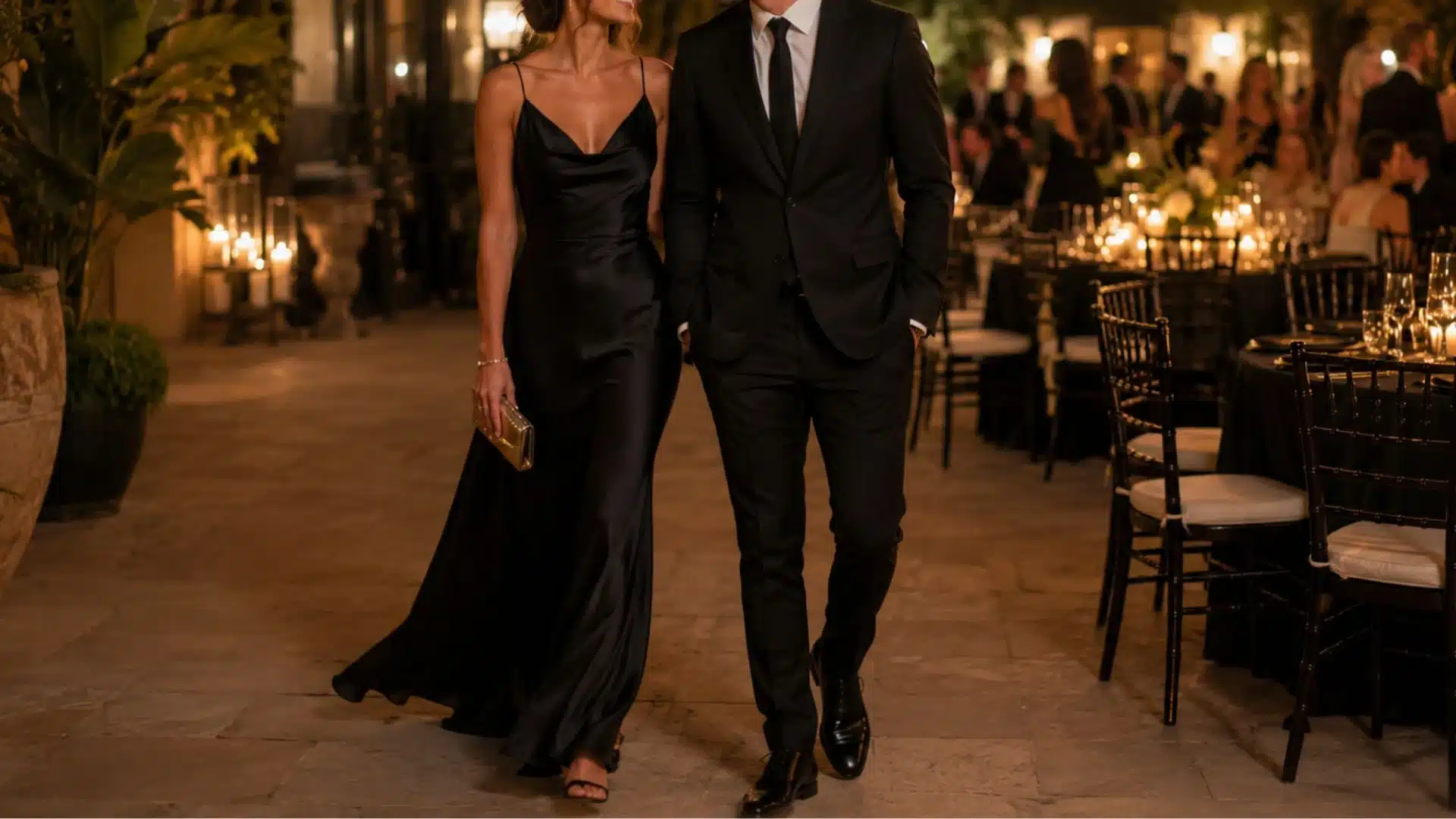
Black works at more weddings than most people expect. The setting, dress code, and time of day are the three factors that matter most.
1. Evening Weddings
The evening festivities suit the color black, as it proves effective in truly impressive candlelight events.
Choose rich fabrics such as silk, velvet, or chiffon to create a festive aura that pairs well with metallic components.
Learn about fall wedding attire styling.
2. Formal and Black-Tie Weddings
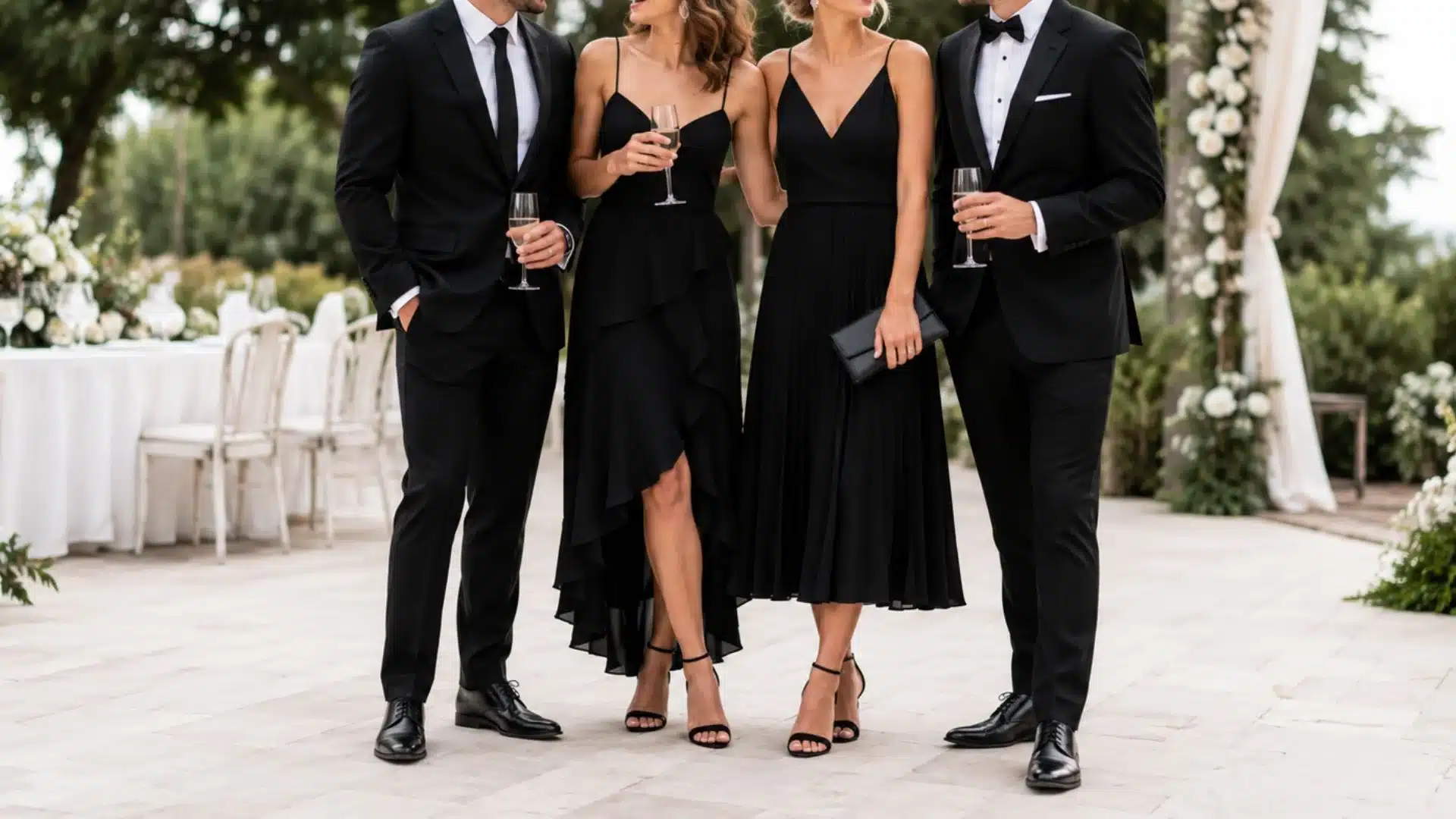
In a black-tie wedding ceremony, a full-length black dress is perfectly acceptable. Black-tie optional means you can wear a full-length dress or a fancy cocktail dress.
A formal dress code means you can wear either a mid-length dress or a cocktail dress.
Dark suits and tuxedos are perfectly fine to be worn at such events.
3. City and Indoor Venues
Hotel ballrooms, restaurants, and urban event spaces suit black naturally. The setting is polished, and black matches that tone well.
The key is fabric and finish; structured cuts and refined materials read celebratory. Avoid anything that looks better suited to the office than a reception.
4. Cocktail Dress Code Weddings
The cocktail dress code is a very versatile environment where black looks fantastic.
In this case, everything revolves around styling accessories, footwear, and material. Everything will fall into place when you choose them properly; then black will look impressive on you.
5. Winter Weddings
Winter weddings are best suited for black, unlike any other season in terms of richness. Long-sleeved outfits, thicker materials, and rich accessories all have a fitting feel.
Women: A long-sleeved velvet gown or a satin midi with a structured blazer works well. Deep jewel-toned jewelry sapphire, emerald, or garnet adds warmth and festivity.
Men: A black tuxedo or a dark wool suit is the best choice for winter events. Accessories such as cashmere scarves and quality overcoats can finish off the look.
How to Wear Black to a Wedding?
Black is great at a wedding when everything is in order. The fabric, cut, and accessories are essential aspects that turn a suit from dark to festive.
Once these elements are in place, the color of the dress will create an effect on its own.
- Choose Occasion-Ready Fabrics: Silk, satin, chiffon, velvet, lace, and crepe all read formal and festive. Avoid plain cotton or jersey that looks too casual.
- Add Color Through Accessories: Metallic shoes, jewel-toned earrings, a bright clutch, or a patterned shawl instantly shifts the mood. One warm-toned piece is enough.
- Get the Fit Right: It is believed that an outfit that fits well will look more graceful compared to a poorly made outfit.
- Break up Solid Black Where Needed: Florals, embroidery, or subtle patterns add visual interest without moving away from the base color. This works especially well for spring and daytime weddings.
- Match the Outfit to The Dress Code: A cocktail dress is perfect for black-tie occasions. As for casual daytime parties, your best choice is a comfortable wrap dress.
- Consider Makeup and Hair: A warm lip color or bronze eye shadow lifts an all-black outfit. Soft, warm tones work better than stark contrast at a wedding setting.
The color itself is not the issue; the problem lies in how it’s styled.
Cultural Etiquette Around Wearing Black to a Wedding
Black does not carry the same meaning everywhere. In Western cultures, it has largely shed its association with mourning and is now widely accepted at weddings.
It is still associated with sadness and death in various East Asian, South Asian, and Middle Eastern cultures. Therefore, wearing black to a wedding can be very insulting in these cultures.
So here are some points to consider when deciding if you are going to wear black for a ceremony specific to a culture:
1. Chinese and Korean Wedding
It is common for the color black to be associated with mourning in China and Korea. White and black are especially associated with funeral rites.
2. South Asian Wedding
The colors that should be worn at Hindu, Sikh, and Muslim weddings are colorful and cheerful ones. Black should not be worn because it is somewhat gloomy.
3. Western Christian and Civil Weddings
Wearing the color black at Western weddings is acceptable, especially in the city or at night receptions. The dress code is indicated on the invitation card.
4. Jewish Weddings
There is variation in the Jewish weddings based on the community, whereby some communities can wear black whereas others cannot wear it.
5. African and Caribbean Weddings
Bold colors are required in the African and Caribbean weddings, and hence black alone might be too sober or dull.
When attending a culturally specific ceremony, a polite question to someone close to the couple is always better than an unintentional misstep.
When You Should Avoid Wearing Black to a Wedding?
Black is a strong choice for many weddings, but it does not suit every setting.
Daytime outdoor ceremonies, garden parties, beach weddings, and countryside receptions usually call for lighter, brighter colors. Black can feel too heavy for an open-air setting in full daylight.
Spring and summer morning weddings suit softer palettes for the same reason.
Cultural and religious ceremonies are where black needs the most consideration.
South Asian, East Asian, and Middle Eastern weddings often carry strong traditions around color; black is best avoided at these events entirely.
If the invitation specifies a colorful or festive dress code, follow it. When the setting is casual or informal, a relaxed, colorful outfit fits better.
When in doubt, a safer color is always the better call.
Final Thoughts
So, can you wear black to a wedding? Most of the time, yes.
Color, on its own, is usually not the issue. It’s about how you wear the color through materials, fit, accessories, and appropriateness for the venue.
Find out what the dress code is and consider the venue, the time of day, and the culture before choosing your attire. More important than the color is this information.
Choose all of these things wisely, and black becomes one of the most versatile and appropriate wedding colors.
Frequently Asked Questions (FAQs)
1. Why is Black Traditionally Avoided at Weddings?
Black was historically linked to mourning and grief, making it considered disrespectful at celebrations like weddings.
2. What is the Superstition of Wearing Black to a Wedding?
In many cultures, black at a wedding is believed to bring bad luck or signal grief rather than celebration.
3. What Colors Are Off Limits at a Wedding?
White, ivory, and cream are the clearest ones to avoid; they are traditionally reserved for the bride.
4. What to Wear to a Wedding in 2026?
Jewel tones, rich neutrals, and classic black all work well; match the fabric and silhouette to the dress code.