

Wedding attire confuses more guests than it should. Getting the invitation is exciting. Then you see its dress code.
Suddenly you’re wondering what “black tie optional” actually means. Most guides list dress codes without telling you what to wear.
From the most formal wedding dress code to the most casual, each has specific meanings and outfits that go along with it.
This is the place where you’ll find every dress code guests face, from the most formal to the most relaxed.
You’ll know exactly what works, what doesn’t, and why. No more last-minute wardrobe panic.
Why Wedding Dress Codes Matter?
A dress code is not just a suggestion. It tells you exactly how formal the event will be and what the couple expects from their guests.
Getting it right shows respect for the occasion, the venue, and the people getting married. Getting it wrong stands out more than most guests realize.
Dress codes also make the decision easier. Instead of guessing, you have a clear starting point. The formality level is set, and the outfit range is defined.
All you need to do is work within it. That is the whole point of a dress code: it removes the guesswork entirely.
Wedding Attire Options by Wedding Style
The dress code tells you the formality, and the venue tells you the rest. Below is what actually works at each setting.
1. Black Tie Ballroom
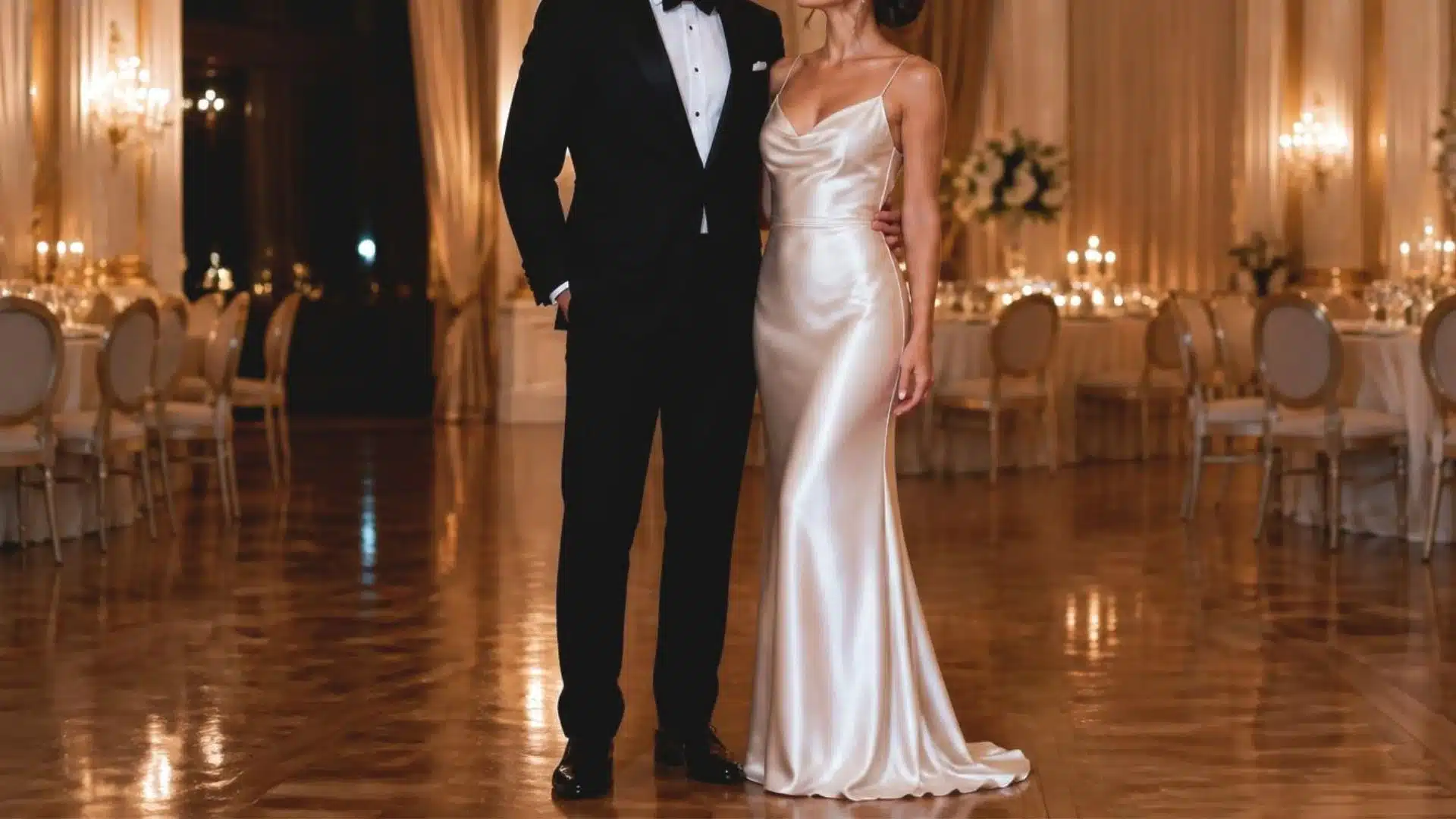
This represents the most formal wedding venue. Imagine a grand hotel ballroom, an old estate, or another luxury venue with chandeliers and formal dining arrangements.
The couple has spent a lot of time creating the atmosphere. You need to dress to match.
Women: Floor-length gowns made from satin, velvet, and crepe; or a formal midi dress that is more structured. Do not wear anything informal or heavily decorated.
Men: A formal black tuxedo, with a crisp white shirt and black bow tie. Black patent leather shoes.
2. Church or Traditional Ceremony
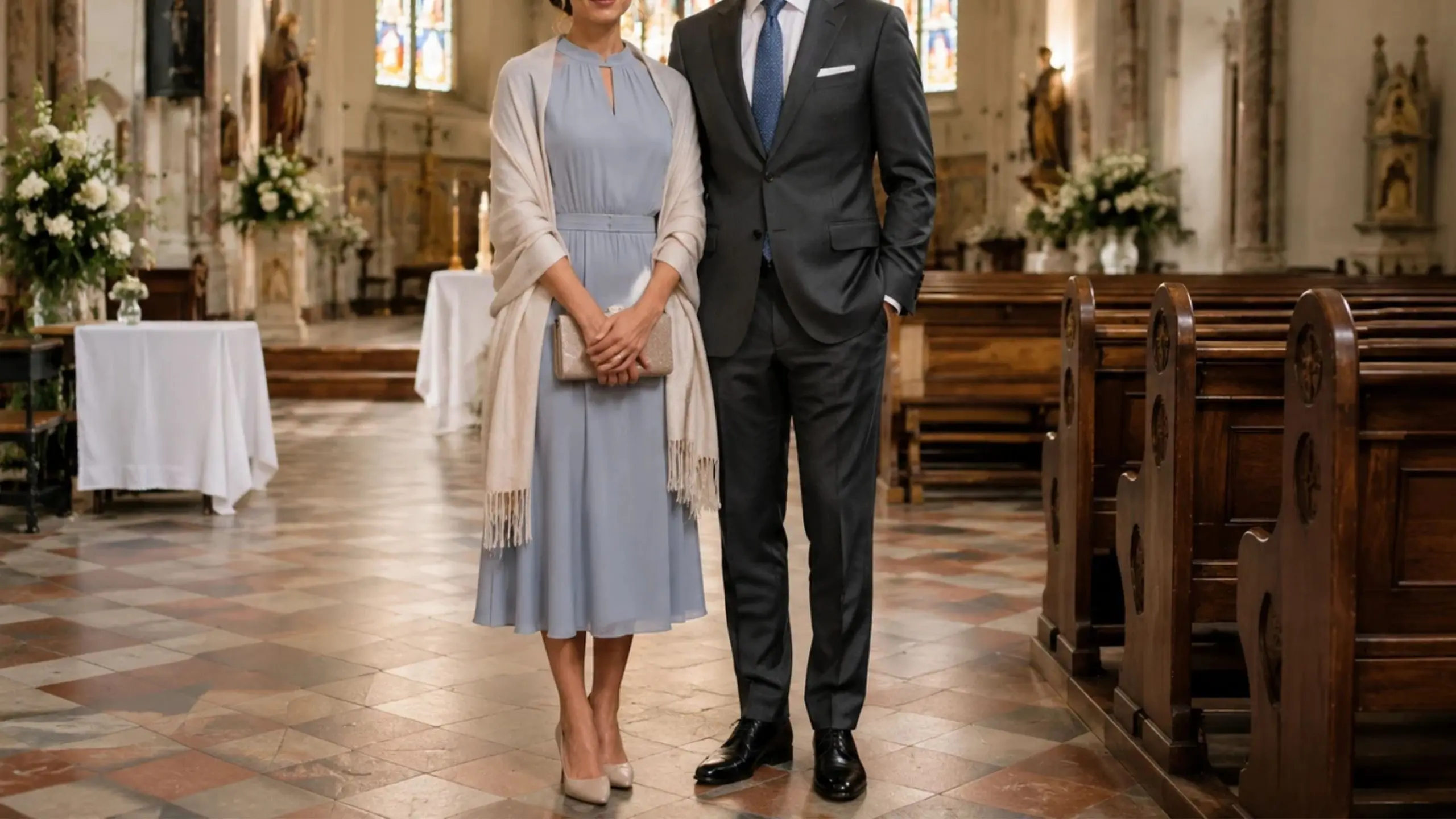
A church or traditional ceremony follows well-established traditions.
The atmosphere will be formal and respectful, with high expectations from the couple’s families.
In this case, being demure is even more important than at any other type of wedding.
Women: A midi or knee-length dress in a modest style. Wear something to cover your shoulders or carry a shawl with you. You may choose either a solid color or soft print.
Men: A suit in navy, charcoal, or grey. A tie is obligatory. Wear only dress shoes.
3. Garden or Outdoor Wedding
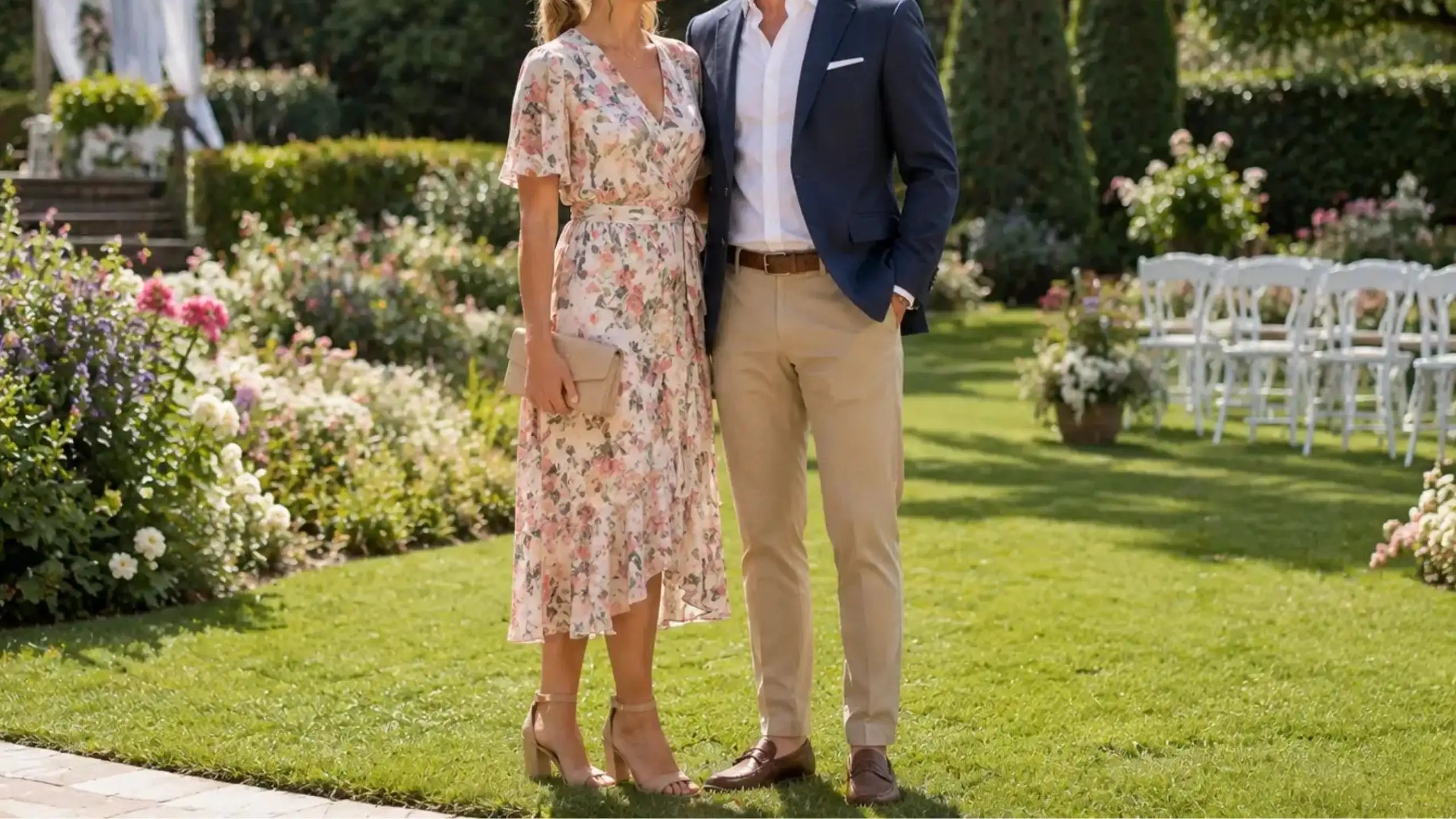
Garden weddings are held in manicured estate gardens, botanic gardens, or private backyards. These venues look neat and comfortable.
The venue looks good, and the ground is uneven. Be graceful, but keep things practical.
Women: A floral midi dress, a breezy wrap dress, or dressy separates. Block heels or wedges over stilettos; grass and gravel are not kind to thin heels. Light fabrics like chiffon or linen suit the setting well.
Men: Wear chinos in stone, beige, or light gray with a blazer. A linen suit would be great for summer days. Loafers are fine. Skip the tie unless invited.
4. Destination Wedding
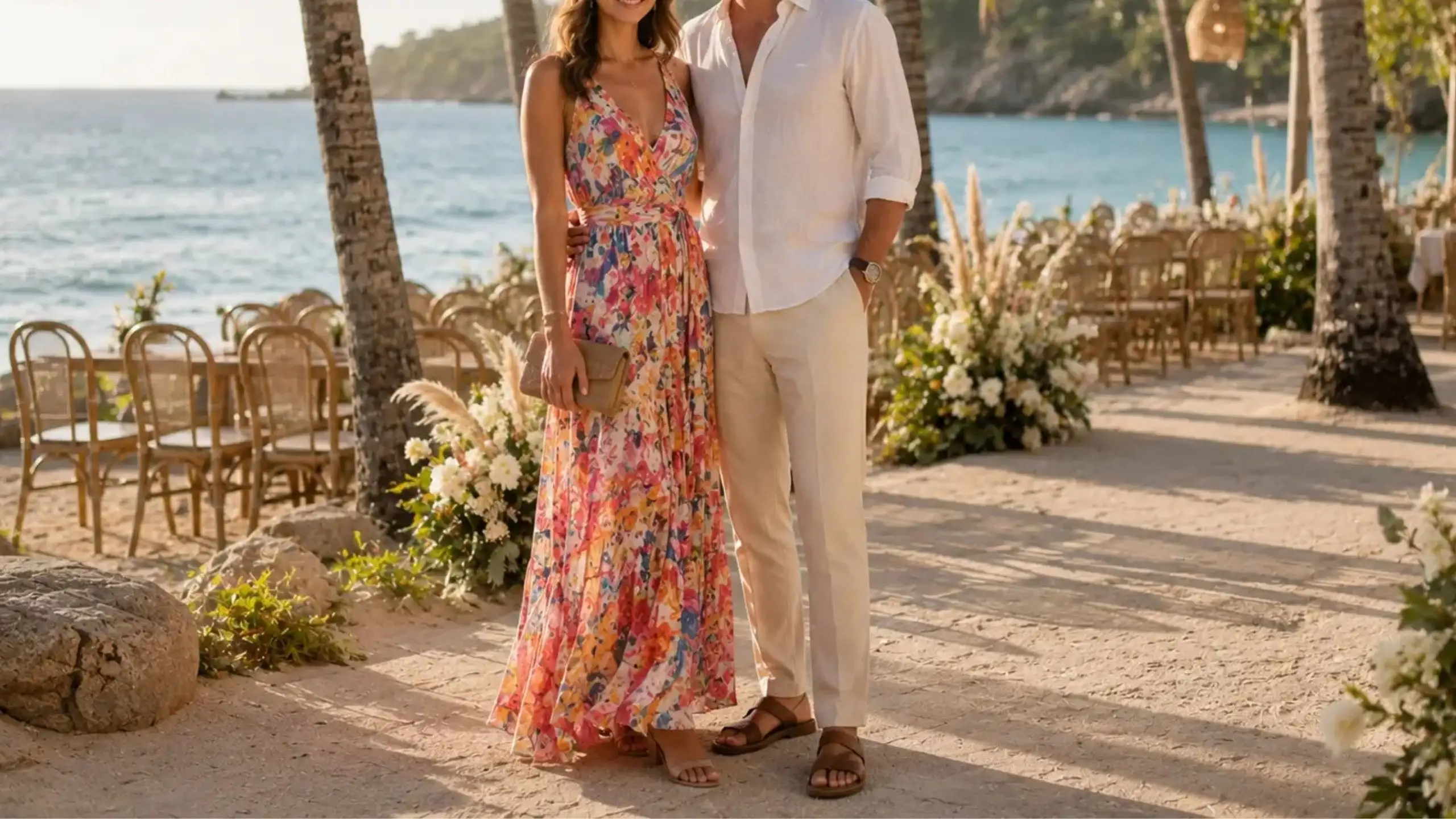
Beach and destination weddings are built around a location: a coastline, an island, or a sun-drenched resort. The dress code is almost always relaxed.
The heat, sand, and open air set the rules here. Comfort and style need to work together.
Women: A flowy maxi dress or lightweight sundress in bright colors or tropical prints; flat sandals only, no heels.
Men: Linen trousers with a light open-collar shirt. A linen blazer if the invite leans semi-formal. Clean leather sandals or loafers. No full suits unless the couple has specified it.
5. Rustic Wedding
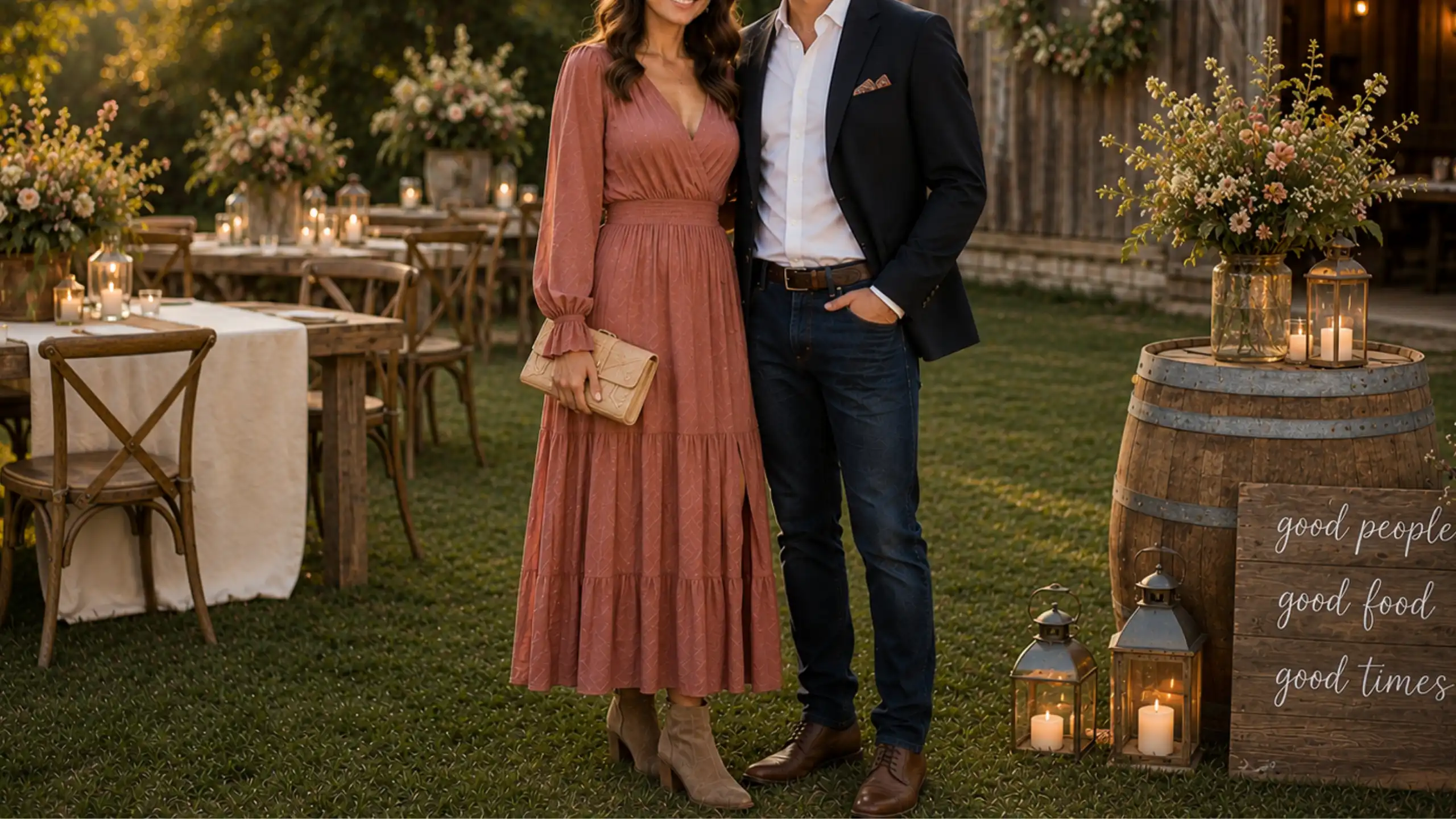
Rustic weddings take place in converted barns, farmhouses, or countryside venues. The look is warm, earthy, and deliberately unpretentious.
Think wooden beams, string lights, and wildflower centerpieces. The vibe is relaxed, but the outfit still needs thought.
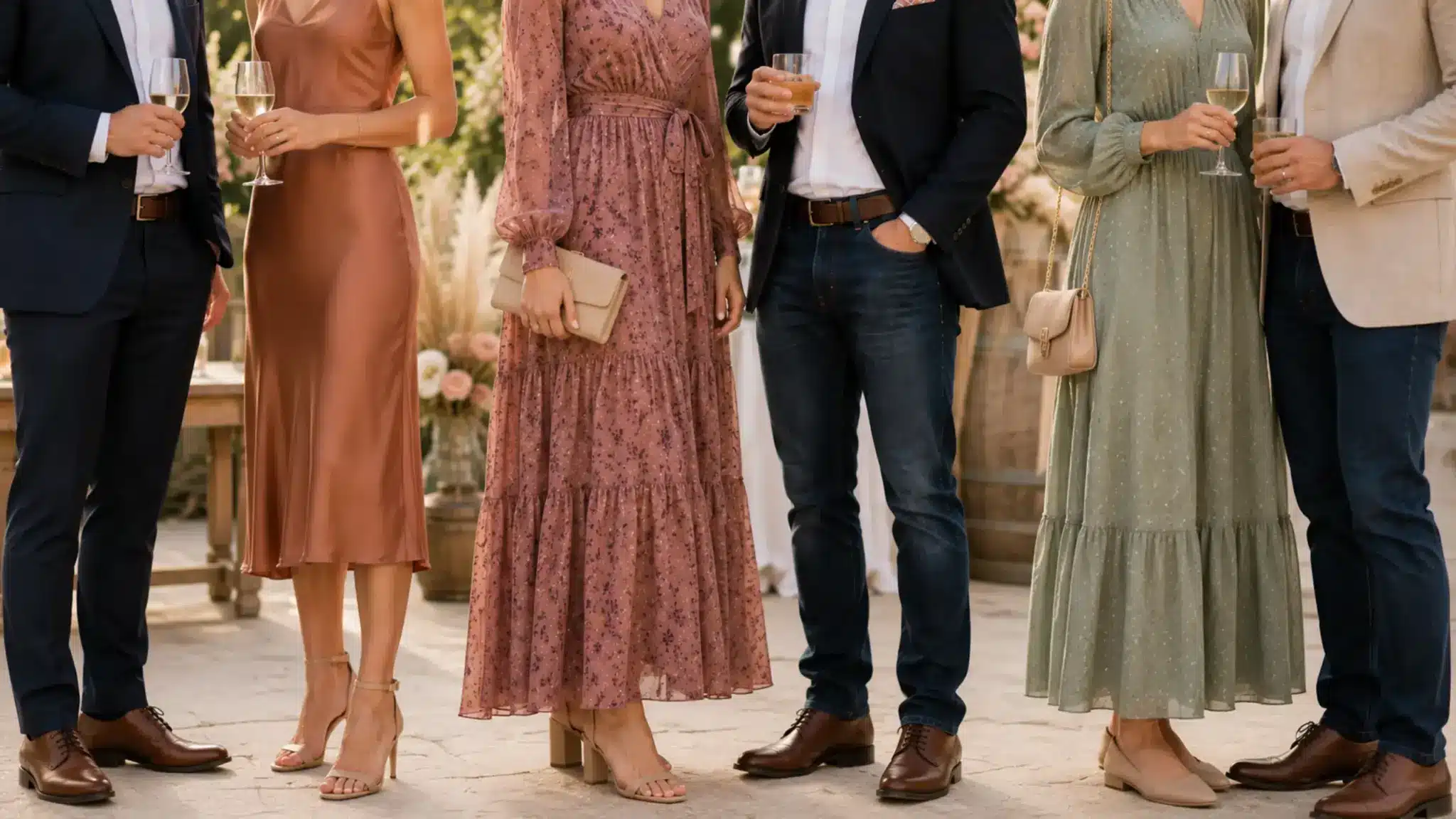
Women: A midi dress in earthy tones- terracotta, sage, dusty rose, or warm brown- with block-heeled boots or dressy flats. Leave the gown at home.
Men: Dark jeans with a pressed shirt and blazer. Leather boots or clean loafers. A casual tie or pocket square adds polish without overdressing.
6. Boho or Festival-Style Wedding
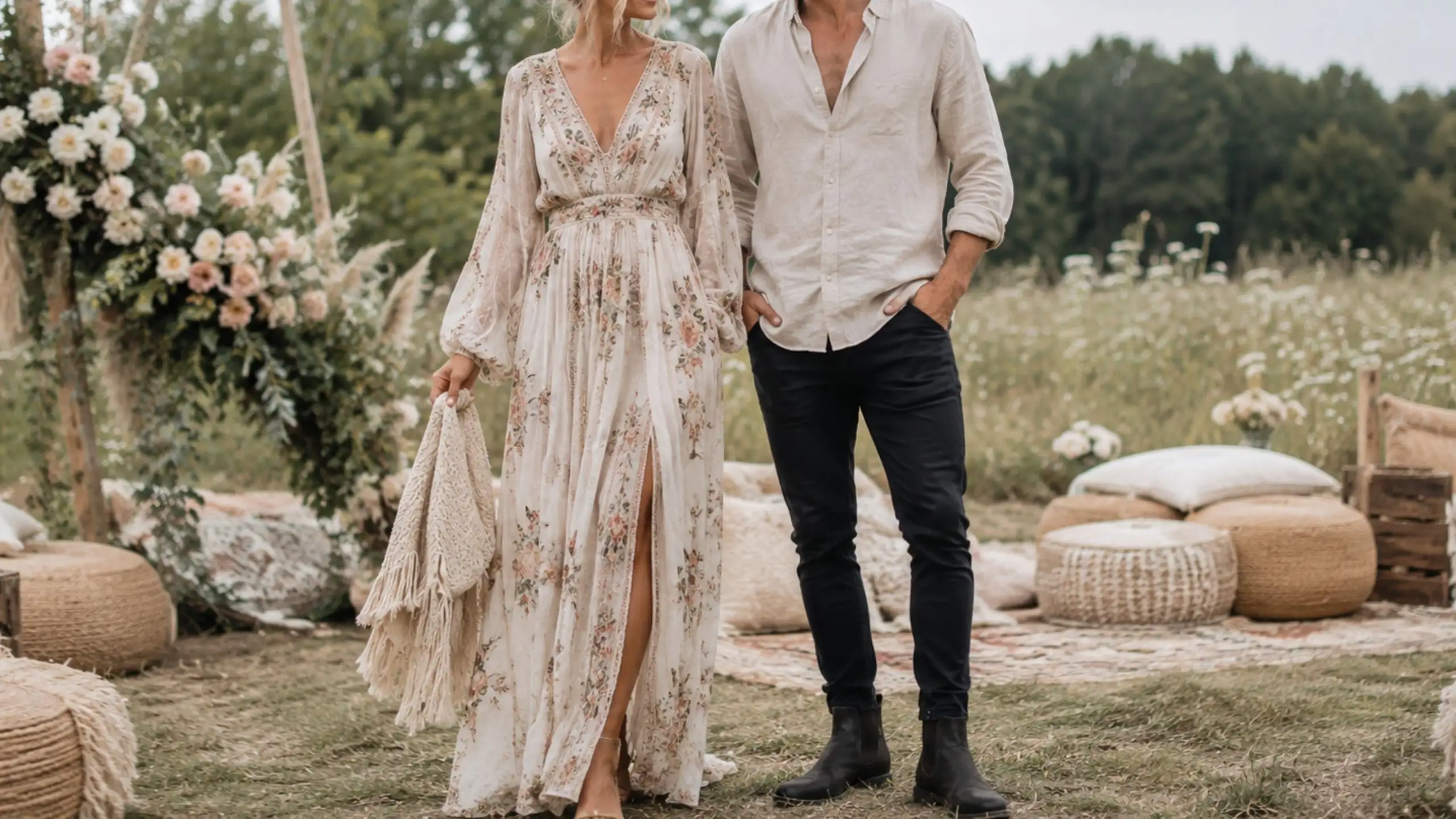
Boho weddings are all about personal expression. They often take place outdoors in forests, fields, or wildflower meadows. Guests are expected to match that creative, free-spirited energy.
Women: A free-flowing maxi dress with lace or embroidery details. Flat sandals, ankle boots, or strappy heels. Soft natural tones or bold prints both fit the vibe.
Men: Dark slim trousers with a relaxed linen shirt. Chelsea boots or suede loafers. A blazer is optional. Avoid overly formal looks.
7. Intimate Courthouse Wedding
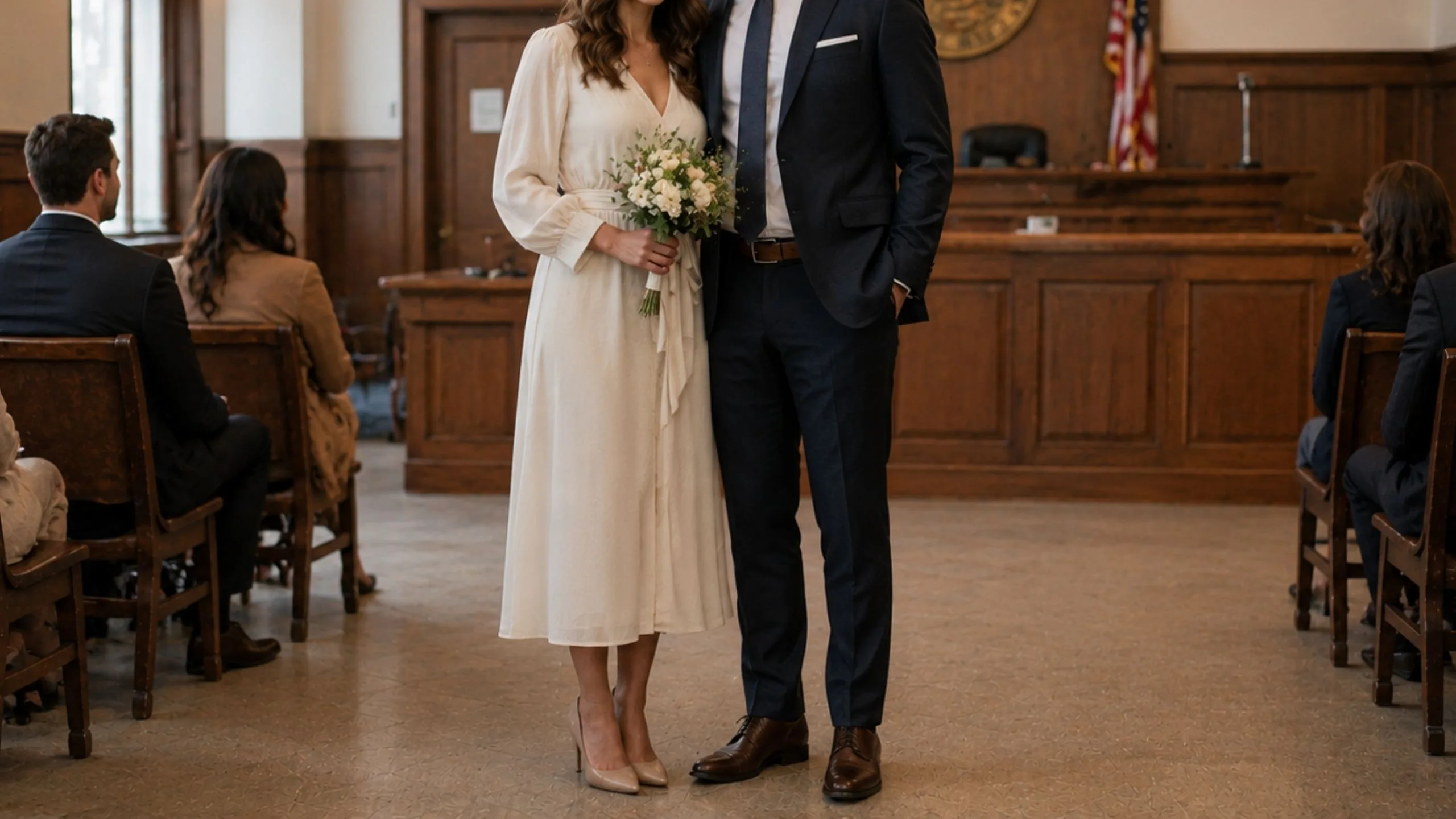
The city hall wedding is intimate, deliberate, and unpretentious. The guest list is minimal, mostly close relatives and a few friends.
The main attention must be on you two as a couple. Choose the appropriate attire, refined and subtle, and certainly not more distracting than the occasion itself.
Women: A neat midi dress, a well-cut blouse paired with a pair of matching trousers, or a jumpsuit. It’s better to choose something neutral and plain.
Men: A proper-fitting suit of any classic color. A shirt and optionally a tie. Leather shoes. Simple and graceful is the best choice here.
8. Vineyard Wedding
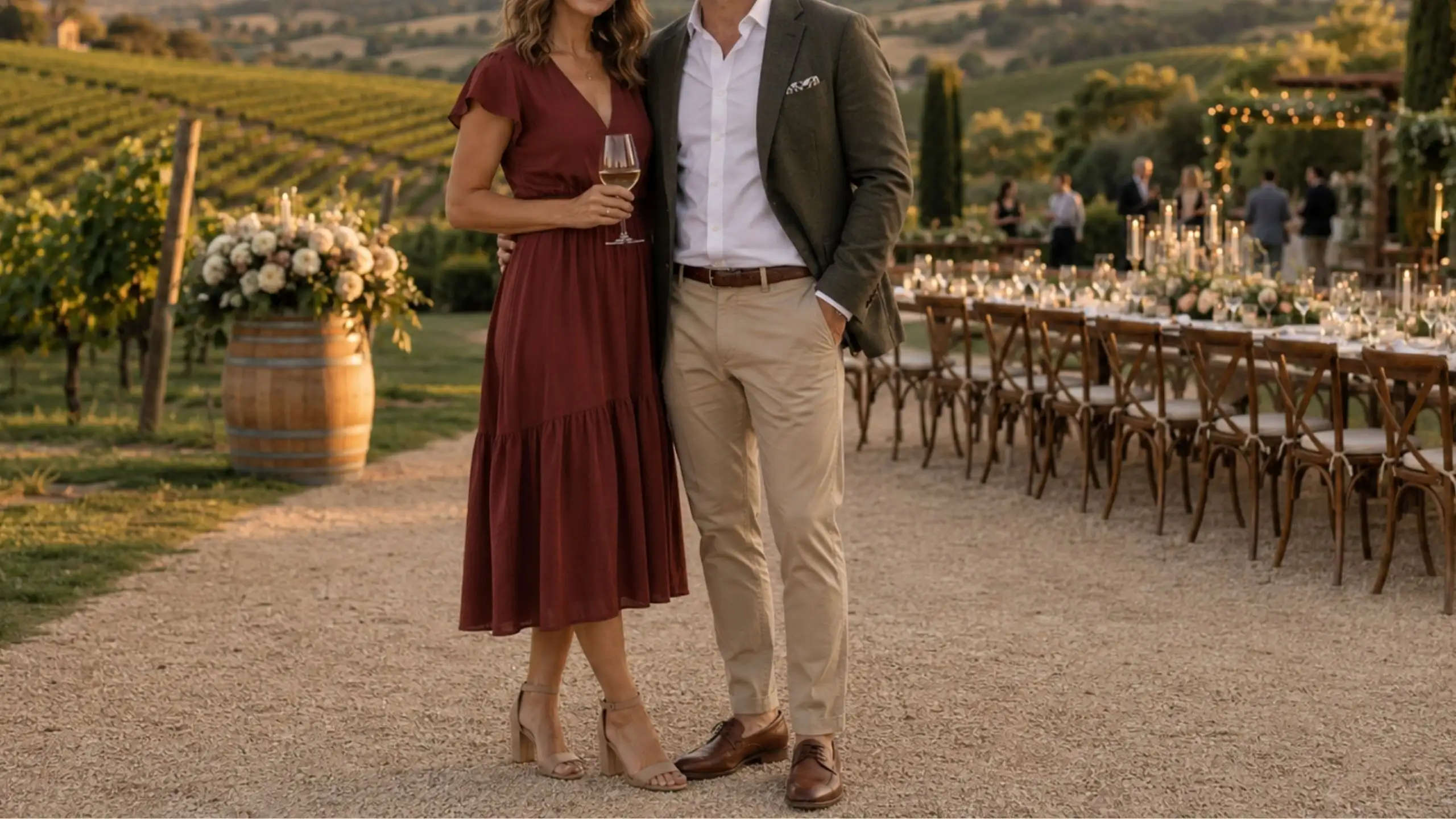
Vineyard weddings combine natural beauty with a relaxed kind of finesse. Rolling hills, outdoor ceremonies, and candlelit dinner tables set the tone.
The dress code sits between smart casual and semi-formal. You want to look put-together without overdoing it.
Women: A floral or solid midi dress in burgundy, rust, or mustard; block heels or wedges only; vineyard ground is uneven.
Men: Chinos or dress trousers with a smart shirt and blazer. Loafers or leather Oxford shoes. A tie is totally optional.
9. Rooftop or City Wedding
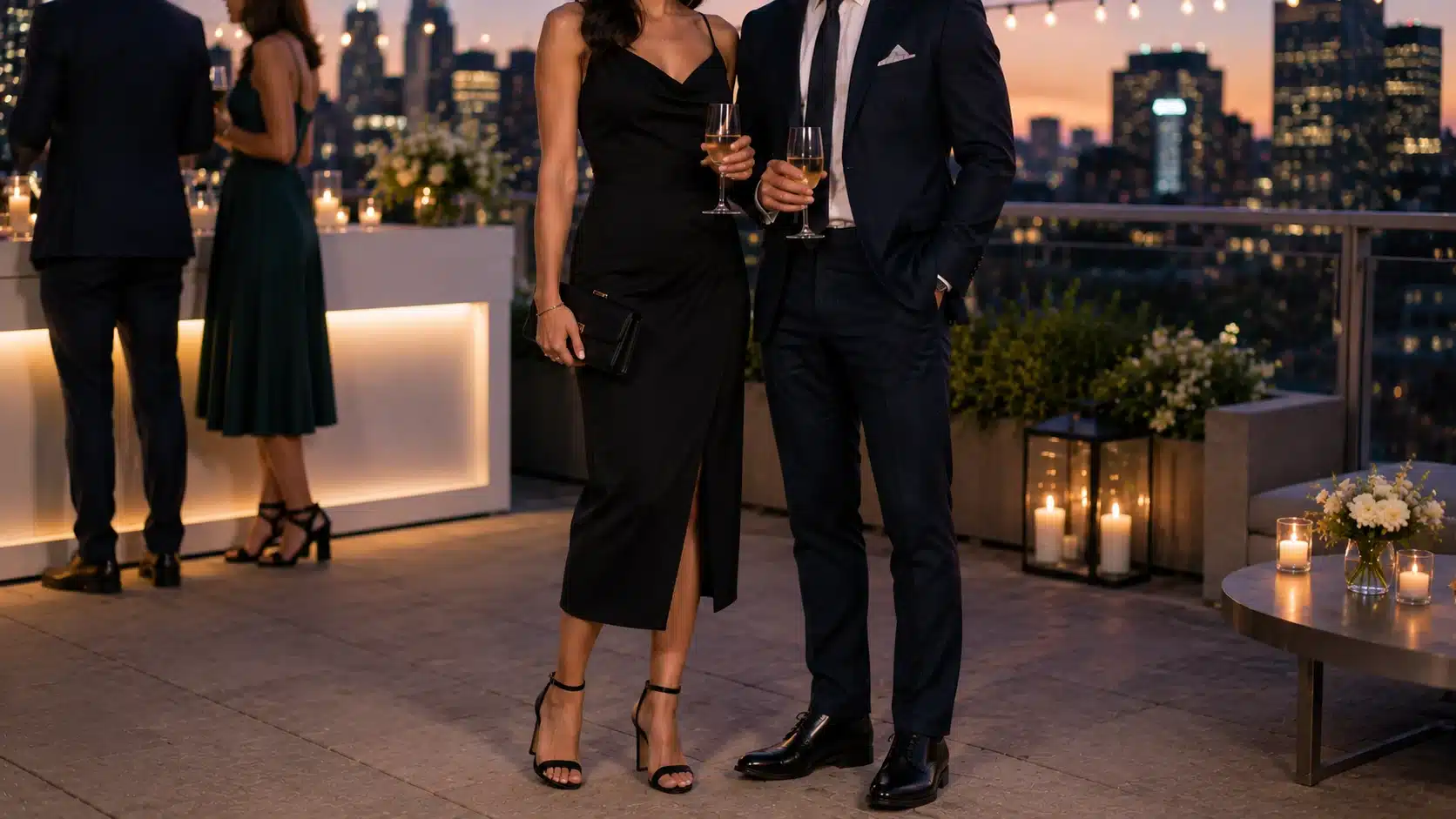
Rooftop weddings take place on urban terraces, penthouse venues, or city skyline settings. The backdrop is modern and sharp.
The dress code usually sits at cocktail or semi-formal level. The vibe is polished, city-smart, and purposeful not casual, not overdressed.
Women: A structured midi dress or a sleek cocktail dress in bold solid colors, deep red, cobalt, or emerald. Block heels or pointed-toe flats. Keep accessories minimal.
Men: A well-fitted suit in navy or charcoal with a dress shirt and tie. Clean Oxford shoes. A pocket square in a contrasting color works well here.
Wedding Attire Options by Dress Code
The dress code on your invitation is the couple’s direct instruction on what to wear. It sets the formality level, the outfit range, and the overall expectation.
10. White Tie
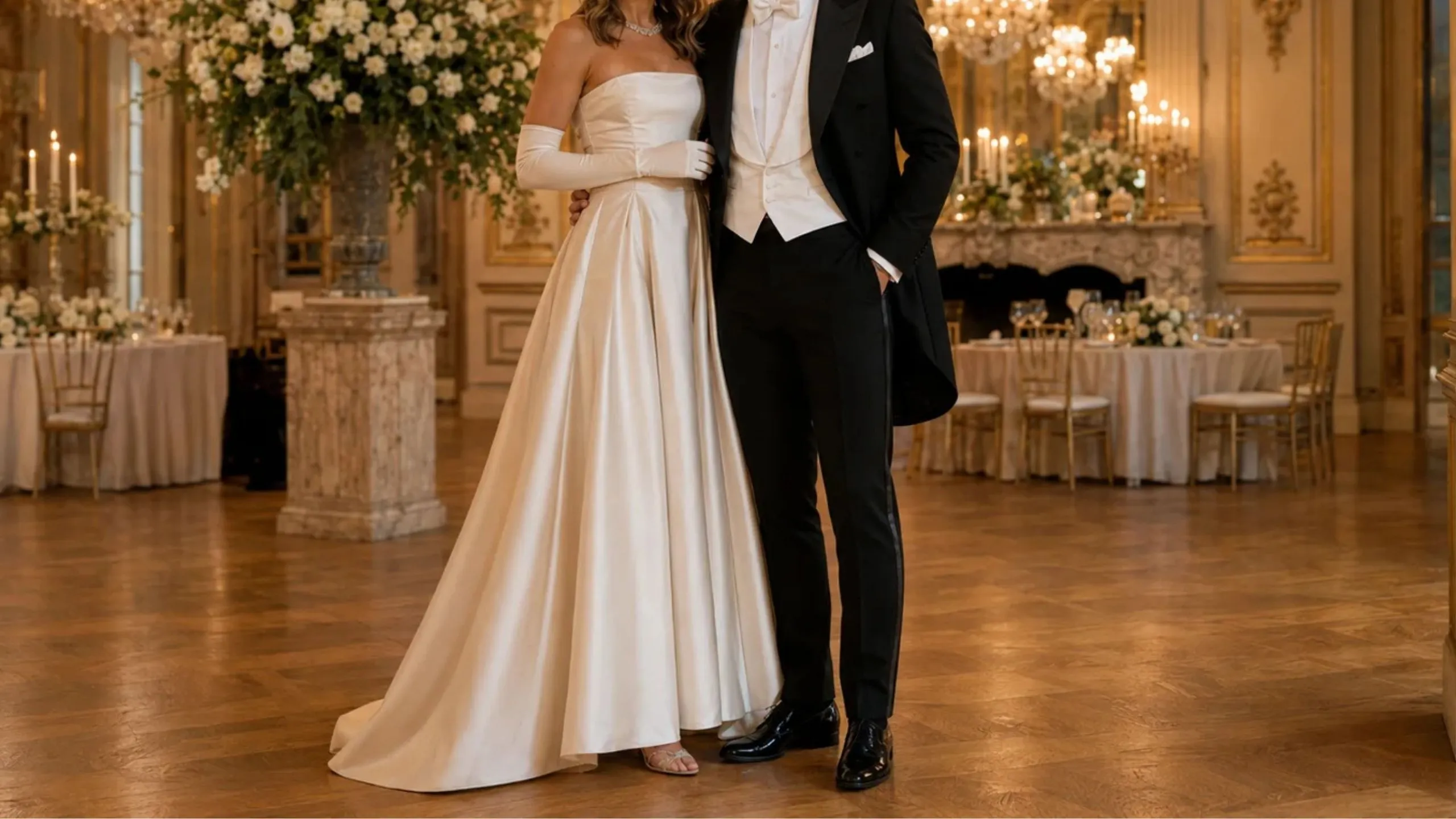
White tie is the most formal dress code. It appears on invitations for state dinners, royal events, and ultra-formal evening weddings.
If you see it on a wedding invitation, the couple expects full formal attire; no exceptions and no substitutions.
Women: A full-length ball gown in a luxurious fabric; silk, satin, or tulle. Elbow-length gloves are traditional but optional. Fine jewelry and formal heels complete the look.
Men: A black tailcoat, white piqué waistcoat, white bow tie, and black trousers with a silk stripe. Black patent leather shoes.
11. Black Tie
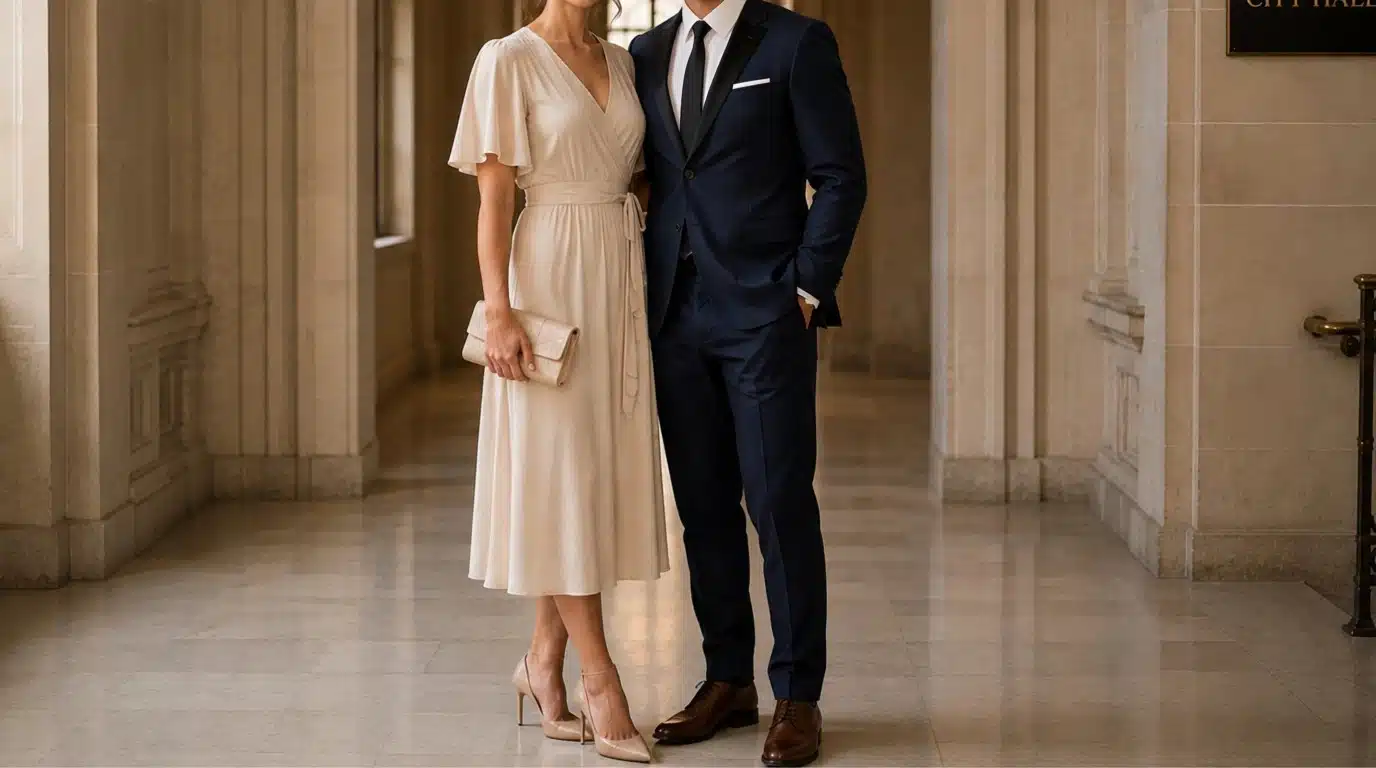
Black tie is a formal evening dress code. It appears most often on evening wedding invitations at upscale venues.
The expectation is polished, dressed-up, and deliberate. A cocktail dress does not meet this standard.
Women: Midi dress, blouse and trousers in a neat fit, jumpsuit. Soft colors and straight cuts would suit best. A wedding is not the place for bright, extravagant clothes.
Men: A neat suit in any classic color, dress shirt, tie optional. Clean leather shoes will go perfectly with this look.
12. Black Tie Optional
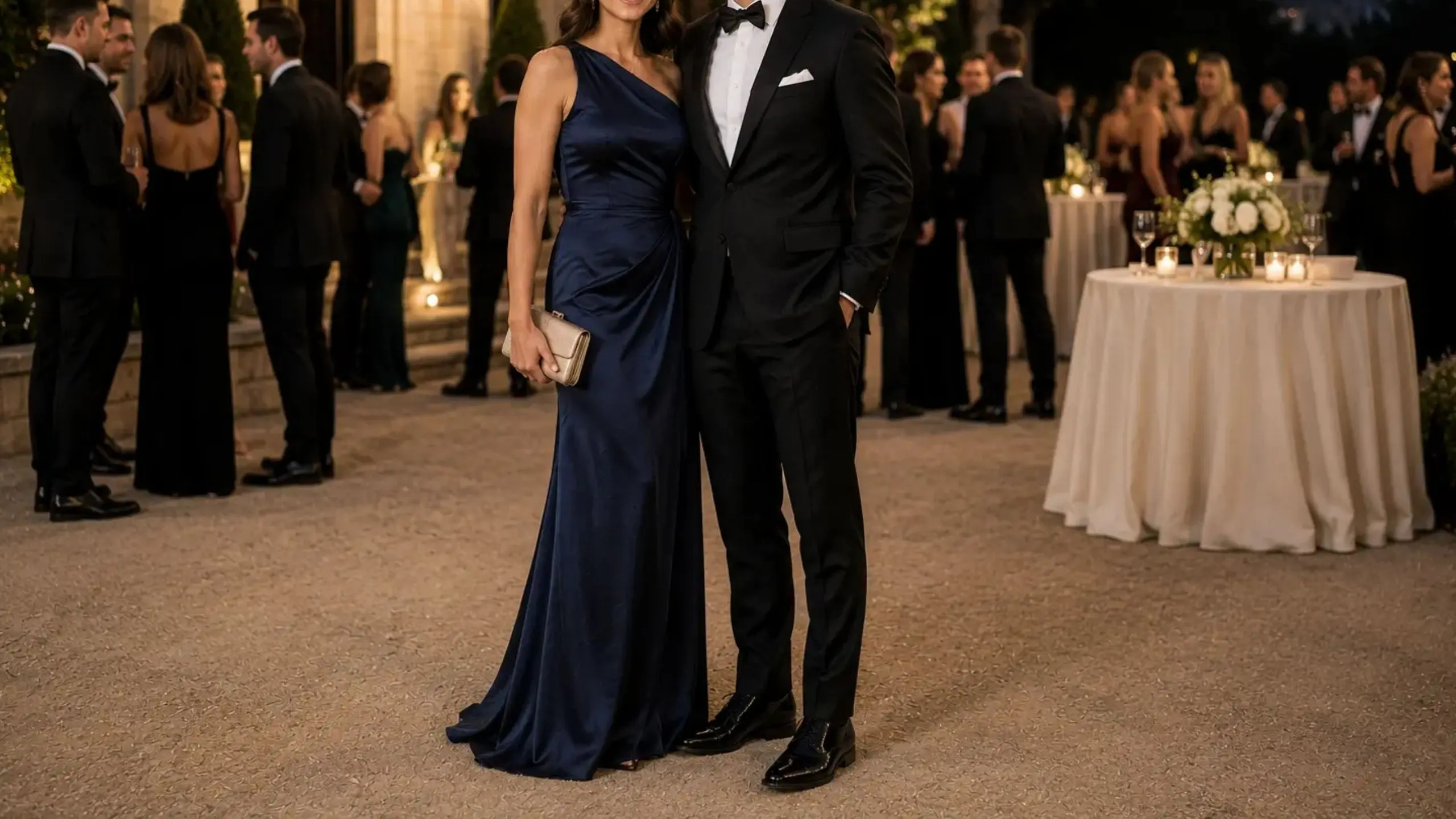
Black tie optional gives guests a choice, but it still leans formal.
“Optional” refers to the tuxedo, not to the formality level. This is not an invitation to dress casually.
Women: A floor-length gown, a cocktail dress, or a dressy formal jumpsuit. All three work well. Keep the fabric and finish polished.
Men: A tuxedo or a dark suit with a tie. Either is appropriate. A navy or charcoal suit with a crisp tie is a strong choice if you leave the tuxedo at home.
13. Cocktail Attire
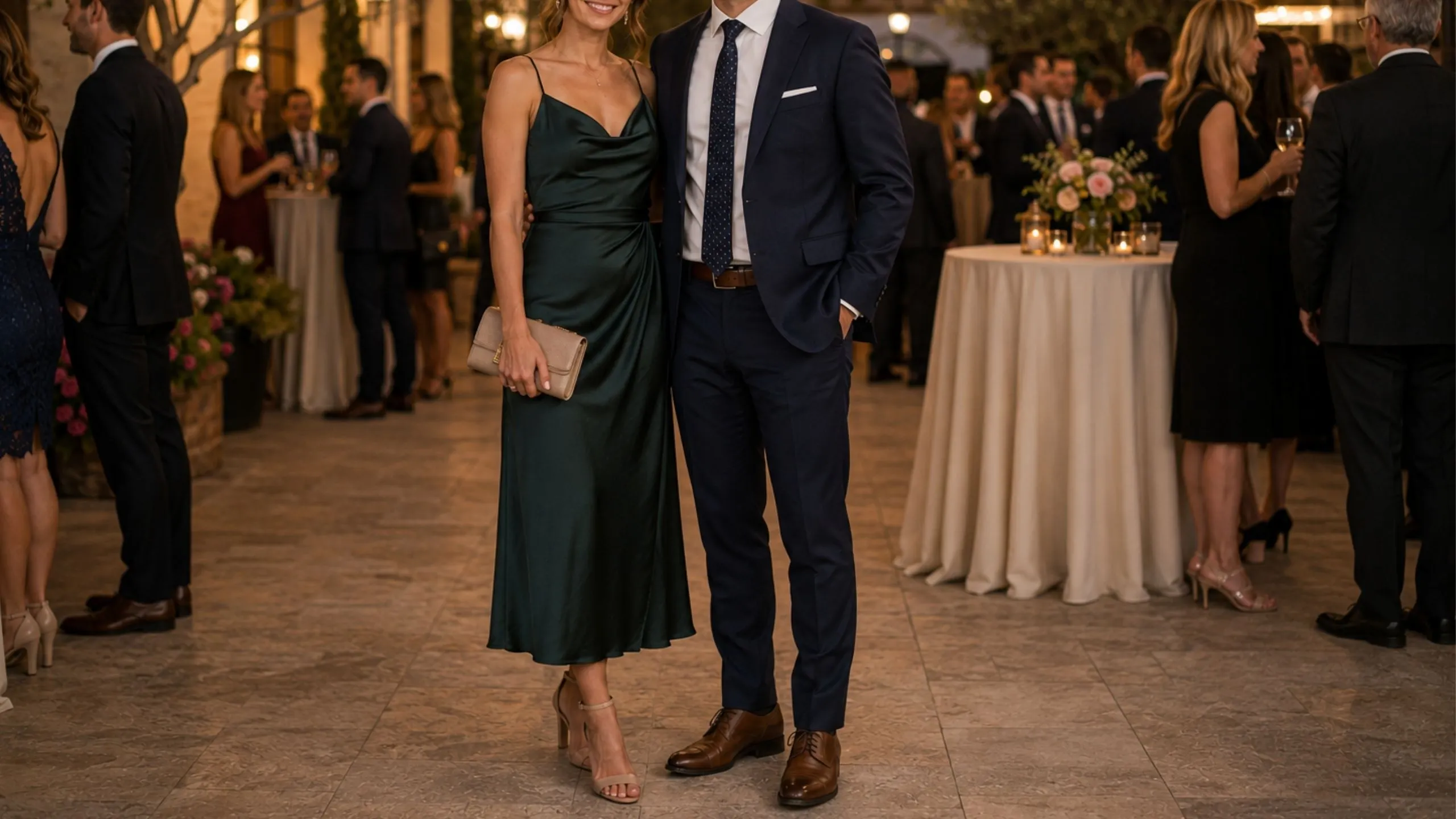
The cocktail dress code is considered semi-formal. The word cocktail itself already provides a clue to the way the outfit should be.
Women: A knee- to midi-length dress, or a dressy skirt with a blouse. The length must not be above the knee.
Men: A dark suit in navy, charcoal, or grey, combined with a tie. Polished dress shoes and a pocket square are recommended.
14. Semi-Formal
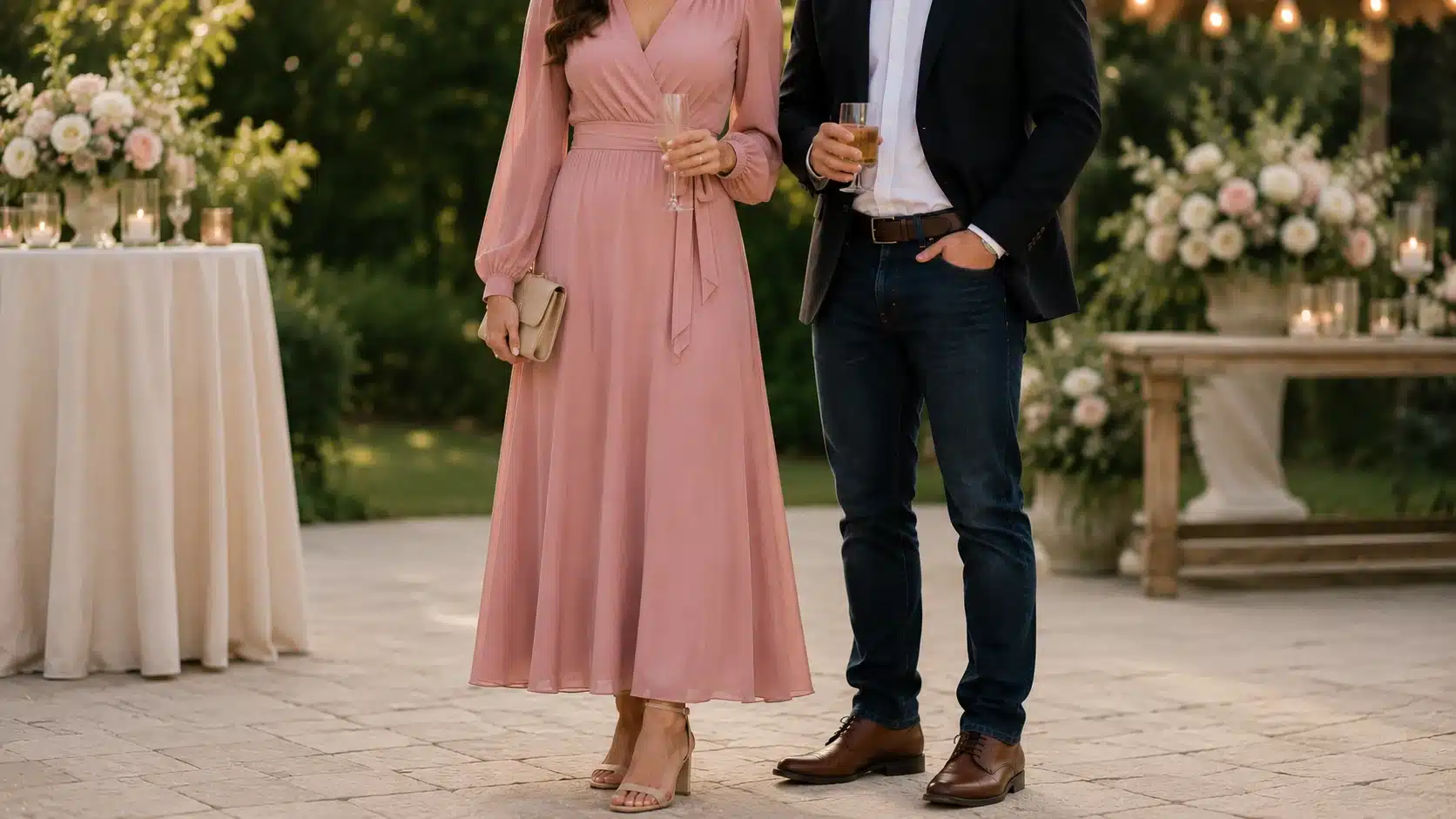
Semi-formal comes halfway between cocktail and smart casual. It’s stylish but not formal.
The couple wants guests to be dressed up, but without the stress of a formal dress code.
Women: A midi dress, a dressy ensemble, or a nice wrap dress. Heels and dressy flats are equally appropriate. You can’t wear anything casual like jeans or sandals.
Men: Suit and tie or a jacket with dress pants. A tie is a must. No loafers, only polished leather shoes.
15. Smart Casual
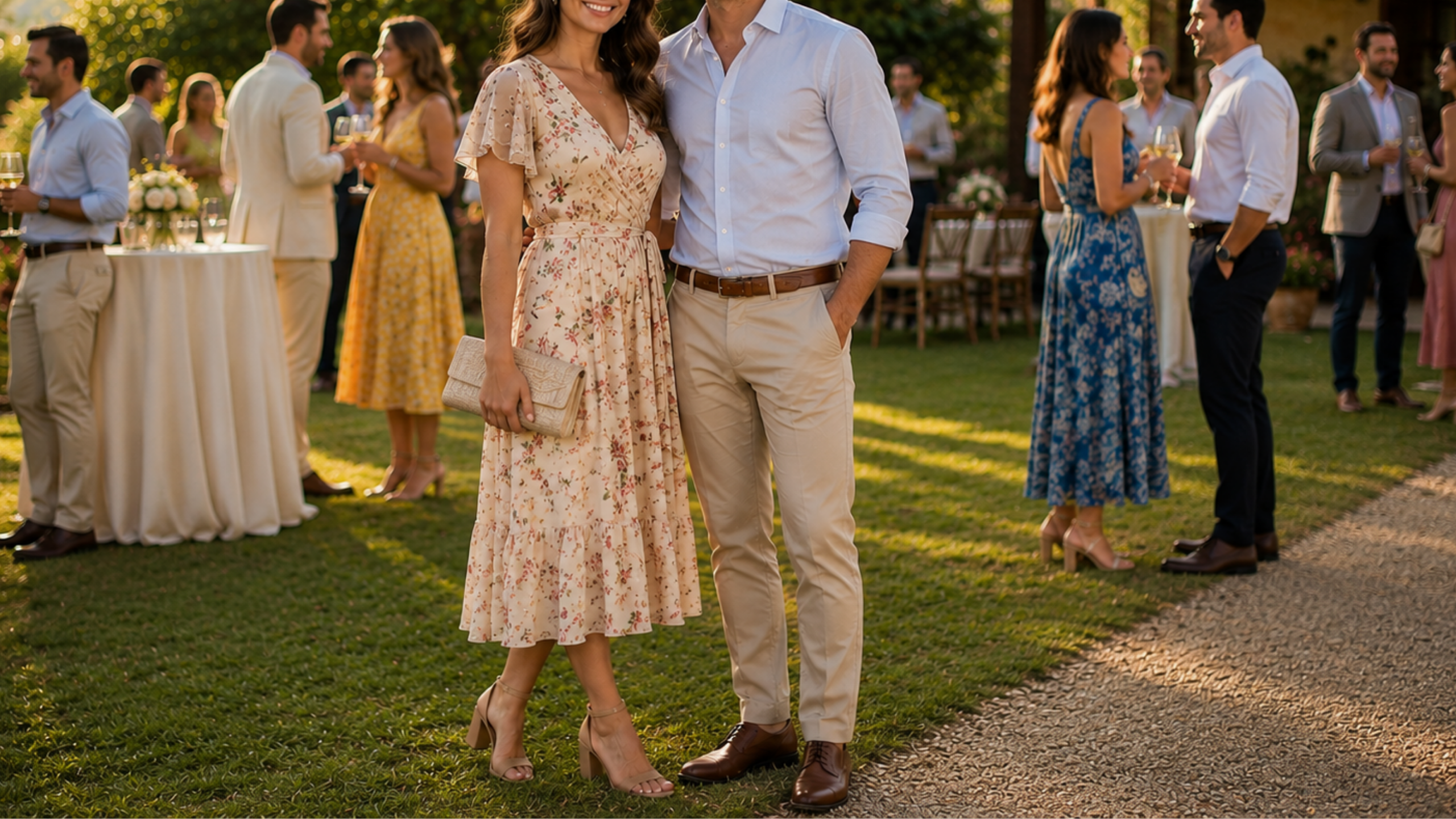
However, smart casual is both relaxed and purposeful. This dress code is typical for wedding invitations and outdoor events held during the day.
Women: A sundress, a casual midi dress, or smart trousers with a blouse. Keep it neat and well-fitting. Flat sandals or low block heels work well.
Men: Chinos or dress trousers with a collared shirt. A blazer is optional but recommended. Clean loafers or leather shoes, no trainers.
To Wrap Up
Wedding attire options cover more ground than most guests expect.
The dress code tells you the level of formality. The venue and wedding style tell you the rest. Get both right, and the outfit decision becomes straightforward.
Every dress code on this list has a clear range to work within it; match the setting, and you’ll always be dressed appropriately.
So, the guesswork is gone. Now you just need to decide what to wear.
Frequently Asked Questions (FAQs)
1. What is the Proper Attire For a Wedding?
Proper wedding attire depends entirely on the dress code stated on the invitation
2. What Colors Should Wedding Guests Avoid?
Avoid white, ivory, and cream, and when in doubt, stick to jewel tones, soft neutrals, or muted prints.
3. What is Not Acceptable to Wear to a Wedding?
Anything too casual, too revealing, or too close to bridal shades falls short at a wedding.
4. What Does Smart Casual Mean For a Wedding?
Smart casual means relaxed but polished; think midi dresses and sandals for women, chinos and a blazer for men.