Archives for 2019

Should pregnant women stop taking sodium valproate? 

Sodium valproate is a widely used and effective medication for treating epilepsy, as well as other conditions, such as bipolar disorder and migraines. The drug has been used for decades and is generally considered safe for those people taking it. However, there is now growing awareness that sodium valproate can pose very serious risks when used by women during pregnancy. 

 This means that the drug is now usually not recommended for pregnant women, except in exceptional circumstances. The National Institute for Heath and Care Excellence (NICE) recommends that sodium valproate should not be used during pregnancy and if it must be used (where there is no effective alternative for a particular patient) then the lowest possible dose should be used. 

 However, if you are currently taking sodium valproate for epilepsy or another condition, you should not stop taking it without speaking to your doctor first. If you have discovered that you are pregnant and are currently taking sodium valproate, you should therefore seek an appointment with your doctor immediately. 

 What risks does sodium valproate pose to unborn children? 

 Where women take sodium valproate during pregnancy, it has been shown that their children are up to 5 times more likely than average to suffer from birth defects. This equates to 1 in 10 children having a physical birth defect and around 4 in 10 experiencing developmental issues. 

 The physical and development issues associated with exposure to sodium valproate in the womb are referred to as Foetal Valproate Syndrome (FVS). 

 Issues associated with FVS can include: 

 Physical defects 

 Spina bifida (where the spinal cord fails to develop properly causing problems such as paralysis, muscle weakness and incontinence) 

  • Heart problems (due to malformation of the heart) 
  • Cleft lip/cleft palate 
  • Facial characteristic (e.g. epicanthic eye folds and a small upturned nose) 
  • Skeletal issues (including deformation of the feet, contraction of small joints and long overlapping fingers) 
  • Genital issues (e.g. the urinary tract terminating on the underside of the penis) 

 Development issues 

  • Delays in walking 
  • Delays in talking 
  • Poor speech & language skills 
  • Memory issues 
  • Below average intelligence 

Claiming compensation for foetal valproate syndrome 

If your child has been affected by foetal valproate syndrome, this is likely to have a profound effect on their life and yours. Children with FVS often require significant help and support throughout their lives, including medical treatments, physical therapy and ongoing care support.  

While much of this support can be accessed through the NHS, many parents must also fund at least some of the treatments and services their child needs themselves. This is why parents of children with foetal valproate syndrome should consider pursuing compensation wherever possible. 

Foetal valproate syndrome compensation may be substantial, allowing you to cover all of the costs associated with helping your child with their condition and allowing them to live a full, happy life. These claims are complicated, however, so it is strongly recommended to consult with a solicitor specialising in FVS claims to give yourself the best chance of a positive outcome for you and your child. 

Simply Earth Review and Unboxing

Disclosure: I received free products to facilitate this review. Affiliate links are contained herein. The opinions are my own.


I am very excited today to introduce you to Simply Earth.  They offer essential oils at an affordable price.  They also have a fun subscription program called the Essential Oil Recipe Box.  Each subscription box is a $150 value for just $39, and it is a fantastic deal.  For that $39, you get 4 bottles of essential oils,  you also get several recipe cards, and extra materials you need to create the recipes included.

When you subscribe, they also send you an awesome BONUS BOX for FREE!  The bonus box has several bottles as well as other great items like coconut oil, beeswax, and almond oil.  Anyone who’s ever used essential oils, knows that these items are definitely staples, and I think it’s great that they include these bonuses.

And if you order today using my referral link and coupon code: SSHOMEFREE you will also get a $40 gift card! [Read more…]

Friday Favorites Linky Party – Week 479


Please support and follow our lovely blog party hostesses:

Jerri at Simply Sweet HomeTwitter | FB | G+ | Pin | Inst

Lisa at Condo BluesTwitter | FB | G+ | Pin | Inst

Amy at A Day of Small ThingsPin

Penny at Penny’s PassionTwitter | FB | G+ | Pin | Inst

Kelly at Under a Texas SkyTwitter | FB | G+ | Pin | Inst | BL

Jennifer at Busy Being JenniferTwitter | FB | Pin | Inst

If you are featured this week, be sure and grab a featured button for your blog!

You can show your love for this week’s favorites by going over and commenting on the posts and by pinning or sharing!

And if you love all of this week’s favorites, please pin, share, and invite your friends to this week’s linky party! [Read more…]

Three Fantastic Fashion Options for Cool Summer Nights

I love the fact that the warmer weather is now with us. It feels good to be able to get out more and spend time having fun with the family. We like eating outside and staying in the yard after the sun has gone down. With the right yard accessories and clothing, you can maximize everyone’s outdoor time.

Versatile kimonos If you click here you will see that, for SS19, kimonos are very on trend. They are a great item of clothing for donning when the sun goes down and the temperature drops. Kimonos are typically lightweight, very comfortable and available a range of lengths. You can buy them for everyone in the family because they are a unisex item.

Potentially, you can get a lot of wear out of a kimono. They look good pretty much whatever you wear them with. Kimonos are lightweight enough to be taken on holiday and used as an alternative to a summer jacket. They are also ideal for wearing over the top of your swimming costume, at lunchtime. Kimonos are acceptable attire in most cafes and casual restaurants.

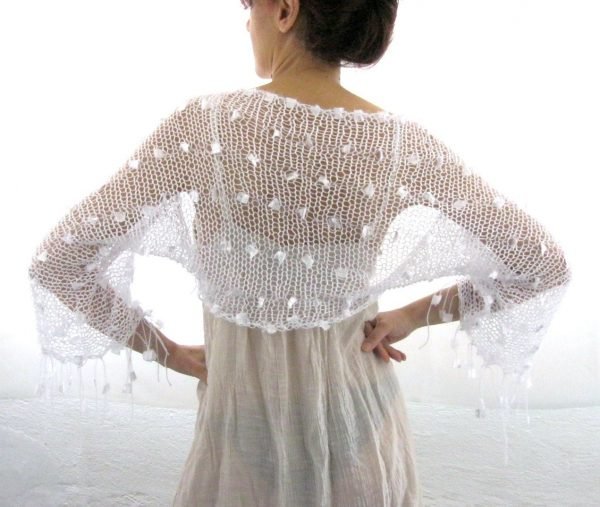
Shrugs

If you want to cover up your bare arms without adding an additional layer of clothing over the rest of your body, a shrug is an answer. They are an item of clothing many women never wear. This is a pity because shrugs are far more useful than you think. Once you have owned and worn one, the chances are you will become a bit of a fan. The trick is finding one that works for your body type. This article explains how to find jackets and shrugs that will flatter you and fit in with the way you like to dress.

A wrap

Wraps are a very useful fashion accessory. They are the ideal way to finish off a date night outfit or to wear for a wedding. Provided you choose one that is relatively neutral color-wise, you will be able to wear it whenever you want.

If it is big enough, you can use it as an alternative to a blanket. They are typically made from very lightweight fabric which means that you should not get too warm when using them like this. Plus, you could fold it up and use it to sit on. Just what you need if you have a metal bench or chairs.

It is also worth choosing one that is light enough to be packed for a holiday. You could potentially use it as an alternative to a sarong. If you like to dry out in the sun rather than towel yourself down you could even spread it on the sand

and lay on it. To be able to do that you would need to buy one that is made from a tightly woven fabric. You can read more of my fashion related articles by clicking here. I update this section on a fairly regular basis, so there is usually something fresh and interesting for you to enjoy reading.

4 Things You Can Do to Protect Your Home From Damage Caused By Pests

Buying a new home is said to be one of the biggest investments that most people will ever make in their lifetime. Therefore, as the years begin to roll on, every homeowner must be able to protect their investment so that the overall value will not fall significantly over time. This is also one of the primary reasons why many homeowners take its upkeep, maintenance, and home improvement projects very seriously each year, especially when the owner of the home is identifying ways to protect their family from pests infestations along with the home itself from the unnecessary damages that they cause.

With these and other issues related to pests infestations, here are four things that you should consider as you make provisions to keep the home clean, fresh and updated with modern features and amenities.

1. Be Proactive — Devise a Pest Proof Plan for Your Entire Home

If you really want to protect your family from having to deal with pests infestations, you will need to be diligent about creating a Moxie Pest Control plan for your home to eliminate the possibilities of these little critters taking up residence in any part of its structure. Thankfully, there is a huge amount of information today on devising an effective proactive plan, which includes doing home improvement projects that are designed to keep them out at all cost. For instance, you may want to hire a professional contractor to seal and repair openings. This contractor will assess the home in advance to inspect the basement and other areas for gaps and cracks. These openings can usually be found in virtually any place around the home, including utility meters, exterior outlets, laundry vents and any other areas that will make it easy for bugs and other little critters to come in.

2. Understand What Pests Found in the Home Can Do– Shatters Happy Home Image

Most people may like to think about that cute home with a white picket fence, especially since it is a simple and attractive picture to visualize. Although this is true, this picture can easily be flawed when the family begins to find pests like mice, termites, and bugs in different areas. In fact, it is not uncommon for the beautiful and comfortable looking living quarters to easily turn into a place where you can see a mouse or two running freely in any room of the home. So if you want to restore the image of your happy home, it is important that the necessary steps be taken immediately.

3. What Should the Family Do When They Find Pests in the Home

Though these problems can occur at anytime, you should always know what your family should do to get rid of these problems completely. One of the most essential and highly recommended is to contact professionals in the industry that know how to assess the extent of the infestation so that they can provide a viable solution. Simply stated, if someone in the home spots these unwanted pests, they should call a local pest control professional as soon as possible to keep them from spreading. These pest control specialists are equipped with the skills, experience, knowledge, equipment and the tools to get rid of these pests completely so that they will never return again. This is because the expertise that they acquire teaches them

how to eradicate different types of pests with the best chemical solutions and remedies in the industry.

4. Damage Caused to the Home By Severe Pest Infestation

There are many different reasons for taking care of these problems before they escalate into full-blown infestations. Once some of these pests infiltrate the home’s walls, roofing, furniture and other things that they can hide in, they can begin to do damage that can be seen and unseen. In some cases, the only way to assess the damage that comes from pests is via the use of smart equipment and technology used by professionals in the pest control industry. These professionals can help to identify severe damage that has been done and they will also recommend a solution to make the necessary repairs.

How to Treat Jet Lag Naturally

With advancements in aviation technology coupled with lower fares, more and more people are flying today than ever before. Despite making the world a much smaller place, travelling greater distances in which you can traverse multiple time zones on a single flight brings with it a problem that is synonymous with modern-day air travel: jet lag.

For many people, especially expectant mothers, treating jet lag without the use of medication is a priority. Here are a few tips for dealing with jet lag symptoms naturally.

When in Rome

You just landed in Heathrow airport after an overnight flight from New York. You may have caught a quick nap here and there, but for the most part, you are feeling a bit worn and ragged. What is your body telling you to do as soon as you check in to your hotel room?

If it is telling you to take a nap, don’t listen!

This advice may sound counterintuitive because you have always heard that it is important to be in tune with what your body is telling you. But when it comes to battling jet lag, you are getting the wrong message. Stay awake and don’t go to bed until the local bedtime hours.

The Hydrate-Caffeinate Equation

What is the most important beverage for a marathon runner? Water.

What is the second most important beverage for a marathon runner? Caffeine – as in coffee.

The majority of Olympic athletes drink coffee to improve their performance. Also increasing mental alertness, the benefits of caffeine for marathoners have been well documented over the years.

If you have just disembarked from a plane after a marathon flight, why not follow the lead of elite athletes? Treat yourself to a healthy and reasonable dose of coffee. For someone who weighs 150 pounds (68 kilograms), a 16-ounce cup should do the trick.

Of course, don’t forget to drink water too. Even when you are not travelling, the standard recommendation is to drink eight 8-ounce glasses daily. If you haven’t been doing that, staying hydrated as a means of overcoming jet lag is the perfect time to start.

Get Out and About

The last thing you want to do when you’re dealing with jet lag is to vegetate in front of the telly in your hotel room.

Besides getting out in the sunlight – which by the way is also a great natural prescription for overcoming a feeling of sluggishness after a long flight – being out and about will give you a

much-needed boost of energy. This energy will carry you through the first day so that you can get to bed at the proper local time and sleep well.

Taking in a few of the nearby local sites will also make you feel good because you didn’t waste the first day of your trip trying to “catch-up” on sleep.

Don’t Make a Meal Of It

It is common knowledge that you should adjust your meal-times to the local clock. But what should you eat when you do sit down to dinner that first night? Foods from chicken to cherries and bananas will help your body to reset its clock and get you out of the jet lag fog faster. Pasta is also a good choice for a meal.

Conversely, stay clear of processed, fatty foods which will cause your digestive system to work overtime, and will make you feel like taking an after-dinner nap.

You should also resist the temptation to drink wine or alcohol of any kind because it will exacerbate any lingering feelings of fatigue. Following this advice may be hard to do, especially if your travels have taken you to wine country in France or Italy. But remember, this is only the first day of your trip, and you will have plenty of time to sample the local varieties without the jet lag hangover.

Finally, and regardless of what you eat, don’t overdo it. You only have to think back to your last festive season dinner to know why this is important.

Sure and Steady

Despite taking every preventative measure you can to deal with jet lag before boarding the plane, you cannot avoid it entirely.

Whether you are eating, getting out for an active stroll or powering down caffeine, do not overdo it the first day. A sure and steady approach to all activities is the ticket.

Also keep in mind that while everyone is different, generally speaking, it will take you anywhere from three to five days for your body to recover from jet lag. Be patient, especially since you get to do it all over again on your return flight. It might be a good idea to book a couple of days off from work when you get home.

6 Home Remedies for Oily Skin

Oily skin can be caused by a whole host of things, including diet, hormones, environmental factors, and cosmetics. While many people tend to think of oily skin as a problem that plagues teenagers, it can persist throughout adulthood. It can even emerge for the first time as you approach middle age – and it never gets less annoying.

A greasy complexion can cause your make-up to wear off more quickly, and can clog your pores, leading to blackheads and pimples. That’s not even mentioning that oily skin can reflect light, causing you to shine like a beacon in photos. We all want a ‘glow,’ but not like this!

Getting rid of oily skin can be quite tricky, as you can accidentally go too far in the opposite direction. Harsh exfoliants and astringents can actually strip your face of necessary oils (sebum), and cause your skin to increase oil production. The result is dry, flaky skin, and the early onset of wrinkles. Thankfully, there are plenty of ways that you can get rid of oily skin without damaging

your face. Here are six tried and true home remedies that can help you wave goodbye to oily skin.

1. Wash your face with a gentle cleanser

This first point almost seems too obvious, but there is an art and a science to washing your face correctly. Attacking it too often or too vigorously with an astringent will dry your skin out, but using something too rich in oils or butters can add to the problem. The best way to clean your face is to apply a gentle foaming cleanser with clean, damp hands, and massage the product into your skin with an even pressure. Rinse with warm water, and pat dry with a clean towel. Resist the urge to scrub your skin with anything exfoliating more than once per week.

2. Create a soothing mask from organic yogurt

Oily skin can be a breeding ground for all kinds of nasty bacteria, some of which can cause acne and breakouts. One way to soothe your skin and fight bacteria is to make a mask from organic yogurt. Plain yogurt is packed with probiotics that will fight the bad bacteria and settle your skin. To use this home remedy, simply place a thin layer of organic yogurt on your skin and allow to sit for 15 minutes. Rinse with warm water and pat dry with a clean towel.

3. Apply aloe vera to your face

Aloe vera is a plant with many medicinal properties, and it can help to balance your body’s pH levels, evening out the sebum production in your skin. To make use of aloe vera on your face, simply squeeze the naturally occurring gel from a frond of the plant. Apply a thin layer on your face, and rinse with warm water after 10 minutes.

If you are using commercially packaged aloe vera, make sure that it has not been mixed with alcohol. While alcohol will have an instant drying effect, it will damage your skin over time.

4. Keep blotting papers on hand

Blotting papers are a quick and easy solution for oily skin, perfect for your handbag. They absorb all of the excess oil on your face and leave your skin looking matte and dry. They won’t address the problem at its root, but they can be a lifesaver when you are out and about. While you can buy these thin papers in small packs from most drugstores, you can also make them yourself. Simply cut rice paper (or even tissue paper) into squares and keep them in a container for use as needed.

5. Cucumbers help heal and soothe oily skin

Cucumbers are not only mildly astringent and loaded with vitamins, they are also soothing and cooling, all properties that are perfect for oily skin. You can simply rub thick slices of cucumber on your face, or you can mash them to a pulp and apply like a mask. Do this a few times a week, and you will see a big improvement in your skin.

6. Make a mask from cosmetic clay

Cosmetic clays are incredibly absorbent, perfect for soaking up excess oil without drying out your skin. In fact, many clays (such as French green clay, bentonite, and kaolin, often sold in powdered form) can also be used to treat irritated or sensitive skin.

You can make your own soothing mask by mixing 1 tablespoon of French green clay with rose water, until it has the consistency of pudding. Apply this to your face and allow it to dry, and then rinse with warm water.

How To Best Avoid Falling Into Illness

Of course, while we can improve our health in several ways, we cannot always dictate just how and when we might experience an illness. Bacteria is all around us, and sometimes our immune system comes under attack. Some people have strong immune systems, and may just be able to brush off a particularly bad flu in a few days. For some, it might take weeks.

To a large extent, we also cannot completely control our percentage chance of contracting a certain specific illness, due to genetic markers, and your contextual lifestyle. For example, methods such as exercise can help reduce your chances of heart trouble, but if there’s a history of heart trouble in your family, the danger is still there. For that reason, learning how best to avoid becoming ill is not something that can be applied to everyone, and it will never work one hundred percent of the time. They say death and taxes are eternal and inevitable, but so is having to experience some form of illness throughout your life. However, with the following worthwhile efforts, you can slow this descent to feeling terrible, and protect yourself against the most common spreadable or developmental illnesses around:

Practice High Standards Of Hygiene

Practical medicine has evolved to such a degree that we can truly marvel at the possibility of care we can receive. However, some medical breakthroughs are as fundamental as anything else, and will never be upgraded or lose their potency. Hygiene is almost single handedly the most important form of health maintenance you could ever practice, especially when out in public. While most of us consider ourselves to have excellent levels of hygiene, and would often take offense at someone teaching us how to ‘stay clean,’ it can often be that we aren’t practicing it as well as we might imagine.

For example, let’s say we go to the gym. We know that this is a hotbed of bacteria. People are sweating, touching equipment, wiping their brow, sneezing into tissues, coughing on the treadmill from time to time etcetera. We know that some equipment might not be wiped down for some time. However, we put headphones in our ears after touching equipment. We might use the shower facilities without thinking about what sort of feet touched the cubicle basin. We handle our bottle of water in the midst of our exercise. This can all spread germs, not to mention just how in-contact with others we might be when working out.

All of this can contribute to us gaining an illness of some kind, or spreading around a viral infection we might have. In this context, washing your hands thoroughly, bringing small anti-bacterial wipes to slightly clean the surface of the equipment you’re handling (gym staff will appreciate this provided it’s not overboard,) and ensuring that you practice comforting personal space can all help you practice higher standards of hygiene. The gym is a pertinent example because it’s a place we go to improve our health, and so we might ignore just how our health can come under attack. Depending on your job, such as public facing roles, or working with children, you might even need to adopt more measures to keeping yourself protected. If you can do this, you will find your chances of gaining or spreading an illness to be lowered, if not completely, at least in a worthwhile sense.

Get Enough Sleep

It’s quite amazing to see just how necessary sleep is to our everyday lives. Just as going without nine square meals can cause anyone to become a much more primitive version of themselves (a fact often repeated in survival television programmes,) going without sleep for even one day will have massive effects on the brain and body. In fact, being sleep deprived to a point can start resembling similar levels of reduced reactivity we would expect from someone who is intoxicated. It doesn’t take long for our mental health to start slipping from this point on.

But getting enough sleep is not only essential for your mind – it’s essential for your body. Your immune system is functioning at its peak when you’re asleep, and your body slowly begins to repair itself. If you do not have this, it can be much easier to contract bugs and illnesses you might have otherwise shrugged off. Cold and flu symptoms become much easier to contract, and worse.

This is why treating sleep as something sacred is essential. Corporate working culture can somehow make us celebrate a lack of true sleep as an ‘achievement’ of some kind, when in reality, this perspective is warped. Going without sleep makes you no more of a hero than someone who manages to take care of themselves each night, and over time, those results will show. Instead, learning what’s right for you is important. Learn how to calculate your sleep and you’ll be able to see how your current schedule is helping or hindering your approach.

On top of these things, it’s essential for you to be consider your sleep hygiene. Regularly change your bedsheets. Go to bed in a ventilated environment. Try to limit the noise pollution nearby, or use memory foam earplugs to drown out the noise. Ensure your right temperature. And give yourself time before bed to unwind, such as reading a book for 15-30 minutes. If you can follow this procedure and keep the same hours each night, you will find yourself feeling much healthier and comfortable in your daily life – because you will have been well rested.

Eat Right

A poor diet can also negatively detract from your ability to fend off illnesses. This is because your body needs nutrients in order to function properly. It can be that eating well and also supplementing with essential vitamins and minerals can help you gain the strongest defense. Ensure you’re getting your RDA of Vitamin C, D and E. Zinc supplements can also help your immune system like no other. If you feel as though you’re losing out on your mineral intake, you might consider using Fulvic Acid to replace those lost through your food consumption.

But remember, none of this is a substitute for a diet comprising of many food groups in their right balance, of eating your caloric needs and consuming many leafy green vegetables. On top of that, ensure that you’re drinking enough water. This is where many people fail to uphold their needs. Ideally, an adult person should drink 2L-3L minimum of water a day to stay healthy. This might be more if regularly enjoying exercise or if suffering from an illness that is causing lost fluids. Eating right, especially when ill, can be a difficult process. But if you meal plan effectively, learn to cook healthy, simple meals and give yourself enough time to enjoy the process, you’ll be much more able to build the defense system your body needs.

Report Said Illness

Of course, many of us fail to visit the Doctor because we feel bad for bothering them over something small. But it could be that our symptoms are lasting for longer than we think, or that something difficult is returning again. Sometimes, the best way to prevent an illness is to catch it before it becomes really bad. This means educating yourself online based on your symptoms, using symptom checker tools, and inspecting how you feel might help put you in touch with the right medication you need. For example, an ear infection could become much worse if left unattended or without the right medical application. This is just one small example, but it goes to show how just sometimes, it’s worth mentioning your worries.

Get Vaccinated

Each year, a flu shot can be a wise thing to get. But of course, it’s important to become vaccinated for other illnesses as well. Some are mandatory, some are not-so-much. However, what’s worrying is how anti-vaccination sentiments have started to once again grow cases of smallpox, when in reality, this should have been completely stamped out. Vaccinations for you and your children are essential, and while this is blindingly obvious and slightly patronizing, keeping that ideal can prevent toxic sentiments such as those described from spreading further.

Quit Your Vices

Smoking, drinking, staying up late, living a sedentary lifestyle, eating too much sugar or trans fats can all contribute to your immune system being weakened. Take drinking, for example. Not only is alcohol bad for your organs, but it dehydrates you. Not only that, but you’re more likely to engage in unaware unhygienic behavior when drunk. Next, you’re going to lack the correct REM sleep needed to heal and repair appropriately. On top of that, you’re likely to binge on junk food the next day as you try to soothe your headache and satisfy the nutrients your body is aching for. Over time, this can prove a worrying circumstance, especially if it happens regularly. This is why curbing your vices is one of the best practices you can engage in to prevent regular illness.

With this advice, you’re sure to best avoid falling into illness.

Friday Favorites Linky Party – Week 478

Please support and follow our lovely blog party hostesses:

Jerri at Simply Sweet HomeTwitter | FB | G+ | Pin | Inst

Lisa at Condo BluesTwitter | FB | G+ | Pin | Inst

Amy at A Day of Small ThingsPin

Penny at Penny’s PassionTwitter | FB | G+ | Pin | Inst

Kelly at Under a Texas SkyTwitter | FB | G+ | Pin | Inst | BL

Jennifer at Busy Being JenniferTwitter | FB | Pin | Inst

If you are featured this week, be sure and grab a featured button for your blog!

You can show your love for this week’s favorites by going over and commenting on the posts and by pinning or sharing!

And if you love all of this week’s favorites, please pin, share, and invite your friends to this week’s linky party! [Read more…]

Take Your Garden from Blah to Brilliant

The summer is going to be here before you know it, and you’re already thinking about all of the backyard parties you’re going to be hosting. There’s the Father’s Day BBQ, your daughter’s graduation party, and of course, lighting off fireworks on the Fourth of July.

But as you’re daydreaming about all the fun events to come, you look out the window into the backyard and see the less than impressive state that your garden is in. Whether your garden took a hard hit over the winter or your green thumb just hasn’t been working with you lately, check out our tips to take your garden from blah to brilliant before the summer is here!

1. Give Your Garden Beds Some TLC

Though weeding your garden beds and laying down some fresh mulch might not be the most exciting of gardening chores, it makes a huge difference in the overall appearance of your space. Plus, getting some weeding done now will make maintaining your garden beds a whole lot easier when the summer comes around. No one likes sweating it out every day pulling weeds in the hot sun!

2. Plant a Fresh Row of Flowers

While weeding is a bit of a chore, planting some fresh flowers is a much more enjoyable gardening task! Hit up your local garden nursery and pick a variety of annuals to add a pop of color to your back, side, and front yard.

Photo by Krystina Rogers on Unsplash

Remember to choose flowers that are best suited for the conditions that you have in your yard. And if your planting flowers a bit later in the season, consider choosing some summer flowers that will bloom when the spring bulbs are done for the year!

3. Rid Your Garden of Annoying Pests

While bugs and creepy crawlies are just a natural part of the garden, they can be super frustrating when they eat away at all of your hard work! Rather than giving into those bugs that keep eating away at your tomato plants, consider trying an eco-friendly repellent instead! Skip the insecticides, and try a homemade roach or ant killer instead.

Having a garden that’s entirely free of pests simply isn’t possible, but deterring some from feasting on your vegetable garden is definitely possible, and will help make your garden look nice, too!

4. Establish a Breathtaking Entryway

You know what they say, first impressions are everything. By establishing a beautiful entryway to your garden, you’re preparing your guests for just how marvelous your backyard space is! If your backyards entryway is just gravel or grass right now, consider installing some stepping stones and a wooden garden arbor to help naturally lead your guests to the backyard.


Photo by Annie Spratt on Unsplash

Additionally, add some solar pathway lights to illuminate the way back to the front of the house when the party is over. These solar lights won’t add any additional cost to your power bill and they’ll help make the path safer for those who might be prone to tripping around in the dark!

You could also use seasonal decorations like a garden flag.  Get residental flagpoles and show your patriotism with displaying your national flag, or celebrate the seasons and holidays of the year with fun, colorful flags for fall, Halloween, Christmas, Easter and more!

5. Create a Gathering Place for Family and Friends

Nothing makes a backyard feel more special (and brilliant) than a comfy, cozy space for family and friends to gather and laugh the night away. Consider investing in a pergola to add a shady place for your loved ones to hang out in when they need a break from that hot summer sun.

Photo by Tanny Do on Unsplash

Add in a set of outdoor couches and a fire pit for all those outdoor summer gatherings. Or, if you’re more keen on outdoor dinners when the weather allows it, build your own outdoor table that will offer you plenty of space to enjoy the outdoors over a homecooked meal with the whole family!

6. Build a Treehouse For Your Kids

Nothing gets your kids outside quite like building them a place to hang out that’s all theirs. Treehouses encourage your kids to explore their imagination and creativity while getting to enjoy the outdoors. There are a wide variety of treehouse plans available for free online, many of which don’t even require a tree!

Get your kids involved in the process by having them help you hammer wood planks together or decorate the interior when it’s all put together.

7. Add Some Vertical Visual Interest

Sometimes when we’re planning our spring garden out, it’s easy to forget about all of the vertical space we have available to ourselves! If you have space on your fence or the side of your house, you have space for another potential garden bed! Get creative and figure out the best way to utilize your space. You can grow climbing vines with the help of a trellis, or you can grow a vertical herb garden to provide your kitchen with fresh garden flavor all year round!

8. Welcome Some Feathered Friends to Your Space

There’s nothing quite like the sounds of a songbird to make a space feel one with nature. Invite feathered friends to your backyard by adding a bird feeder (or two) and a bird bath.

Photo by Dan Wayman on Unsplash

Chat with your local pet store about what kind of seed is best for the birds in your area and set up the feeders in a space where you can see them from your window. Be patient, and sooner or later you’ll see a whole flock of birds stopping by for a quick snack!

9. Go Eco-Friendly With a Rain Barrel

If you live in a part of the world that gets lots of rain, consider installing a rain catchement system. Rather than sending your rainwater down a storm drain, collect it and use it to water your plants and grass or wash your car.

Utilizing rain barrels will help reduce your water bill during the summer and allows you to water your plants with something other than city tap water. Additionally, if you’re dealing with any erosion problems at your home due to rainwater runoff from your roof, collecting the water rather than letting it settle into the soil can work wonders on your yard’s overall appearance.

10. Add Some Mood Lighting

Who says the outdoor party has to end once the sun goes down? Consider lining the perimeter of your yard with some solar string lights! Charging during the day and coming on at sundown, solar lights won’t increase your home’s energy bill and they will encourage your guests to linger at the party for just a bit longer.

Photo by Jon Tyson on Unsplash

Alternatively, decorate your garden with pathway lights to illuminate those dark walkways that could really use some more visibility.

How are you preparing your garden for the summer to come? What parties are you hosting? Let us know in the comments below!

Bio: Leigha Staffenhagen is the managing editor of Insteading.com, a homesteading and sustainability site focusing on everything from gardening and chickens to tiny homes and off-grid living.