
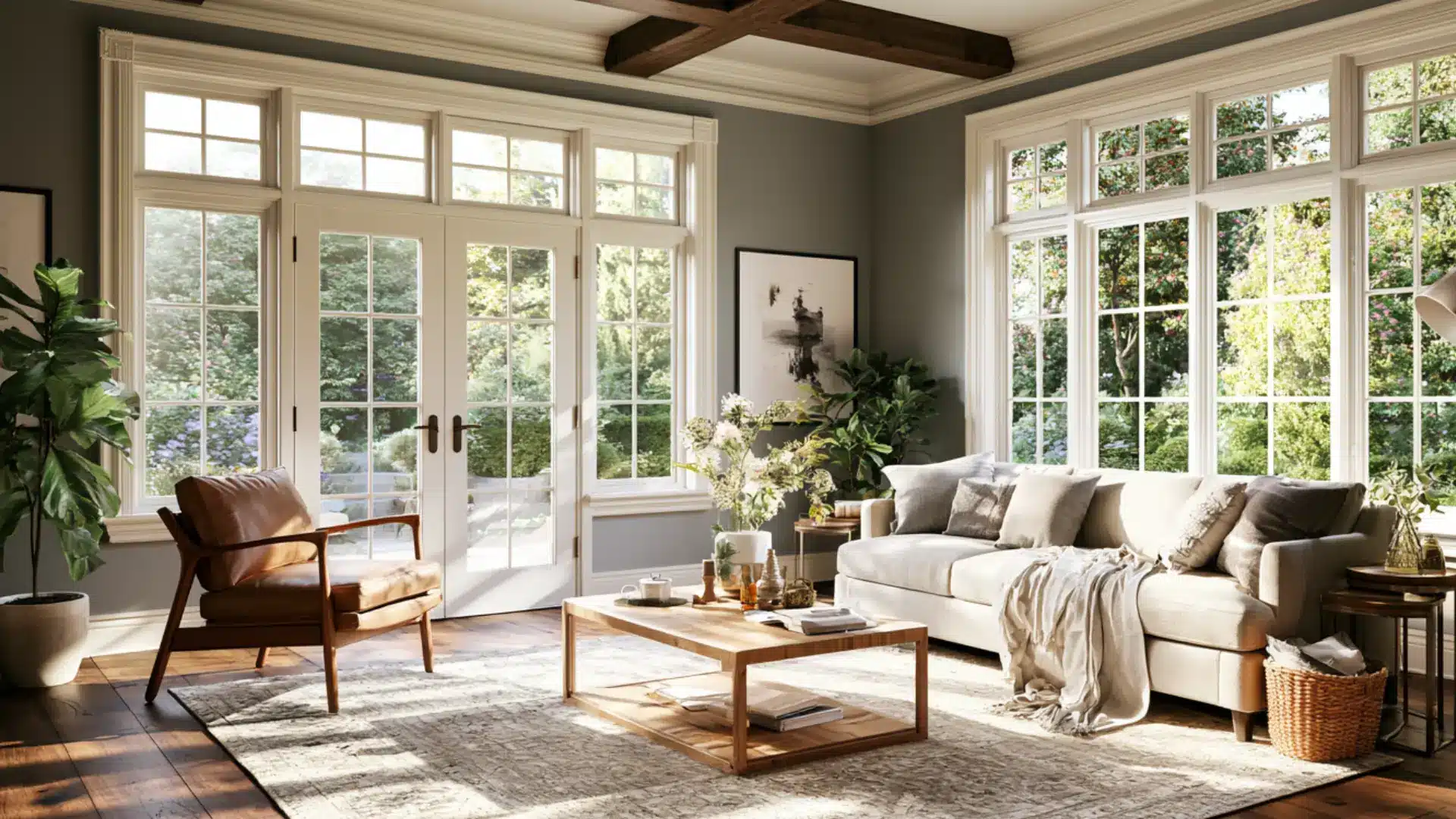

Window trim is the decorative molding or casing installed around windows to create a finished look.
Window trim styles range from flat modern casing to ornate colonial profiles, and the common options are craftsman (with a plinth block and flat boards), colonial (with curved ogee profiles), picture frame (four-sided surround), and farmhouse apron.
Everything depends on your home’s architecture, ceiling height, and whether you want trim to blend in or become a design feature.
Standard window openings take casing between 2.5 and 3.5 inches wide.
What is a Window Trim?
Window trim, also known as casing or molding, is the decorative and functional framework installed around windows.
It covers the joint between the window frame and the interior or exterior wall, which is made of wood, vinyl, PVC, or composite materials.
Window trim serves multiple purposes. It adds architectural detail, improves curb appeal, and complements the home’s style.
It conceals gaps, protects drywall edges from damage, and helps block drafts, improving energy efficiency.
It also makes windows appear more finished and professional.
Properly installed trim increases property value and simplifies painting or maintenance.
Window Trim Ideas
There are five main styles of window trim, and each one signals something different about the room it’s in.
1. Flat Casing

It uses a single straight board with no profile.
It is placed against the wall and around 1/4 inch proud of the drywall surface. Popular in modern and Scandinavian interiors. Typical width runs 2.5 to 3 inches.
2. Craftsman Casing

This trim style uses flat boards with a back band around the outer edge.
The signature feature is the plinth block at the base, which is a square block where the window casing meets the baseboard.
3. Colonial Casing

It is a very common trim style in homes built between 1950 and 1990.
It uses a curved ogee or cove profile, that subtle S-shaped groove running the length of the board. It reads traditional, but it can feel dated in rooms with low ceilings.
4. Picture Frame Casing

This kind of trim wraps all four sides of the window in identical casing. The window is inside a complete rectangular frame.
In rooms where the window is flush with the wall and there’s no deep sill to work around, this goes well with those!
5. Farmhouse Apron Trim
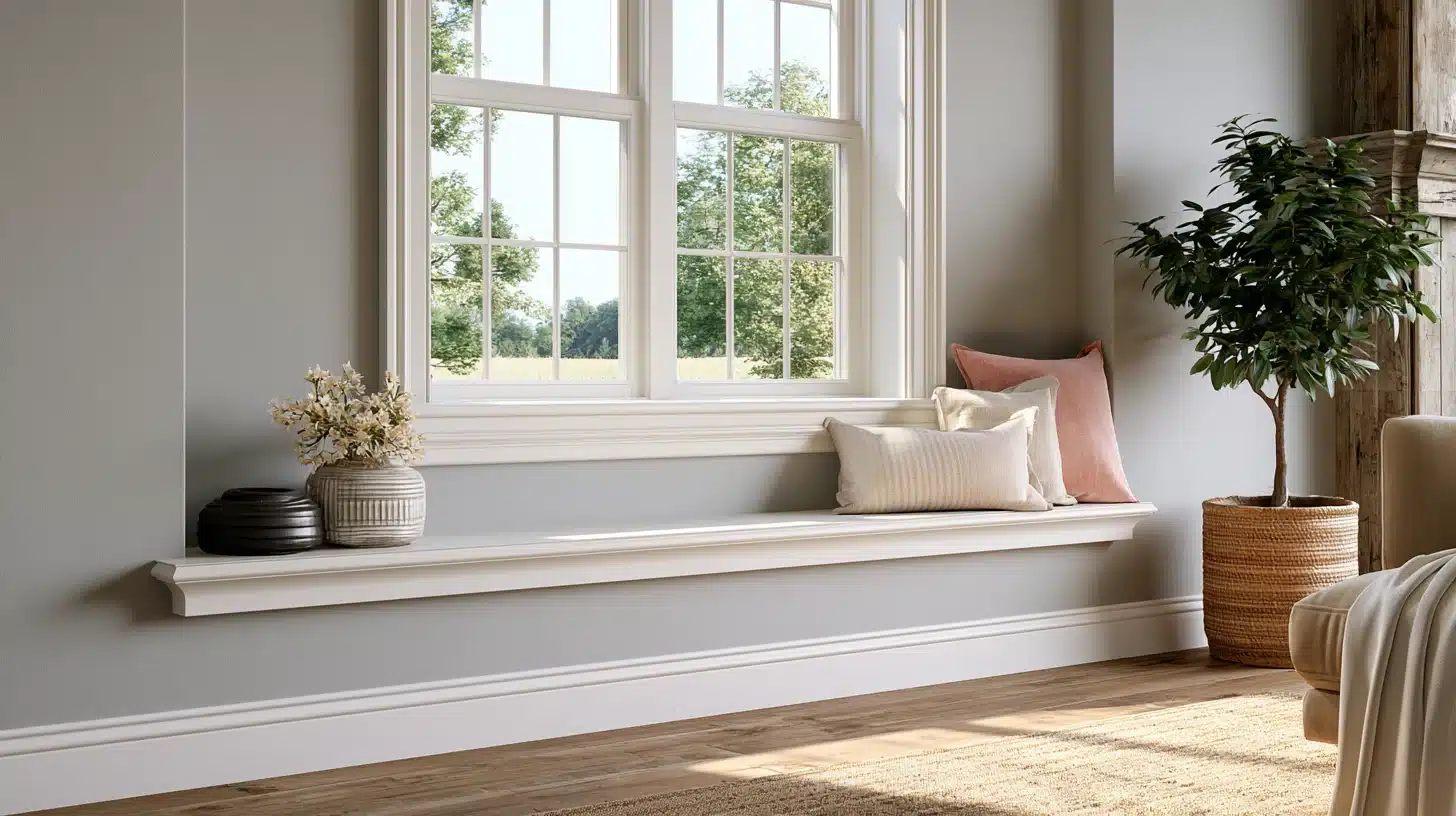
It is 4 to 6 inches tall and keeps a standard head and side casing but adds a wide, flat apron board beneath the sill.
It’s a simple way to add visual weight at the base without changing the upper trim profile.
6. Minimalist Window Trim

It is usually a single piece of flat casing 2 to 2.5 inches wide, with no decorative routing, backband, or corner blocks.
The casing sits tight to the jamb with a 3/16-inch reveal and meets the wall cleanly. This style works best in contemporary and Scandinavian-influenced interiors.
7. Victorian Window Trims

Victorian trim uses layered moldings stacked to create a projecting, decorative frame.
A built-up Victorian casing might combine a base flat board, an ovolo or bead profile on top, and a separate backband on the outer edge.
This casing is 4 to 5.5 inches wide with two to three stacked elements.
How to Choose Window Trim for Your Home’s Style
The first step is identifying your home’s original architecture.
- Craftsman bungalows take craftsman or prairie-style trim.
- Colonial Revival homes take colonial ogee profiles.
- New builds and converted industrial spaces take flat casing.
- Period Victorian properties take built-up profiles.
Mismatching the trim style to the architecture reads as renovation work, not intentional design.
The second step is checking your wall depth.
Walls with less than 4.5 inches of depth from the exterior window frame to the interior wall surface are suitable for standard casing.
Walls 5 inches or deeper suit picture frame trim or a stool-and-apron setup.
The third step is comparing the ceiling height to the trim width.
- In rooms under 9 feet, wider Victorian profiles can feel heavy.
- In rooms above 10 feet, flat 2.5-inch casing can look too thin.
How to Choose Window Trim Size for Your Room?
Standard window casing is 2.5 to 3.5 inches wide for most residential rooms.
They cover rooms with ceilings between 8 and 10 feet. And 3.5 to 4.5 inches in rooms with ceilings at 11 feet or above.
Go narrower, 2.25 to 2.5 inches, in small bathrooms or hallways where wide trim would crowd the wall.
Conclusion
Window trim styles do more than frame glass; they define the visual language of every room they’re in.
Flat casing keeps things clean and modern. Craftsman adds period character. Colonial is traditional and widely available.
Pick the profile that fits your home’s architecture, cut your reveals consistently at 3/16 inch, and glue every miter joint before nailing.
Get those three things right, and the rest follows.
People Also Ask
1. What is the New Trend for Windows?
Minimalist flat casing, shadow gap details, and picture-frame trim are leading trends.
2. What Kind of Trim is Popular Now?
Flat, wide-board casing in 3 to 3.5 inches is most popular. Clean profiles with no decorative routing dominate current interior design.
3. Should Window Trim Be Lighter or Darker than Walls?
Lighter trim on darker walls sharpens definition. White trim on any wall color is a broadly used and safest choice.
4. What Color Makes a House Look Expensive?
Warm white trim against deep wall colors like navy, sage, and charcoal looks most expensive.