

For a very long time, when I was young, I used to think that setting spray, finishing spray, and fixing spray were all the same thing, that they did the same job, and that they could be used by anyone.
I was wrong. Using the wrong one can actually change your entire makeup outcome.
Setting spray locks makeup in place and extends wear time. Finishing spray improves how makeup looks by adding glow, reducing powderiness, or creating a skin-like surface.
Being a girl is about looking your best in any circumstance, and wearing makeup is something most of us love.
But doing it right is what really matters.
So today, in our makeup lesson, we are going to look at what sets setting spray vs finishing spray apart—and how knowing the difference can help your makeup last longer and look better.
What Setting Spray Actually Does?
Setting spray is a functional product. Its job is to hold your makeup in place for longer.
Most setting sprays work by forming a thin, flexible layer over your makeup.
This layer reduces the transfer of foundation, eyeshadow, and powder onto clothing, glasses, or your hands.
Setting sprays typically contain film-forming polymer ingredients like acrylate copolymers that bind layers of makeup together once they dry.
The result? Your makeup moves with your face rather than cracking or sliding off.
When You Actually Need a Setting Spray
Setting spray matters most in these situations:
- Long days where you need makeup to last 8+ hours
- Hot or humid weather, where sweat breaks down powder products fast
- Oily skin that tends to push through foundation by midday
- Event makeup weddings, performances, photo shoots where touch-ups aren’t possible
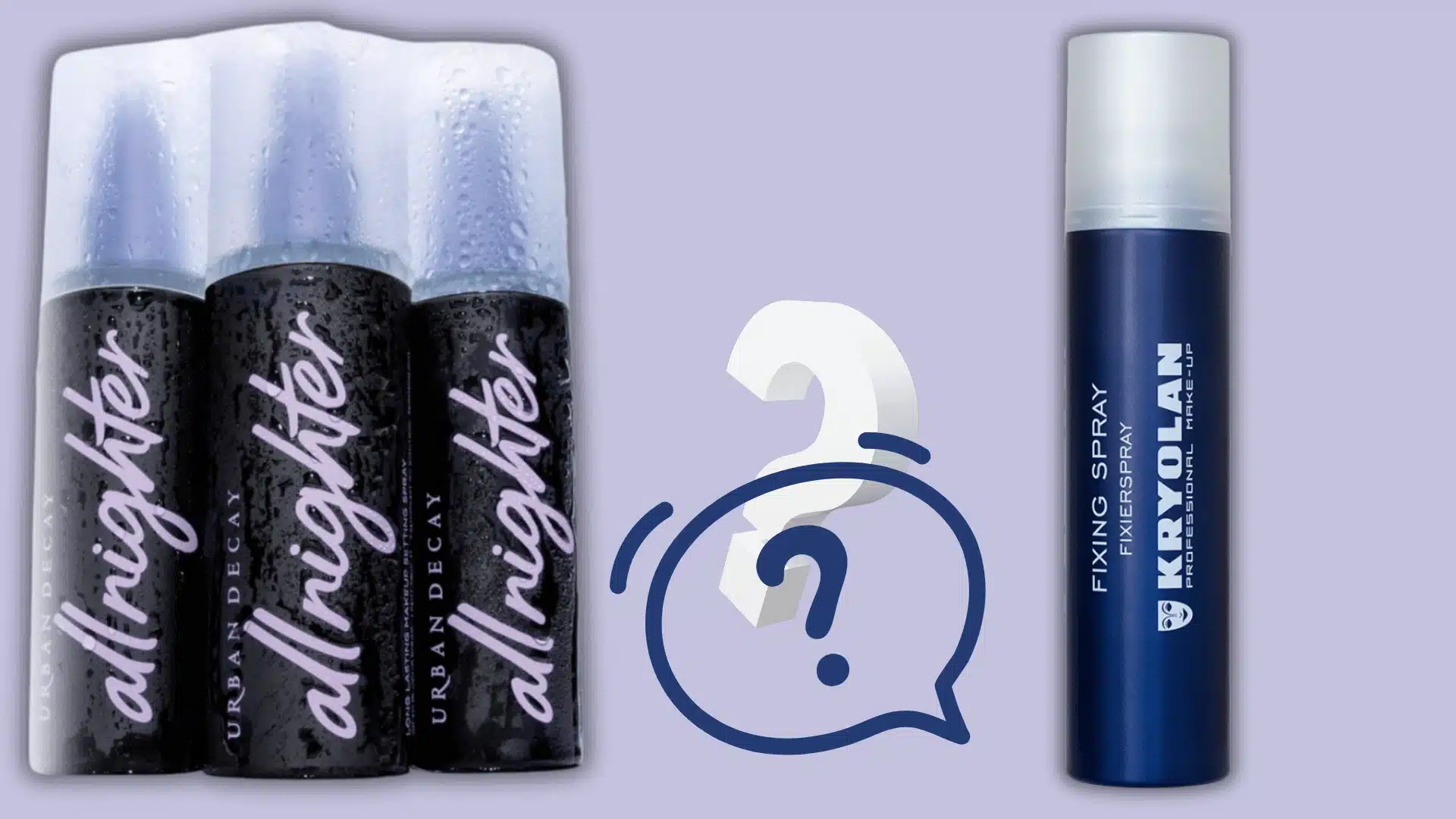
Urban Decay’s All Nighter, one of the most tested setting sprays on the market, is formulated to last up to 16 hours, according to the brand’s product documentation.
That kind of longevity comes from the film-forming technology in the formula, not from any skin benefit.
Setting spray is a hold product. It doesn’t change how your makeup looks. It keeps it where you put it.
What Finishing Spray is for
Finishing spray is a visual product. It changes how your makeup looks once it’s on.
Where setting spray focuses on wear time, finishing spray focuses on finish. It can shift your makeup from matte to dewy, from flat to luminous, or from bright to more natural-looking.
Some finishing sprays also help blend powder products so they look less heavy on the skin.
The Most Common Finishing Spray Types
- Dewy or luminous finish: Adds a fresh, skin-like glow. Good for dry or normal skin. Common pick: Charlotte Tilbury’s Airbrush Flawless Finish Setting Spray, which Allure named a Best of Beauty winner.
- Matte finish: Reduces shine and sets a flat, no-gloss look. Better for oily or combination skin.
- Refreshing or hydrating finish: Adds moisture back into the skin. Useful if your makeup looks dry or cakey after application.
The key thing to know: finishing spray adjusts the look of your makeup. It’s the final creative step, not the protective one.
Setting Spray vs Finishing Spray: The Main Differences

These two products look similar, are applied the same way, and even come in similar packaging. But their formulas and goals are quite different.
1. Purpose and Function
A setting spray’s job is to hold your makeup in place. A finishing spray’s job is to make your makeup look better.
One is about durability; the other is about appearance.
2. Makeup Longevity
Setting sprays are designed with longevity in mind.
Most contain film-forming agents that help extend wear time. Finishing sprays typically do not include these ingredients, so they may not add meaningful hold on their own.
3. Skin Finish and Appearance
Finishing sprays have a more direct impact on how the skin looks after application.
Setting sprays also affect the finish to some degree, but that is a secondary effect rather than the main goal.
4. Ingredient Formulation
Setting sprays often contain alcohol, polymers, and film-forming agents. Finishing sprays tend to lean more toward skin-care-inspired formulas with hydrating or light-diffusing ingredients.
If your skin is sensitive, it is worth checking the ingredients list before buying either one.
5. Wear Time Performance
Setting sprays usually extend wear time more reliably than finishing sprays.
A good setting spray can help makeup last several hours longer in warm or active conditions. Most finishing sprays are not formulated to make a major difference in wear time.
6. Application Techniques
Both are applied by misting over the finished face.
The main difference is that some finishing sprays can also be layered mid-routine, while setting sprays are typically used only at the end.
7. Suitable Skin Types
Setting sprays tend to work well across all skin types, with oil-control variants specifically for oily skin and hydrating variants for dry skin.
Finishing sprays can be trickier because some formulas may add too much sheen for oily skin or not enough moisture feel for very dry skin.
Pros and Cons of Setting Spray
Advantages
- Extends makeup wear time meaningfully
- Works across skin types when the right formula is chosen
- Can reduce the cakey or powdery look from heavy coverage
- Affordable options are widely available
- Easy to apply and does not require extra tools
Potential Drawbacks
- Some formulas contain alcohol, which can be drying for sensitive or dry skin
- Applying too much can make makeup look patchy or cause it to shift
- Not all setting sprays work equally well in very humid conditions
- Matte formulas may feel too flat on dry skin
Pros and Cons of Finishing Spray
Advantages
- Gives makeup a more intentional and refined appearance
- Adds glow or soft focus without applying extra product
- Works well for photography and video content
- Some formulas include skin-care ingredients that benefit the skin underneath
- Can make heavy makeup looks appear more natural and blended
Potential Drawbacks
- Does not reliably extend makeup wear time on its own
- Some dewy formulas can intensify oiliness on oily skin
- Overapplication can result in a greasy or overly shiny look
- Tends to be pricier than basic setting sprays for equivalent volume
Which One Works for Your Skin?
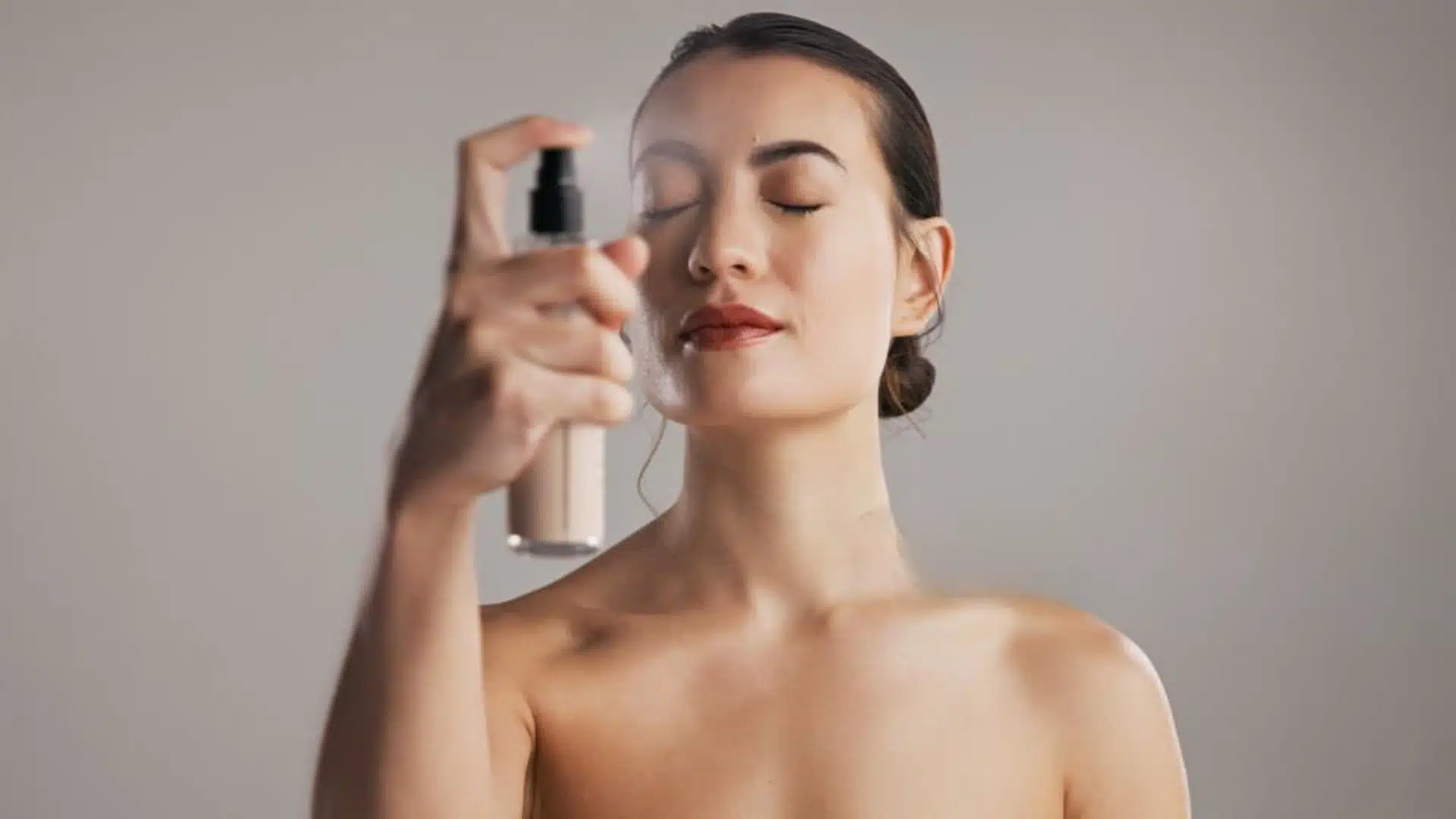
Based on Your Skin Type
Your skin type is the most practical starting point. The right formula works with your skin, not against it.
Oily Skin
Hold is a bigger priority for oily skin. A setting spray with oil-control or mattifying properties keeps foundation from sliding and reduces shine throughout the day.
Dewy finishing sprays are usually not a good fit here since they can add more luminosity to areas already producing oil.
If using both, keep the application light and finish with a strong-hold setting spray.
Dry Skin
Dry skin often looks flat after powder. A hydrating finishing spray adds a moisture-like softness without disturbing the makeup underneath.
For setting spray, look for a hydrating or alcohol-free formula since alcohol-heavy sprays can feel tight on dry skin over a long day.
Combination Skin
A lightweight, balanced setting spray works well across the full face without over-matting the cheeks.
If adding a finishing spray, apply it selectively on the cheeks rather than the full face, since the T-zone rarely needs extra glow.
Sensitive Skin
Fragrance and alcohol are the two most common irritants in both sprays. Fragrance-free, alcohol-free formulas are the safest starting point.
A quick patch test on the neck before misting across the full face is worth doing with any new product
Based on the Occasion
The same makeup look needs different levels of support depending on where you are wearing it.
Everyday Wear
A setting spray on its own is usually enough for a regular day. A finishing spray is not always necessary for casual looks, especially if your foundation already has a finish you like.
Office Makeup
A setting spray with a natural finish keeps everything neat without looking overdone.
If you prefer a more polished appearance, a light layer of finishing spray before the setting spray adds a clean, refined look.
Weddings and Special Events
Both products earn their place here. A finishing spray adds glow and a smooth surface that photographs well. A setting spray on top locks everything in through the full event.
Starting with a long-wear primer underneath gives both sprays a stronger base to hold onto.
Can You Use Both?
Yes. And it’s worth understanding the order if you do.
Apply setting spray first, directly after finishing your makeup. Let it dry fully, usually 30 to 60 seconds. Then apply finishing spray on top to adjust the visual effect.
If you reverse this order, the finishing spray creates a barrier that may stop the setting spray’s film-forming ingredients from binding to your makeup properly.
The hold will be weaker, and the finish may look patchy.
Not every routine needs both. If your skin type and the look you want are both served by one product, there’s no need to layer.
Using a setting spray that delivers a dewy finish, like the Mario Badescu Facial Spray with Rosewater, as a multitasking option can simplify the routine without compromising results.
Are Setting Spray and Fixing Spray the Same Thing?
This is one of the most common points of confusion in makeup, which is exactly what the introduction touched on.
Setting spray and fixing spray are often used interchangeably, and in most cases, they refer to the same type of product. Both are designed to hold makeup in place and extend wear time.
The term “fixing spray” is more common in European and some Asian markets, while “setting spray” is the term more widely used in North America.
If you pick up a product labeled “fixing spray,” read the description and ingredients to confirm it is a hold-focused formula rather than a finishing spray marketed with a different name.
Some brands do use “fixing spray” to describe a product that sits between setting and finishing, offering light hold along with a polished appearance.
In that case, treat it the same way you would a setting spray with a mild finishing benefit.
Wrapping Up
Setting spray holds your makeup in place. Finishing spray controls how it looks.
They do different jobs, and knowing which one you need based on your skin type and the finish you want will save you time and wasted product.
For most people, setting spray is the non-negotiable step. Finishing spray is the optional layer that fine-tunes the result.
Get the hold right first, then adjust the look.
Frequently Asked Questions
1. Is Setting Spray Better than Finishing Spray?
Neither is better overall. Setting spray focuses on hold; finishing spray focuses on appearance. Your skin type and occasion decide which one you need.
2. Can Finishing Spray be Used as a Setting Spray?
It can, but it will not hold makeup as reliably. Finishing sprays are not formulated primarily for wear time.
3. Do I Need Both Products?
Not always. For everyday wear, one is usually enough. Both work best together for long events or camera-ready looks.
4. Which Spray is Best for Oily Skin?
A mattifying or oil-control setting spray works best for oily skin and helps reduce shine throughout the day.
5. Which Spray Creates a Dewy Finish?
A dewy finishing spray creates the most visible glow. Some setting sprays also offer a dewy finish in their formulas