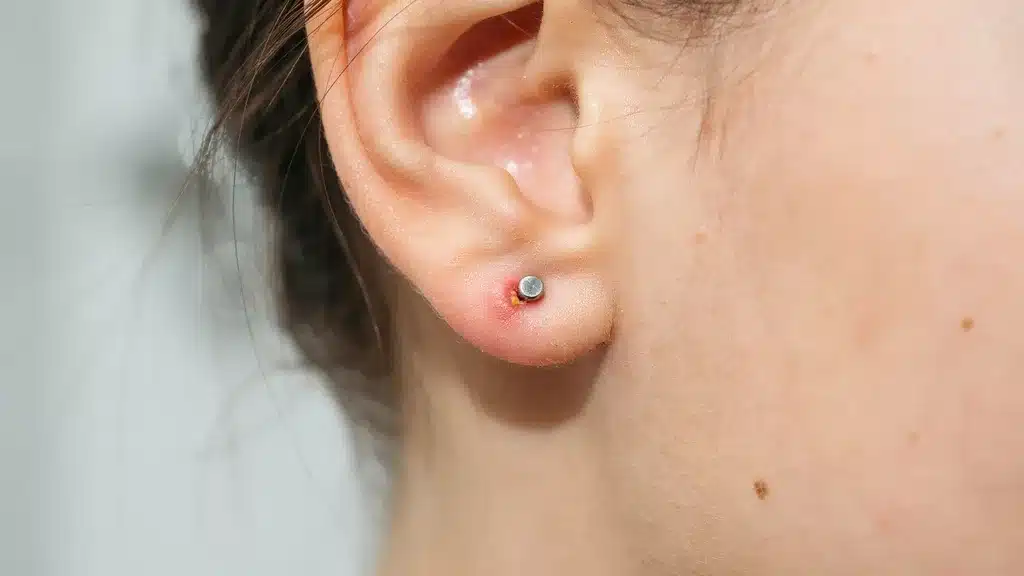

A little bump by your new piercing is not automatically a keloid.
In fact, it can be the piercing bumps. A piercing bump is a small, soft lump that stays near the piercing hole and clears within a few weeks.
A keloid is a raised, firm scar that grows beyond the piercing site, continues to expand, and requires medical treatment.
But First, What is a Piercing Bump?
A piercing bump, sometimes called an irritation bump, is found at the edge of the piercing hole.
It is small, round, and red or skin-coloured. It can appear within days of getting a new piercing or after any trauma to a healed one.
There are three distinct types of bumps that appear on piercing sites. They look similar but are different.
- Irritation bump: Caused by movement, snagging, or wrong jewelry.
- Pustule: A small bump filled with clear or white fluid. This is not an infection, but the body flushing out dead cells.
- Hypertrophic scar: A raised scar that stays within the boundary of the piercing wound.
Now, What is a Keloid?
A keloid is not just a big bump. It is a type of abnormal scar tissue where the body produces collagen far beyond what the wound needs to heal.
On a piercing, a keloid appears as a raised, firm lump that is larger than the jewelry hole.
The skin over it may be shiny, and the color can range from pink to dark brown, depending on your skin tone. It does not hurt, but it can itch or feel tender.
But did you know that keloids do not develop overnight?
They take weeks to months to form. If your bump appeared within the first few days of a new piercing, it is almost certainly not a keloid.
Earlobes are a common site for piercings, especially in those with a genetic predisposition.
The chest, shoulders, and upper back are also high risk for keloids, not just piercings. Having existing keloids increases the risk at new piercing sites.
Piercing Bump vs Keloid: Key Characteristics
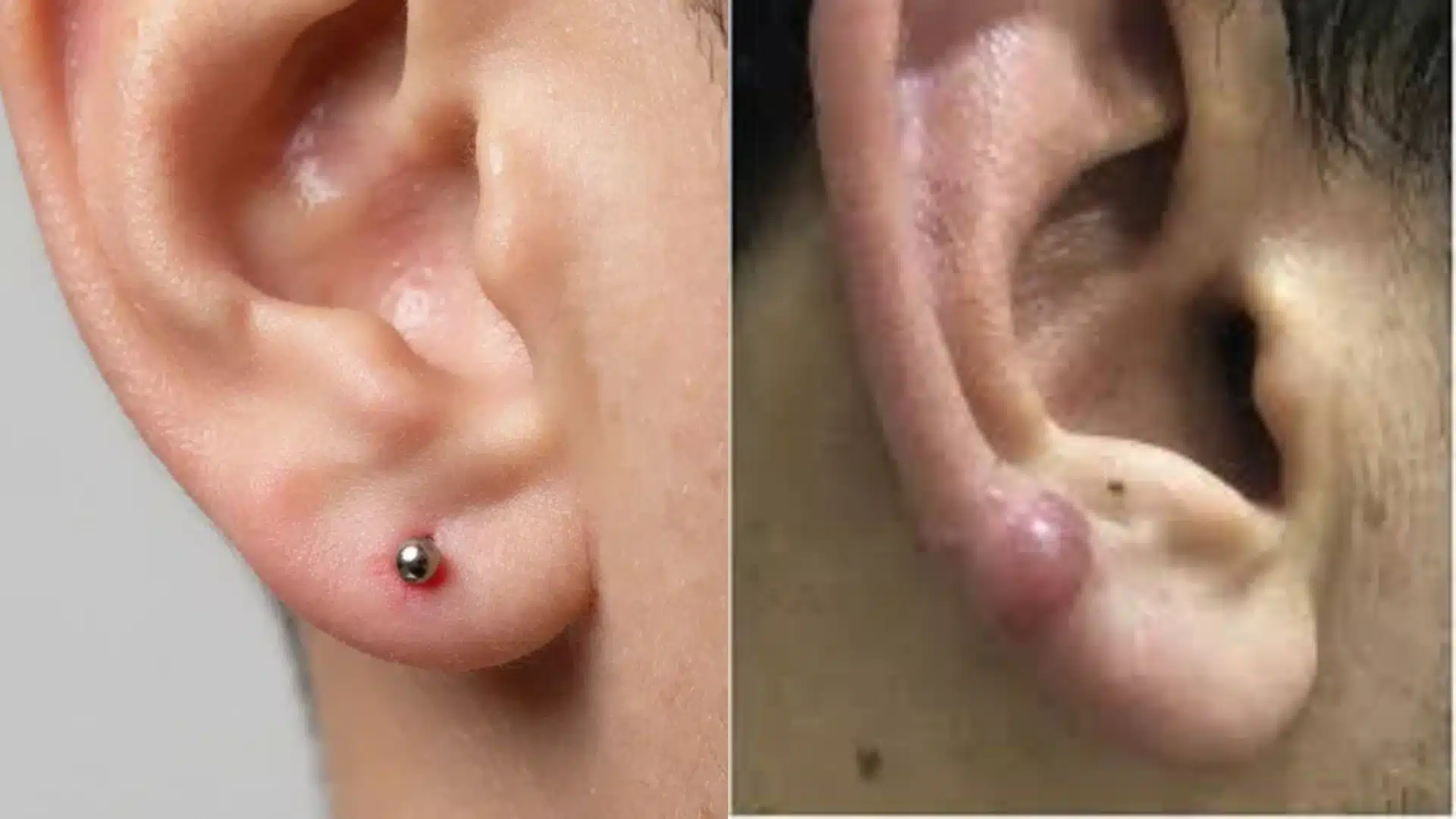
Use these markers to know which one you are dealing with.
This is not a medical diagnosis, but it’ll help you to identify the problem!
Growth Pattern
An irritation bump stays roughly the same size or shrinks with proper care.
Whereas a keloid keeps growing, slowly but consistently, past the edges of the original piercing hole.
Timeline
Irritation bumps appear within days to a few weeks.
Keloids develop weeks to months after the initial wound, sometimes long after the piercing appears healed.
Texture
Irritation bumps are soft or slightly firm. Keloids feel rubbery and dense, like a small piece of cartilage under the skin.
Boundaries
Irritation bumps and hypertrophic scars stay within the wound area. Keloids spread. They spill over the edges of the piercing site in all directions.
Response to Better Aftercare
An irritated bump usually improves when you fix the underlying cause, such as wearing the wrong jewelry, touching it too often, or sleeping on it.
But a keloid does not respond to changes in aftercare.
What Causes a Piercing Bump?
Irritation bumps form when something disrupts the healing process. If you have confirmed this is an irritation bump and not a keloid, then it can be treated.
Let’s find out the causes of it.
- Jewelry is of the wrong material – anything other than implant-grade titanium, implant-grade steel, solid 14k or 18k gold, or niobium
- Jewelry that is too tight or too short puts constant pressure on the tissue.
- Moving the jewelry to clean it re-injures the healing fistula every time.
- Sleeping on a new piercing without a travel pillow.
- Using aftercare products with alcohol, tea tree oil, or antibacterial soap.
Keloids: Causes and Treatment
Keloids result from an overactive wound-healing response.
Genetics plays a big role. Certain skin types, particularly darker skin tones, have a higher predisposition to keloid formation, though keloids can affect anyone.
Trauma to the site, including a piercing being done with a piercing gun rather than a needle, is a known trigger.
Piercing guns cause more blunt tissue damage than needles, which increases the risk.
Treatment
Keloids need professional treatment. There is no home remedy that removes a true keloid.
- Corticosteroid injections flatten and soften the tissue over multiple sessions.
- Silicone gel or sheets applied daily over the keloid. Silicone sheeting applies consistent pressure and moisture to the scar.
- Cryotherapy is freezing the keloid with liquid nitrogen. Often used alongside corticosteroid injections.
- Removing the keloid surgically has a high recurrence rate, up to 100% if done without follow-up treatment.
- Radiation therapy is used post-surgery in high-risk cases.
When to See a Doctor?
See a board-certified dermatologist, not just your piercer. Do not try to remove a suspected keloid yourself.
Cutting, squeezing, or attempting to flatten a keloid at home causes additional trauma.
- Your bump has been growing steadily for more than six weeks.
- The lump extends beyond the edges of the piercing hole.
- You have a personal or family history of keloids.
- The site is painful, very itchy, or feels hardened and rubbery.
- You have tried corrected aftercare for eight weeks with no improvement.
- You are considering any treatment beyond saline and jewelry changes.
Disclaimer: This article is for informational purposes only and does not constitute medical advice. Always consult a board-certified dermatologist or qualified healthcare professional before starting any treatment for a piercing bump or keloid.
Conclusion
Piercing bumps sort themselves out with the right jewelry and consistent saline care. Keloids do not.
If your bump is growing past the piercing hole, feels rubbery, and has been there for more than six weeks, stop waiting and see a dermatologist.
Early treatment works better than delayed treatment.
Check your aftercare routine first, know your risk factors, and act quickly if something feels off.
People Also Ask
1. Can a Piercing Bump Turn Into a Keloid?
An irritation bump cannot turn into a keloid. However, repeated trauma to an unhealed piercing in someone with a keloid predisposition can trigger keloid formation.
2. How Long Does It Take for a Piercing Bump to Go Away?
Piercing bumps resolve in two to eight weeks once the cause of the irritation is removed.
3. Is Tea Tree Oil Good for a Piercing Bump?
No. Tea tree oil is too harsh for healing piercing tissue. It can damage the cells lining the fistula, slow healing, and worsen irritation bumps.