

The shape of your eyes affects everything from makeup and eyewear to hairstyles.
However, the form of your eyes influences which eyeshadow methods are most effective, determines which eyeglass frames truly improve your face, and the right hairstyle can also depend on it.
This is the point where misunderstanding frequently arises.
Eye shape differs from eye size and eyelid type.
Shape refers to the general structure, while size and lid features are distinct characteristics.
What Eye Shape is the Rarest?
Downturned eyes represent the least common eye shape.
The majority of eyes angle a bit upward at the outer edge. Drooped eyes have the contrary effect. The outer edge is positioned lower than the inner edge.
This creates a gentle, drowsy appearance.
Only a small number of individuals are born with it, which is why makeup artists consider it one of the rarest.
Celebrities such as Sydney Sweeney and Anne Hathaway possess it.
Different Types of Eye Shapes
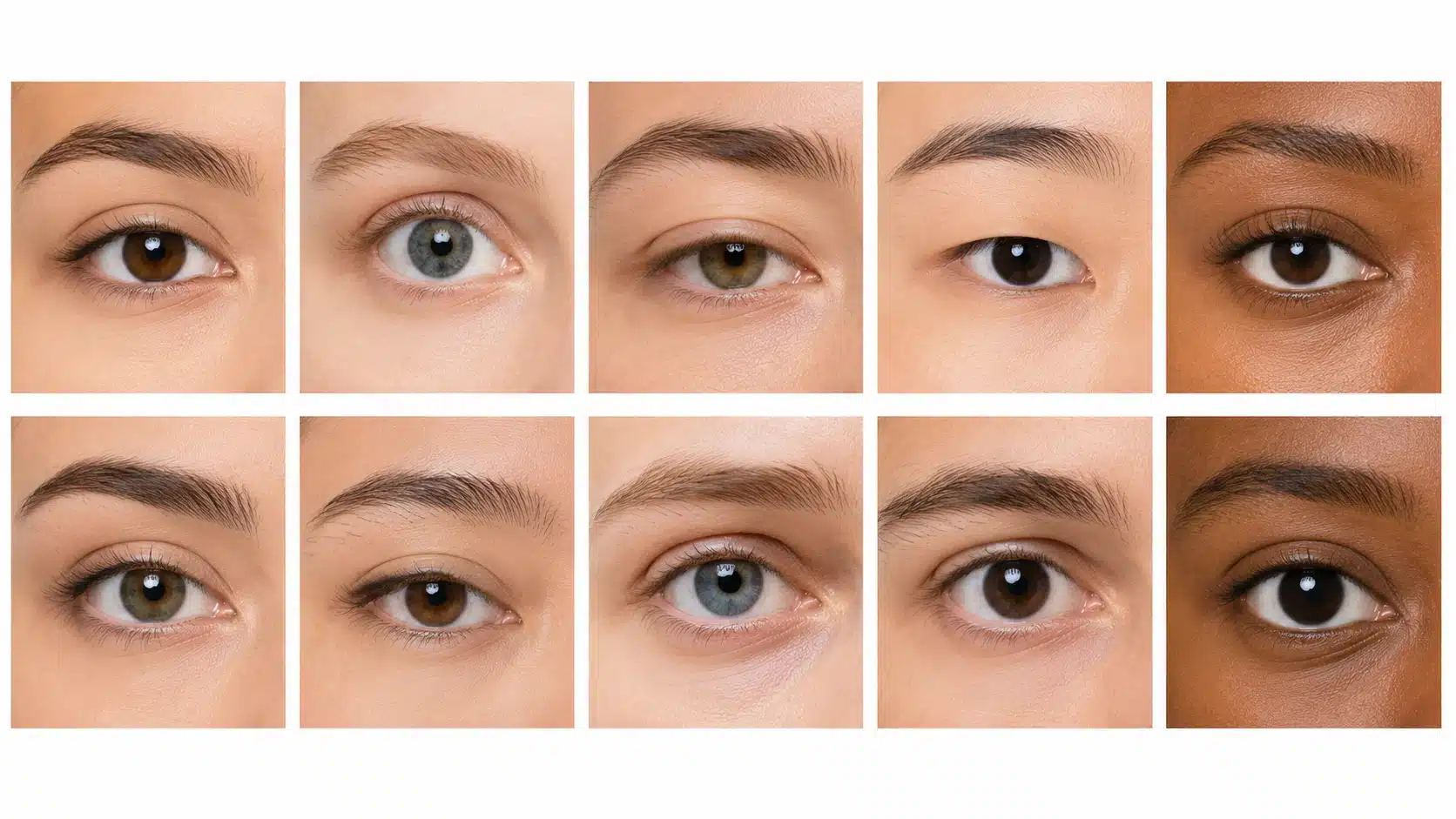
There are several eye shape names, and each one has its own look. Some eyes tilt up at the corners while others sit deeper in the socket.
1. Almond Eyes
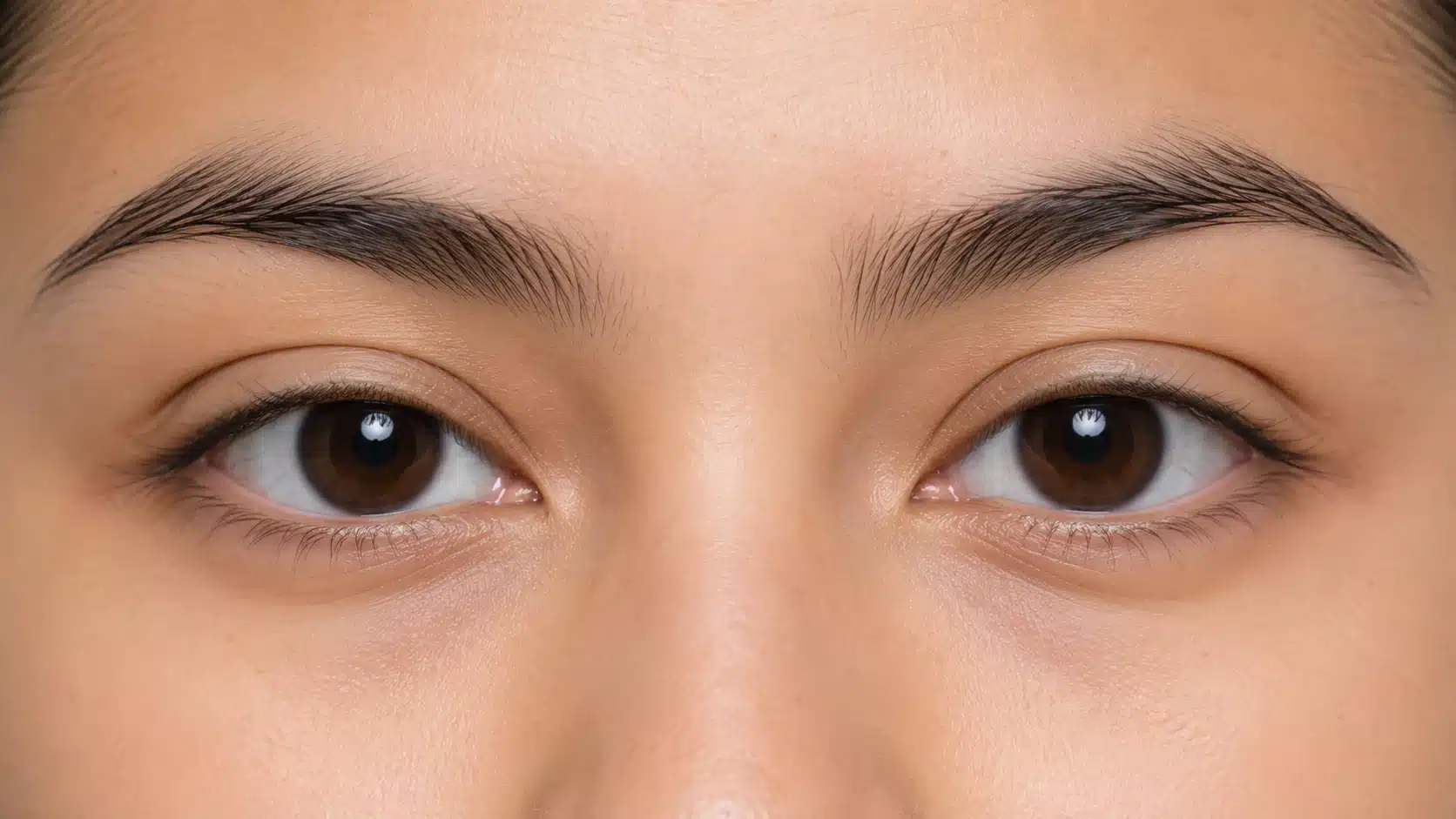
Almond eyes taper gently at both corners, much like the shape of an almond. The iris usually touches the top and bottom lid, with little white space showing.
A visible crease sits above the lid, and the outer corner lifts just slightly. Width and height stay balanced too.
This shape suits nearly every makeup style, and most glasses frames flatter almond eyes too.
2. Round Eyes
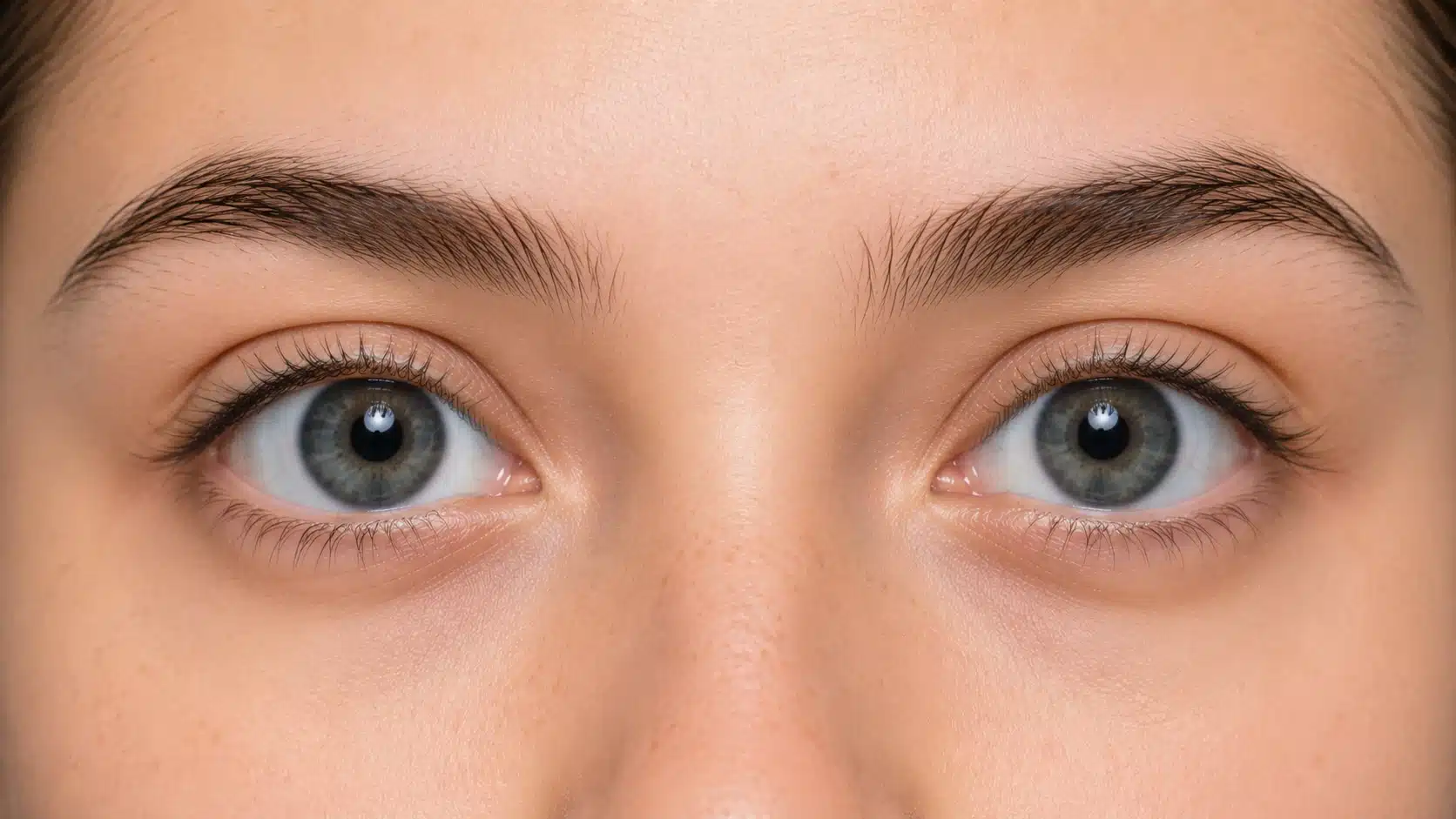
Round eyes have a wide, circular outline.
White space often shows above and below the iris, not just on the sides. This makes the eyes look larger and more open.
Soft, elongated eyeliner helps balance the roundness and extend the line slightly past the outer corner.
3. Hooded Eyes
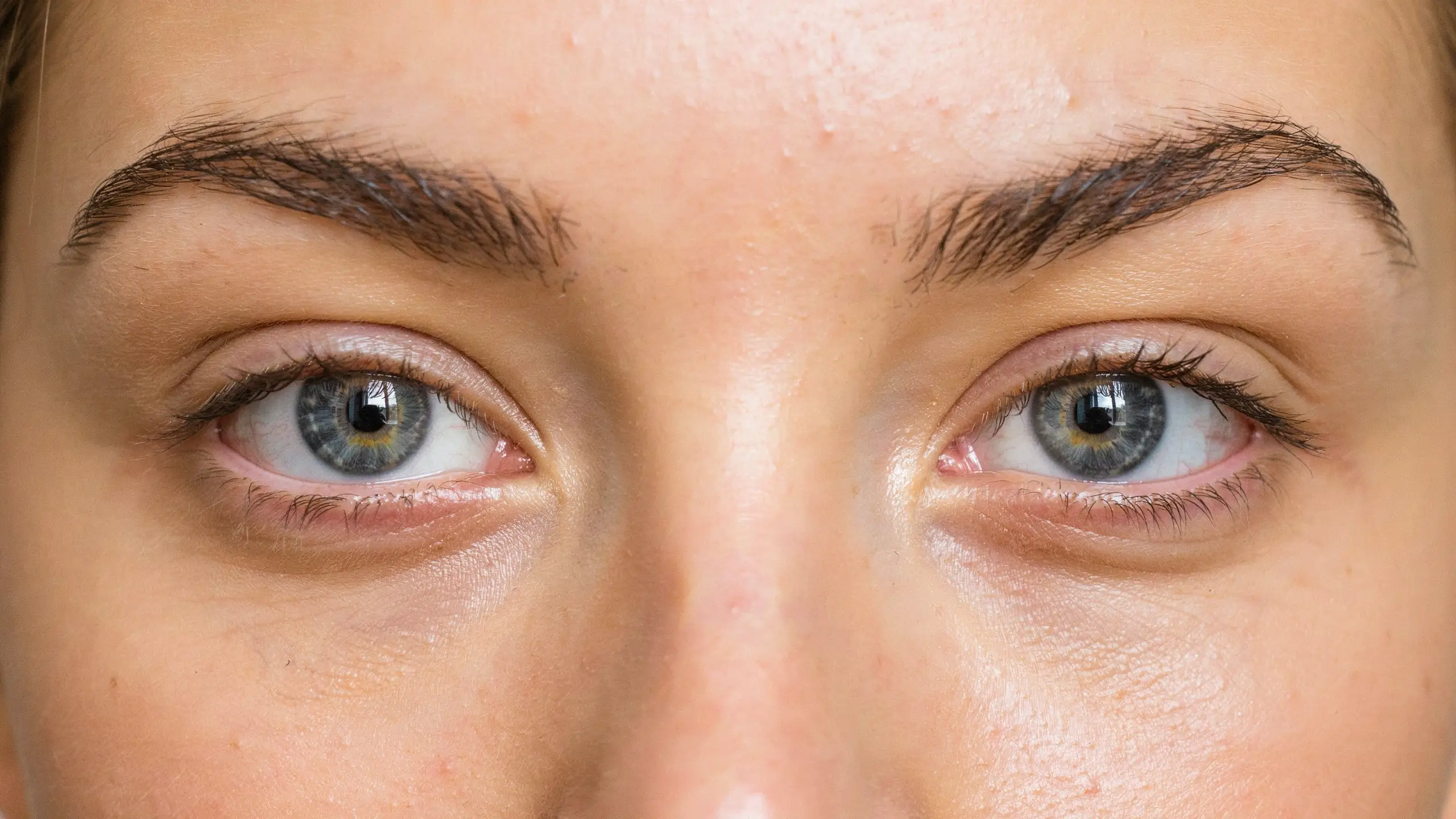
Hooded eyes have extra skin that covers part or all of the lid crease. This can make the crease hard to see when eyes are open.
Almond eyes show a clear crease. Hooded eyes hide it, sometimes fully.
4. Monolid Eyes
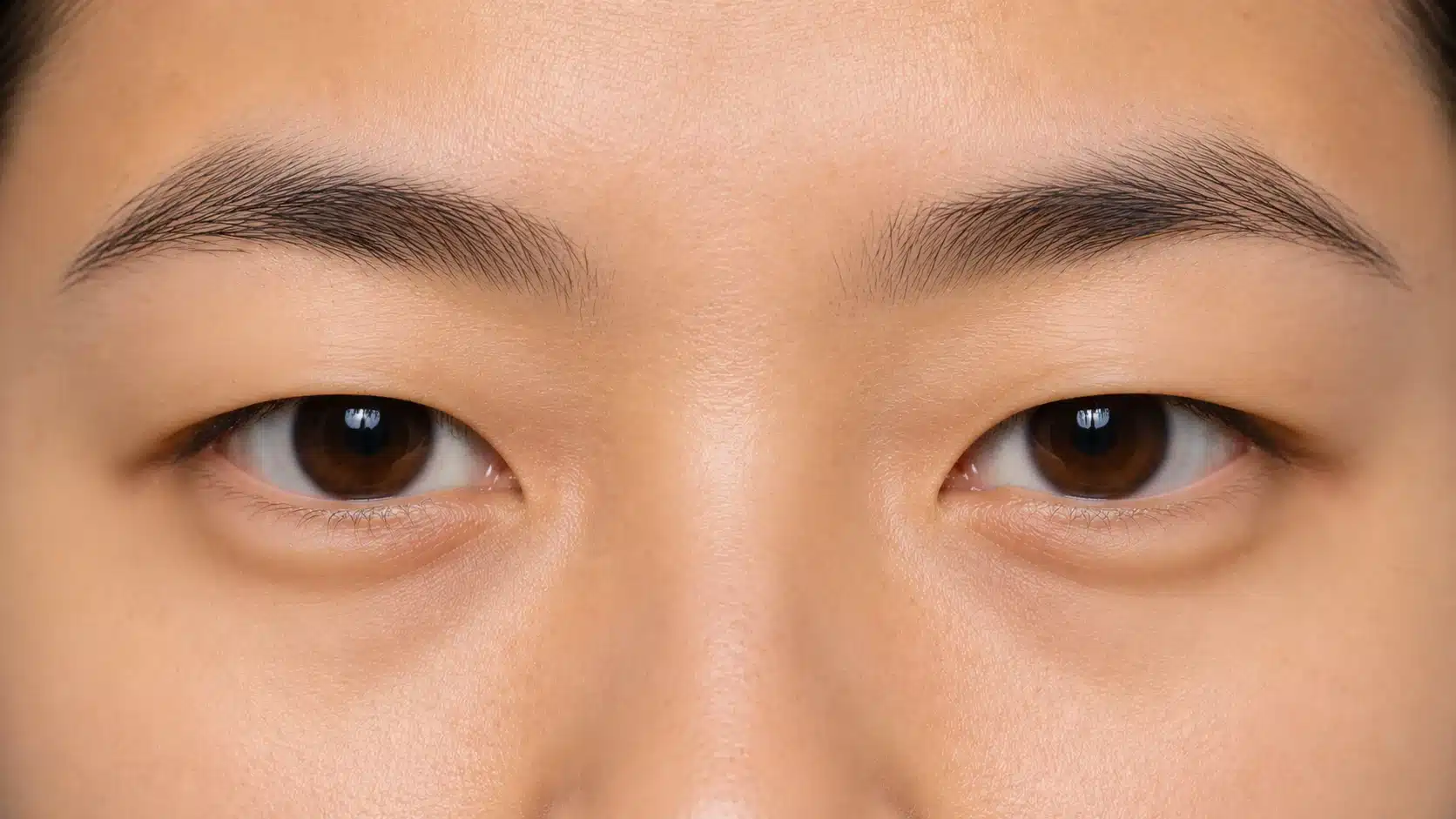
Monolid eyes have a smooth lid with no visible crease line. The surface stays flat and even from lash line to brow bone.
This shape is common among many East Asian eye shapes.
The lid holds shadow beautifully. Graphic liner styles work especially well here.
5. Upturned Eyes
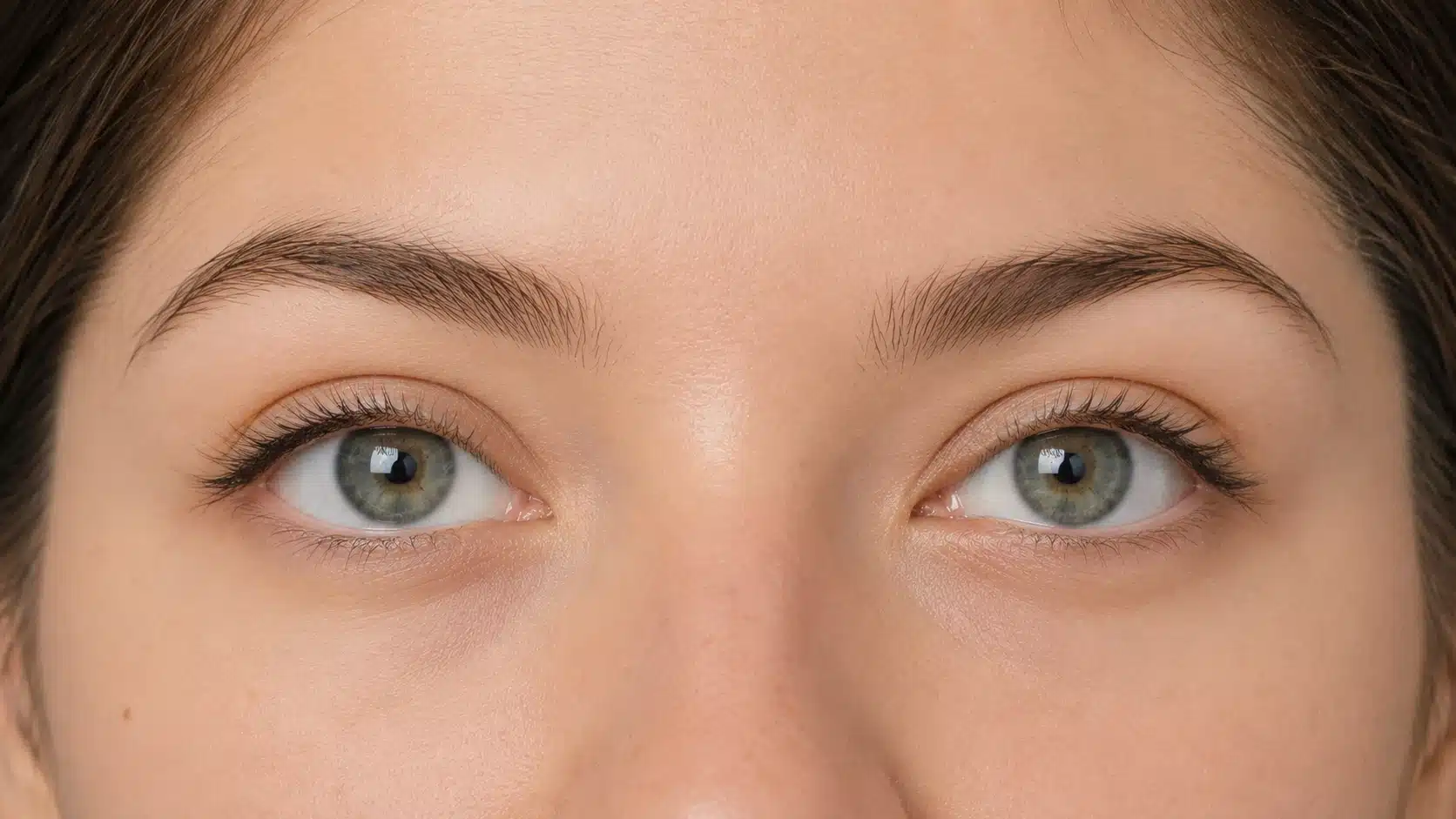
Upturned eyes have outer corners that sit higher than the inner corners. This creates a lifted, cat-like look. The upward angle changes how liner should be applied.
It also shifts where shadow looks best.
Most upturned eyes already appear lifted. Heavy winging usually isn’t needed.
6. Downturned Eyes
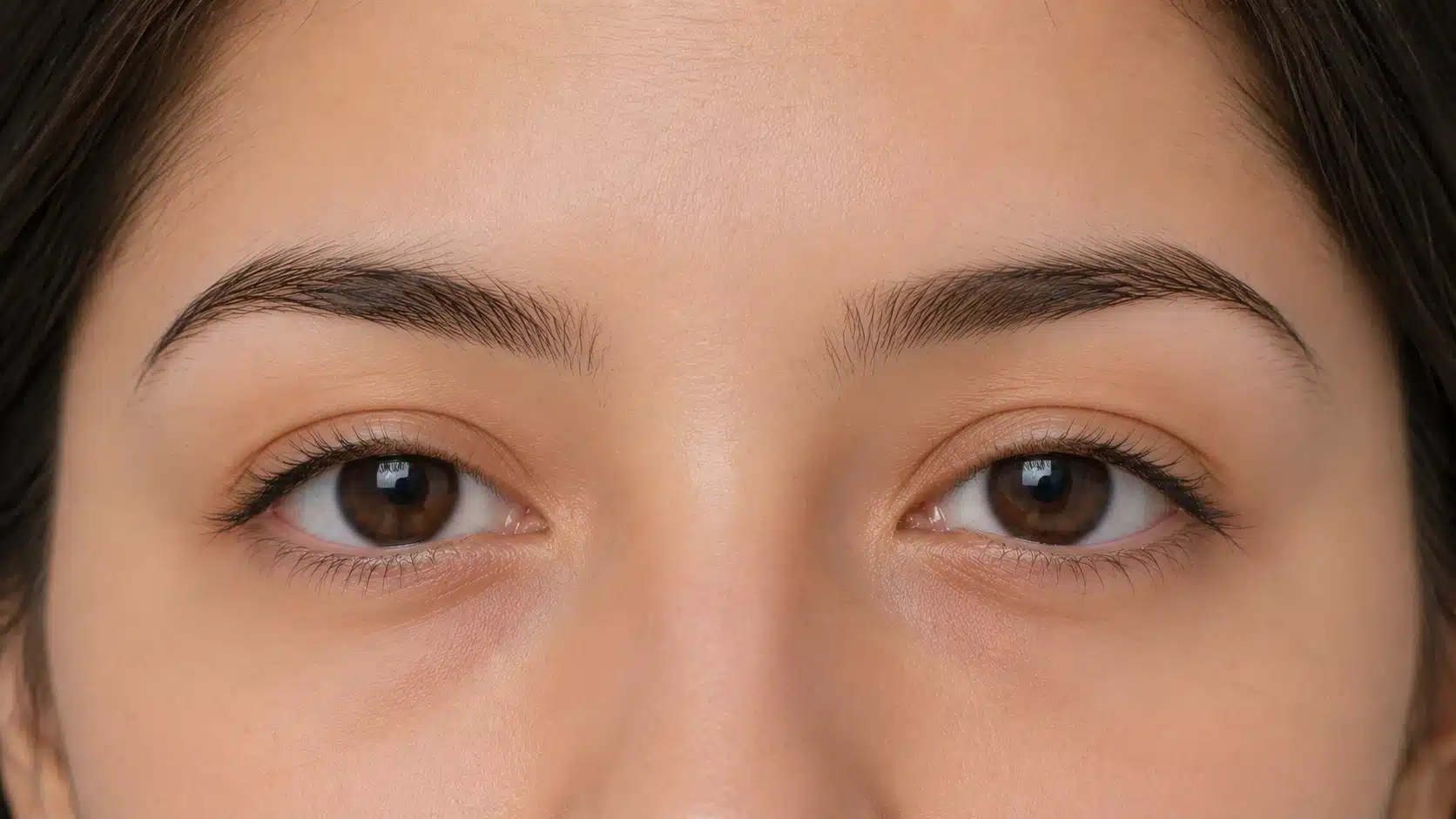
Downturned eyes have outer corners that dip lower than the inner corners. This can make eyes look softer, sometimes even tired.
The overall shape often reads rounder too.
A small wing of liner, angled upward, helps lift the outer corner visually.
7. Deep-Set Eyes
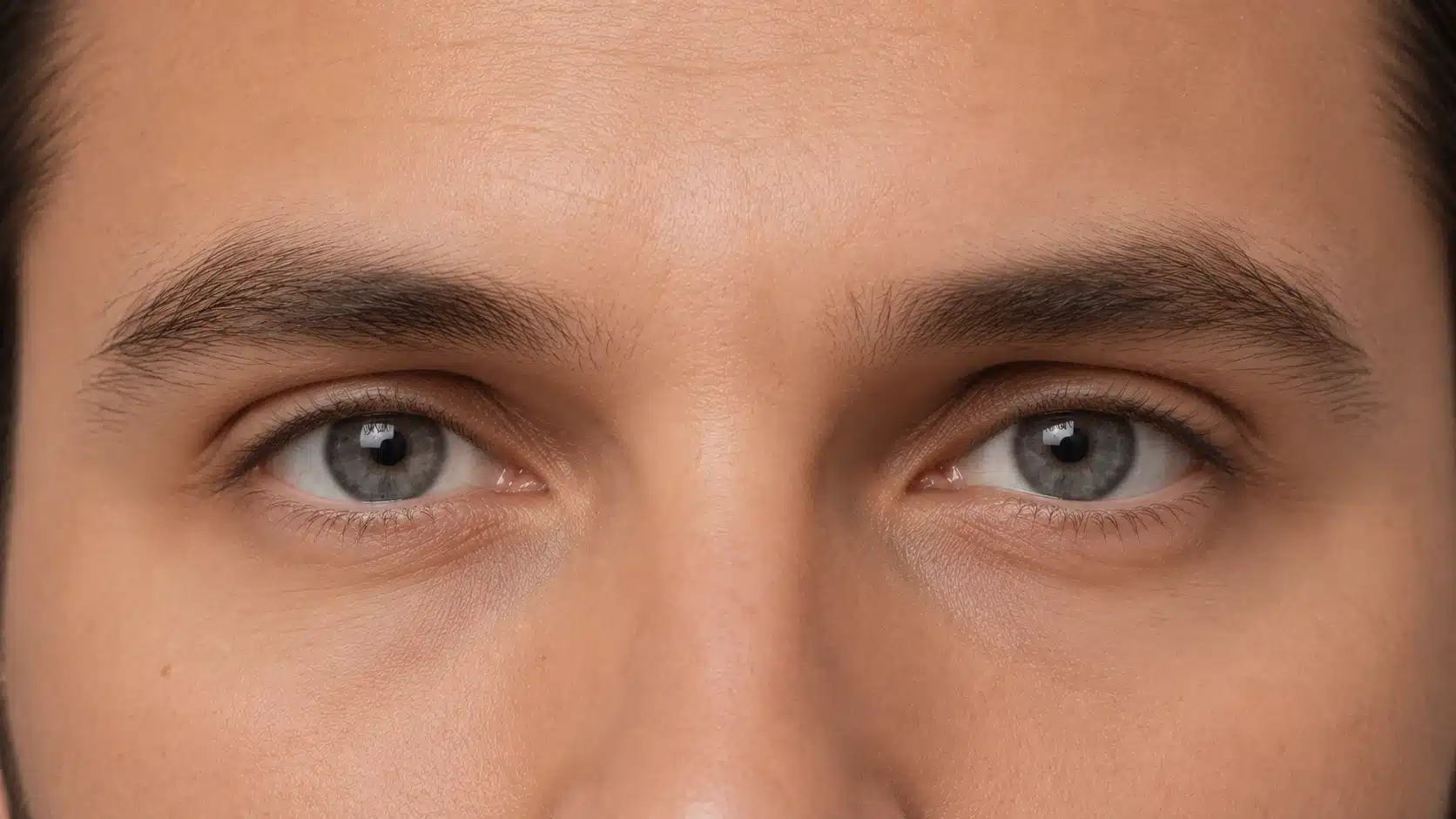
Deep-set eyes sit further back in the socket, beneath a more prominent brow bone. This placement creates a natural shadow effect.
Eyes can appear deeper or smaller than they actually are.
Lighter shadow shades on the lid help eyes stand out more clearly.
8. Protruding (Prominent) Eyes
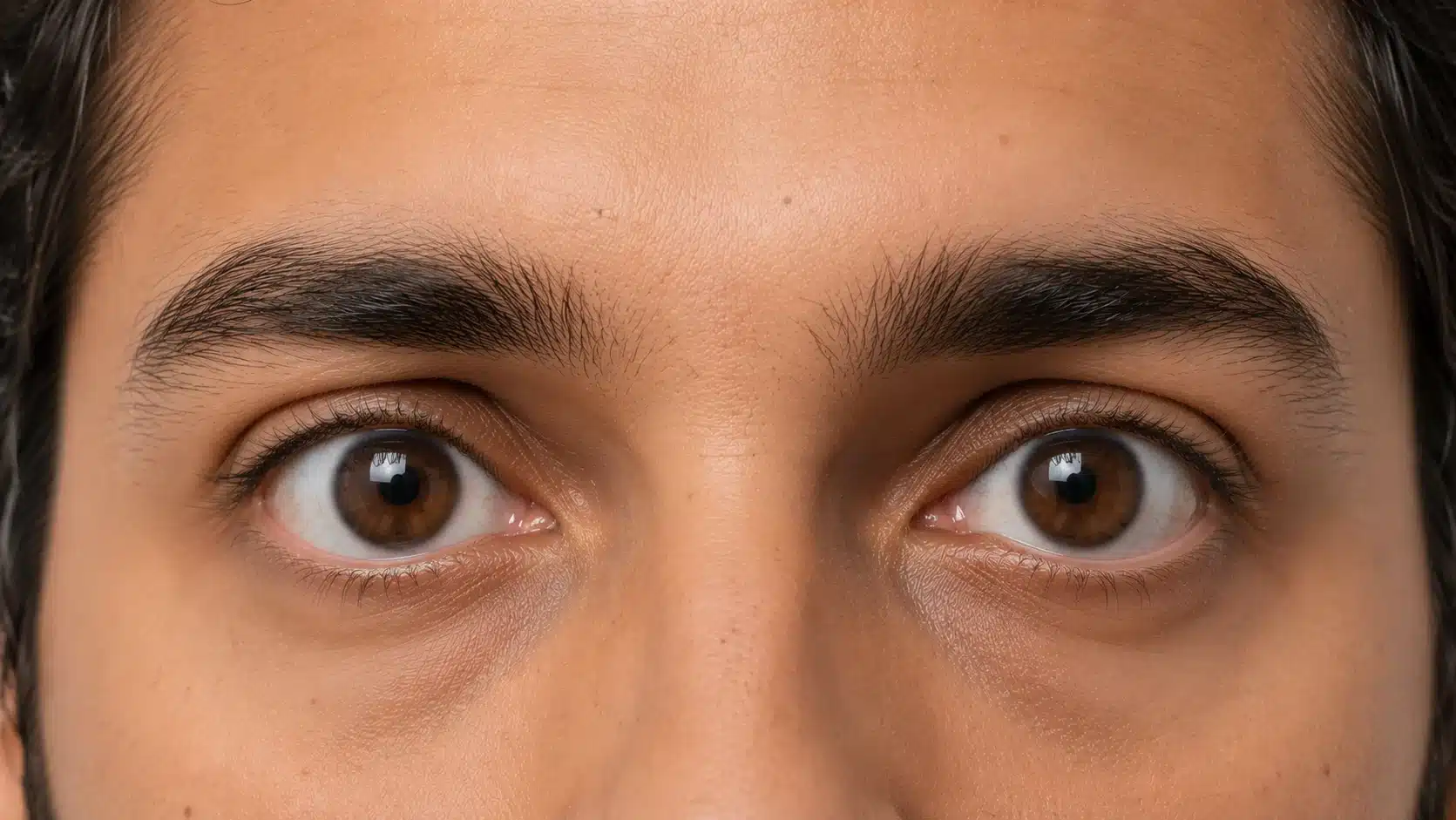
Protruding eyes sit forward, extending slightly beyond the brow bone and socket line.
This differs from round eyes in one key way.
Round eyes stay wide but sit at a normal depth. Protruding eyes push outward instead, making them more noticeable from the side.
9. Wide-Set Eyes
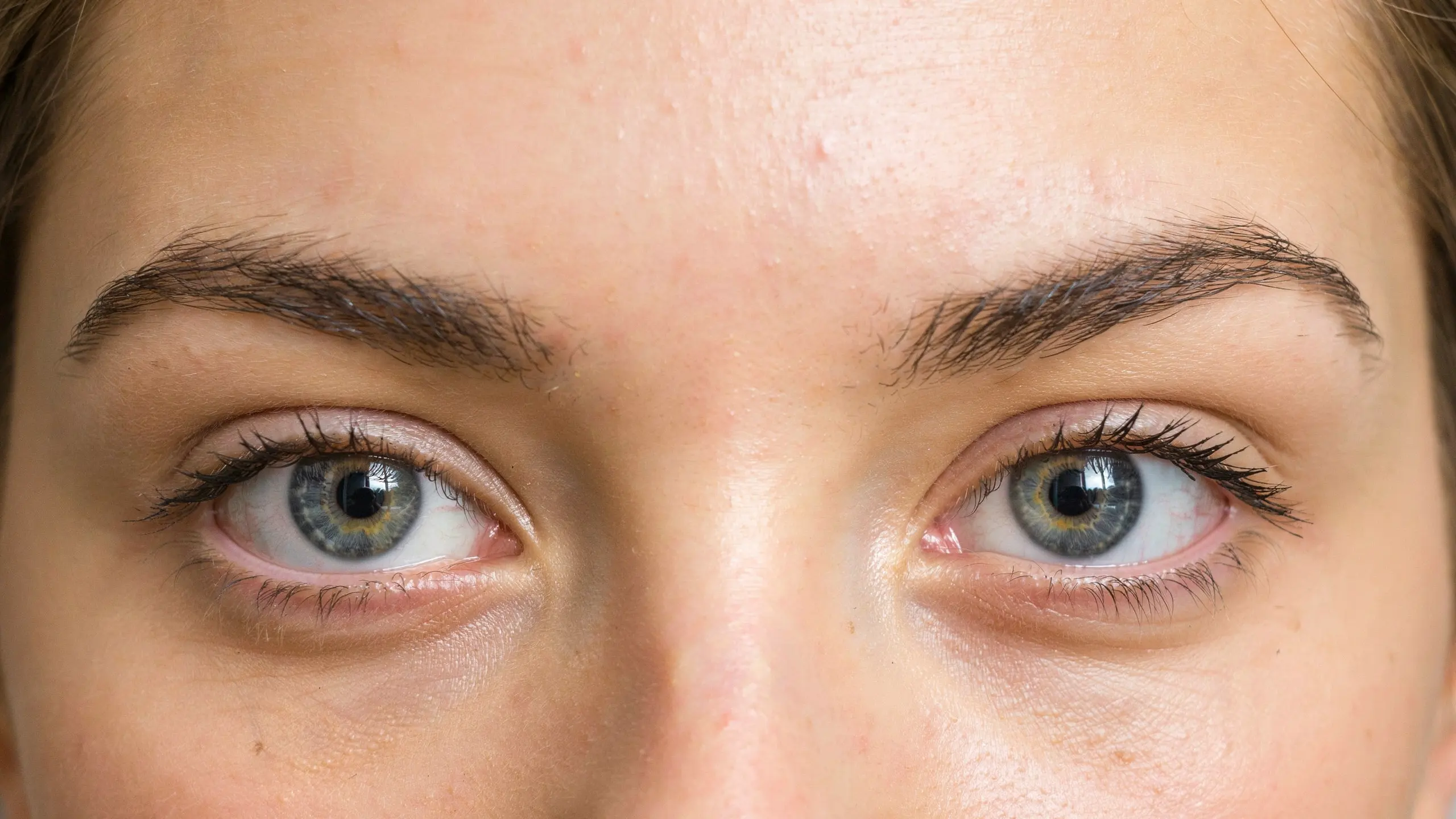
Wide-set eyes have more space between them than the average width of one eye.
This spacing changes how makeup gets applied.
Shadow and liner often get pulled slightly toward the center, which helps balance the extra space out.
10. Close-Set Eyes
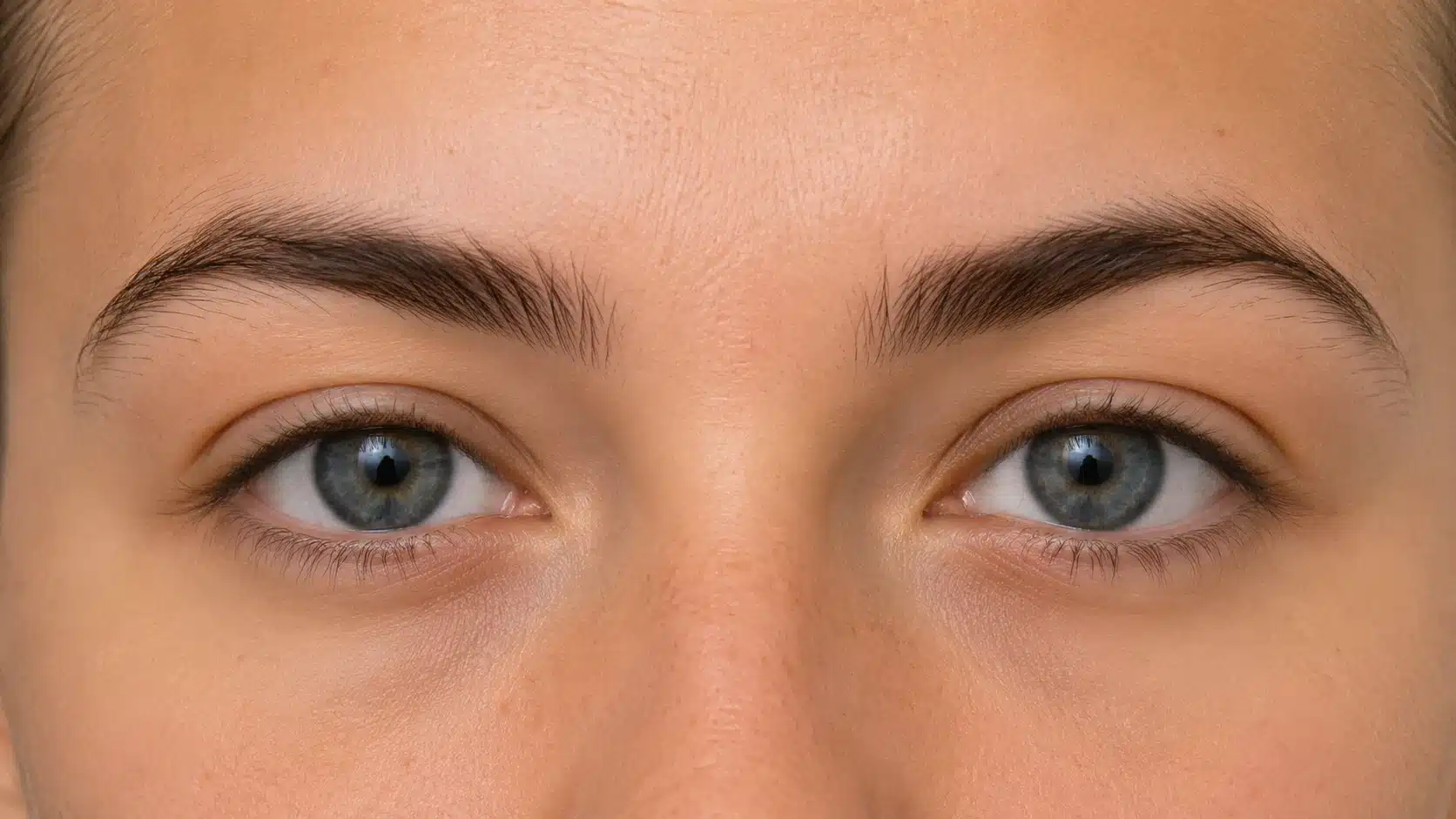
Close-set eyes sit closer together, with less than one eye-width of space between them.
Liner and shadow techniques for this shape usually push color outward. This creates the appearance of more space between the eyes.
Eye Shape Comparison Chart: Quick Overview
| Eye Shape | Key Feature | How to Spot It | Best Styling Tip |
|---|---|---|---|
| Almond | Tapered corners | Iris touches top and bottom lid | Works with most makeup styles |
| Round | Wide, circular outline | White space above and below iris | Elongated liner balances shape |
| Hooded | Covered crease | Extra skin hides fold | Cream shadow shows up better than powder |
| Monolid | No visible crease | Flat, smooth lid surface | Holds bold shadow well |
| Upturned | Lifted outer corner | Outer corner sits higher than inner | Minimal winging needed |
| Downturned | Dropped outer corner | Outer corner sits lower than inner | Upward-angled liner lifts corners |
| Deep-Set | Recessed placement | Prominent brow bone casts shadow | Light shades bring eyes forward |
| Protruding | Forward placement | Eyes extend past brow bone | Matte shades reduce prominence |
| Wide-Set | Extra space between eyes | More than one eye-width apart | Center-focused shadow balances gap |
| Close-Set | Minimal space between eyes | Less than one eye-width apart | Outward-pulled liner adds space |
How to Identify Your Eye Shape Step by Step
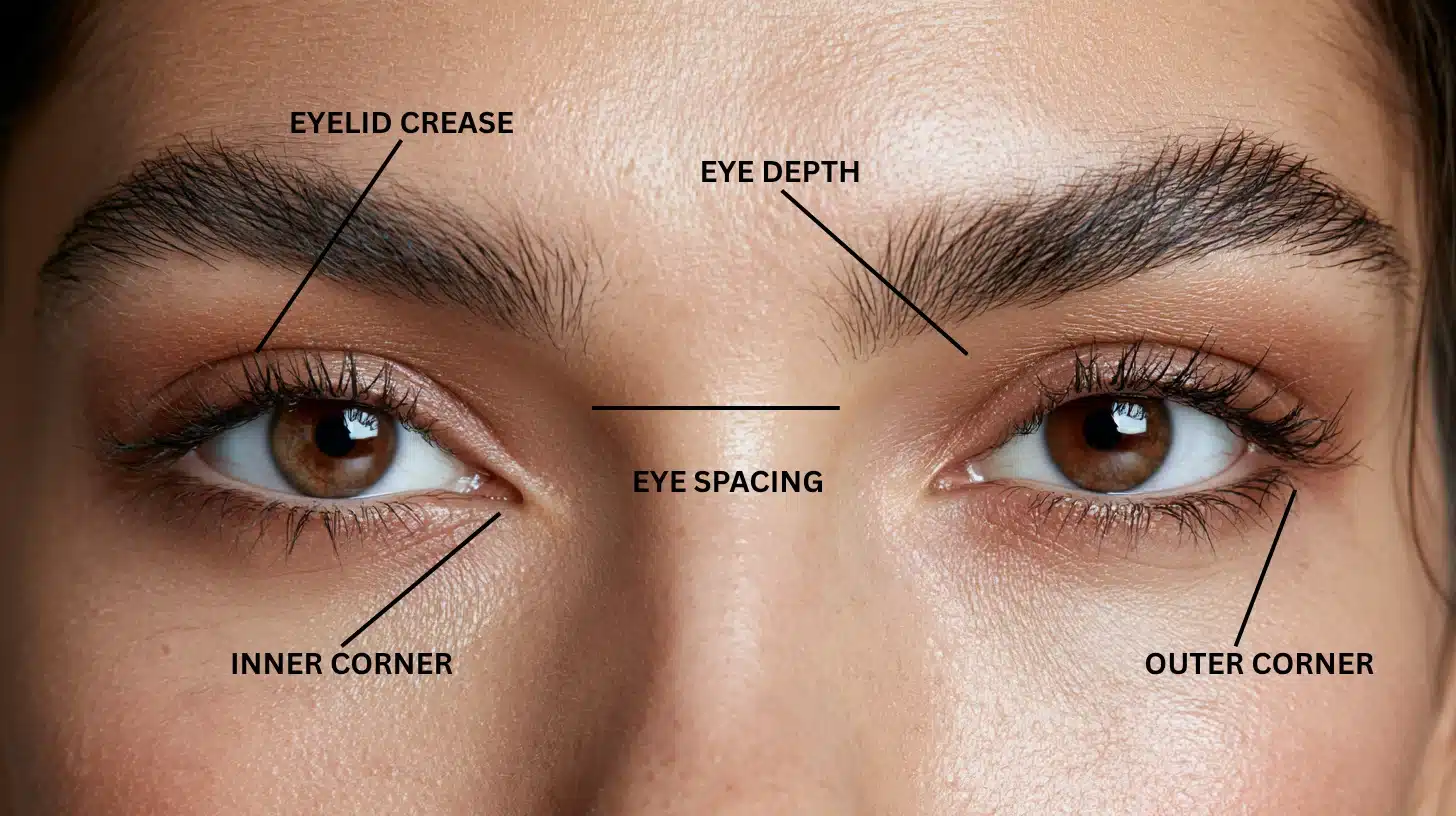
Figuring out your eye shape doesn’t take special tools. It just takes a mirror and a few minutes. Follow these steps in order for the clearest results.
Step 1: Look Straight into a Mirror
Start by facing a mirror directly. Keep your head level, not tilted up or down.
Relax your face completely. Don’t raise your eyebrows or squint. A natural, neutral expression gives the most accurate picture.
Look at the overall outline of your eyes. Notice the general shape before checking any smaller details.
Step 2: Check the Iris Visibility
Next, look closely at your iris, the colored part of your eye.
Can you see white space above it? What about below it? Or does the iris touch both your top and bottom lids?
This detail reveals a lot. Round eyes show more white space around the iris. Almond eyes usually show the iris touching both lids.
Step 3: Examine the Eyelid Crease
Now shift focus to your eyelid. Look for a visible fold or crease line.
A clear, visible crease often points to almond or round eyes.
A crease that’s hidden under extra skin suggests hooded eyes, and if no crease at all? That’s a monolid. Some also have a double eyelid, which shows two visible fold lines instead of one.
Step 4: Compare the Inner and Outer Corners
Look at where your outer corner sits compared to your inner corner. If the outer corner is higher, that points to upturned eyes.
And if it is lower, that suggests downturned eyes.
Step 5: Notice Eye Depth
Pay attention to how far your eyes sit within the socket. If they sit further back, with a noticeable brow bone above them, that’s a sign of deep-set eyes.
And if they sit forward instead, extending slightly past the brow bone, that points to protruding eyes.
Step 6: Compare with Multiple Reference Images
Finally, compare your eyes with several reference photos, not just one.
A single image can be misleading. Lighting, angle, and expression all affect how eyes appear.
Looking at multiple examples of each shape improves accuracy. It also helps confirm your findings from the earlier steps.
Identifying Your Eye Shape Using AI Tools
An AI assistant can study a photo and describe your eye shape within seconds. Know how the process works, step by step.
Step 1: Take a Clear Photo
Natural daylight works best, so stand near a window if possible. Face the camera straight on, without tilting your head.
Pull your hair back fully so both eyes are visible.
Remove glasses and heavy makeup for a clean, natural view.
Step 2: Open an AI Assistant
Choose an AI assistant that can read and understand images, such as Claude or ChatGPT. Open the app or website and start a new chat.
Make sure you are logged in, since some tools need an account to upload photos.
Step 3: Upload the Photo and Ask a Clear Question
Upload your photo directly into the chat window. Then type a clear question, such as, “Can you tell me my eye shape from this photo?”
Being specific helps the AI give a more accurate answer.
Step 4: Read the AI’s Answer Carefully
The assistant will name your eye shape, such as almond, round, hooded, or downturned. It may also explain why it chose that shape, based on things like eyelid space or corner angle.
Read this part closely, since it adds useful context.
Step 5: Confirm the Result With a Mirror
Stand in front of a mirror and check your eyes closely. Compare what you see with the AI’s answer. This step helps confirm the result and builds your confidence in it.
Doe Eyes vs Siren Eyes
Doe eyes and siren eyes sit at opposite ends of the eye shape spectrum.
Doe eyes are round and wide, with plenty of eyelid space on show. The corners sit level or dip slightly, giving a soft, innocent look, much like a deer’s eyes.
Siren eyes are narrow and stretched out, with outer corners that lift upward.
The eyelid often looks slanted rather than rounded.
This upward tilt gives siren eyes a bold, lifted look, which is why people often call this shape a cat eye or fox eye.
Why Knowing Your Eye Shape is Useful?
Knowing your eye shape isn’t just a fun fact. It helps you make smarter choices. Makeup, glasses, even photos all of it connects back to shape.
Choosing Flattering Makeup Techniques
Eyeshadow and liner look different depending on shape. Knowing your shape saves time. You skip techniques that don’t suit you and focus on ones that do.
Cream shadows show up better on hooded lids, and powder shadows work well on almond eyes.
Eyeglass Frame Selection
Frame shape matters more than people think. The right frame balances your features. Round eyes often pair well with angular frames, and downturned eyes suit frames with a slight upward angle.
Knowing your shape narrows the choices fast.
Styling Tips for Photos and Portraits
Posing for photos also connects to eye shape. Certain angles bring out specific shapes better than others. Deep-set eyes photograph well with soft, direct lighting.
Protruding eyes look best with side lighting.
Wrapping Up
Spotting eye shapes like almond, hooded, round, or downturned now takes just a quick mirror check.
Makeup, glasses, and hairstyles get easier once the shape is clear.
With these steps and shape names in hand, choosing the right techniques becomes simple. Anyone can now identify their shape and style with confidence.
Frequently Asked Questions (FAQs)
1. Can Your Eye Shape Change Over Time?
Yes, slightly. Aging and weight changes can shift the area around the eyes. Genetics still matter most. Minor changes are common after forty.
2. Do Both Eyes Always Match in Shape?
Not always. Small differences are common and usually unnoticeable. Noticeable gaps are worth mentioning to a doctor.
3. Does Eye Shape Differ by Ethnicity?
Yes. Monolids are common among East Asian groups. Deep-set eyes appear more in some European populations. Variation still exists within groups.