
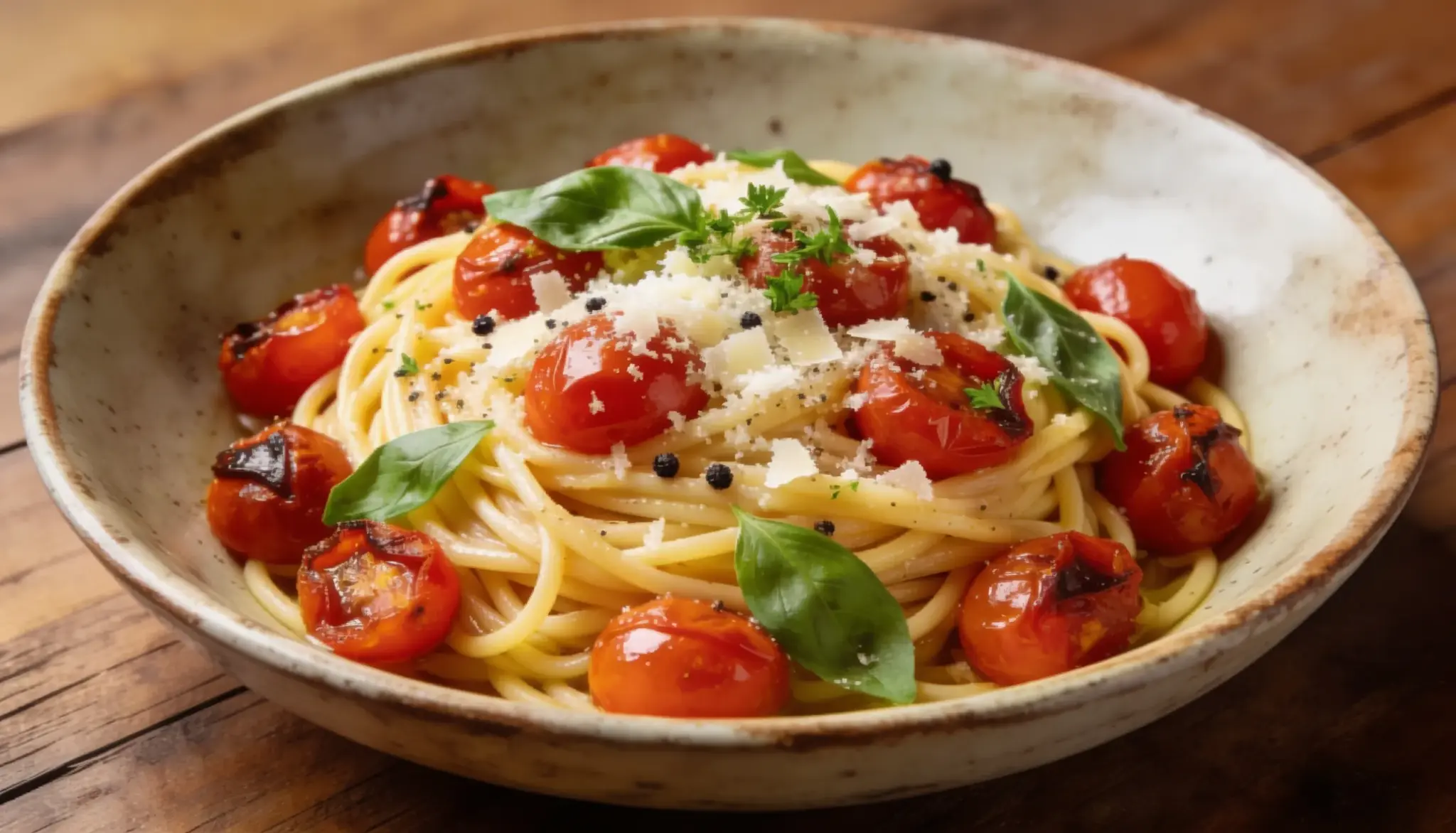

Tomato pasta with roasted cherry tomatoes turns simple ingredients into a rich, sweet dish.
The tomatoes roast low and slow first.
The heat pulls out the sugar from the tomatoes and turns them soft and jammy. That sauce gets tossed with hot pasta, good cheese, and torn basil. And in under an hour, this pasta tastes like it took all day.
People reach for this dish again and again once tomato season hits. It’s simple enough for a weeknight and good enough for guests.
What You’ll Need for This Recipe
Prep Time: 10 minutes Cook Time: 30 minutes Total Time: 40 minutes Serves: 4 Difficulty: Easy
- 2 lbs cherry tomatoes, halved (grape or Roma tomatoes work too)
- 4 tbsp olive oil, divided
- 4 garlic cloves, smashed
- 1 tsp salt, plus more for pasta water
- ½ tsp black pepper
- 1 tsp dried oregano
- 12 oz short pasta, such as penne or fusilli
- ¼ cup grated Parmesan, plus more to serve
- ¼ cup fresh basil, torn
- Pinch of red pepper flakes (optional)
How to Make Roasted Tomato Pasta, Step by Step?
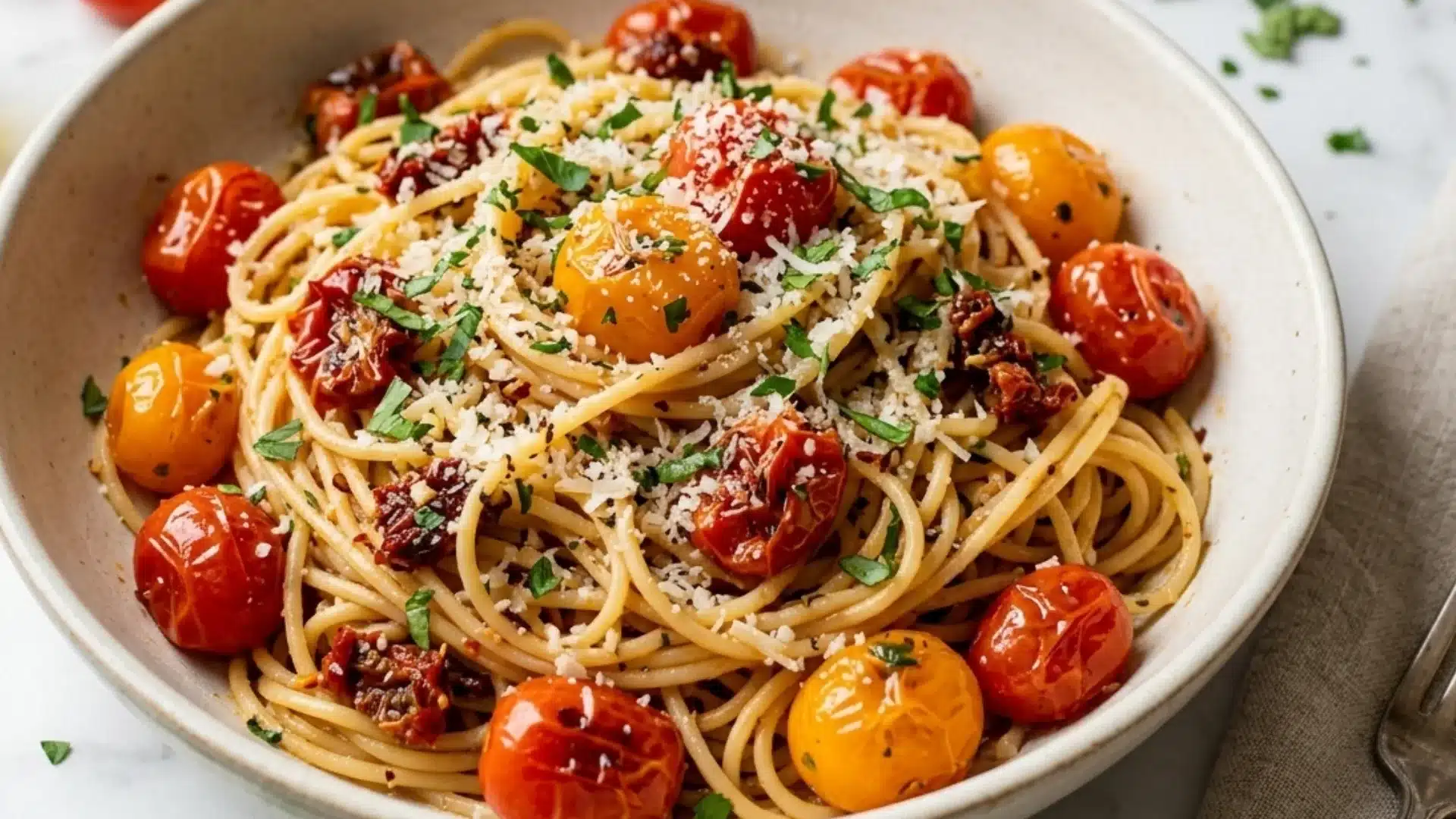
This method involves two procedures in this recipe: roasting the tomatoes and cooking the pasta. The timing is important even if neither process takes much time.
Use the following order to get the finest flavor and texture in each bite.
1. Get the Pan Ready and Preheat the Oven
Preheat the oven with the rack in the center to 400°F (200°C). The tomatoes toast rather than burn on one side because the central tier provides uniform heat.
Additionally, you should wait until it is completely heated before adding the tomatoes.
The tomatoes will be mushy rather than caramelized and will steam rather than roast in a cold or partially heated oven.
2. Add Oil and Garlic to the Tomatoes.
Arrange half the tomatoes on a baking pan. Add the oregano, salt, pepper, three tablespoons of olive oil, and smashed garlic.
To ensure that every piece is evenly covered, toss everything by hand. Here, hands are more effective than a spoon since they can reach every tomato without damaging them.
3. Use a Single Layer for Everything
With a small gap between each piece, arrange the tomatoes and garlic in a single, uniform layer.
The main cause of watery roasted tomatoes is overcrowding the pan.
When tomatoes touch or overlap, they trap steam instead of releasing it, and that steam is what keeps the caramelized edge from forming.
4. Roast Until Tender and Slightly Charred.
For 25 to 30 minutes, roast. When the tomatoes appear soft, wrinkled, and have a hint of char around the edges, they are ripe. Instead of being bitter, the garlic should smell pleasant and nutty.
There’s a smell check here too. It should start smelling sweet and a little caramelized. A sharp, acidic smell partway through usually means the pan needs another few minutes meaning the sugars haven’t broken down yet.
If the pieces appear done sooner than anticipated, remove the pan a few minutes early since very small tomatoes cook more quickly.
For a detailed recipe on how to roast tomatoes perfectly, click here.
5. While the Tomatoes Roast, Boil the Pasta.
Bring a big pot of water to a boil and add enough salt to make it taste like the sea.
Once the roasting process has begun, add the pasta so that both portions finish at around the same time.
Don’t start the pasta the second the tomatoes go in the oven. Wait until the tomatoes have about 15 minutes left to roast, then get the pasta water going.
To prevent overcooking, check a minute before the package time and cook until it becomes firm.
6. Before Draining, Save Some Pasta Water.
Remove half a cup of the starchy cooking water and set it aside before draining. Later on, the sauce sticks to the pasta because of this water.
Additionally, after draining, do not rinse. The starch that was recently conserved for the sauce is removed by rinsing.
7. Mash the Tomatoes to Make a Thick Sauce.
Over low heat, add the roasted tomatoes, garlic, and all of their pan juices to the pasta pot that has been emptied. Use a fork or spoon to gently mash.
A few whole tomato chunks should be evident because texture, not a perfect purée, is the key objective.
8. Add the Pasta to the Sauce.
Re-add the drained pasta to the pot. Add a little of the pasta water that was set aside and stir in the remaining tablespoon of olive oil.
Continue tossing until all of the pasta is uniformly coated with sauce.
9. Modify the Sauce and Add the Cheese.
Add the grated Parmesan and stir until it melts completely.
One spoonful at a time, add more of the pasta water that was set aside if the sauce appears dry or tight until it returns to a smooth consistency.
10. Add the Basil and Serve.
If desired, sprinkle some red pepper flakes and torn basil on top. Serve right now, accompanied by more Parmesan.
When the sauce is still warm and shiny, this dish is best served straight off the stove.
Pro Cooking Tips for This Sauce
A few small adjustments can fix most common issues that come with this recipe. These come up often, along with simple tips to get better results every time.
- Sauce Too Watery: Simmer it a little longer over low heat, or stir in a spoonful of tomato paste to thicken it.
- Tomatoes Came Out Bland: This usually means they weren’t ripe enough. A small pinch of sugar can be added before roasting to help bring back sweetness.
- Pasta Turned Mushy: The pasta likely sat in the sauce too long after cooking. Toss it only when the sauce is ready to serve.
- Sauce Won’t Cling to the Pasta: This means that not enough starchy pasta water was saved. Add a splash more, a spoonful at a time, until the sauce turns glossy.
- Garlic Tastes Burnt: Garlic roasts faster than tomatoes. Smashing the cloves instead of chopping them helps them cook more evenly and reduces the risk of burning.
Tip: Let the roasted tomatoes rest for a minute or two before mashing them. This makes them easier to break down and gives a better texture.
Sum Up
This tomato pasta with roasted tomatoes turns plain tomatoes into a rich, sweet sauce with almost no effort.
Roasting brings out the flavor that a quick stovetop sauce can’t match. It comes together fast, uses one pan, and tastes far better than the short ingredient list suggests.
The method follows up even outside peak tomato season, with a pinch of sugar to balance underripe fruit.
Frequently Asked Questions
1. What Tomatoes Work Best for Roasted Tomato Pasta?
Small, sweet tomatoes work best. Cherry, grape, and Roma tomatoes all roast well, but they hold their sweetness and don’t turn watery.
2. Can Roasted Tomato Pasta Be Made Ahead of Time?
Yes. The tomatoes can be roasted up to two days ahead and kept in the fridge. Reheat them gently in a pan before tossing with fresh, hot pasta.
3. Can Canned Tomatoes Be Used Instead of Fresh?
Yes, but Canned tomatoes work in a pinch; they won’t roast the same way. Drain them well first, then roast for about 15 minutes, since they’re already soft.