

You don’t need a complete renovation of your porch.
A $45 rug, a set of string lights, and one oversized planter can do more for a porch than a full remodel does.
The porch ideas below show exactly where that money and effort should go.
What are the Four Primary Types of Porches?
First, knowing what types there are and which criteria your porch fits under is a smart step.
It’s necessary, as the type you have shapes what you can do with it: how much furniture fits, how much weather protection you get, and how far you can take the décor.
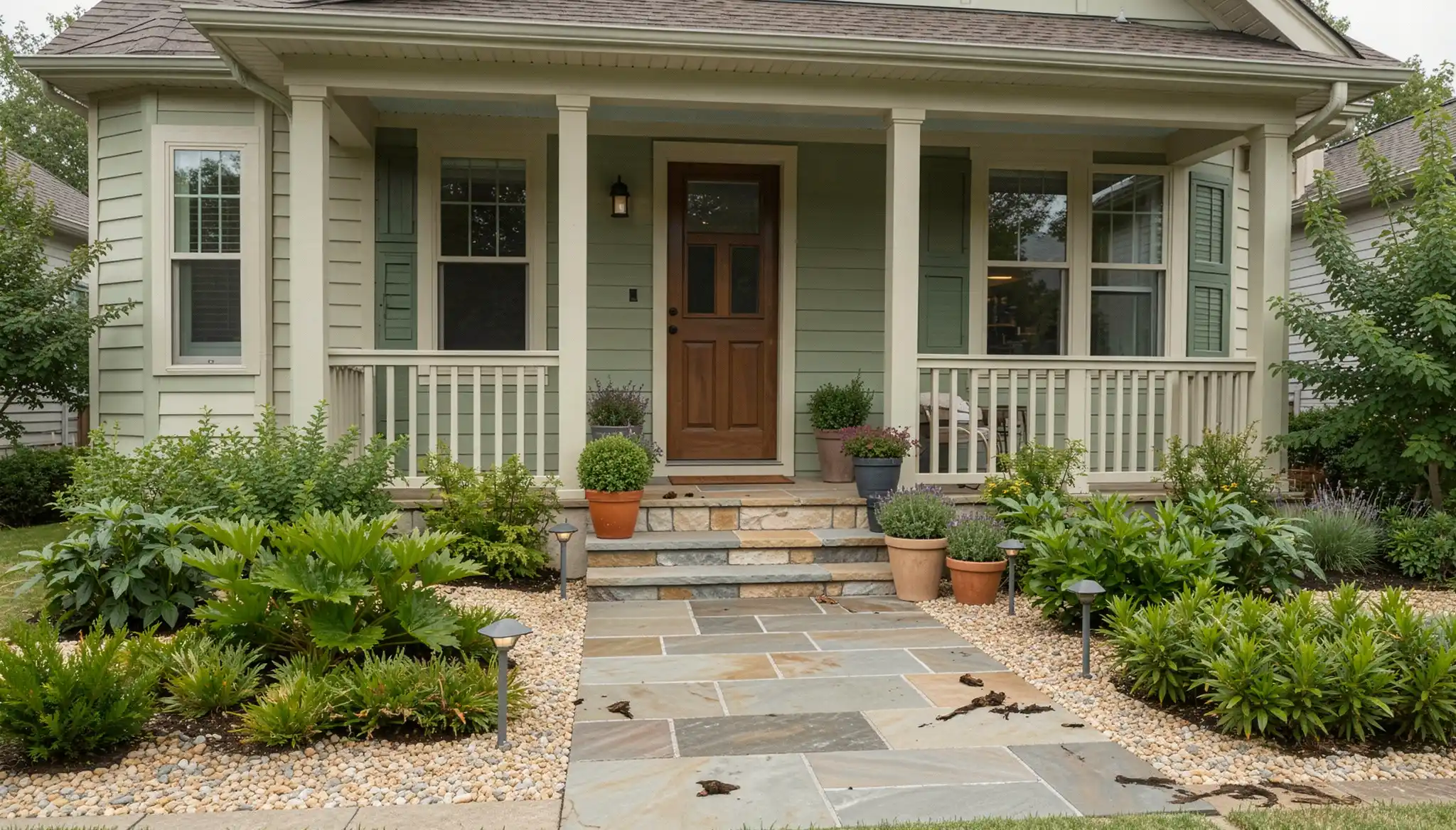
- Front Porch: Attached to the home’s entrance and fully or partially covered. It faces the street, frames your front door, and sets the first impression of your home’s exterior.
- Wraparound Porch: Extends along two or more sides of the house. It offers more usable square footage, better airflow, and the flexibility to create distinct seating zones.
- Screened Porch:Enclosed with mesh screening on all open sides. It keeps bugs and debris out while letting air in, making it usable through warmer months without the need for fans.
- Back Porch: Sits at the rear of the home, typically off the kitchen or living room. It offers more privacy than a front porch.
What Turns a Porch Into an Outdoor Living Room?
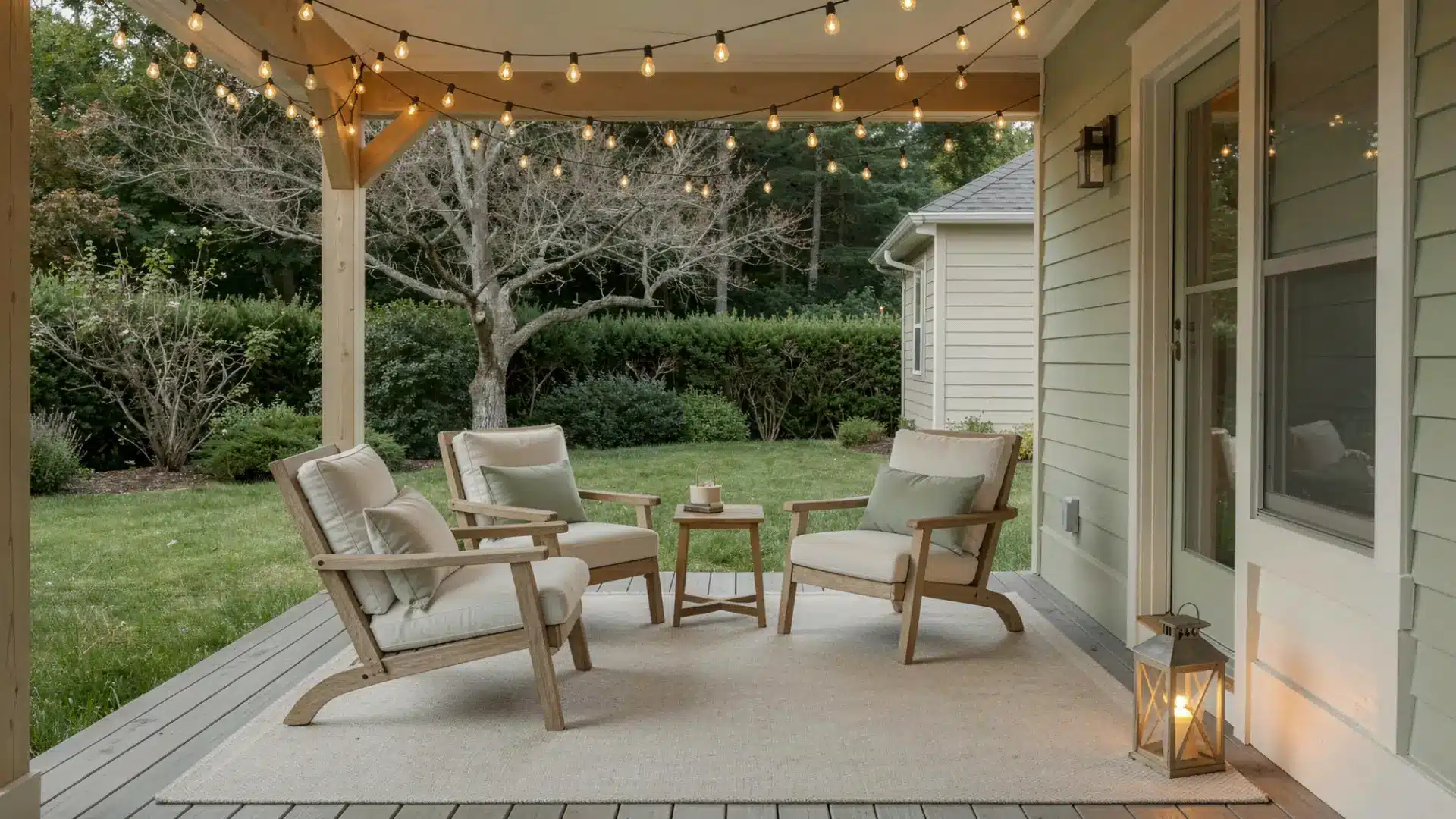
A porch becomes an outdoor living room when it becomes a place you can chill at, rather than just a pathway to the main door.
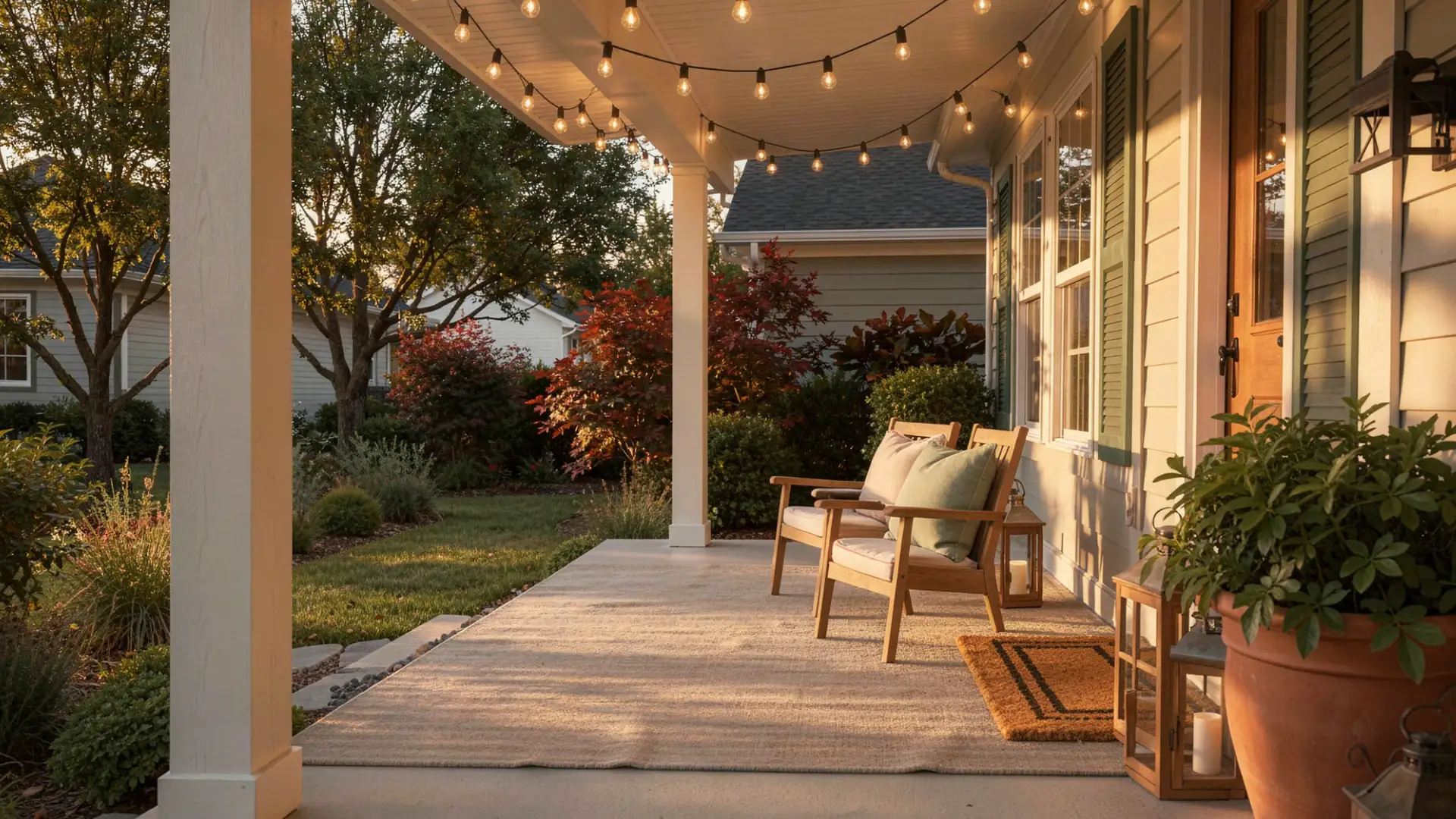
Think of a defined floor. An outdoor rug is the most effective way to create zones; that’s the first step.
Next comes the seating.
The one that always faces out, not the door. Angle them outward at roughly 45 degrees, and you’ll have a space you want to sit in rather than pass through.
And last but not least, layered lighting.
Using string lights or a battery-powered lantern is a small addition that makes the space inviting.
The best choice for string lights is the Brightech Ambience Pro outdoor edison string lights, which are rated best for wet conditions.
Which Porch Style Fits Your Home?
Choosing a porch style does not always come down to going with what’s trending, but to the elements that work with the architecture you already have.
And different home styles fit different porch styles.
Traditional craftsmen and colonial homes benefit from classic touches such as dark-painted wood furniture and simple lantern-style lighting.
Contemporary and mid-century homes look best with streamlined furniture, modern materials, and clean-lined planters.
Cottage and Victorian homes, on the other hand, can handle more texture and layering.
And for ranch and split-level homes, functionality should come first.
Storage benches, practical seating, and a restrained color palette help maximize comfort without overwhelming the porch.
6 Porch Ideas That Punch Above Their Cost
Now comes the part where you make the unbelievable believable.
Pick the one or two that fit your porch type from above, or work through all six.
1. Add an Outdoor Rug (Create Zones)
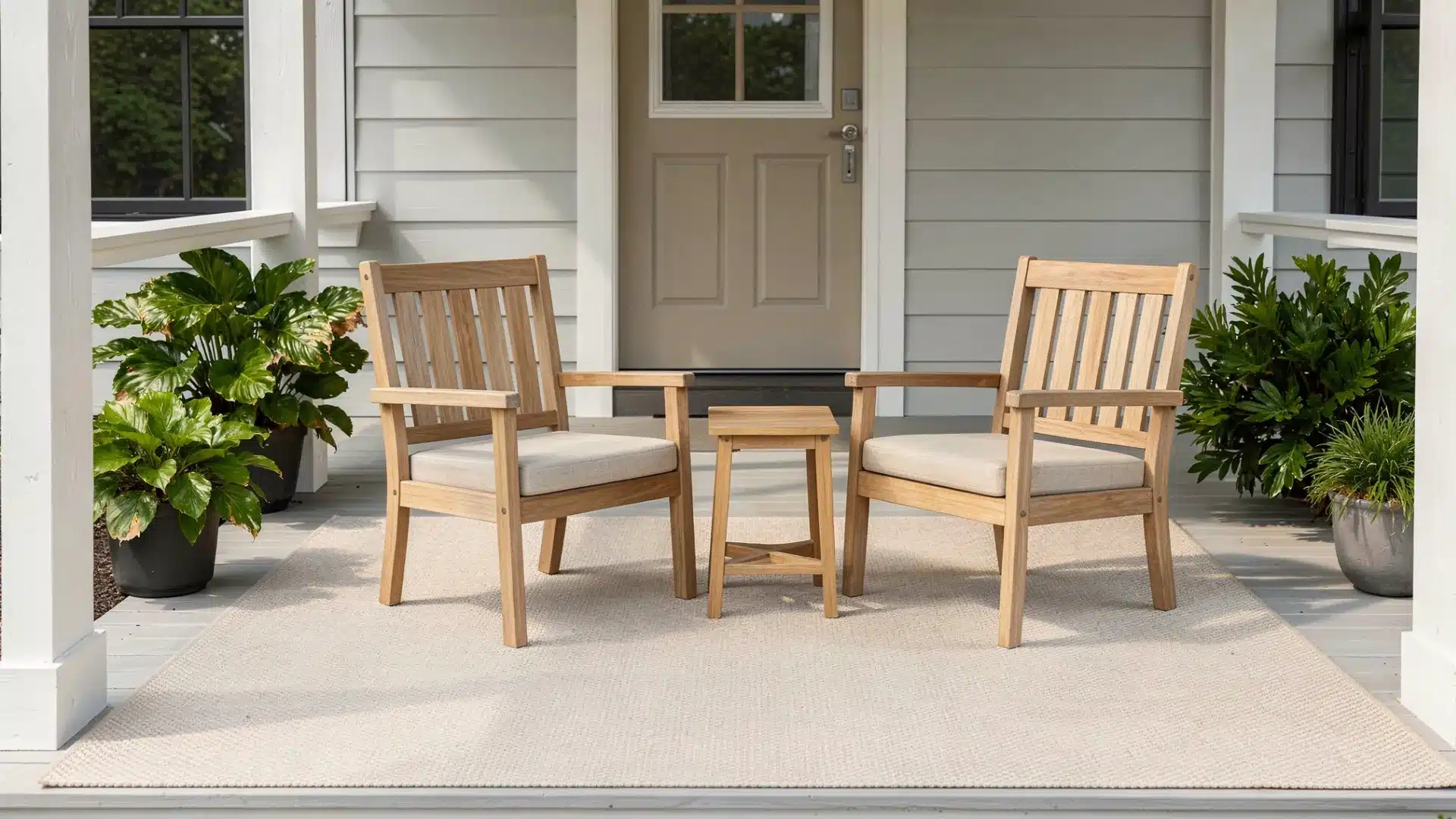
This is the lowest-effort, highest-return move on any porch.
A flat-weave polypropylene rug is a smart choice here, as it handles weather, foot traffic, and hosing down.
For reference, the Safavieh Courtyard Collection manufactures outdoor-rated options starting around $45 for a 4×6 ft size.
Measure your porch before buying. Front legs of any furniture should sit on the rug, not float off the edge.
2. Hang String Lights
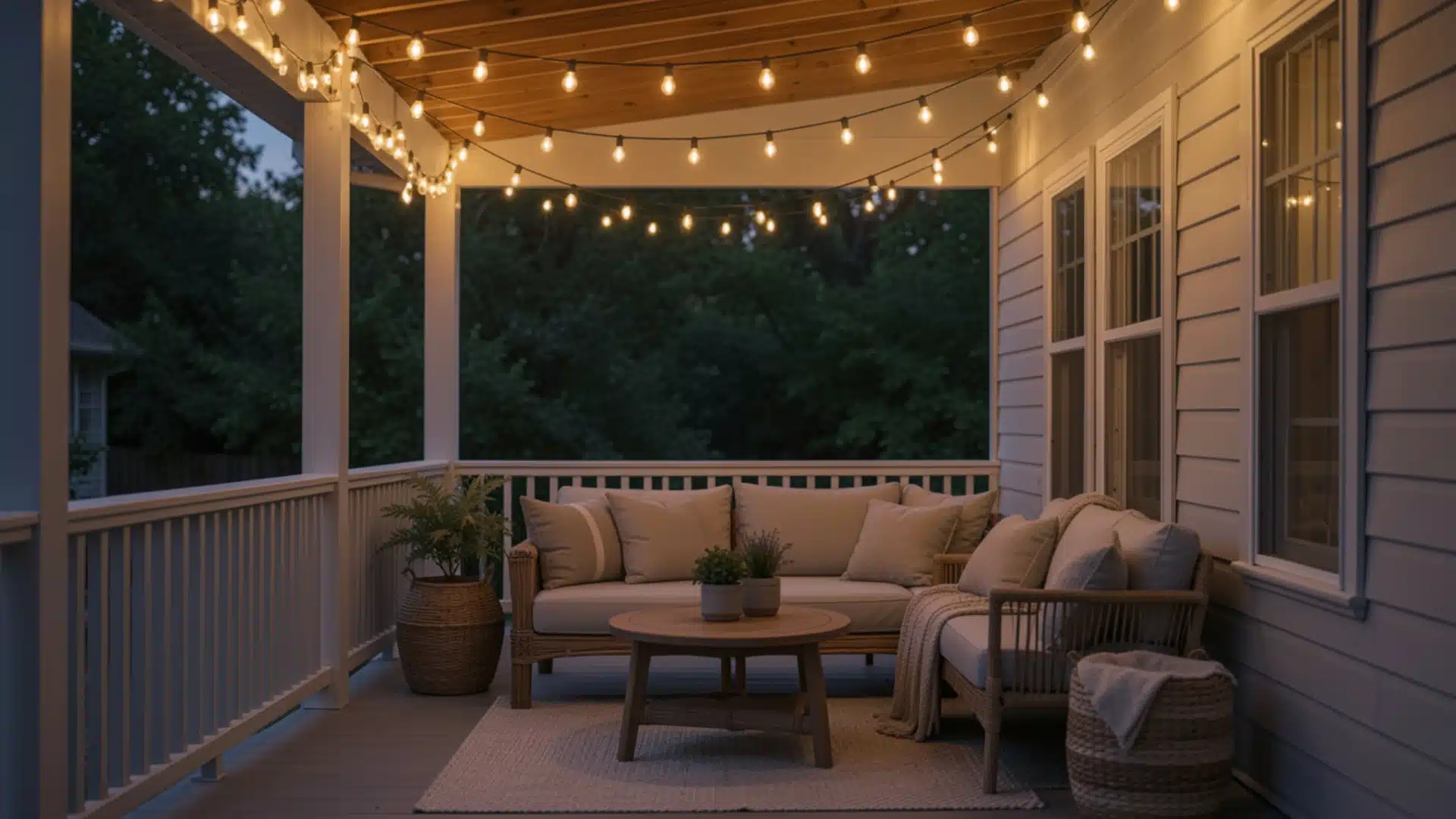
Hanging string lights between 7 and 8 ft from the floor creates an effect worth sitting to look at.
Run them parallel to the ceiling line or drape them in a loose catenary curve between two anchor points.
And remember to use outdoor-rated, weatherproof bulbs.
The Brightech Ambience Pro set includes 48 ft of cable with 15 edison-style bulbs and handles rain and temperature swings from -40°f to 140°f (-40°c to 60°c).
3. Use a Layered Mat Setup
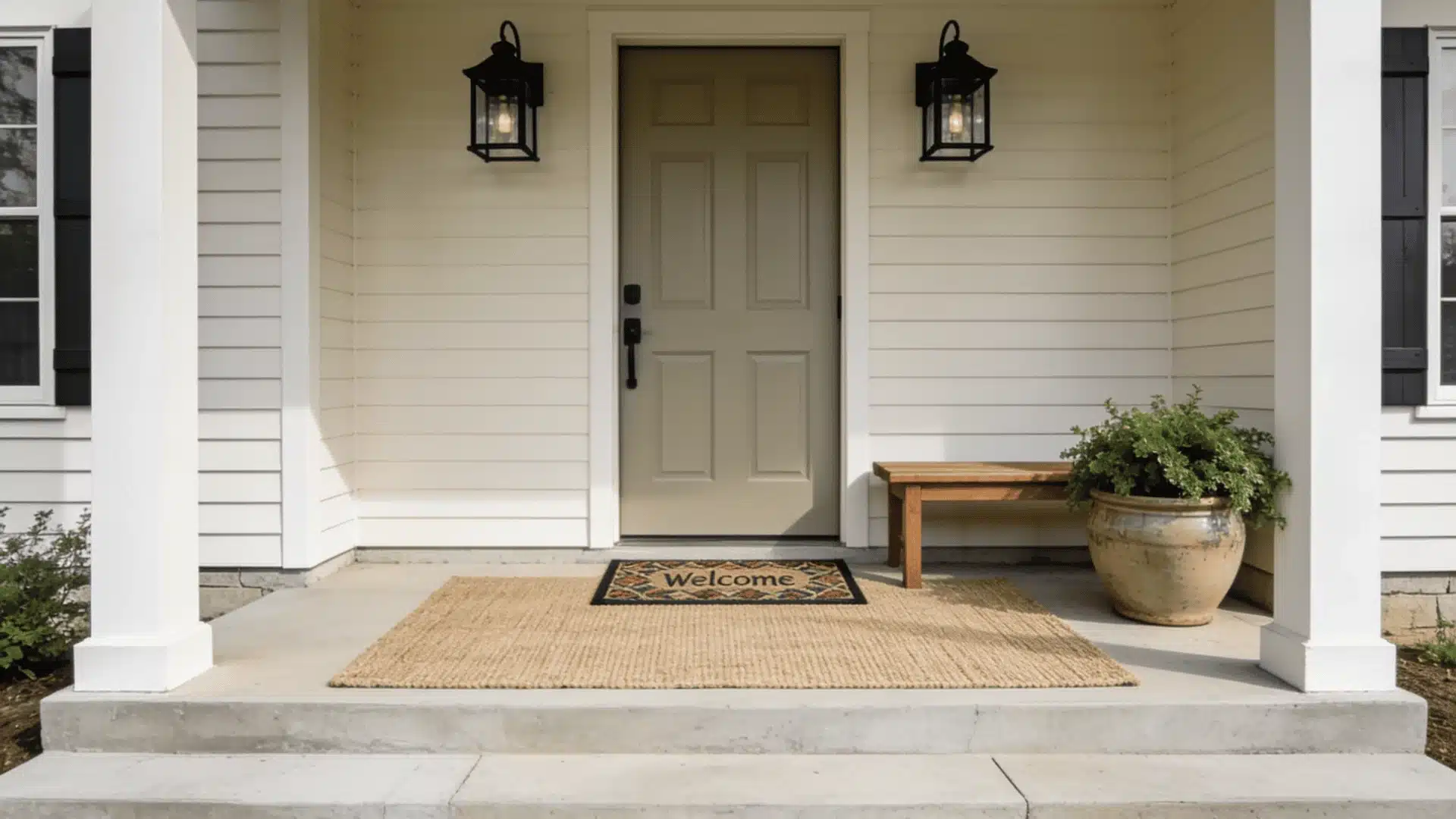
A single rubber mat reads as purely functional, but two mats are where the change happens.
A larger flat-weave base (around 24×36 in) with a smaller decorative mat centered on top instantly gives the entrance more presence.
4. Use One Large Planter, Not Three Small Ones
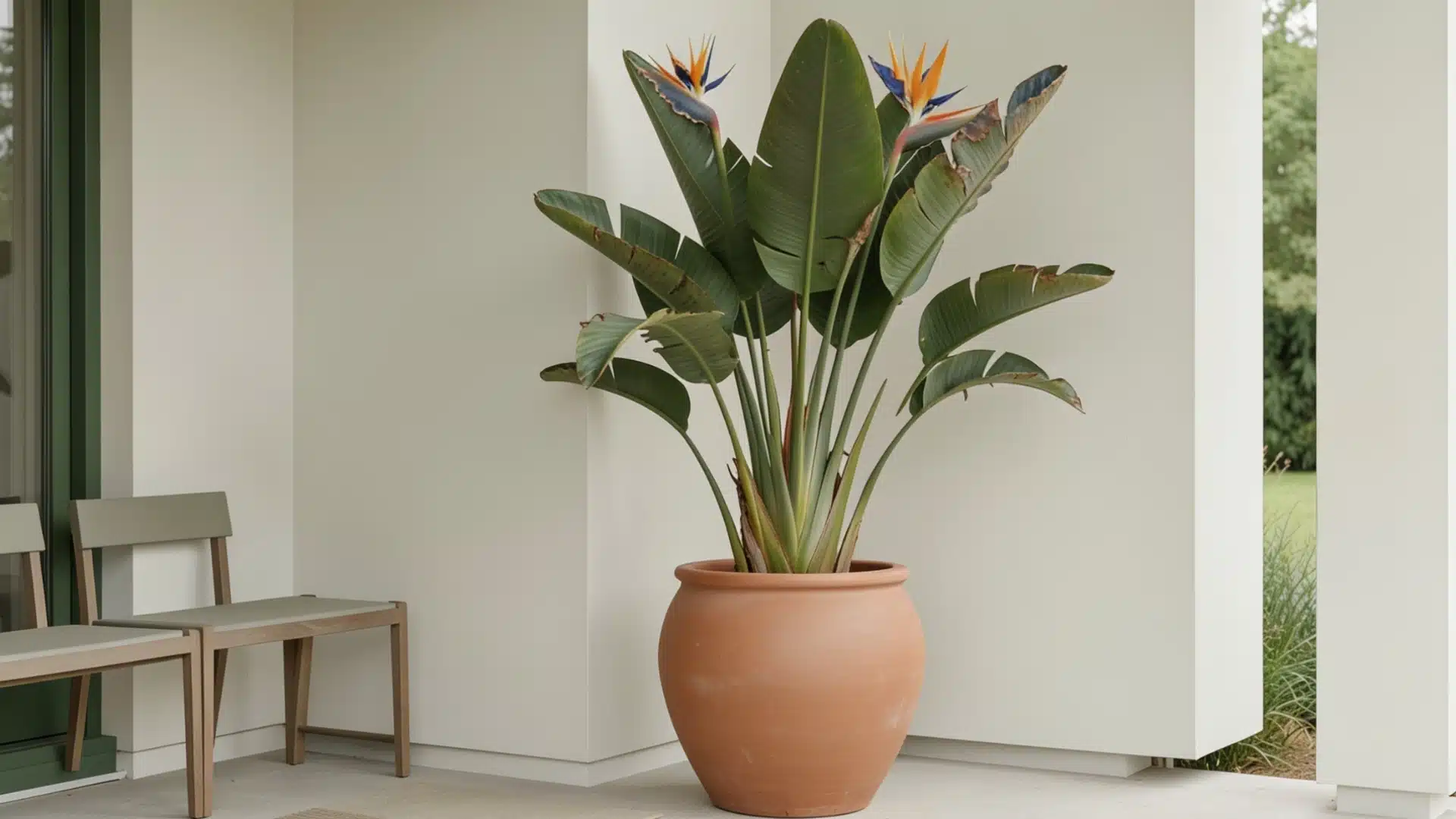
Small pots scattered around a porch create a cluttered setup that’s neither okay to sit in nor to look at.
The best move is to go for one oversized planter.
A 16-inch or 18-inch pot in terracotta, concrete, or glazed ceramic, with a bold plant like a bird of paradise (Strelitzia reginae), fits well.
According to the Royal Horticultural Society (RHS), tall grasses and architectural foliage plants in containers work particularly well in transitional outdoor spaces because they read as intentional rather than filler.
5. Install a Ceiling Fan on a Covered Porch
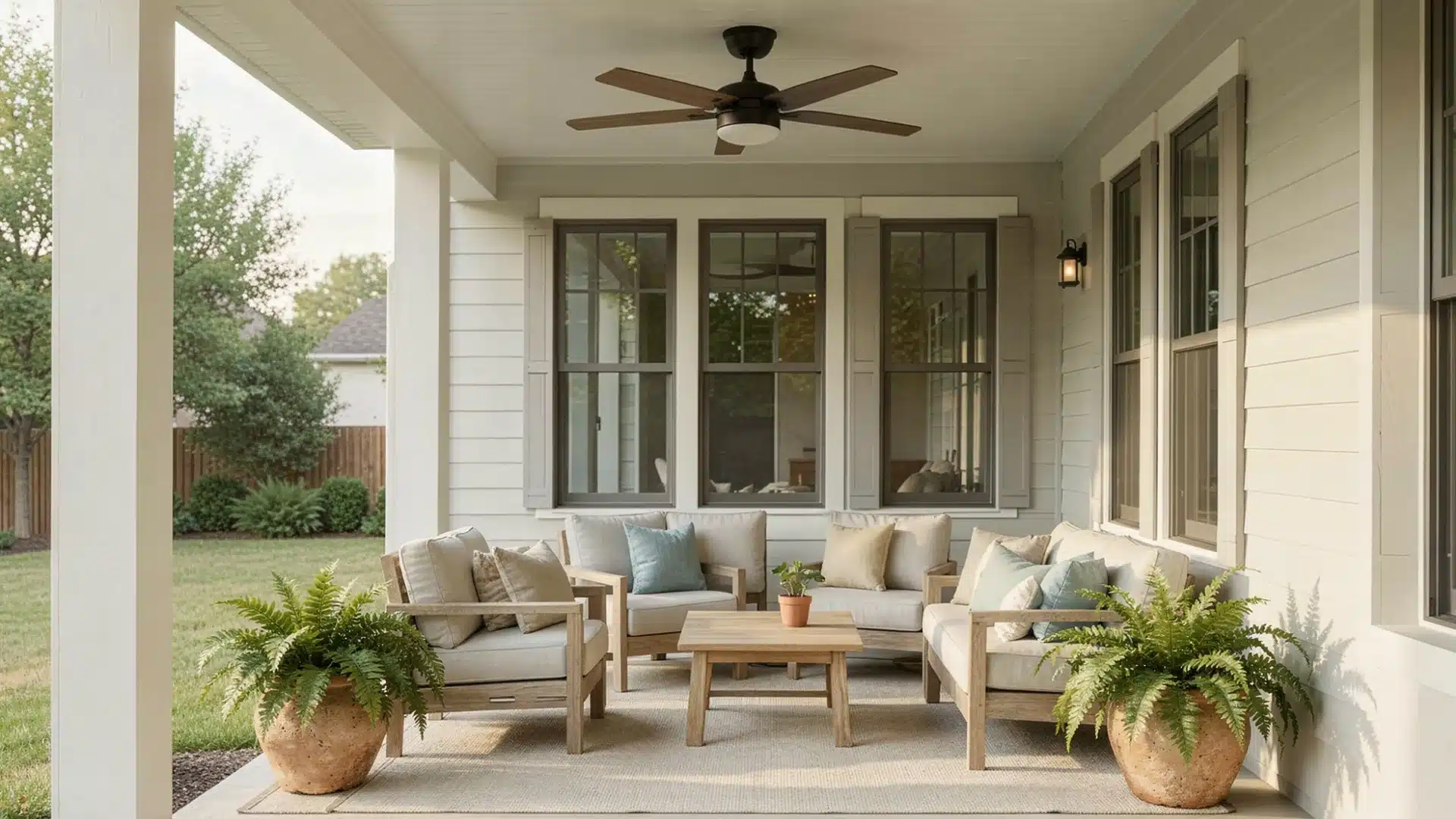
Think about the two reasons that will make you leave your porch and rush inside your house.
Heat and bugs certainly top the list.
A damp-rated ceiling fan handles both.
The Hunter Dempsey fan company sits in the $120–$180 range and is UL-rated for damp locations.
Blades should clear the floor by at least 7 ft. if your ceiling is lower than 9 ft, use a flush-mount model.
6. Add a Privacy Screen with a Climbing Plant
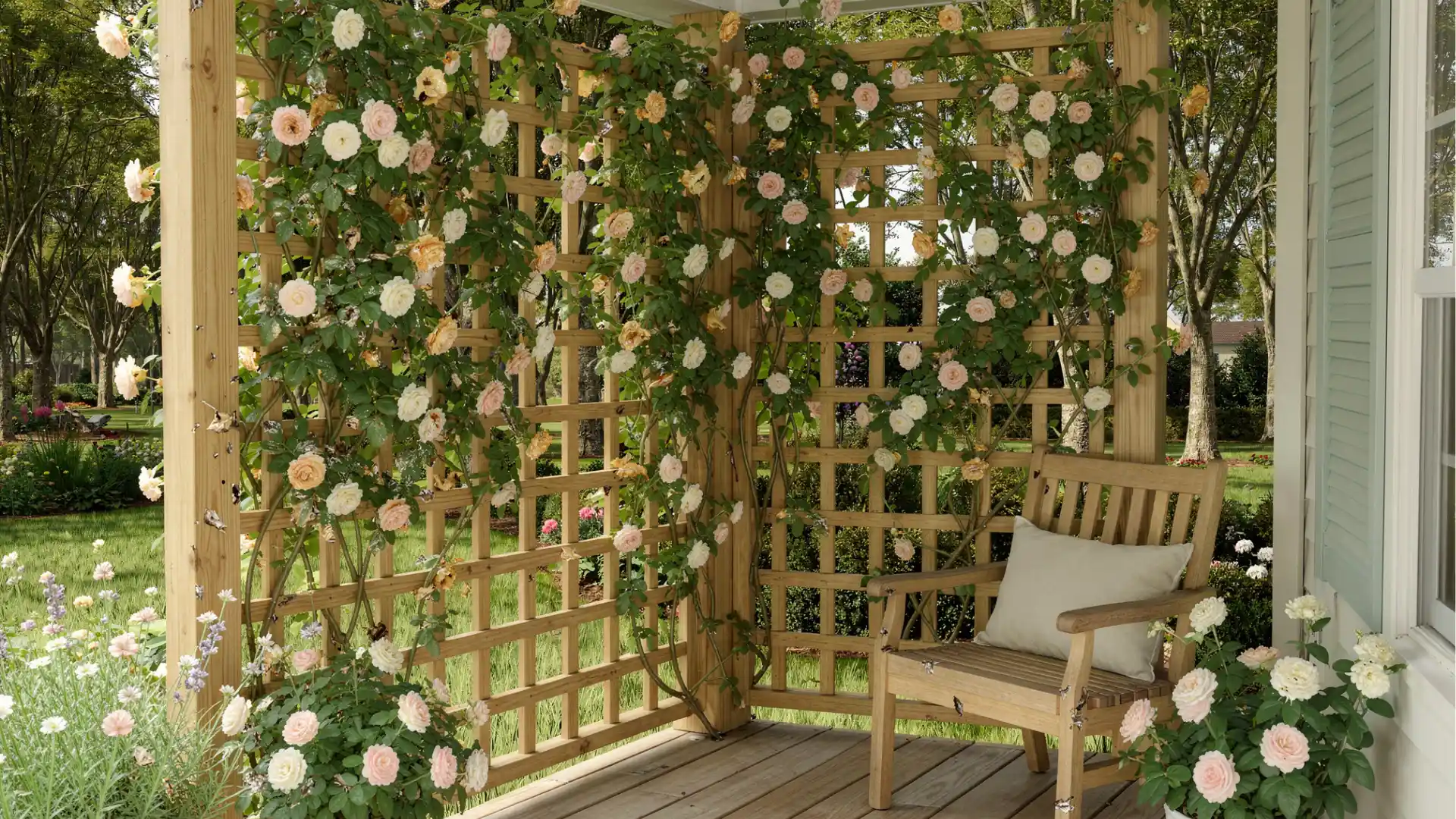
A cedar trellis panel, typically available in 4×6 ft or 4×8 ft sizes from most hardware stores, is the go-to for this.
It gives a semi-open porch a sense of enclosure without blocking airflow.
Grow a fast-climbing annual like black-eyed Susan vine (Thunbergia alata) or a perennial clematis (Clematis viticella) up the panel.
That gets you privacy plus color within one growing season.
Front Porch Decor Details Worth Getting Right
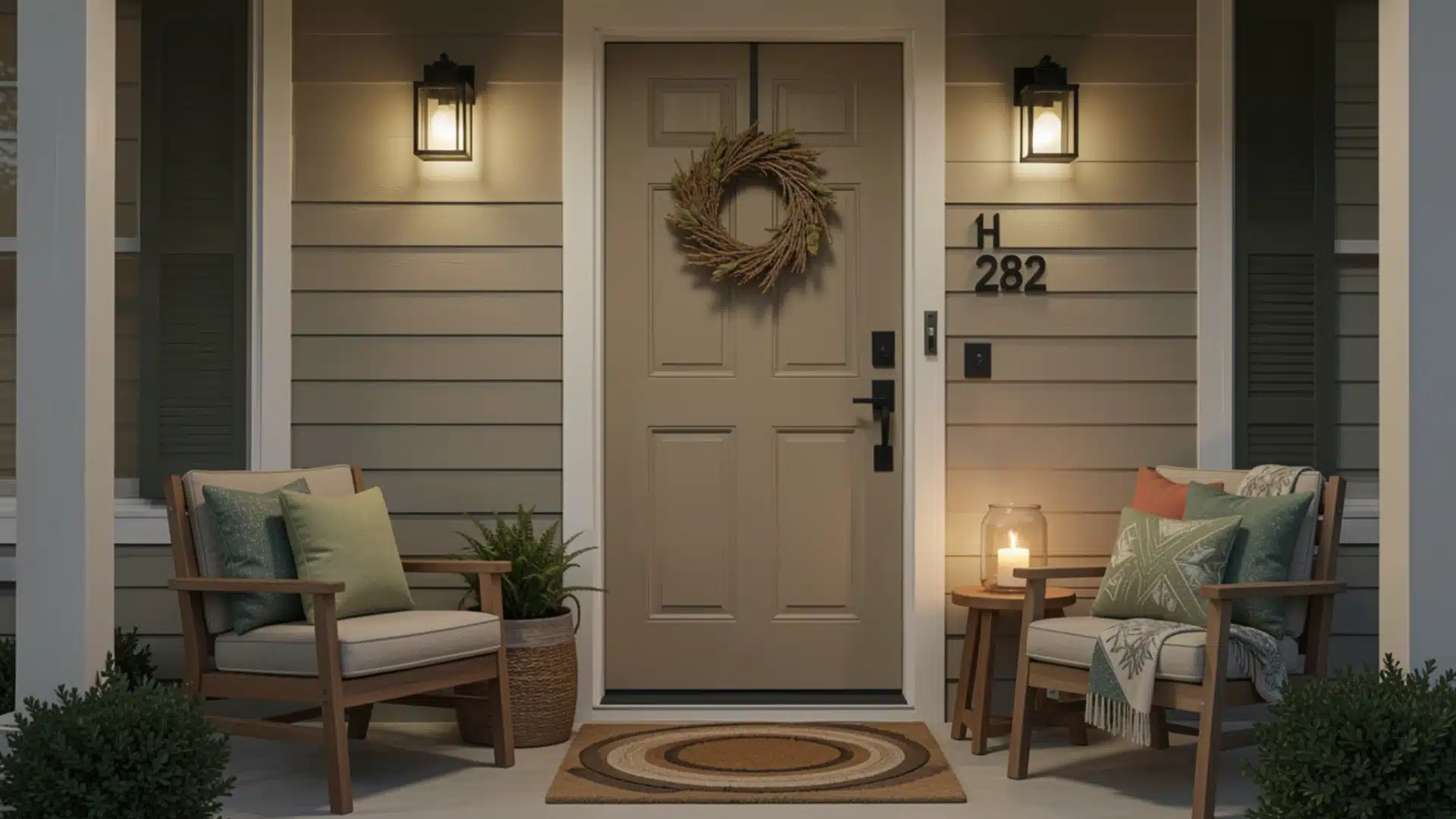
Your porch setup and style are already in place. Now it’s time to focus on the details that actually bring it to life.
These decor ideas are simple, practical, and designed to instantly improve how your front porch looks and feels without major changes or high costs
7. Use the Door as an Anchor, Not an Afterthought
Your front door is the visual center of your porch; hence, everything else should frame it.
A wreath and a consistent paint color that contrasts slightly with the surroundings create a focal point that makes the whole porch feel more pulled-together.
8. Match Your Hardware Finish Across Three Points:
Door handle, house number, and light fixture finish should match. That means all brushed nickel, all matte black, or all antique bronze.
Avoid mixing finishes, as it makes the porch look unfinished.
9. Layer in Seasonal Color Without Committing to It
Swap out cushion covers and a doormat rather than buying new furniture each season. For reference, IKEA’s Hållö outdoor cushion cover range offers removable, machine-washable designs.
10. Add a Scent Layer for Evening Use
It’s a small addition, but it changes how the porch feels after dark.
A citronella-based candle in a glass hurricane holder does two things: it repels mosquitoes, and it creates a sensory cue that the space is meant to be relaxed in.
Small Porch vs. Large Porch
Size changes scale, not strategy.
On a small porch, one large planter and a 4×6 rug are enough, add more and it starts feeling cramped rather than styled. Skip the layered mat setup here too; one mat already does the job when the entry is tight.
String lights work best run along a single rail or railing edge instead of criss-crossing overhead.
On a wraparound or larger porch, the same ideas need repeating in zones rather than scaling up in size.
Two smaller seating clusters, each with its own rug, work better than one oversized arrangement. A single large planter still applies, but you can add a second at the opposite end to bookend the space.
I’ve seen small porches get overwhelmed by trying to copy a wraparound’s layout in miniature.
Match the idea count to the square footage, not the ambition.
How Much Does a Porch Makeover Cost, Total
Most of the above listed upgrades come out to well under $500 combined, and that’s if you buy everything new.
I’d start with the rug and lighting since those two alone change how the porch feels for under $150.
| Upgrade | Price Range |
|---|---|
| Outdoor rug (4×6 ft) | $45–$80 |
| String lights (Brightech Ambience Pro) | $40–$60 |
| Layered mat setup | $20–$40 |
| Large planter (16–18 in) | $30–$70 |
| Ceiling fan (Hunter Dempsey) | $120–$180 |
| Cedar trellis panel | $40–$70 |
Add the door and hardware details from the decor section for another $30–$60, and a full refresh still lands under $500.
Final Thoughts
Well-planned porch ideas make all the difference, and now you know that.
Just start small, with the floor and the lighting. Get those right, and everything else follows naturally.
From there, add what your home’s architecture actually calls for.
And feel free to experiment, let the creativity take charge, and comment on some of your personal favorite ideas below!
Frequently Asked Questions (FAQs)
1. What Makes a Small Porch Feel Bigger?
Keeping furniture legs visible, using larger rugs, avoiding dark paint on the ceiling, and using mirrors are a few things that make a small porch feel bigger.
2. How Do You Make a Front Porch Look More Expensive?
Consistent hardware finishes across the door handle, house number plate, and light fixture make the biggest difference in making a porch look expensive.
3. What Outdoor Furniture Lasts the Longest?
Teak, powder-coated aluminum, and high-density polyethylene (HDPE) resin are the three most durable materials for outdoor furniture.