If you want to make sure that you are as confident as possible in your own looks, that’s something that can be relatively easy to achieve. It’s actually likely that you are already doing one or two things that will help here, but there are also going to be a lot of other ways you can approach this too. Luckily, it could be that you are going to turn your view of yourself around here quite easily.

In this post, we’ll consider some of the main ways to build confidence in your own looks. If you can do even just some of the following, you should find that you are going to be considerably more likely to be happy with yourself, and to feel confident on the whole. So let’s see what may be involved here.
Increase Self-Awareness
The first step in building confidence in your looks is cultivating self-awareness. Understanding the features you value and the ones you find challenging allows you to approach your appearance more objectively. Instead of fixating on perceived flaws, acknowledge them without harsh judgment. Often, the traits we are most critical of are the ones others notice least. Self-awareness also involves recognizing how external factors, like media exposure or societal expectations, have influenced your self-image. By becoming conscious of these influences, you can begin to separate them from your own authentic perception of beauty.
Focus On Wellbeing
Another critical component of building confidence is shifting your focus from appearance to overall wellbeing. Physical appearance is just one aspect of who you are, and when you invest in your health, energy, and vitality, it naturally enhances your presence. Simple lifestyle changes, such as getting adequate sleep, eating nourishing foods, and exercising, can have a significant impact on how you feel and carry yourself. These practices are not about achieving a particular body type; they are about feeling strong, energized, and comfortable in your skin. When your body feels good, your confidence radiates outward.

Watch Your Self-Talk
Mindset plays a crucial role in shaping how confident you feel about your looks. Negative self-talk can be incredibly damaging, while positive affirmations and self-compassion foster resilience. It helps to practice catching critical thoughts and reframing them. For instance, instead of thinking, “I look awful today,” you might say, “My features are unique, and I can style myself in a way that highlights what I like.” Over time, this practice rewires your brain to focus on positive attributes and diminishes the hold of unrealistic comparisons. Meditation and mindfulness exercises can also strengthen your ability to observe your thoughts without judgment, allowing you to maintain a more balanced perspective on your appearance.
Care For Your Presentation
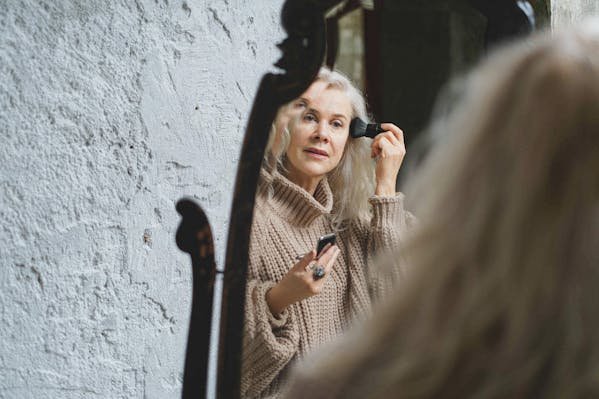
Presentation is another factor that contributes to confidence in your looks. While true confidence stems from inner belief, external presentation can reinforce that inner sense. Dressing in clothing that feels comfortable and aligns with your personal style can significantly boost your self-esteem. Similarly, grooming routines tailored to your preferences, whether that means skincare, hairstyling, or simply maintaining neatness, create a sense of control and pride. Importantly, presentation is not about impressing others; it’s about signaling to yourself that you care for and value your appearance. Even if you want to get botox, injectables and facial fillers, this should be done for yourself.
Be Careful Who You Spend Time With
Social interactions also shape how we perceive ourselves. Surrounding yourself with supportive, positive people who appreciate you for who you are reinforces self-confidence. Conversely, toxic relationships or environments that prioritize superficial standards can erode self-esteem. Seeking out communities, friends, or mentors that encourage self-expression and authenticity allows you to feel accepted and seen, reducing the pressure to conform to unrealistic ideals. Practicing assertiveness in social settings, such as maintaining eye contact, speaking clearly, and standing tall, further solidifies your confidence in how you present yourself to the world.
Don’t Believe What You See
Media literacy is another powerful tool in building confidence. Understanding that most images are curated, edited, and often unrealistic helps temper the impact of comparison. Recognizing the artifice behind advertisements, social media filters, and celebrity portrayals allows you to appreciate your own natural beauty without constantly measuring it against manufactured standards. Reducing exposure to content that triggers negative self-evaluation can also help maintain a healthy mindset. Instead, seek media that celebrates diversity, individuality, and authenticity, which reinforces the idea that beauty is multifaceted and subjective.
Being Individual
A transformative aspect of confidence is embracing individuality. Each person has unique traits, features, and expressions that set them apart. By celebrating what makes you different rather than attempting to erase perceived imperfections, you foster genuine self-assurance. This can involve experimenting with styles, hairstyles, or makeup that reflect your personality, or simply learning to love natural features that make you distinct. Over time, embracing individuality reduces reliance on external validation, creating a more stable and lasting sense of confidence.
Self-Acceptance
Confidence in your looks is not about perfection; it is about acceptance and self-expression. It grows when you focus on what you can control, like health, grooming, and personal style, while letting go of unattainable ideals. Part of this process is learning to treat yourself with kindness and patience. Building self-confidence takes time and consistent effort, and setbacks are natural. Moments of insecurity are inevitable, but they do not define your overall worth or beauty. Learning to navigate these moments with compassion reinforces resilience and a positive self-image.
Valuing Yourself
Ultimately, building confidence in your looks is a holistic endeavor that integrates mindset, lifestyle, self-awareness, and social reinforcement. It is about valuing yourself for who you are, not who society tells you to be. By nurturing your physical and mental well-being, practicing positive self-talk, presenting yourself authentically, and embracing individuality, you create a foundation of self-assurance that is resilient to comparison and external judgment. Confidence is not a static state but a skill that strengthens with practice, reflection, and patience.