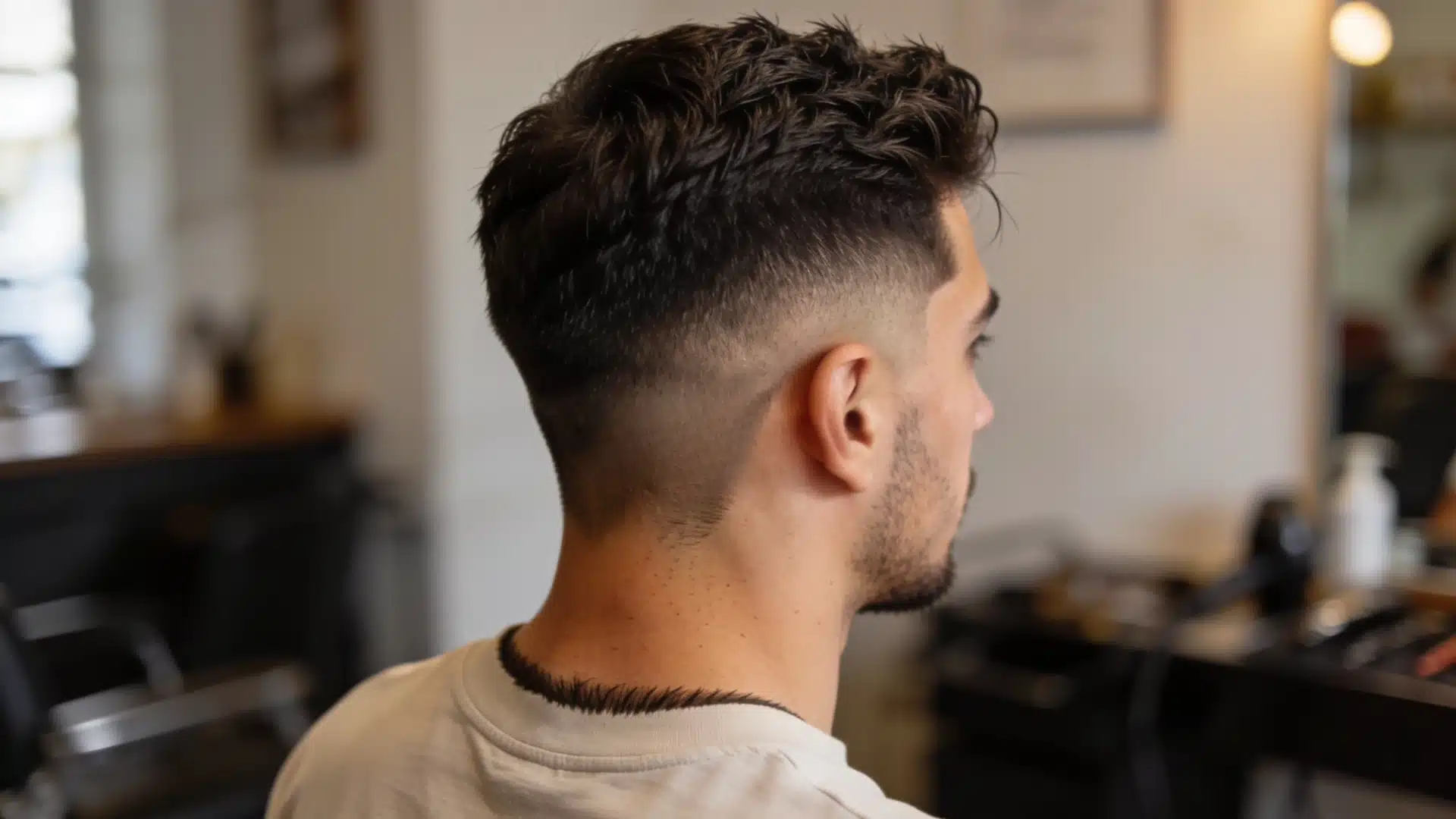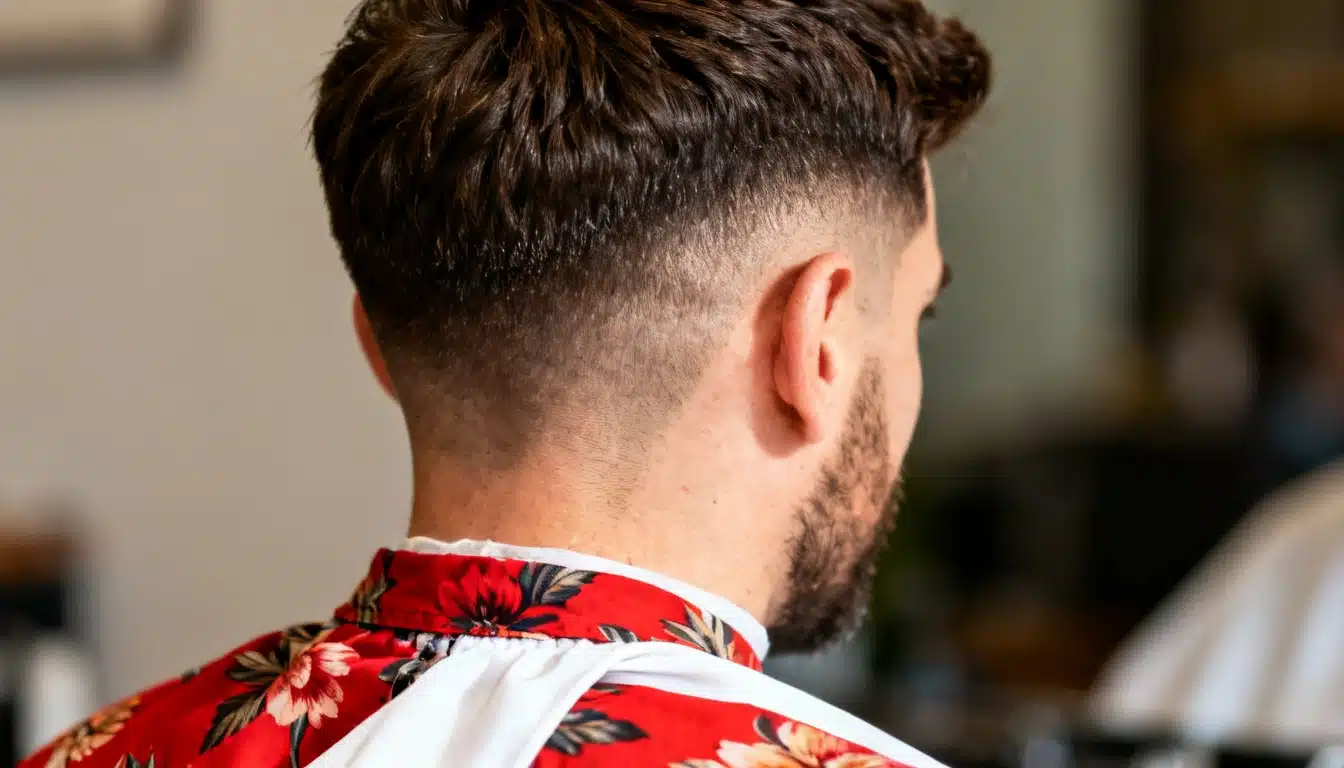
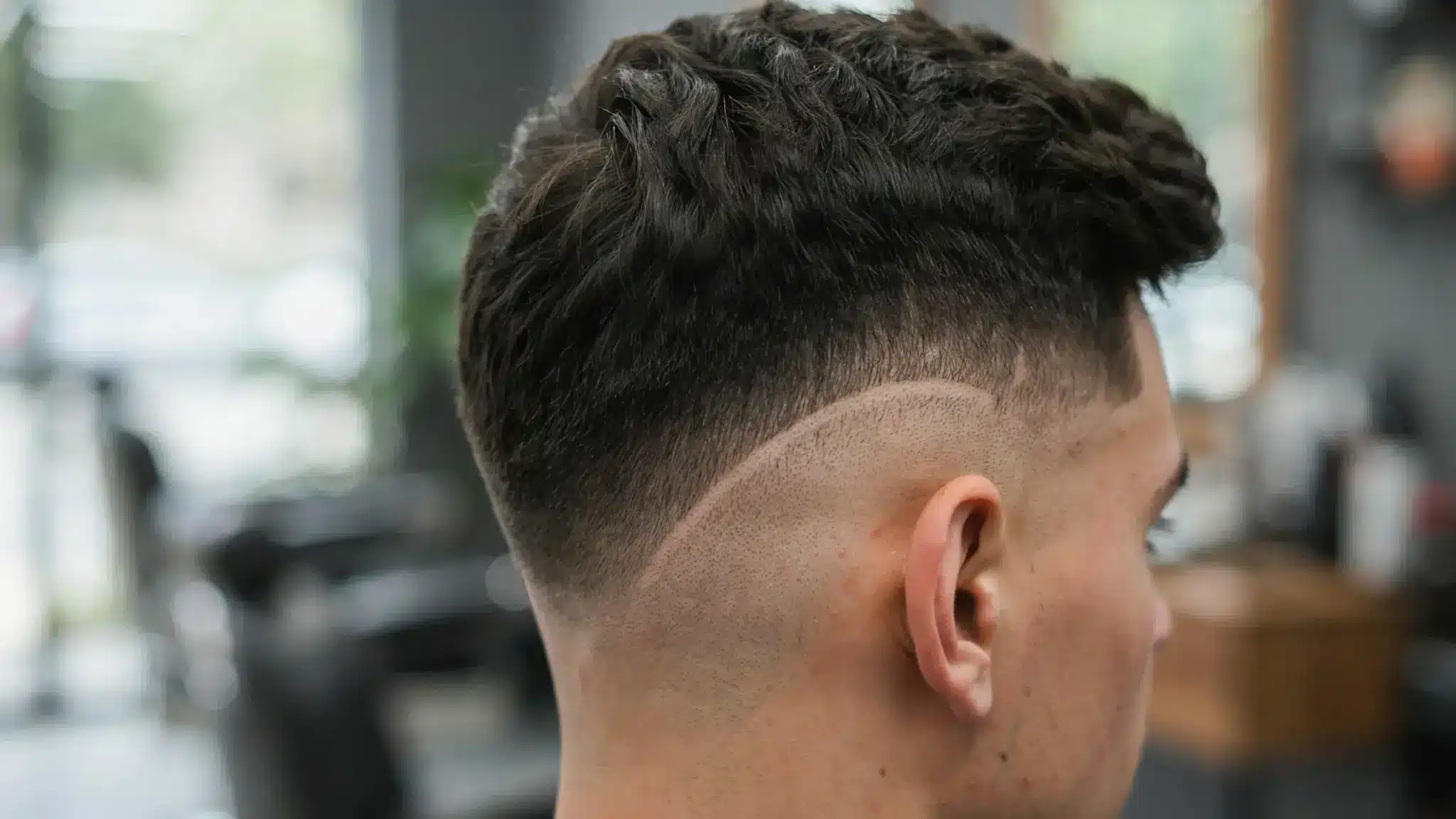

Right now, the high taper fade is one of the most requested cuts in any barbershop, and knowing how mid styles compare helps before committing to one. It’s sharp, low-fuss, and pairs with almost any top style.
But something most guides skip is that a taper that looks great on one face shape can throw off another completely, and hair type changes the outcome too.
A style built for straight, fine hair won’t sit the same on thick, curly strands.
Below are the taper fade styles, each paired with a face shape and hair texture that it actually flatters.
What is a High Taper Fade?
This hairstyle starts short near the temples and tapers up. The clippers start higher on the head than most other cuts.
Sides stay tight and clean, then blend into noticeably longer hair on top. Because the fade sits higher, the contrast between short and long hair is sharper here than with a low or mid fade.
This cut also plays well with almost anything on top, like curls, waves, straight hair, thick hair, and thin hair, as the fade adjusts to fit.
Barbers tend to recommend it for another reason: it grows out evenly, and the shape holds its structure between visits rather than turning shaggy or losing its line within a week.
High Taper Fade vs Other Fade Haircuts
Each fade type creates a different look and suits different lifestyles, and it helps to see what works for men more broadly.
The table below compares it with five common alternatives.
| Fade Type | Fade Height | Overall Appearance | Best Face Shape |
|---|---|---|---|
| High Taper Fade | Starts high, near the temple | Sharp contrast, bold | Oval, round, square |
| Low Taper Fade | Starts just above the ear | Subtle, understated | Long, diamond |
| Mid Taper Fade | Starts midway up the side | Balanced, versatile | Most face shapes |
| Skin Fade | Fades down to bare skin | Very sharp, modern | Square, oval |
| Drop Fade | Curves down behind the ear | Rounded, softer edge | Round, heart |
| Burst Fade | Fades around the ear only | Compact, edgy | Diamond, oval |
Best High Taper Fade Haircuts
Each style below pairs the same sharp fade with a different top length or texture. Face shape and hair type both play a part in choosing the right one.
1. Textured Crop Cut
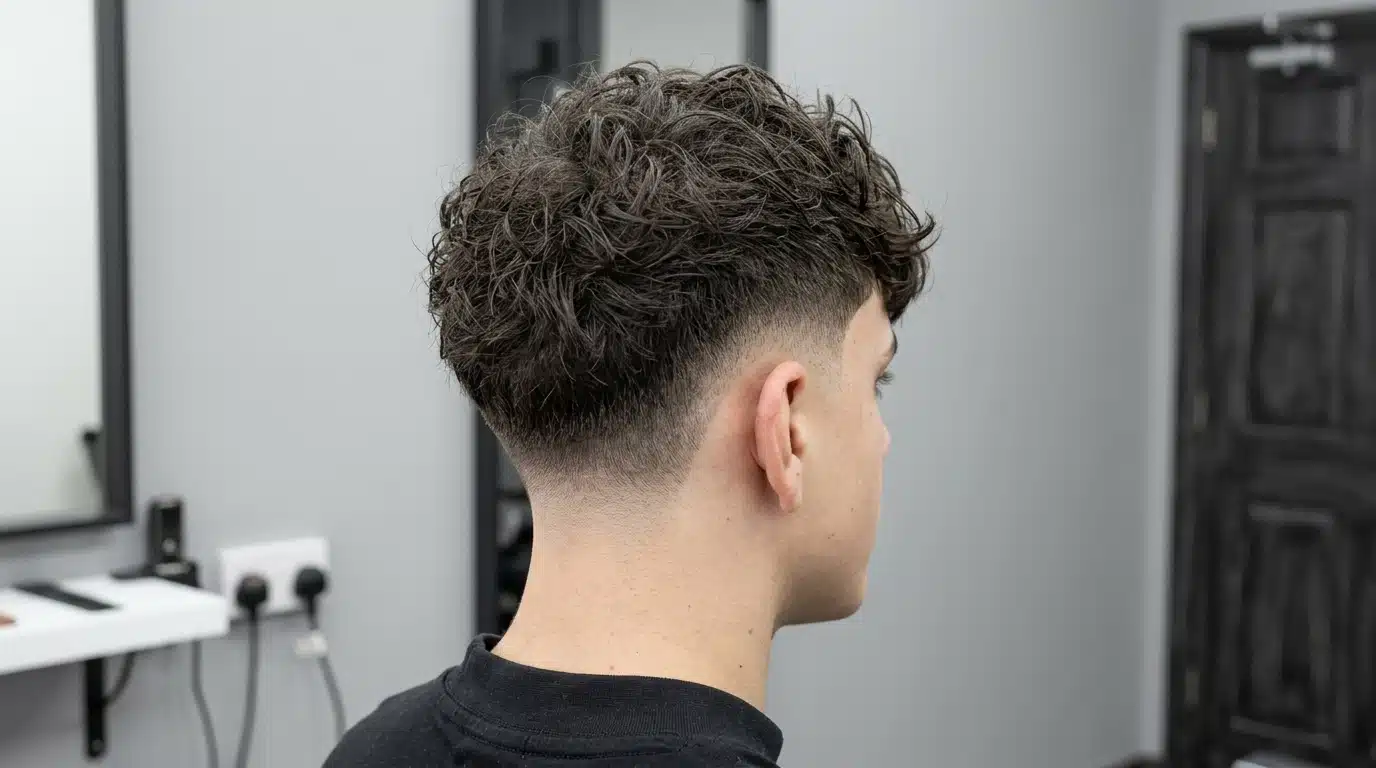
This one works best for oval and square faces with thick or wavy hair. The top is cut with point-cut ends, which break the hair into pieces rather than a single solid block.
Barbers usually keep the crop slightly longer at the front for a natural fringe effect. It needs a trim every three weeks to stay sharp.
2. Pompadour
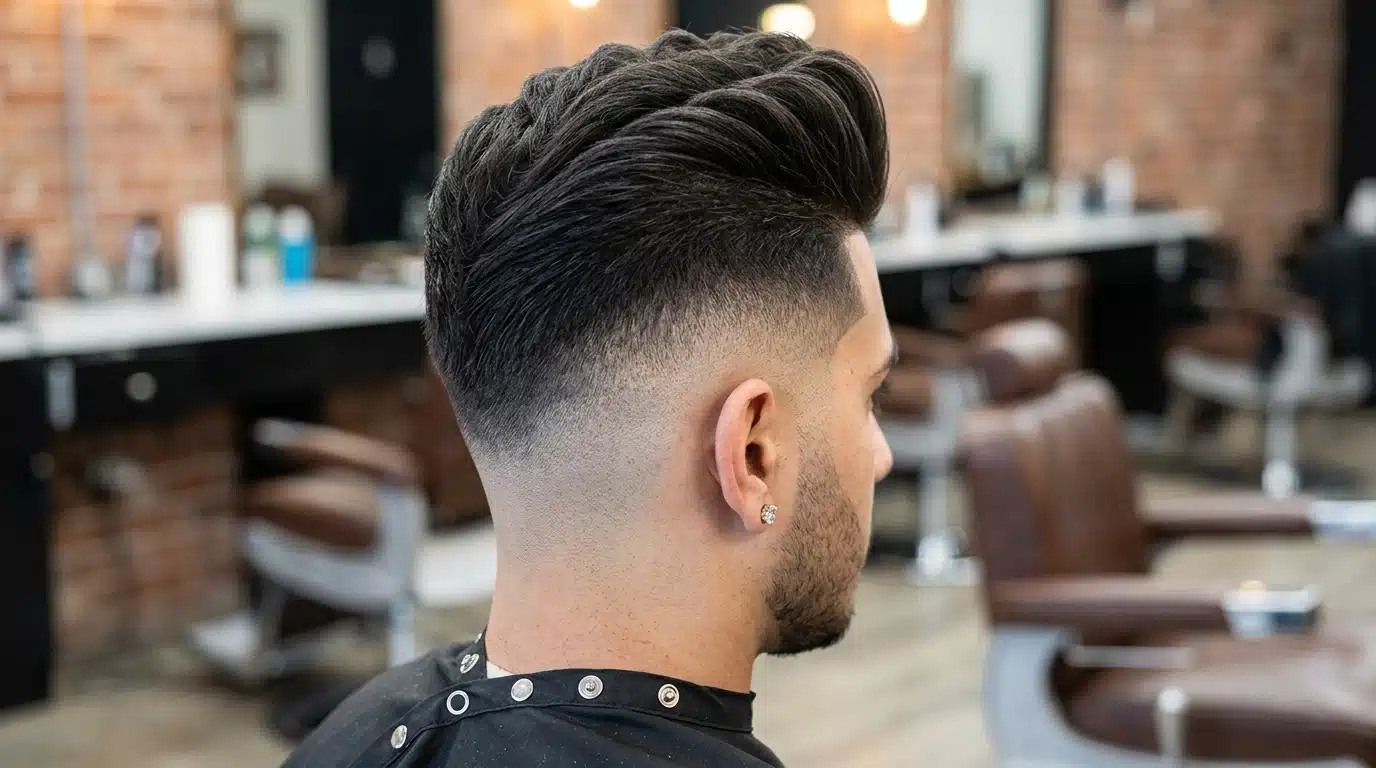
The pompadour suits round and heart-shaped faces best, especially with straight-to-wavy, medium-density hair.
Keep extra length at the front, then push it up and back with a strong-hold pomade and a blow-dryer. This takes daily styling, so it’s not a low-maintenance choice.
3. High Taper Fade with Quiff
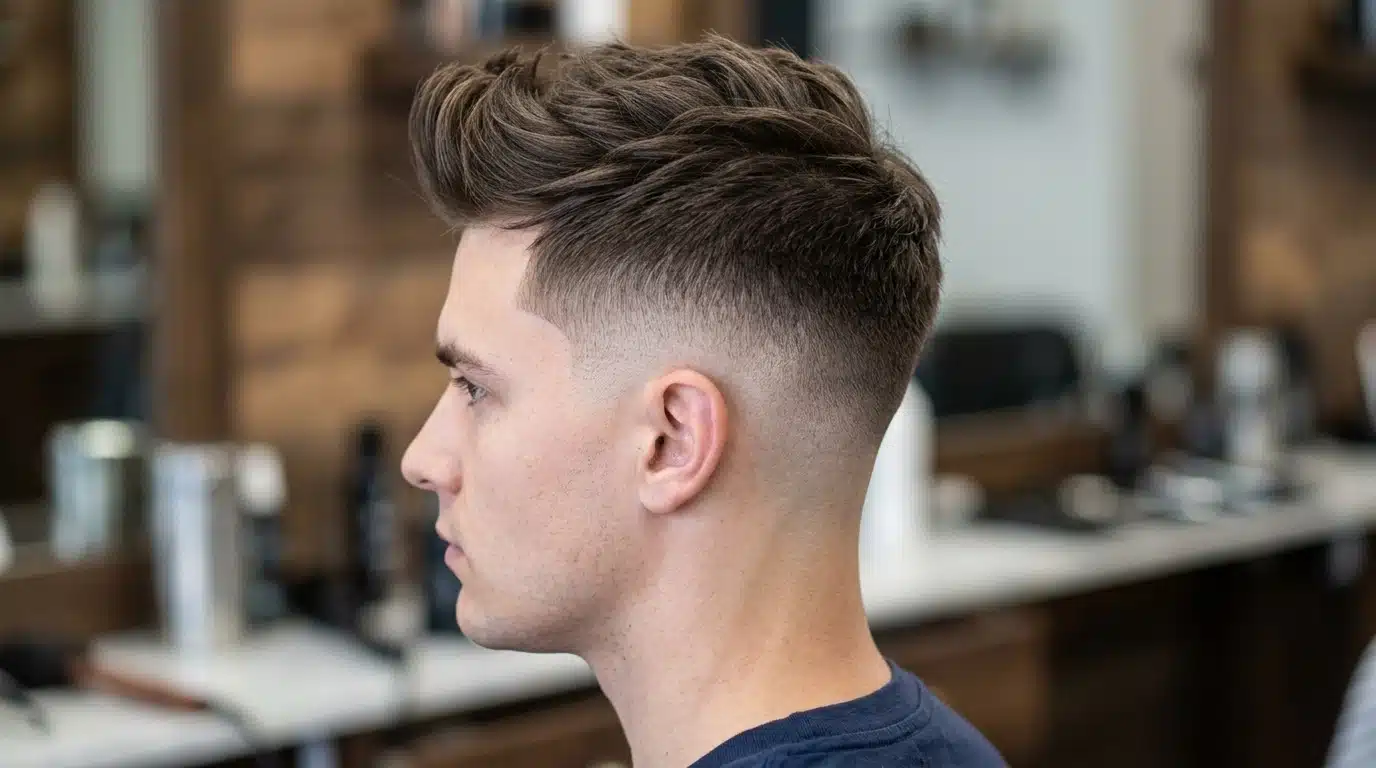
A quiff flatters round and square faces and works well with straight or slightly wavy hair. The top is pushed upward and slightly forward, creating a textured peak rather than a fully slicked-back shape.
Compared to the pompadour, it’s a bit more relaxed and works for both casual days and dressed-up occasions.
4. Side Part High Taper

The side part favors oval and diamond faces with fine-to-medium straight hair. A defined part line runs across the top, either shaved in for extra sharpness or created with a comb and light pomade.
This is one of the easier styles to maintain at home since it doesn’t require much daily rebuilding.
5. Slick Back Taper
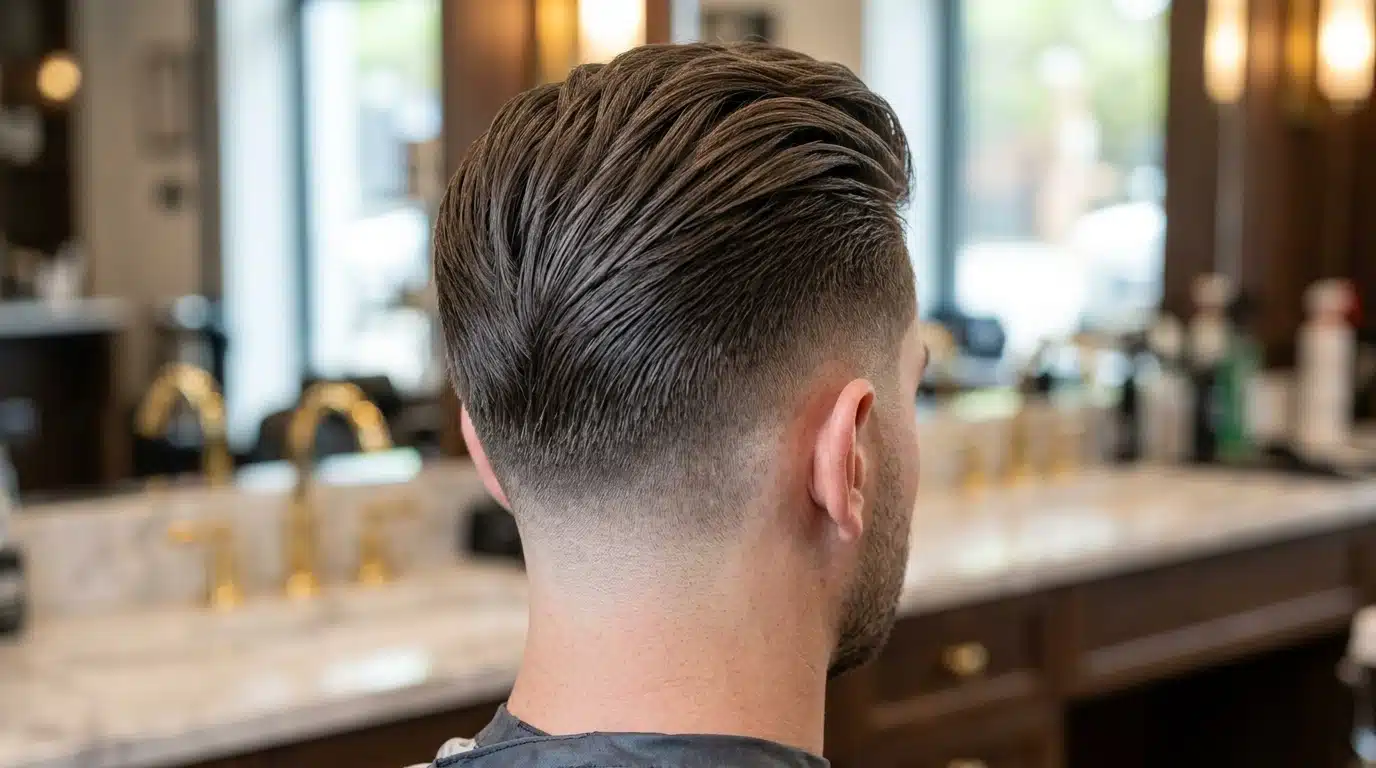
Slick backs work best on oval and long faces with straight or wavy, medium-to-thick hair. Enough length needs to stay on top so the hair can sweep fully backward without gaps.
The finished look feels sharp and grown-up, and it pairs particularly well with a beard blend for a more polished overall shape.
6. Curly High Taper
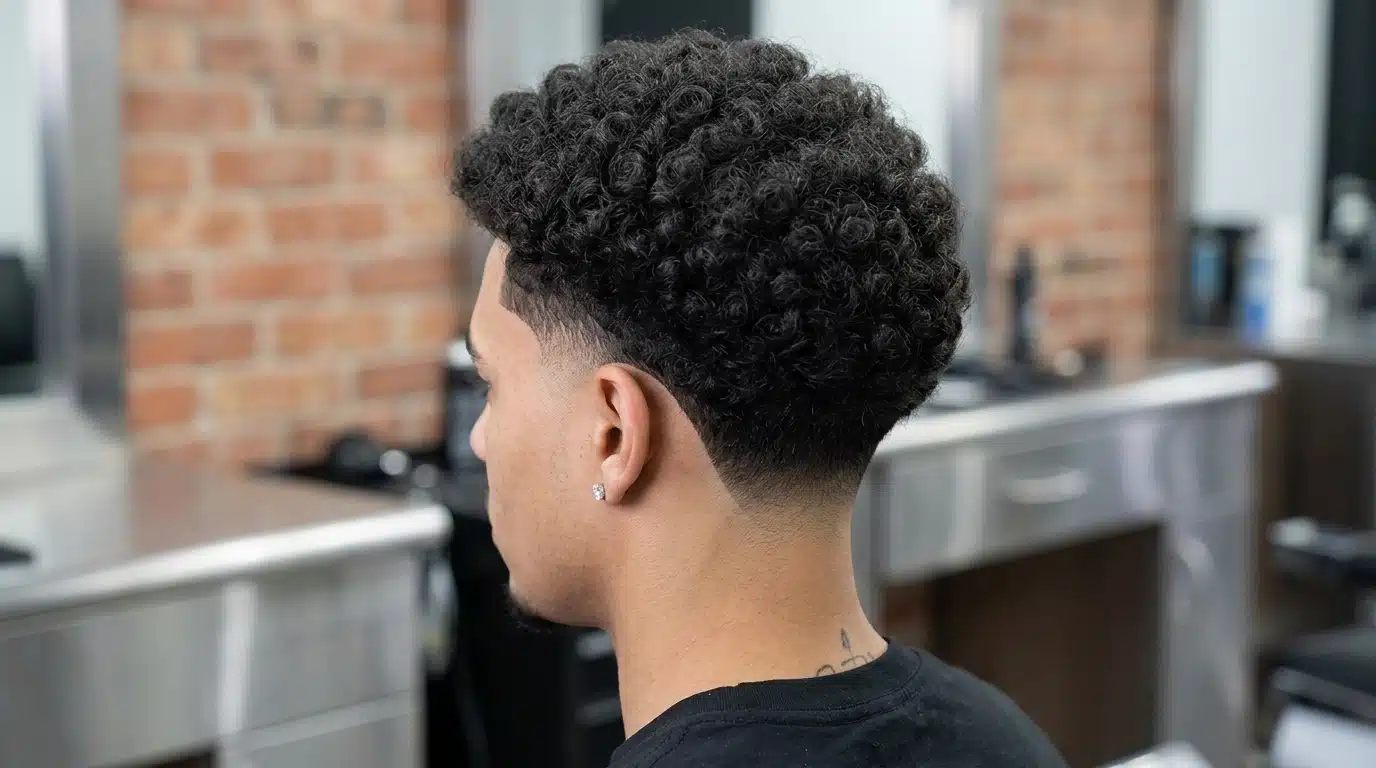
This pairing works well for square and round faces with naturally curly or coily hair. The fade removes bulk at the sides, so the curls on top get room to show their shape instead of blending into a shapeless mass.
It only needs a trim every four weeks since curls disguise fade grow-out better than straight hair does.
7. High Taper Buzz Cut
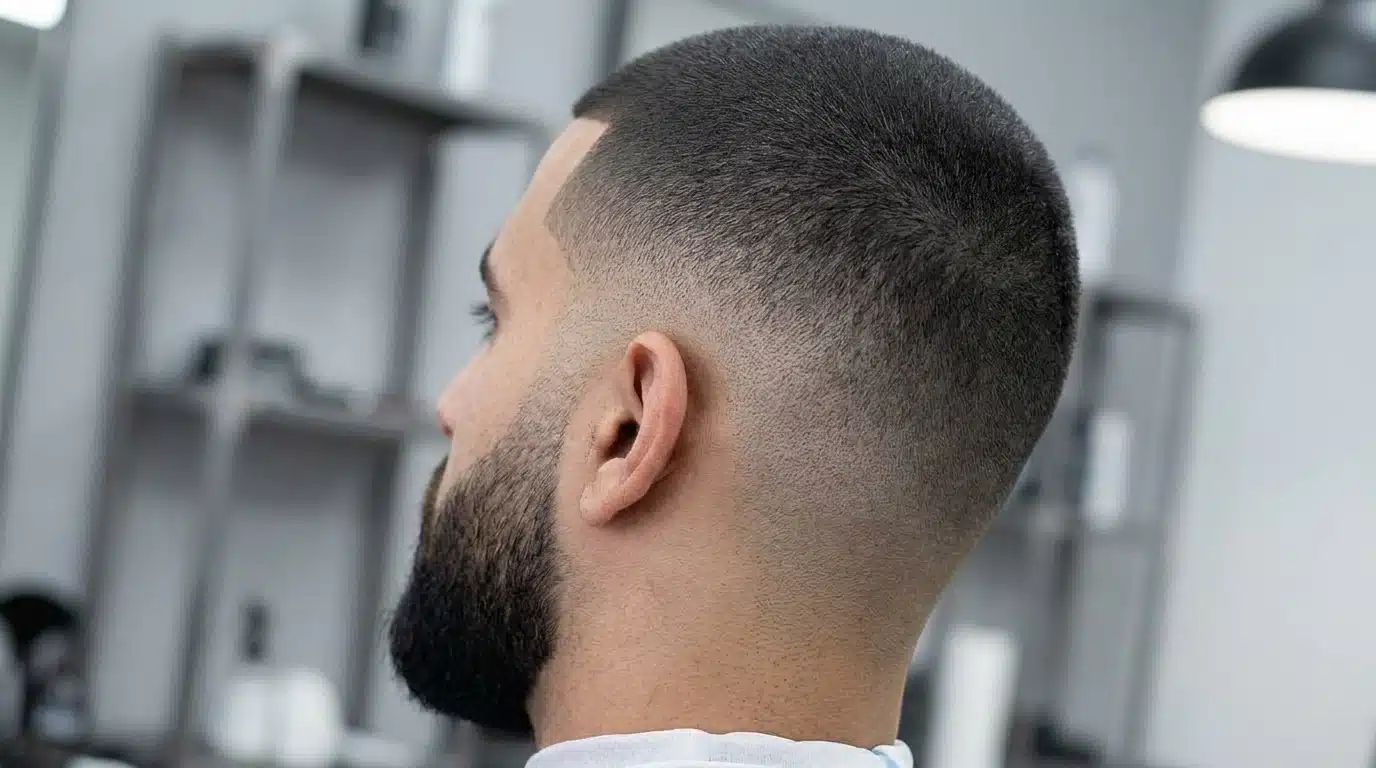
The buzz cut works with nearly any face shape, though it suits oval and square shapes especially well. It works with any hair type since the top gets cut to a uniform short length using one clipper guard.
Because there’s no length on top to distract from it, the fade line itself becomes the main visual feature of this cut.
8. High Taper Fade with Crew Cut
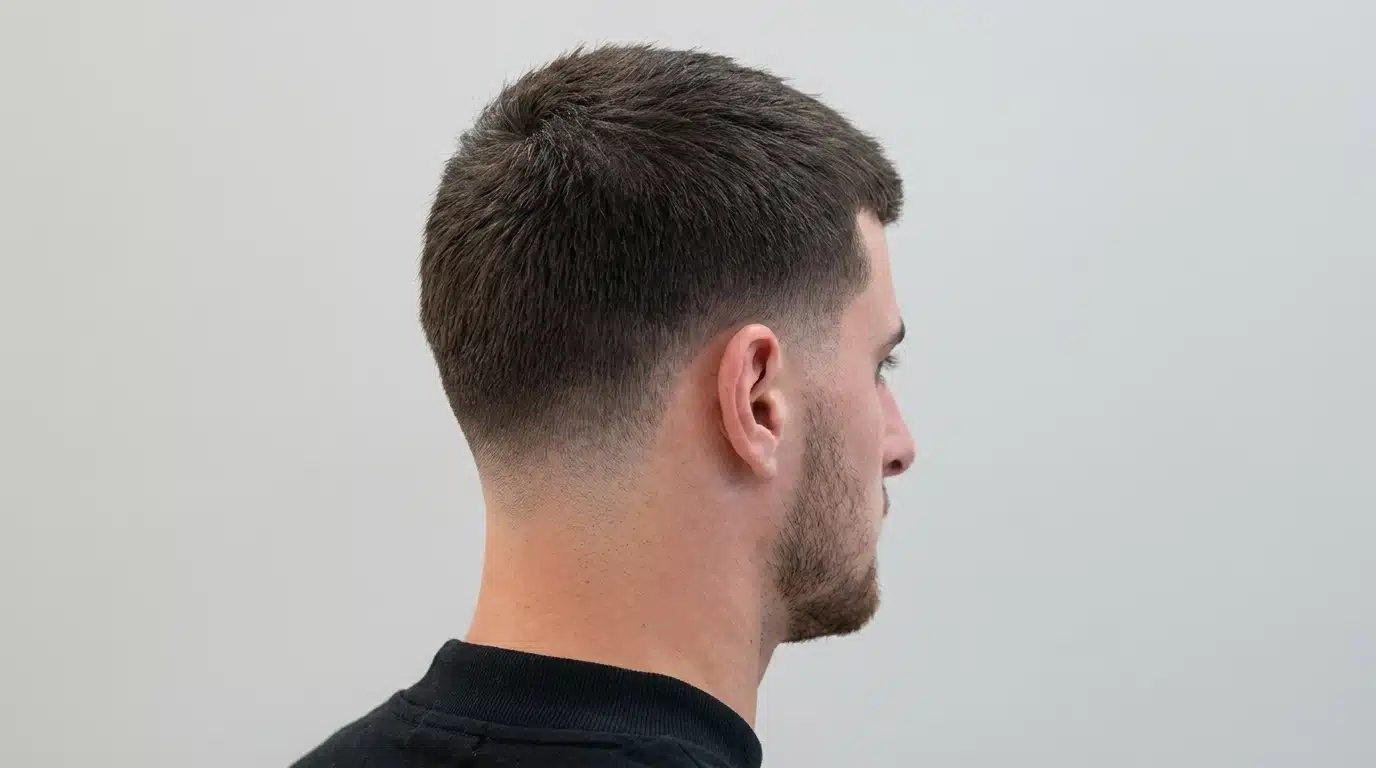
Crew cuts suit round and square faces and straight-to-wavy hair. The top stays short and even, generally a bit longer than a buzz cut, with slightly more length left at the front hairline.
It’s a practical, no-fuss choice for anyone who wants a defined fade without spending time styling the top each day.
9. French Crop
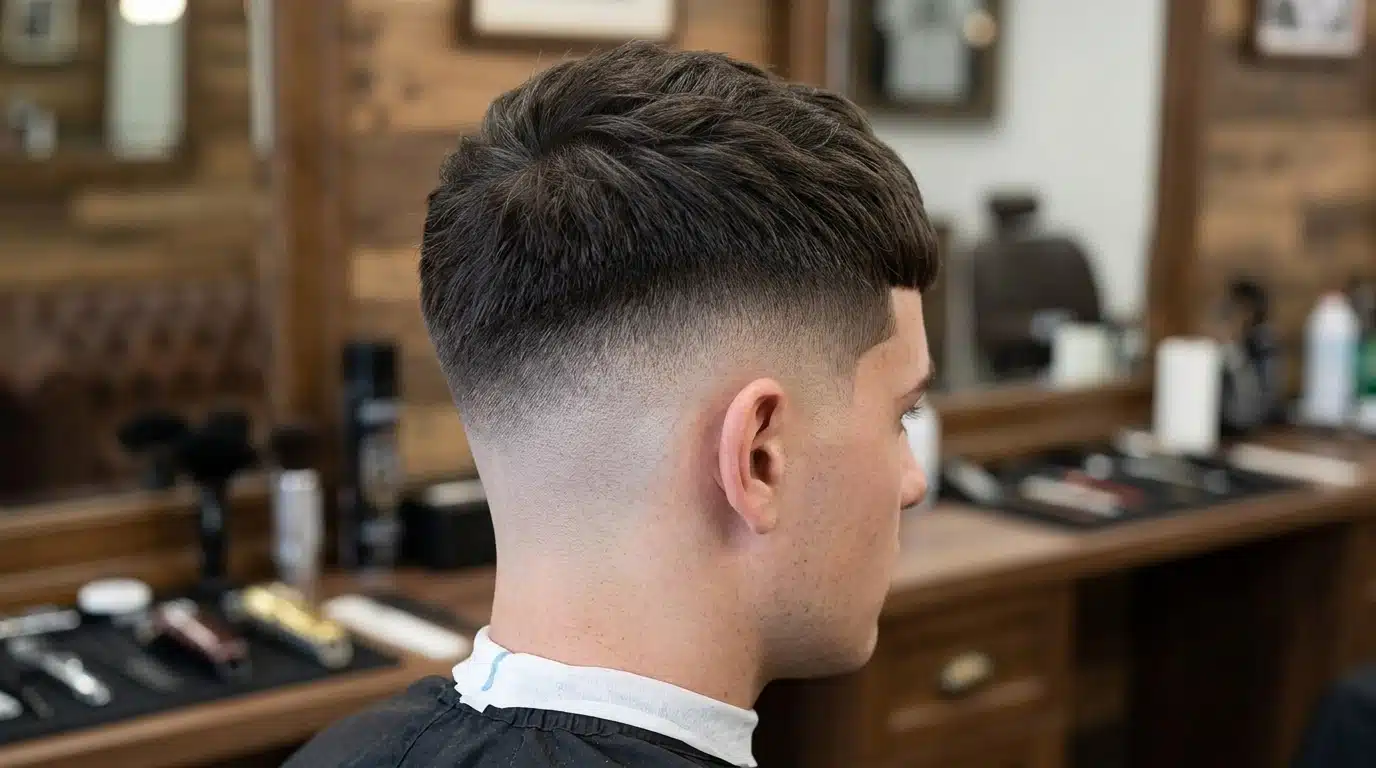
The French crop flatters oval and diamond faces with straight or wavy, medium-thickness hair. Cut a blunt fringe just above the brow, then style it with a matte clay for texture.
This fringe helps balance narrower chins or more angular jawlines by adding visual width near the forehead.
10. Faux Hawk
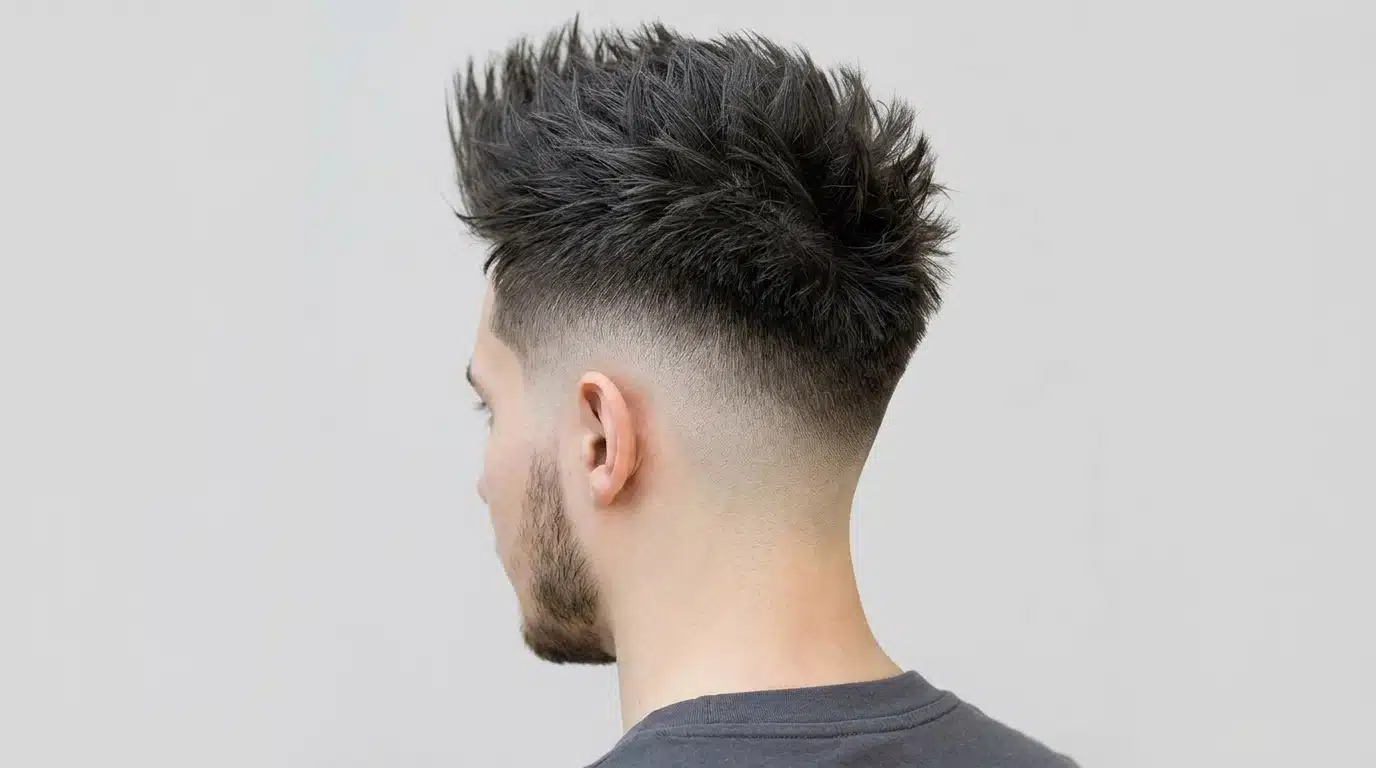
Faux hawks work best for square and diamond faces with straight-to-wavy, medium-thick hair. Fade both sides evenly to frame a raised strip of hair running down the center.
The raised center draws attention upward and away from wider cheekbones, making it a strong pick for diamond-shaped faces.
11. Spiky Hair
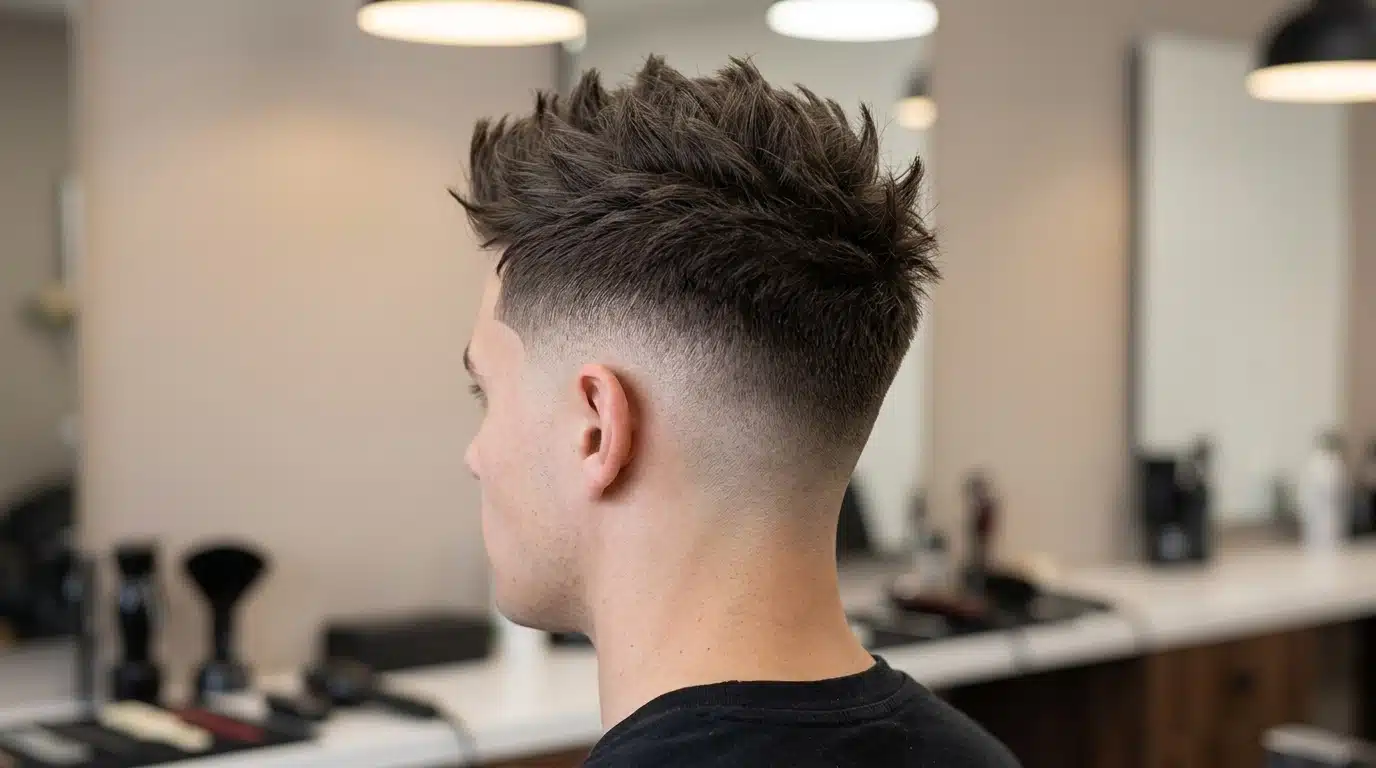
Spiky styles suit round and oval faces with straight, fine-to-medium hair. The top gets point-cut to create texture that spikes easily with the right product.
The broken-up shape also helps soften the rounded outline of a fuller face. It requires daily restyling but only a trim every three weeks or so.
12. Long Top
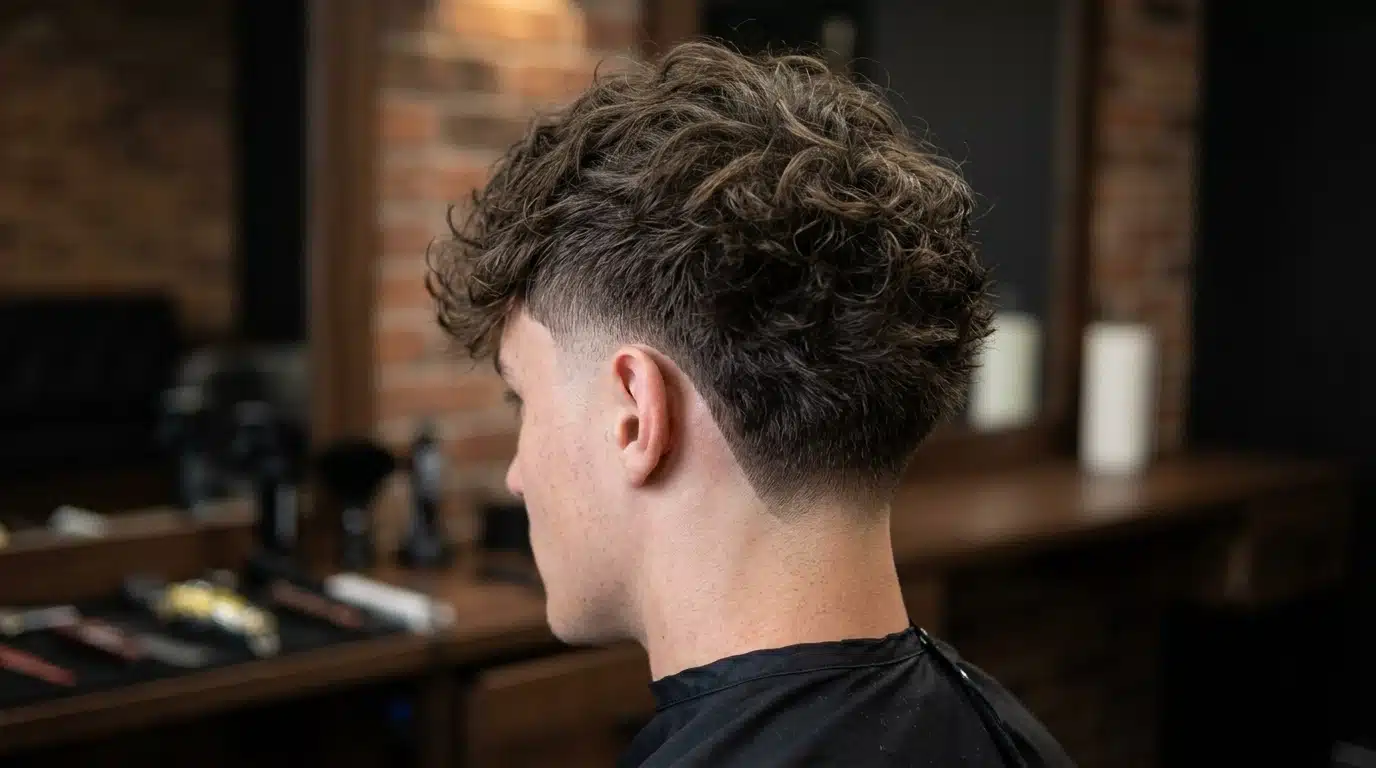
This style works well for long and heart-shaped faces and needs at least three inches of length on top, regardless of texture.
The fade gets blended gradually rather than sharply to avoid a harsh line under the heavier top section. A light gel or cream adds definition without stiffness.
13. Beard Blend
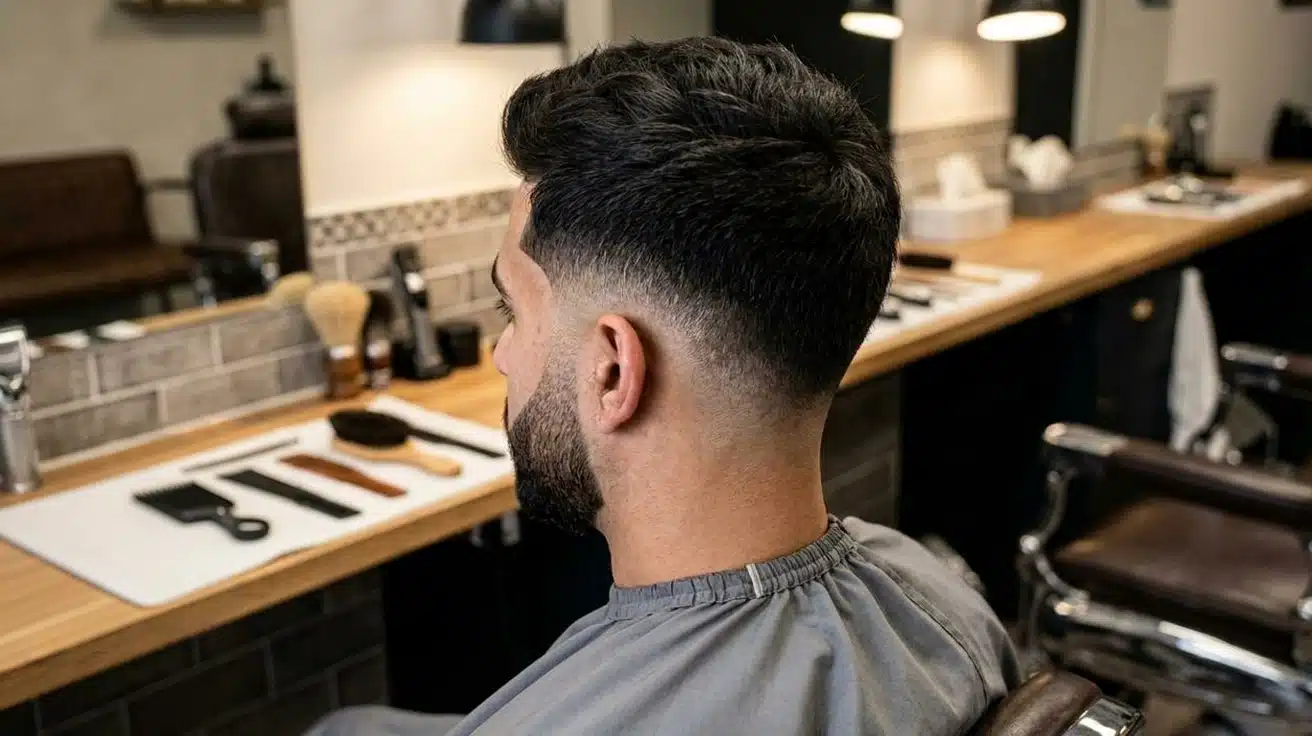
This combination suits square and oval faces and works with nearly any top style. The fade blends directly into the beard line, so there’s no visible break between hair and facial hair.
The connected look sharpens the jawline and ties the whole haircut together into one cohesive shape. Beard oil keeps the beard itself in shape, while regular styling products handle the top.
Keeping your high taper fade sharp
A fade only looks sharp for as long as you keep up with it. These habits, done at home and at the barber, keep the lines clean and the style looking fresh between cuts.
- How often to trim: Every 2 to 3 weeks. The fade grows out faster than the top, so the contrast fades without regular visits.
- Keeping edges sharp: Ask the barber to clean up the hairline and neckline at each visit, even if the rest of the cut still looks fine.
- Beard blending upkeep: If the fade blends into a beard, trim both together. Letting one grow out while the other stays short breaks the seamless line.
- Home maintenance between visits: A trimmer with a guard can clean up neckline growth or stray hairs around the ears without touching the main fade.
- Washing frequency: Wash 2 to 3 times a week. Washing daily can dry out the scalp, and too little washing leads to buildup.
- Product buildup prevention: Use a clarifying shampoo once a week to clear out leftover clay, gel, or wax. Buildup weighs hair down and dulls the fade’s sharp look.
Stick to this routine, and the fade holds its shape well past the two-week mark, so every trip back to the barber starts from a cleaner baseline instead of a full reset.
Wrapping Up
A high taper fade works because it’s flexible. Face shape, hair type, and lifestyle all play a part, but there’s a version for nearly every combination.
Picking the right style is only half the job; the rest comes down to clear communication with a barber and steady upkeep between visits.
A photo, the right guard sizes, and regular trims keep the fade looking as sharp in week three as it did on day one.
Pick a style from this list, bring a reference photo, and let the barber handle the rest.
Frequently Asked Questions (FAQs)
1. Can a High-Taper Fade Work with a Receding Hairline?
Yes, it often helps. The fade draws attention to the sides, which can make a receding hairline less noticeable up top.
2. Does a High Taper Fade Require a Specific Type of Clipper?
No special clippers are needed. A standard clipper set with multiple guard sizes is enough to create the blend and fade.
3. Can a High Taper Fade Be Done on Very Short Overall Hair?
Yes, it works well even with short hair, especially with buzz cut or crew cut styles where the top and sides stay close in length.