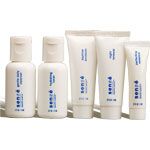
Sense Prelude 5 Review/Giveaway

I was excited when Shonda, an associate for USANA Health Sciences and a fellow blogger, who writes at The Knowlton Nest and Milk N’ Honey Learn and Grow, contacted me about reviewing the Sensé Prelude skin care products from Usana.

Sensé beautiful science® skin-care products offer an innovative approach to skin care. With groundbreaking, patented Self-Preserving Technology, Sensé™ products contain no added chemical preservatives—meaning they stay fresh naturally—so they are more gentle and healthy for even the most sensitive skin. And all the products include antioxidant complexes and ingredients proven to revitalize skin cells, leaving skin looking younger and more radiant.

Summer Safety: Sunburn Remedies

As as kid, I got sunburned a lot. I was–ahem, am– very fair complected, and some of the times even Water Babies couldn’t save me. But as an adult I’ve learned to be more careful and reapply my sunscreen, but sometimes in the name trying to get a tan, I still little burned. After going to the beach several weeks ago, I looked up some sun burn cures/remedies on the net, and I thought I’d share some of these with you. I wish I’d had these years ago!

Showers – Right after coming in from the sun, take a warm to hot shower (before it actually starts burning. The hot water can help to open your pores, draw the heat out of your skin, and can help to ease the burn before it starts.
And after your skin actually starts to “burn”, take cool showers (at least 2 a day) to moisturize the skin and ease pain & itching.

Aloe – One of the most popular cures for sunburn. Use actual aloe leaves, or buy it in a bottle at the store. Apply several times a day to keep skin moist.
After-Sun Lotion – I use Banana Boat Moisturizing After Sun Lotion. It contains aloe & vitamin E. It’s designed to keep your skin moisturized and “extend” your tan.
Apple cider vinegar (or white vinegar) – Apply apple cider vinegar to the burn with a cottonball, or make a compress. This remedy should prevent peeling. **A few weeks ago, after a day at the beach I tried this one myself. I was unsure of the immediate effects of it, but I can tell you that I didn’t peel–and my skin was burned worse than a previous beach trip where I did peel, so I think the ACV helped.)

Aspirin – this will relieve pain, reduce fever, and reduce inflammation. It should be taken within 24 hours of getting sunburned.

Ice packs – These can help to keep the skin cool & basically numb the skin. (very good, if you’re itching!)
Baking soda – Dissolve some baking soda in water and make a compress using a clean cloth or add baking soda to bath water. Let the skin dry on its own. This should also help to keep skin moisturized.

Oatmeal Pack – Place some instant oatmeal in a bowl. Place a small amount of water in the bowl, just enough to moisten the oatmeal. Take a damp cloth and dip out some of the oatmeal on to the cloth. Place it on the burn for 15-20 minutes. (I actually tried this one; I placed a towel on the couch, then laid the oatmeal pack on top of it, and laid with my back on the oatmeal pack. It immediately relieved my itching.)

Milk – Before taking a bath, make a compress of cool milk. Apply it to the skin and leave it on for 20 minutes. Then wash off. The fat content is said to help cool the burns but it shouldn’t clog your pores the way butter would.

Cucumbers – To soothe the burn, rub the sunburn with fresh cucumber slices.
Epsom salts – Dissolve epsom salts in water and make a compress using a clean cloth.

Potato -Grate a potato and apply it to the burned area to cool and soothe the burn.

Yogurt -apply plain yogurt with live cultures, let it stand for a few minutes, then rinse off under cool water.

Lavender – Mix 20-25 drops of lavender oil in one cup of water and bathe the sunburned area.

Lemon water – Mix the juice of three lemons into two cups of cold water and rub it on the burn with a rag or sponge. The lemon will cool the burn, act as a disinfectant, and will promote healing of the skin.


Works For Me Wednesday: Remedies for Insect Bites & Stings

I decided to participate in W4MW again this week, and in keeping with my Summer Safety theme, I came up with a list of treatments for wasp, yellow jacket, and bee stings. Shortly after I met my husband, we were outside walking, and I got stung. I had told him before that I was allergic to wasps & bees. And in the days following the sting, he admitted to me that he had kinda thought I was exaggerating a bit about how allergic I was, that is, until he saw how badly swollen my foot got. When he saw that my foot was still swollen after 4 or 5 days, he swore he’d be taking me to the hospital if I ever got stung again…and looking back, that’s probably not a bad idea.

It’s funny…as I think about all my topics for this week’s posts, I’m reminded why I don’t like the outdoors…because every time I go out there, something happens to me!

********

If you are highly allergic to wasp & bee stings, you should seek immediate medical attention. Don’t wait for the the sting to swell, etc. At the emergency room they will remove the stinger & will most likely give you a shot to prevent pain, swelling, and itching.

Otherwise you can take care of the stings yourself through a number of techniques and treatments. Here are some which I have used to provide relief:

If stung by a bee, you should remove the stinger as soon as possible. It is said that using a credit card for the removal of the stinger, rather than using tweezers is best, as to prevent the stinger from breaking and/or releasing more poison in to your body. But the most important thing is to remove it.

Shortly after being stung, use tobacco on the sting. Use chewing tobacco or tobacco out of a cigarette. Place a few drops of water on the tobacco and then place it on the sting. Cover with a bandage or gauze. It doesn’t feel good to have this one the sting. You’ll feel a little pressure and a pounding/pulsating feeling. But this method is very effective at preventing some of the pain and swelling.

Take an antihistamine, such as a Benadryl.

As with other injuries, you should wash the sting with soap and water.

Ice may used to relieve itching and pain.

Use creams such as Cortizone or Benadryl.

Also, try Campho Phenique. I’ve never personally tried this for a wasp/bee sting, but Campho Phenique works wonders on mosquito bites (more so than the other creams), and I imagine that it would work better on stings as well.

Use a pain reliever such as Advil or Tylenol for the pain.

Keep the sting elevated if possible. Elevation is very important; this prevents a lot of blood flow from going down to the area of the sting, and will help with pain and itching. And if stung on the foot, avoid walking if possible, as this will cause more pain and swelling. You should also avoid writing, typing, or doing other work with your hands, if you are stung on the hand.

Lightly rub the sting, Don’t Scratch!

What Has Worked for Others:
Here is a list of other items you can try. I’ve not used these personally, but on the around the internet, others have attested that these remedies work.

  • applying meat tenderizer
  • applying toothpaste
  • applying tobacco
  • applying chili paste
  • applying mint leaves
  • applying clay paste, and
  • applying a copper coin
  • applying hot water
  • applying lavender oil
  • baking soda
  • vinegar

To view other Works for Me Wednesday posts, visit Rocks in My Dryer.

Summer Safety: Heat Exhaustion & Heat Stroke

In planning for my posts for July & August, I’ve thought of a variety of topics having to do with safety. And since I try to make the posts relevant to the calendar and have the majority of the posts sort of build on one another or be on a common theme, I decided to make this week Summer Safety Week.

I’m starting with some information on heat stroke and heat exhaustion. As I child and as an adult, I’ve had heat exhaustion myself. As a kid, I wasn’t aware of what it was. But basically whenever I went outside for a long period of time, whether we were at a park, a ball game, minature golf, or just anywhere, I would suddenly become ill, and as a result we’d all have to go home. Even now, my husband and I go outside and play disc golf, and I have to be very careful about what I eat before we go, I can never go on an empty stomach, and I have to stay hydrated. And unless we go early in the morning or late in the afternoon, (after 5pm or later) I won’t be able to stay out for a long period of time without getting ill.

Luckily in the past I’ve come inside to rest before all the symptoms hit me, so I never actually had to go to the doctor, but a friend of my husband actually went to the hospital for this just last year. And with our humid climate and our heat index often being 100 degrees or higher in the middle of summer, we have a lot of heat exhaustion and heat stroke cases, some of which result in death. So it is definitely a topic to be informed about & to take seriously.

Who can get heat exhaustion or heat stroke? Anybody and everybody. But small children and the elderly are most likely to get it. And whenever you get it once, you are more susceptible to getting it again.

Symptoms:

Heat Exhaustion:
severe thirst
muscle weakness
nausea, sometimes vomiting
fast, shallow breathing
irritability
headache
increased sweating
cool, clammy skin
elevation of body temperature to more than 104 Fahrenheit (40 Celsius)

Heatstroke:
severe, throbbing headache
weakness, dizziness, or confusion
difficulty breathing
decreased responsiveness or loss of consciousness
may not be sweating
flushed, hot, dry skin
elevation of body temperature to 104 Fahrenheit (40 Celsius) or higher

Treatment:
Go indoors immediately. If you cannot go inside immediate have a seat in the shade.
If you are having heat exhaustion/stroke symptoms, don’t drive. And don’t let others who are experiencings the symptoms drive.
Take off clothing.
Lie down and elevate feet slightly.
Get into a bath of cool water or sponge yourself off. You may also apply cold rags or ice packs. In extreme cases, get in an ice bath.
If treating a child, place the child (if conscious) in a cool bath or sponge-bathe the child repeatedly. If outside, spray the child with mist from a garden hose.
Drink plenty of fluids. You should drink water, juice, or sports drinks. I also remember hearing that Pedialite was good because of the electrolytes it contains. (avoid drinks carbonated beverages, drinks containing caffiene, and alcohol.)
If you are treating a child who is vomiting, turn his or her body to the side to prevent choking.
Keep temperature monitored.
**If the person has a temperature of 104 degrees or higher, you could call 911 immediately. If you suspect the person has heat stroke, treat them while waiting for paramedics to arrive.

Prevention:
Avoid being out in the extreme heat, especially for an extended period of time.
Drink plenty of water and other fluids before going outside and while outside.
Wear clothing that is light in color and loose fitting. Wear hats.
If outside, stay in shaded areas.
Stay in an Air-Conditioned Environment if possible.
If you’re home isn’t air conditioned, go somewhere that is, and if you have air conditioning turn it on! (last year a woman in our area died from heat stroke in her home. She had air conditioning, but she didn’t have it on b/c she didn’t want her electric bill to go up.)
If you have an elderly relative, friend, or neighbor, check on them frequently, and make sure they are keeping their home cool and avoiding the heat.
Do all yard work in the early morning or at the very end of the day (after 5 pm) to avoid getting over heated.
If you work in the heat, take breaks often, and go inside for your breaks if possible.
Avoid running, bike riding, and other strenuous exercise in the middle of the day.
If outside in the middle of the day, pace yourself to preserve your energy. (Don’t run when you can walk. Etc.)
Eat small meals, and eat frequently. Avoid eating foods high in protein, as this increases Metabolic Heat and increases Water Loss.
**At first sign of any of the symptoms of heat exhaustion, get out of the heat immediately. Don’t try to wait it out. If you are outside with anyone else, let them know what is going on so that they can treat you if necessary.

Tips to Prevent Colds & Flu, Pt 2 – Housekeeping & Personal Hygeine

Here is the second part to my post on preventing colds and flu. This part lists tips about proper hygeine and housekeeping.

*Go for yearly checkups, and take a yearly flu shot, and get other necessary screenings and vaccinations.

*Wash your hands frequently with hot water and antibacterial soap for at least 30 seconds. Be sure to wash after using the restroom and before eating, and wash frequently if you are around sick people or if you are around a lot of school kids. Also, wash up after handling raw meats & after washing dishes & performing other cleaning duties.

*Don’t cover your sneezes and coughs with your hands. This only puts germs on your hands which will then spread to others. Cover your mouth with a tissue instead.

*Avoid touching your face. Viruses enter the body through the eyes, nose, or mouth. Touching their faces is the major way children catch colds, and a key way they pass colds on to their parents.

*Clean your house regularly, including floors, counter tops, toilets, sinks & tubs, and bedding.

*Avoid sharing towels and rags, as this spreads germs.

*Change out dish towels, rags, and sponges regularly.

*Replace your toothbrush every 2-3 months, and if anyone is sick replace their toothbrush after they get well, as well as any toothbrushes that are stored nearby.

*When someone is sick, wash their sheets and spray their mattress with Lysol to kill germs. Also, clean and sanitize toys that children play with while they are sick.

*Spray door knobs with Lysol or other antibacterial cleaners, especially if anyone in your home has been sick.

*Use plastic cups & silverware and paper plates while someone in your household is sick, in order to avoid spreading germs.

Tips to Prevent Colds & Flu, Pt 1 – Lifestyle

*Due to the all the recent cold weather and because we’re right in the middle of the season in which people are most likely to miss work due to sickness, I decided to research tips to help prevent colds, flu, and other illnesses. I found so much information I’ve decided to divide it up into 2 or 3 different posts. Part one (as you can see) involves tips for maintaining a healthy lifestyle.

*Get plenty of exercise, especially aerobic exercise in order to strengthen your heart and carry oxygen from your lungs into the blood and the rest of your body. Exercise also causes you to perspire, which helps to naturally get rid of toxins in your body and helps your body to create cells which kill viruses.

*Get fresh air. During the winter people spend more time indoors. Central heating dries you out and makes you more vulnerable to viruses. So spend more time outside and open the windows and doors of your home for a few minutes each day to allow fresh air to circulate. This will help you to avoid catching airborne viruses.

*Drink plenty of fluids, including water and fruit juice. You should drink eight 8 ounce glasses of water a day. Drinking water helps to clean out your system and is crucial to maintain proper bodily functions.

*Maintain a healthy diet. Be sure you get enough fruits and vegetables, including green and yellow vegetables. And get plenty of vitamins (especially vitamin C) and foods that are high in antioxidants.

*Also, eat yogurt. Some studies show that eating a cup of yogurt each day can help reduce your risk of catching a cold by 25%.

*Avoid smoking. Smokers are more prone to getting colds, pneumonia, bronchitis, and other infections.

*Cut down on alcohol consumption. Alcohol suppresses the immune system and dehydrates you and could make you more vulnerable to disease and complications.

*Rest and relaxation. It is very important to get about 8 hours of sleep each night. Additionally you should try to spend about thirty minutes a day relaxing. Try meditation or deep concentration while listening to relaxing music or focusing on a particular image.

*Avoid stressers. Too much stress can seriously compromise your body’s ability to fight infection.

Check back in a day or two for part 2 of this article!